
|

brake pad temperature guide

Brake Pad Temperature Guide: How Heat Affects Stopping Power, Wear, and Fade

Your brake pads’ operating temperature is the most important variable in your stopping system. Yet most drivers never think about it until something fails. Brake pad temperature isn’t just a gauge reading. It’s the physical state that decides whether your pads grip the rotor confidently or turn slippery at the worst moment. Every pad material has a designed thermal window. This includes organic compounds, semi-metallic blends, and ceramic formulations. Living outside that window changes everything about how your brakes behave.

This guide breaks down the complete temperature profile of brake pads. You’ll learn about the cold range where they underperform. You’ll see the ideal operating band where friction is maximized. And you’ll understand the dangerous zone above 600°F, where brake fade turns your pedal into a suggestion rather than a command. You’ll learn how heat accelerates pad wear. You’ll discover why glazing occurs. You’ll find out how to measure your actual pad temperatures. And you’ll learn how to match pad compounds to your driving demands, whether that’s daily commuting, track days, or heavy towing. We’ll also cover the warning signs of thermal distress. We’ll explain the honest limitations of every measurement approach. This way, you can make data-driven decisions instead of guessing.

Most articles give you a single “ideal temperature” chart and stop there. This one goes deeper. We’ll show you real-world temperature data from different driving scenarios. We’ll explain the physics of friction fade in plain language. We’ll give you a practical decision framework for choosing pads based on your specific thermal load. By the end, you’ll understand what temperature your brakes should run at. You’ll know why that number matters. You’ll learn how to keep it in range, and what happens when you don’t.

What Is Brake Pad Temperature and Why It Matters
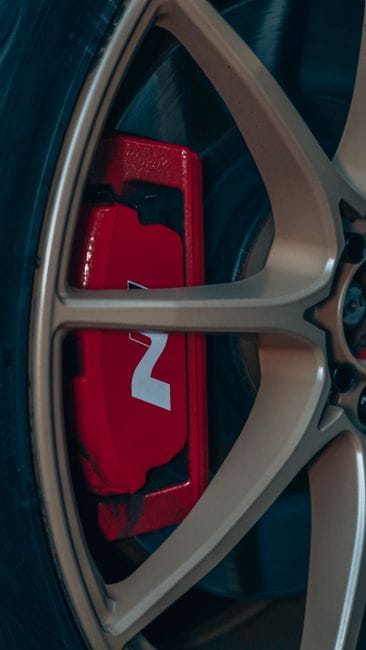
What Is Brake Pad Temperature and Why It Matters - brake pad temperature guide

Brake pad temperature is the heat generated at the friction surface when your brake pads clamp against the rotor to slow the wheel. Every time you press the pedal, kinetic energy converts to thermal energy. That heat is not a side effect — it is the mechanism your brakes use to shed speed. The question is whether that heat stays within a range the pad material can handle.

Defining the operating temperature window

Every brake pad has an operating temperature range, which is the span between the minimum temperature needed for effective friction and the maximum temperature before performance degrades. Below that window, the pad grips poorly — think of cold brakes on a winter morning when the first stop feels weak. Above that window, the pad material begins to break down, friction drops, and you enter the dangerous territory of brake fade. The width of this window varies dramatically by material, and understanding where your pads sit on that spectrum is the first step to proper brake management.

How temperature affects friction coefficient and stopping distance

The friction coefficient of a brake pad is not a fixed number — it changes with temperature. Most pads are designed to deliver their peak friction coefficient within a specific thermal band. Below that band, the friction material hasn’t reached its optimal molecular state, so the coefficient is lower and stopping distances increase. As temperature climbs into the designed range, the coefficient rises to its rated value, giving you maximum stopping power. But push beyond the upper limit, and the coefficient plummets as the pad’s resin binders begin to decompose, creating a lubricating gas layer between pad and rotor. This is why a car that stops confidently at 300°F can feel terrifyingly ineffective at 800°F — the physics of friction have changed, not your driving.

The difference between surface temperature and core temperature

When you measure brake pad temperature, you need to distinguish between the surface temperature — the thin layer at the friction interface that experiences the highest heat — and the core temperature of the pad material itself. The surface can spike hundreds of degrees higher than the core during a hard stop, but it also cools faster once you release the pedal. The core temperature is what determines the pad’s overall structural integrity and wear characteristics. A pad can survive brief surface spikes above its rated limit, but sustained high core temperatures will cause permanent damage. This distinction matters for both measurement and pad selection: a track pad may tolerate surface temperatures over 1,000°F, but its core must stay below its thermal degradation point to avoid delamination or cracking.

Top Picks

Brake Pad Temperature Ranges by Material Type
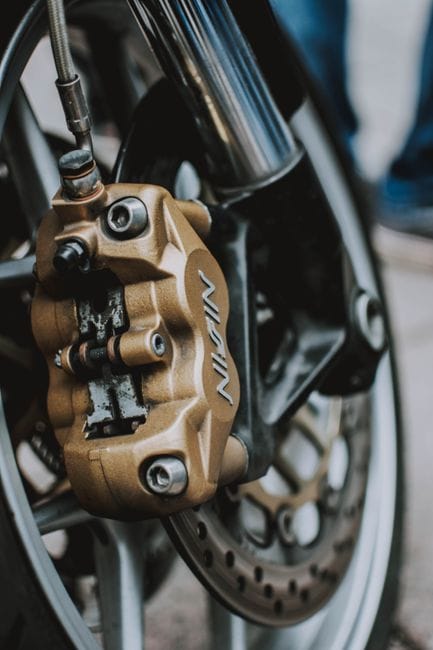
Brake Pad Temperature Ranges by Material Type - brake pad temperature guide

Different friction materials have fundamentally different thermal personalities. Choosing the right pad for your application means understanding these material-specific temperature windows, because what works perfectly for a daily commuter could be dangerous on a track car and vice versa.

Organic (NAO) pads — low-temperature street use

Organic pads, also called Non-Asbestos Organic (NAO) pads, are made from a mixture of fibers, fillers, and resins. They operate best in a relatively low temperature range, typically between 200°F and 500°F. Below 200°F, they provide adequate but not exceptional friction. Above 500°F, the organic resins begin to break down rapidly, causing significant fade and accelerated wear. These pads are ideal for light street use where braking temperatures rarely exceed 400°F, but they are not suitable for heavy towing, aggressive driving, or track work. Their advantage is quiet operation, low rotor wear, and low cost — but their thermal ceiling is the lowest of all pad types.

Semi-metallic pads — the balanced middle ground

Semi-metallic pads contain 30% to 65% metal content — typically steel, copper, or iron fibers — mixed with friction modifiers and binders. This construction gives them a much wider operating window, typically from 250°F to 900°F. They deliver consistent friction across a broad temperature range, making them the most versatile choice for daily drivers who occasionally push their brakes hard, such as towing a trailer or driving mountain roads. Semi-metallic pads handle heat better than organics because the metal content conducts heat away from the friction surface more efficiently. However, they tend to be noisier, wear rotors faster, and require more pedal pressure when cold compared to organic pads.

Ceramic pads — high-temperature stability and low dust

Ceramic pads use ceramic fibers and copper particles embedded in a binding matrix. Their operating range typically spans from 300°F to 1,000°F, with some performance-oriented ceramic compounds rated even higher. Ceramic pads excel at maintaining a stable friction coefficient across a wide temperature range, which means predictable braking from cold starts to hard highway stops. They produce significantly less brake dust than semi-metallic pads and are quieter in most applications. The trade-off is that ceramic pads can be more expensive, and some formulations sacrifice cold-bite performance for high-temperature stability. For most modern street vehicles, ceramic pads offer the best balance of daily drivability and thermal resilience.

Performance and track pads — extended high-temperature range

Track and performance pads are engineered for sustained high-temperature operation, typically rated from 400°F to 1,400°F or higher. These pads use specialized friction compounds — often carbon-metallic or sintered metal formulations — that maintain high friction coefficients at extreme temperatures where street pads would fail catastrophically. The trade-off is significant: track pads often have poor cold performance, can be extremely noisy, generate heavy dust, and wear rotors quickly. They are designed for one purpose — maintaining stopping power under repeated hard braking — and they sacrifice street comfort to achieve it. Using track pads on the street means living with squealing brakes and poor performance until they warm up, which is why most serious drivers swap pads between street and track use.

Brake Fade: The Temperature Limit of Stopping Power

Brake Fade: The Temperature Limit of Stopping Power - brake pad temperature guide

Brake fade is the single most dangerous consequence of exceeding your brake pads’ temperature limits. It’s the point where your brake pedal goes soft, stopping distance stretches, and your vehicle no longer responds the way it should. Understanding fade — and its causes — is essential for anyone who drives aggressively, tows heavy loads, or descends long mountain grades.

Friction fade vs. fluid fade — two different failures

There are two distinct types of brake fade, and they have different causes and solutions. Friction fade occurs when the pad material itself overheats and its friction coefficient drops. This is a pad problem — the friction surface has exceeded its thermal limit and can no longer generate the grip needed to stop. Fluid fade, on the other hand, happens when brake fluid boils inside the caliper or lines. Boiling fluid creates compressible gas bubbles, and since gas compresses where liquid doesn’t, your pedal goes to the floor with little braking effect.
effect. Friction fade is often recoverable once the pads cool down, but fluid fade is more dangerous because it can persist until the fluid is replaced. Both types can occur simultaneously in extreme conditions, which is why monitoring pad temperature alone isn’t enough — you also need to respect your brake fluid’s boiling point.

The glazing phenomenon — when heat permanently damages pads

Glazing is a specific form of thermal damage that occurs when brake pad surface temperatures exceed the material’s curing threshold, typically above 600°F for organic pads and 800°F for semi-metallic pads. The heat causes the resin binders to melt and then re-harden into a smooth, glassy surface. This glazed layer has a dramatically reduced friction coefficient — often dropping from 0.40 to below 0.20 — and it creates a characteristic squealing noise and reduced stopping power. Unlike simple fade, glazing is often permanent. The damaged surface layer must be sanded off or the pads replaced entirely. Glazing is most common in vehicles that experience repeated hard stops followed by long cooling periods, which allows the melted resin to re-crystallize into the glassy state.

Heat soak and recovery — how brakes cool down

Heat soak refers to the process where heat from the friction surface conducts into the deeper pad material, the caliper, the brake fluid, and the rotor. Even after you stop braking, heat continues to spread through the system. This is why brakes can feel worse moments after a hard stop than during it — the heat has soaked into the fluid and caliper, potentially causing fluid fade even after the pad surface has cooled. Recovery time varies by material and cooling conditions. Vented rotors and brake ducts accelerate cooling, while solid rotors and enclosed wheels retain heat longer. Understanding heat soak is critical for track driving, where you need to manage cooling between braking zones to prevent cumulative temperature buildup.

Warning signs of thermal distress

Your brakes give you clear warnings when they’re approaching their thermal limits. A soft or spongy pedal indicates fluid fade or boiling. A pedal that requires more pressure to achieve the same stopping force suggests friction fade. Squealing or grinding noises can indicate glazing or pad material breakdown. A burning smell — often described as acrid or chemical — signals that pad binders are decomposing. Visible smoke from the wheels is a late-stage warning that temperatures are critically high. Finally, if you notice reduced stopping power that doesn’t improve as you continue driving, you may have permanently damaged your pads. Recognizing these signs early can prevent a dangerous failure and save your brake components from costly replacement.

How to Measure Brake Pad Temperature

How to Measure Brake Pad Temperature - brake pad temperature guide

Measuring brake pad temperature is essential for diagnosing issues, selecting the right pads, and optimizing performance. But not all measurement methods are created equal — each has its own accuracy, cost, and practical limitations.

Infrared thermometers — quick but limited

Infrared (IR) thermometers are the most accessible tool for measuring brake temperature. They work by reading the thermal radiation emitted from a surface, and they’re inexpensive and easy to use. However, they have significant limitations. IR thermometers measure surface temperature only, and they can be inaccurate on shiny or reflective surfaces like polished rotors. They also require a clear line of sight to the target, which means you typically need to remove the wheel or use a special access port. For a quick check after a drive, an IR thermometer can give you a rough idea of whether your brakes are running hot, but it won’t give you the detailed thermal data needed for serious performance tuning.

Thermocouple sensors — accurate and continuous

Thermocouples are thin wire sensors that can be embedded into the brake pad backing plate or attached to the rotor surface. They provide continuous, accurate temperature readings and can distinguish between surface and core temperatures depending on placement. Thermocouples are the standard tool for professional brake testing and track-day data logging. The downside is that installation requires drilling into the pad or rotor, which is invasive and not practical for most street drivers. For those who do serious track work, however, thermocouples provide the most reliable data for understanding exactly what your brakes are experiencing.

Temperature-indicating paints and labels

Temperature-indicating paints and adhesive labels change color at specific temperatures, providing a visual record of peak temperatures reached. These are inexpensive, non-invasive, and require no equipment to read. You apply the paint or label to the caliper or pad backing plate, drive as you normally would, then inspect the color change afterward. Different formulations change color at different thresholds, so you can use multiple indicators to bracket the temperature range. The limitation is that they only show the maximum temperature reached, not the duration or the temperature curve over time. Still, for a simple, low-cost check of whether your brakes are exceeding safe limits, these indicators are an excellent choice.

Real-world temperature data from different driving scenarios

Understanding typical brake temperatures in different driving conditions helps you interpret your measurements. Light city driving typically produces pad temperatures between 150°F and 250°F. Highway driving with occasional stops runs slightly higher, around 200°F to 300°F. Aggressive mountain driving or repeated hard stops can push temperatures to 400°F to 600°F. Track driving is a different world entirely — sustained lapping can generate pad temperatures of 800°F to 1,200°F or more, depending on the track and vehicle. Heavy towing in hilly terrain can also produce sustained temperatures above 600°F. If your measurements consistently exceed the recommended range for your pad material, it’s time to upgrade to a higher-temperature compound or improve your brake cooling.

How Heat Affects Brake Pad Wear

How Heat Affects Brake Pad Wear - brake pad temperature guide

Temperature doesn’t just affect stopping power — it directly controls how quickly your brake pads wear out. Operating outside the optimal thermal window accelerates wear in different ways, and understanding this relationship helps you extend pad life and avoid premature replacement.

Wear mechanisms at different temperatures

At low temperatures — below the pad’s designed operating range — wear is primarily abrasive. The pad material is harder and less compliant, so it grinds against the rotor surface, producing fine dust and gradual material loss. This is why pads used only for short, cold trips often wear faster than pads used for longer, warmer drives. In the optimal temperature range, wear is minimal because the pad material is in its designed state — soft enough to grip effectively but hard enough to resist excessive abrasion. Above the optimal range, wear accelerates dramatically. High temperatures cause the pad material to soften, oxidize, and decompose, leading to rapid material loss. At extreme temperatures, pads can lose material so quickly that they wear out in a single track day.

The relationship between temperature and pad life

The wear rate of a brake pad is not linear with temperature — it’s exponential at the extremes. A pad operating at 300°F might last 30,000 miles, but the same pad operating at 700°F might last only 5,000 miles. The key factor is the pad’s thermal degradation point. Below that point, wear is predictable and gradual. Above it, the binder materials break down, and the pad essentially disintegrates from the inside out. This is why choosing a pad with an appropriate temperature rating for your driving is so important — a pad that’s constantly running at the edge of its thermal limit will wear out far faster than one that has headroom to spare.

Thermal cycling and pad cracking

Repeated heating and cooling cycles — known as thermal cycling — cause stress on the pad material that can lead to cracking and delamination. When a pad heats up, it expands; when it cools, it contracts. Over hundreds of cycles, this expansion and contraction creates micro-cracks in the pad material and at the bond line between the friction material and the backing plate. Eventually, these cracks can grow large enough to cause chunks of pad material to break away or the entire friction layer to separate from the backing plate. Thermal cycling damage is most common in vehicles that experience frequent hard stops followed by long cooling periods — such as delivery vehicles, police cars, or track cars driven to and from the circuit.

Brake Cooling Systems and Heat Management

Brake Cooling Systems and Heat Management - brake pad temperature guide

Managing brake temperature isn’t just about choosing the right pad — it’s also about designing your brake system to dissipate heat effectively. Cooling upgrades can dramatically reduce operating temperatures and expand the effective range of your existing pads.

Vented rotors and their role in heat dissipation

Vented rotors are designed with internal vanes that create a centrifugal pumping effect, drawing cool air in from the center and pushing hot air out through the outer edges. This design can reduce rotor and pad temperatures by 100°F to 200°F compared to solid rotors of the same size. The vanes come in different configurations — curved vanes are more efficient at
pumping air at high speeds, while straight vanes perform better at lower speeds. For street driving, standard vented rotors are usually sufficient. For track use or heavy towing, cross-drilled or slotted rotors can further improve heat dissipation, though they come with trade-offs in rotor durability and pad wear.

Brake ducts and cooling air routing

Brake ducts are tubes or channels that route cool air from the front of the vehicle directly to the brake assembly. They are common on performance cars and are a popular upgrade for track enthusiasts. By directing a steady stream of ambient air onto the rotor and caliper, brake ducts can reduce operating temperatures by 150°F to 300°F under sustained braking. The effectiveness of brake ducts depends on their design — larger diameter ducts, smooth internal surfaces, and proper positioning relative to the rotor all improve cooling efficiency. For street cars, factory-installed ducts or aftermarket kits can provide meaningful temperature reductions during aggressive driving or mountain descents.

Brake fluid boiling point and its relationship to pad temperature

Brake fluid is the hydraulic medium that transfers pedal pressure to the calipers, and it has a finite boiling point. When pad and rotor temperatures rise, heat conducts through the caliper and into the brake fluid. If the fluid reaches its boiling point, it forms vapor bubbles that compress under pressure, resulting in a spongy pedal and reduced braking force. Standard DOT 3 fluid boils at around 401°F, while DOT 4 fluid boils at 446°F, and high-performance DOT 5.1 or racing fluids can withstand 500°F to 600°F. Matching your brake fluid’s boiling point to your pad’s operating temperature is critical — even the best high-temperature pads are useless if your fluid boils first. For track use or heavy towing, upgrading to a high-boiling-point fluid is essential.

Thermal conductivity of pad materials and heat transfer

The thermal conductivity of a brake pad material determines how quickly heat moves from the friction surface into the backing plate, caliper, and brake fluid. Semi-metallic pads have high thermal conductivity because metal fibers efficiently conduct heat away from the surface. Ceramic pads have moderate conductivity, while organic pads have the lowest. High thermal conductivity is a double-edged sword: it keeps the pad surface cooler and reduces fade, but it also transfers more heat into the caliper and brake fluid, potentially causing fluid fade. Some performance pads use insulating layers between the friction material and backing plate to limit heat transfer to the caliper, allowing the pad surface to run hot while protecting the hydraulic system.

Choosing the Right Brake Pad for Your Driving Needs

Choosing the Right Brake Pad for Your Driving Needs - brake pad temperature guide

Selecting the right brake pad is about matching the pad’s thermal characteristics to your specific driving demands. There’s no single “best” pad — only the best pad for your use case. This decision framework helps you evaluate your needs and choose accordingly.

Daily commuting and light street use

For daily commuting, your braking temperatures rarely exceed 300°F to 400°F, even in stop-and-go traffic. Organic or ceramic pads are ideal choices. Organic pads offer quiet operation and low cost, while ceramic pads provide better longevity and less dust. Either type will deliver reliable stopping power within their thermal limits. The key is to avoid track pads or aggressive semi-metallic compounds, which may not reach their optimal operating temperature during normal driving, resulting in poor cold performance and increased rotor wear.

Heavy towing and mountain driving

Towing heavy loads or descending mountain grades generates sustained brake temperatures of 500°F to 700°F or more. Semi-metallic pads are the best choice for this application because they maintain consistent friction across a wide temperature range and handle sustained heat well. Ceramic pads can also work, but you should verify that the specific compound is rated for your expected temperature range. Avoid organic pads entirely — they will fade quickly and wear out prematurely under heavy loads. Also, consider upgrading to high-boiling-point brake fluid and vented rotors to manage the additional heat.

Track days and performance driving

Track driving pushes brake temperatures to 800°F to 1,200°F or higher, demanding pads specifically engineered for extreme heat. Performance and track pads with carbon-metallic or sintered compounds are the only suitable choice. These pads maintain high friction coefficients at temperatures that would destroy street pads. However, they sacrifice cold performance, quiet operation, and pad life. Most track enthusiasts use dedicated track pads for track days and swap back to street pads for daily driving. If you’re just starting with track days, consider a hybrid pad that offers moderate street manners with improved high-temperature performance.

Matching pad temperature range to your thermal load

The fundamental rule of pad selection is that your pad’s operating temperature range should comfortably encompass your expected thermal load. If your brakes regularly run at 500°F, choose a pad rated for at least 700°F to provide a safety margin. If your brakes rarely exceed 300°F, a pad rated for 1,000°F will underperform because it won’t reach its optimal operating temperature. The goal is to select a pad whose peak friction coefficient occurs within your typical operating range, with enough headroom to handle occasional spikes without entering the fade zone.

Brake Pad Temperature and Rotor Interaction

Brake Pad Temperature and Rotor Interaction - brake pad temperature guide

The brake pad and rotor work as a thermal system — heat generated at the friction interface is shared between both components. Understanding this interaction is crucial for managing temperatures and preventing premature component failure.

How rotor mass affects pad temperature

The rotor acts as a heat sink, absorbing and dissipating the thermal energy generated during braking. A larger, heavier rotor can absorb more heat before its temperature rises significantly, which in turn keeps pad temperatures lower. This is why performance vehicles use larger rotors — they provide more thermal mass to manage the increased heat from aggressive driving. Conversely, small, lightweight rotors heat up quickly, transferring that heat to the pads and causing them to reach their thermal limits sooner. If you’re experiencing pad fade, upgrading to larger rotors can be as effective as switching to a higher-temperature pad compound.

Rotor temperature limits and thermal damage

Rotors also have temperature limits, though they’re generally higher than pad limits. Most cast iron rotors can withstand temperatures up to 1,200°F before they begin to warp, crack, or develop heat spots. At extreme temperatures, the rotor surface can undergo metallurgical changes, creating hard spots that cause brake judder and vibration. These damaged rotors must be resurfaced or replaced. The interaction between pad and rotor temperature is bidirectional — a rotor that’s too hot will heat the pads beyond their limits, and pads that generate excessive friction will overheat the rotor. Managing both components together is essential for a healthy brake system.

Heat transfer between pad and rotor

During braking, heat flows from the friction interface into both the pad and the rotor. The distribution depends on the thermal conductivity of both materials. Since rotors are typically made of cast iron or carbon-ceramic, they conduct heat well and absorb the majority of the thermal energy — typically 80% to 90% of the heat goes into the rotor, with the remainder absorbed by the pad. This is why rotor condition is so important: a warped or worn rotor reduces the contact area, concentrating heat into smaller regions and causing localized hot spots that accelerate pad wear and fade.

Common Myths and Misconceptions About Brake Pad Temperature

Common Myths and Misconceptions About Brake Pad Temperature - brake pad temperature guide

There’s no shortage of misinformation about brake pad temperatures. Separating fact from fiction helps you make better decisions about your brake system and avoid costly mistakes.

Myth: Hotter brakes are always better brakes

Some drivers believe that if a little heat improves braking, more heat must be even better. This is false. While brake pads do need to reach a minimum operating temperature for optimal friction, exceeding the designed range causes fade, glazing, and accelerated wear. The goal is to keep your brakes within their optimal operating window — not to make them as hot as possible. Track pads are designed for high temperatures, but they’re terrible on the street precisely because they need extreme heat to work properly.

Myth: Ceramic pads never fade

Ceramic pads have excellent high-temperature characteristics, but they are not immune to fade. Every friction material has a thermal limit, and ceramic pads will fade if pushed beyond their rated temperature. The misconception likely arises because ceramic pads handle typical street driving temperatures so well that many drivers never approach their limits. But on a track or during sustained heavy braking, ceramic pads can and do fade just like any other material.

Myth: You can tell brake temperature by touching the wheel

Touching the wheel or even the caliper after driving is a dangerous and unreliable way to estimate brake temperature. The

Brake Pad Temperature Guide: How Heat Affects Stopping Power, Wear, and Fade

Your brake pads’ operating temperature is the most important variable in your stopping system. Yet most drivers never think about it until something fails. Brake pad temperature isn’t just a gauge reading. It’s the physical state that decides whether your pads grip the rotor confidently or turn slippery at the worst moment. Every pad material has a designed thermal window. This includes organic compounds, semi-metallic blends, and ceramic formulations. Living outside that window changes everything about how your brakes behave.

This guide breaks down the complete temperature profile of brake pads. You’ll learn about the cold range where they underperform. You’ll see the ideal operating band where friction is maximized. And you’ll understand the dangerous zone above 600°F, where brake fade turns your pedal into a suggestion rather than a command. You’ll learn how heat accelerates pad wear. You’ll discover why glazing occurs. You’ll find out how to measure your actual pad temperatures. And you’ll learn how to match pad compounds to your driving demands, whether that’s daily commuting, track days, or heavy towing. We’ll also cover the warning signs of thermal distress. We’ll explain the honest limitations of every measurement approach. This way, you can make data-driven decisions instead of guessing.

Most articles give you a single “ideal temperature” chart and stop there. This one goes deeper. We’ll show you real-world temperature data from different driving scenarios. We’ll explain the physics of friction fade in plain language. We’ll give you a practical decision framework for choosing pads based on your specific thermal load. By the end, you’ll understand what temperature your brakes should run at. You’ll know why that number matters. You’ll learn how to keep it in range, and what happens when you don’t.

What Is Brake Pad Temperature and Why It Matters

What Is Brake Pad Temperature and Why It Matters - brake pad temperature guide

Brake pad temperature is the heat generated at the friction surface when your brake pads clamp against the rotor to slow the wheel. Every time you press the pedal, kinetic energy converts to thermal energy. That heat is not a side effect — it is the mechanism your brakes use to shed speed. The question is whether that heat stays within a range the pad material can handle.

Defining the operating temperature window

Every brake pad has an operating temperature range, which is the span between the minimum temperature needed for effective friction and the maximum temperature before performance degrades. Below that window, the pad grips poorly — think of cold brakes on a winter morning when the first stop feels weak. Above that window, the pad material begins to break down, friction drops, and you enter the dangerous territory of brake fade. The width of this window varies dramatically by material, and understanding where your pads sit on that spectrum is the first step to proper brake management.

How temperature affects friction coefficient and stopping distance

The friction coefficient of a brake pad is not a fixed number — it changes with temperature. Most pads are designed to deliver their peak friction coefficient within a specific thermal band. Below that band, the friction material hasn’t reached its optimal molecular state, so the coefficient is lower and stopping distances increase. As temperature climbs into the designed range, the coefficient rises to its rated value, giving you maximum stopping power. But push beyond the upper limit, and the coefficient plummets as the pad’s resin binders begin to decompose, creating a lubricating gas layer between pad and rotor. This is why a car that stops confidently at 300°F can feel terrifyingly ineffective at 800°F — the physics of friction have changed, not your driving.

The difference between surface temperature and core temperature

When you measure brake pad temperature, you need to distinguish between the surface temperature — the thin layer at the friction interface that experiences the highest heat — and the core temperature of the pad material itself. The surface can spike hundreds of degrees higher than the core during a hard stop, but it also cools faster once you release the pedal. The core temperature is what determines the pad’s overall structural integrity and wear characteristics. A pad can survive brief surface spikes above its rated limit, but sustained high core temperatures will cause permanent damage. This distinction matters for both measurement and pad selection: a track pad may tolerate surface temperatures over 1,000°F, but its core must stay below its thermal degradation point to avoid delamination or cracking.

Brake Pad Temperature Ranges by Material Type

Brake Pad Temperature Ranges by Material Type - brake pad temperature guide

Different friction materials have fundamentally different thermal personalities. Choosing the right pad for your application means understanding these material-specific temperature windows, because what works perfectly for a daily commuter could be dangerous on a track car and vice versa.

Organic (NAO) pads — low-temperature street use

Organic pads, also called Non-Asbestos Organic (NAO) pads, are made from a mixture of fibers, fillers, and resins. They operate best in a relatively low temperature range, typically between 200°F and 500°F. Below 200°F, they provide adequate but not exceptional friction. Above 500°F, the organic resins begin to break down rapidly, causing significant fade and accelerated wear. These pads are ideal for light street use where braking temperatures rarely exceed 400°F, but they are not suitable for heavy towing, aggressive driving, or track work. Their advantage is quiet operation, low rotor wear, and low cost — but their thermal ceiling is the lowest of all pad types.

Semi-metallic pads — the balanced middle ground

Semi-metallic pads contain 30% to 65% metal content — typically steel, copper, or iron fibers — mixed with friction modifiers and binders. This construction gives them a much wider operating window, typically from 250°F to 900°F. They deliver consistent friction across a broad temperature range, making them the most versatile choice for daily drivers who occasionally push their brakes hard, such as towing a trailer or driving mountain roads. Semi-metallic pads handle heat better than organics because the metal content conducts heat away from the friction surface more efficiently. However, they tend to be noisier, wear rotors faster, and require more pedal pressure when cold compared to organic pads.

Ceramic pads — high-temperature stability and low dust

Ceramic pads use ceramic fibers and copper particles embedded in a binding matrix. Their operating range typically spans from 300°F to 1,000°F, with some performance-oriented ceramic compounds rated even higher. Ceramic pads excel at maintaining a stable friction coefficient across a wide temperature range, which means predictable braking from cold starts to hard highway stops. They produce significantly less brake dust than semi-metallic pads and are quieter in most applications. The trade-off is that ceramic pads can be more expensive, and some formulations sacrifice cold-bite performance for high-temperature stability. For most modern street vehicles, ceramic pads offer the best balance of daily drivability and thermal resilience.

Performance and track pads — extended high-temperature range

Track and performance pads are engineered for sustained high-temperature operation, typically rated from 400°F to 1,400°F or higher. These pads use specialized friction compounds — often carbon-metallic or sintered metal formulations — that maintain high friction coefficients at extreme temperatures where street pads would fail catastrophically. The trade-off is significant: track pads often have poor cold performance, can be extremely noisy, generate heavy dust, and wear rotors quickly. They are designed for one purpose — maintaining stopping power under repeated hard braking — and they sacrifice street comfort to achieve it. Using track pads on the street means living with squealing brakes and poor performance until they warm up, which is why most serious drivers swap pads between street and track use.

Brake Fade: The Temperature Limit of Stopping Power

Brake Fade: The Temperature Limit of Stopping Power - brake pad temperature guide

Brake fade is the single most dangerous consequence of exceeding your brake pads’ temperature limits. It’s the point where your brake pedal goes soft, stopping distance stretches, and your vehicle no longer responds the way it should. Understanding fade — and its causes — is essential for anyone who drives aggressively, tows heavy loads, or descends long mountain grades.

Friction fade vs. fluid fade — two different failures

There are two distinct types of brake fade, and they have different causes and solutions. Friction fade occurs when the pad material itself overheats and its friction coefficient drops. This is a pad problem — the friction surface has exceeded its thermal limit and can no longer generate the grip needed to stop. Fluid fade, on the other hand, happens when brake fluid boils inside the caliper or lines. Boiling fluid creates compressible gas bubbles, and since gas compresses where liquid doesn’t, your pedal goes to the floor with little braking effect.

effect. Friction fade is often recoverable once the pads cool down, but fluid fade is more dangerous because it can persist until the fluid is replaced. Both types can occur simultaneously in extreme conditions, which is why monitoring pad temperature alone isn’t enough — you also need to respect your brake fluid’s boiling point.

The glazing phenomenon — when heat permanently damages pads

Glazing is a specific form of thermal damage that occurs when brake pad surface temperatures exceed the material’s curing threshold, typically above 600°F for organic pads and 800°F for semi-metallic pads. The heat causes the resin binders to melt and then re-harden into a smooth, glassy surface. This glazed layer has a dramatically reduced friction coefficient — often dropping from 0.40 to below 0.20 — and it creates a characteristic squealing noise and reduced stopping power. Unlike simple fade, glazing is often permanent. The damaged surface layer must be sanded off or the pads replaced entirely. Glazing is most common in vehicles that experience repeated hard stops followed by long cooling periods, which allows the melted resin to re-crystallize into the glassy state.

Heat soak and recovery — how brakes cool down

Heat soak refers to the process where heat from the friction surface conducts into the deeper pad material, the caliper, the brake fluid, and the rotor. Even after you stop braking, heat continues to spread through the system. This is why brakes can feel worse moments after a hard stop than during it — the heat has soaked into the fluid and caliper, potentially causing fluid fade even after the pad surface has cooled. Recovery time varies by material and cooling conditions. Vented rotors and brake ducts accelerate cooling, while solid rotors and enclosed wheels retain heat longer. Understanding heat soak is critical for track driving, where you need to manage cooling between braking zones to prevent cumulative temperature buildup.

Warning signs of thermal distress

Your brakes give you clear warnings when they’re approaching their thermal limits. A soft or spongy pedal indicates fluid fade or boiling. A pedal that requires more pressure to achieve the same stopping force suggests friction fade. Squealing or grinding noises can indicate glazing or pad material breakdown. A burning smell — often described as acrid or chemical — signals that pad binders are decomposing. Visible smoke from the wheels is a late-stage warning that temperatures are critically high. Finally, if you notice reduced stopping power that doesn’t improve as you continue driving, you may have permanently damaged your pads. Recognizing these signs early can prevent a dangerous failure and save your brake components from costly replacement.

How to Measure Brake Pad Temperature

How to Measure Brake Pad Temperature - brake pad temperature guide

Measuring brake pad temperature is essential for diagnosing issues, selecting the right pads, and optimizing performance. But not all measurement methods are created equal — each has its own accuracy, cost, and practical limitations.

Infrared thermometers — quick but limited

Infrared (IR) thermometers are the most accessible tool for measuring brake temperature. They work by reading the thermal radiation emitted from a surface, and they’re inexpensive and easy to use. However, they have significant limitations. IR thermometers measure surface temperature only, and they can be inaccurate on shiny or reflective surfaces like polished rotors. They also require a clear line of sight to the target, which means you typically need to remove the wheel or use a special access port. For a quick check after a drive, an IR thermometer can give you a rough idea of whether your brakes are running hot, but it won’t give you the detailed thermal data needed for serious performance tuning.

Thermocouple sensors — accurate and continuous

Thermocouples are thin wire sensors that can be embedded into the brake pad backing plate or attached to the rotor surface. They provide continuous, accurate temperature readings and can distinguish between surface and core temperatures depending on placement. Thermocouples are the standard tool for professional brake testing and track-day data logging. The downside is that installation requires drilling into the pad or rotor, which is invasive and not practical for most street drivers. For those who do serious track work, however, thermocouples provide the most reliable data for understanding exactly what your brakes are experiencing.

Temperature-indicating paints and labels

Temperature-indicating paints and adhesive labels change color at specific temperatures, providing a visual record of peak temperatures reached. These are inexpensive, non-invasive, and require no equipment to read. You apply the paint or label to the caliper or pad backing plate, drive as you normally would, then inspect the color change afterward. Different formulations change color at different thresholds, so you can use multiple indicators to bracket the temperature range. The limitation is that they only show the maximum temperature reached, not the duration or the temperature curve over time. Still, for a simple, low-cost check of whether your brakes are exceeding safe limits, these indicators are an excellent choice.

Real-world temperature data from different driving scenarios

Understanding typical brake temperatures in different driving conditions helps you interpret your measurements. Light city driving typically produces pad temperatures between 150°F and 250°F. Highway driving with occasional stops runs slightly higher, around 200°F to 300°F. Aggressive mountain driving or repeated hard stops can push temperatures to 400°F to 600°F. Track driving is a different world entirely — sustained lapping can generate pad temperatures of 800°F to 1,200°F or more, depending on the track and vehicle. Heavy towing in hilly terrain can also produce sustained temperatures above 600°F. If your measurements consistently exceed the recommended range for your pad material, it’s time to upgrade to a higher-temperature compound or improve your brake cooling.

How Heat Affects Brake Pad Wear

How Heat Affects Brake Pad Wear - brake pad temperature guide

Temperature doesn’t just affect stopping power — it directly controls how quickly your brake pads wear out. Operating outside the optimal thermal window accelerates wear in different ways, and understanding this relationship helps you extend pad life and avoid premature replacement.

Wear mechanisms at different temperatures

At low temperatures — below the pad’s designed operating range — wear is primarily abrasive. The pad material is harder and less compliant, so it grinds against the rotor surface, producing fine dust and gradual material loss. This is why pads used only for short, cold trips often wear faster than pads used for longer, warmer drives. In the optimal temperature range, wear is minimal because the pad material is in its designed state — soft enough to grip effectively but hard enough to resist excessive abrasion. Above the optimal range, wear accelerates dramatically. High temperatures cause the pad material to soften, oxidize, and decompose, leading to rapid material loss. At extreme temperatures, pads can lose material so quickly that they wear out in a single track day.

The relationship between temperature and pad life

The wear rate of a brake pad is not linear with temperature — it’s exponential at the extremes. A pad operating at 300°F might last 30,000 miles, but the same pad operating at 700°F might last only 5,000 miles. The key factor is the pad’s thermal degradation point. Below that point, wear is predictable and gradual. Above it, the binder materials break down, and the pad essentially disintegrates from the inside out. This is why choosing a pad with an appropriate temperature rating for your driving is so important — a pad that’s constantly running at the edge of its thermal limit will wear out far faster than one that has headroom to spare.

Thermal cycling and pad cracking

Repeated heating and cooling cycles — known as thermal cycling — cause stress on the pad material that can lead to cracking and delamination. When a pad heats up, it expands; when it cools, it contracts. Over hundreds of cycles, this expansion and contraction creates micro-cracks in the pad material and at the bond line between the friction material and the backing plate. Eventually, these cracks can grow large enough to cause chunks of pad material to break away or the entire friction layer to separate from the backing plate. Thermal cycling damage is most common in vehicles that experience frequent hard stops followed by long cooling periods — such as delivery vehicles, police cars, or track cars driven to and from the circuit.

Brake Cooling Systems and Heat Management

Brake Cooling Systems and Heat Management - brake pad temperature guide

Managing brake temperature isn’t just about choosing the right pad — it’s also about designing your brake system to dissipate heat effectively. Cooling upgrades can dramatically reduce operating temperatures and expand the effective range of your existing pads.

Vented rotors and their role in heat dissipation

Vented rotors are designed with internal vanes that create a centrifugal pumping effect, drawing cool air in from the center and pushing hot air out through the outer edges. This design can reduce rotor and pad temperatures by 100°F to 200°F compared to solid rotors of the same size. The vanes come in different configurations — curved vanes are more efficient at
pumping air at high speeds, while straight vanes perform better at lower speeds. For street driving, standard vented rotors are usually sufficient. For track use or heavy towing, cross-drilled or slotted rotors can further improve heat dissipation, though they come with trade-offs in rotor durability and pad wear.

Brake ducts and cooling air routing

Brake ducts are tubes or channels that route cool air from the front of the vehicle directly to the brake assembly. They are common on performance cars and are a popular upgrade for track enthusiasts. By directing a steady stream of ambient air onto the rotor and caliper, brake ducts can reduce operating temperatures by 150°F to 300°F under sustained braking. The effectiveness of brake ducts depends on their design — larger diameter ducts, smooth internal surfaces, and proper positioning relative to the rotor all improve cooling efficiency. For street cars, factory-installed ducts or aftermarket kits can provide meaningful temperature reductions during aggressive driving or mountain descents.

Brake fluid boiling point and its relationship to pad temperature

Brake fluid is the hydraulic medium that transfers pedal pressure to the calipers, and it has a finite boiling point. When pad and rotor temperatures rise, heat conducts through the caliper and into the brake fluid. If the fluid reaches its boiling point, it forms vapor bubbles that compress under pressure, resulting in a spongy pedal and reduced braking force. Standard DOT 3 fluid boils at around 401°F, while DOT 4 fluid boils at 446°F, and high-performance DOT 5.1 or racing fluids can withstand 500°F to 600°F. Matching your brake fluid’s boiling point to your pad’s operating temperature is critical — even the best high-temperature pads are useless if your fluid boils first. For track use or heavy towing, upgrading to a high-boiling-point fluid is essential.

Thermal conductivity of pad materials and heat transfer

The thermal conductivity of a brake pad material determines how quickly heat moves from the friction surface into the backing plate, caliper, and brake fluid. Semi-metallic pads have high thermal conductivity because metal fibers efficiently conduct heat away from the surface. Ceramic pads have moderate conductivity, while organic pads have the lowest. High thermal conductivity is a double-edged sword: it keeps the pad surface cooler and reduces fade, but it also transfers more heat into the caliper and brake fluid, potentially causing fluid fade. Some performance pads use insulating layers between the friction material and backing plate to limit heat transfer to the caliper, allowing the pad surface to run hot while protecting the hydraulic system.

Choosing the Right Brake Pad for Your Driving Needs

Choosing the Right Brake Pad for Your Driving Needs - brake pad temperature guide

Selecting the right brake pad is about matching the pad’s thermal characteristics to your specific driving demands. There’s no single “best” pad — only the best pad for your use case. This decision framework helps you evaluate your needs and choose accordingly.

Daily commuting and light street use

For daily commuting, your braking temperatures rarely exceed 300°F to 400°F, even in stop-and-go traffic. Organic or ceramic pads are ideal choices. Organic pads offer quiet operation and low cost, while ceramic pads provide better longevity and less dust. Either type will deliver reliable stopping power within their thermal limits. The key is to avoid track pads or aggressive semi-metallic compounds, which may not reach their optimal operating temperature during normal driving, resulting in poor cold performance and increased rotor wear.

Heavy towing and mountain driving

Towing heavy loads or descending mountain grades generates sustained brake temperatures of 500°F to 700°F or more. Semi-metallic pads are the best choice for this application because they maintain consistent friction across a wide temperature range and handle sustained heat well. Ceramic pads can also work, but you should verify that the specific compound is rated for your expected temperature range. Avoid organic pads entirely — they will fade quickly and wear out prematurely under heavy loads. Also, consider upgrading to high-boiling-point brake fluid and vented rotors to manage the additional heat.

Track days and performance driving

Track driving pushes brake temperatures to 800°F to 1,200°F or higher, demanding pads specifically engineered for extreme heat. Performance and track pads with carbon-metallic or sintered compounds are the only suitable choice. These pads maintain high friction coefficients at temperatures that would destroy street pads. However, they sacrifice cold performance, quiet operation, and pad life. Most track enthusiasts use dedicated track pads for track days and swap back to street pads for daily driving. If you’re just starting with track days, consider a hybrid pad that offers moderate street manners with improved high-temperature performance.

Matching pad temperature range to your thermal load

The fundamental rule of pad selection is that your pad’s operating temperature range should comfortably encompass your expected thermal load. If your brakes regularly run at 500°F, choose a pad rated for at least 700°F to provide a safety margin. If your brakes rarely exceed 300°F, a pad rated for 1,000°F will underperform because it won’t reach its optimal operating temperature. The goal is to select a pad whose peak friction coefficient occurs within your typical operating range, with enough headroom to handle occasional spikes without entering the fade zone.

Brake Pad Temperature and Rotor Interaction

Brake Pad Temperature and Rotor Interaction - brake pad temperature guide

The brake pad and rotor work as a thermal system — heat generated at the friction interface is shared between both components. Understanding this interaction is crucial for managing temperatures and preventing premature component failure.

How rotor mass affects pad temperature

The rotor acts as a heat sink, absorbing and dissipating the thermal energy generated during braking. A larger, heavier rotor can absorb more heat before its temperature rises significantly, which in turn keeps pad temperatures lower. This is why performance vehicles use larger rotors — they provide more thermal mass to manage the increased heat from aggressive driving. Conversely, small, lightweight rotors heat up quickly, transferring that heat to the pads and causing them to reach their thermal limits sooner. If you’re experiencing pad fade, upgrading to larger rotors can be as effective as switching to a higher-temperature pad compound.

Rotor temperature limits and thermal damage

Rotors also have temperature limits, though they’re generally higher than pad limits. Most cast iron rotors can withstand temperatures up to 1,200°F before they begin to warp, crack, or develop heat spots. At extreme temperatures, the rotor surface can undergo metallurgical changes, creating hard spots that cause brake judder and vibration. These damaged rotors must be resurfaced or replaced. The interaction between pad and rotor temperature is bidirectional — a rotor that’s too hot will heat the pads beyond their limits, and pads that generate excessive friction will overheat the rotor. Managing both components together is essential for a healthy brake system.

Heat transfer between pad and rotor

During braking, heat flows from the friction interface into both the pad and the rotor. The distribution depends on the thermal conductivity of both materials. Since rotors are typically made of cast iron or carbon-ceramic, they conduct heat well and absorb the majority of the thermal energy — typically 80% to 90% of the heat goes into the rotor, with the remainder absorbed by the pad. This is why rotor condition is so important: a warped or worn rotor reduces the contact area, concentrating heat into smaller regions and causing localized hot spots that accelerate pad wear and fade.

Common Myths and Misconceptions About Brake Pad Temperature

Common Myths and Misconceptions About Brake Pad Temperature - brake pad temperature guide

There’s no shortage of misinformation about brake pad temperatures. Separating fact from fiction helps you make better decisions about your brake system and avoid costly mistakes.

Myth: Hotter brakes are always better brakes

Some drivers believe that if a little heat improves braking, more heat must be even better. This is false. While brake pads do need to reach a minimum operating temperature for optimal friction, exceeding the designed range causes fade, glazing, and accelerated wear. The goal is to keep your brakes within their optimal operating window — not to make them as hot as possible. Track pads are designed for high temperatures, but they’re terrible on the street precisely because they need extreme heat to work properly.

Myth: Ceramic pads never fade

Ceramic pads have excellent high-temperature characteristics, but they are not immune to fade. Every friction material has a thermal limit, and ceramic pads will fade if pushed beyond their rated temperature. The misconception likely arises because ceramic pads handle typical street driving temperatures so well that many drivers never approach their limits. But on a track or during sustained heavy braking, ceramic pads can and do fade just like any other material.

Myth: You can tell brake temperature by touching the wheel

Touching the wheel or even the caliper after driving is a dangerous and unreliable way to estimate brake temperature. The

Brake Pad Temperature Guide: How Heat Affects Stopping Power, Wear, and Fade

Your brake pads’ operating temperature is the most important variable in your stopping system. Yet most drivers never think about it until something fails. Brake pad temperature isn’t just a gauge reading. It’s the physical state that decides whether your pads grip the rotor confidently or turn slippery at the worst moment. Every pad material has a designed thermal window. This includes organic compounds, semi-metallic blends, and ceramic formulations. Living outside that window changes everything about how your brakes behave.

This guide breaks down the complete temperature profile of brake pads. You’ll learn about the cold range where they underperform. You’ll see the ideal operating band where friction is maximized. And you’ll understand the dangerous zone above 600°F, where brake fade turns your pedal into a suggestion rather than a command. You’ll learn how heat accelerates pad wear. You’ll discover why glazing occurs. You’ll find out how to measure your actual pad temperatures. And you’ll learn how to match pad compounds to your driving demands, whether that’s daily commuting, track days, or heavy towing. We’ll also cover the warning signs of thermal distress. We’ll explain the honest limitations of every measurement approach. This way, you can make data-driven decisions instead of guessing.

Most articles on this topic give you a single “ideal temperature” chart and stop there. This one goes deeper: we’ll show you real-world temperature data from different driving scenarios, explain the physics of friction fade in plain language, and give you a practical decision framework for choosing pads based on your specific thermal load. By the end, you’ll understand not just what temperature your brakes should run at, but why that number matters, how to keep it in range, and what happens when you don’t.

What Is Brake Pad Temperature and Why It Matters

What Is Brake Pad Temperature and Why It Matters - brake pad temperature guide

Brake pad temperature is the heat generated at the friction surface when your brake pads clamp against the rotor to slow the wheel. Every time you press the pedal, kinetic energy converts to thermal energy. That heat is not a side effect — it is the mechanism your brakes use to shed speed. The question is whether that heat stays within a range the pad material can handle.

Defining the operating temperature window

Every brake pad has an operating temperature range, which is the span between the minimum temperature needed for effective friction and the maximum temperature before performance degrades. Below that window, the pad grips poorly — think of cold brakes on a winter morning when the first stop feels weak. Above that window, the pad material begins to break down, friction drops, and you enter the dangerous territory of brake fade. The width of this window varies dramatically by material, and understanding where your pads sit on that spectrum is the first step to proper brake management.

How temperature affects friction coefficient and stopping distance

The friction coefficient of a brake pad is not a fixed number — it changes with temperature. Most pads are designed to deliver their peak friction coefficient within a specific thermal band. Below that band, the friction material hasn’t reached its optimal molecular state, so the coefficient is lower and stopping distances increase. As temperature climbs into the designed range, the coefficient rises to its rated value, giving you maximum stopping power. But push beyond the upper limit, and the coefficient plummets as the pad’s resin binders begin to decompose, creating a lubricating gas layer between pad and rotor. This is why a car that stops confidently at 300°F can feel terrifyingly ineffective at 800°F — the physics of friction have changed, not your driving.

The difference between surface temperature and core temperature

When you measure brake pad temperature, you need to distinguish between the surface temperature — the thin layer at the friction interface that experiences the highest heat — and the core temperature of the pad material itself. The surface can spike hundreds of degrees higher than the core during a hard stop, but it also cools faster once you release the pedal. The core temperature is what determines the pad’s overall structural integrity and wear characteristics. A pad can survive brief surface spikes above its rated limit, but sustained high core temperatures will cause permanent damage. This distinction matters for both measurement and pad selection: a track pad may tolerate surface temperatures over 1,000°F, but its core must stay below its thermal degradation point to avoid delamination or cracking.

Brake Pad Temperature Ranges by Material Type

Brake Pad Temperature Ranges by Material Type - brake pad temperature guide

Different friction materials have fundamentally different thermal personalities. Choosing the right pad for your application means understanding these material-specific temperature windows, because what works perfectly for a daily commuter could be dangerous on a track car and vice versa.

Organic (NAO) pads — low-temperature street use

Organic pads, also called Non-Asbestos Organic (NAO) pads, are made from a mixture of fibers, fillers, and resins. They operate best in a relatively low temperature range, typically between 200°F and 500°F. Below 200°F, they provide adequate but not exceptional friction. Above 500°F, the organic resins begin to break down rapidly, causing significant fade and accelerated wear. These pads are ideal for light street use where braking temperatures rarely exceed 400°F, but they are not suitable for heavy towing, aggressive driving, or track work. Their advantage is quiet operation, low rotor wear, and low cost — but their thermal ceiling is the lowest of all pad types.

Semi-metallic pads — the balanced middle ground

Semi-metallic pads contain 30% to 65% metal content — typically steel, copper, or iron fibers — mixed with friction modifiers and binders. This construction gives them a much wider operating window, typically from 250°F to 900°F. They deliver consistent friction across a broad temperature range, making them the most versatile choice for daily drivers who occasionally push their brakes hard, such as towing a trailer or driving mountain roads. Semi-metallic pads handle heat better than organics because the metal content conducts heat away from the friction surface more efficiently. However, they tend to be noisier, wear rotors faster, and require more pedal pressure when cold compared to organic pads.

Ceramic pads — high-temperature stability and low dust

Ceramic pads use ceramic fibers and copper particles embedded in a binding matrix. Their operating range typically spans from 300°F to 1,000°F, with some performance-oriented ceramic compounds rated even higher. Ceramic pads excel at maintaining a stable friction coefficient across a wide temperature range, which means predictable braking from cold starts to hard highway stops. They produce significantly less brake dust than semi-metallic pads and are quieter in most applications. The trade-off is that ceramic pads can be more expensive, and some formulations sacrifice cold-bite performance for high-temperature stability. For most modern street vehicles, ceramic pads offer the best balance of daily drivability and thermal resilience.

Performance and track pads — extended high-temperature range

Track and performance pads are engineered for sustained high-temperature operation, typically rated from 400°F to 1,400°F or higher. These pads use specialized friction compounds — often carbon-metallic or sintered metal formulations — that maintain high friction coefficients at extreme temperatures where street pads would fail catastrophically. The trade-off is significant: track pads often have poor cold performance, can be extremely noisy, generate heavy dust, and wear rotors quickly. They are designed for one purpose — maintaining stopping power under repeated hard braking — and they sacrifice street comfort to achieve it. Using track pads on the street means living with squealing brakes and poor performance until they warm up, which is why most serious drivers swap pads between street and track use.

Brake Fade: The Temperature Limit of Stopping Power

Brake Fade: The Temperature Limit of Stopping Power - brake pad temperature guide

Brake fade is the single most dangerous consequence of exceeding your brake pads’ temperature limits. It’s the point where your brake pedal goes soft, stopping distance stretches, and your vehicle no longer responds the way it should. Understanding fade — and its causes — is essential for anyone who drives aggressively, tows heavy loads, or descends long mountain grades.

Friction fade vs. fluid fade — two different failures

There are two distinct types of brake fade, and they have different causes and solutions. Friction fade occurs when the pad material itself overheats and its friction coefficient drops. This is a pad problem — the friction surface has exceeded its thermal limit and can no longer generate the grip needed to stop. Fluid fade, on the other hand, happens when brake fluid boils inside the caliper or lines. Boiling fluid creates compressible gas bubbles, and since gas compresses where liquid doesn’t, your pedal goes to the floor with little braking effect.

effect. Friction fade is often recoverable once the pads cool down, but fluid fade is more dangerous because it can persist until the fluid is replaced. Both types can occur simultaneously in extreme conditions, which is why monitoring pad temperature alone isn’t enough — you also need to respect your brake fluid’s boiling point.

The glazing phenomenon — when heat permanently damages pads

Glazing is a specific form of thermal damage that occurs when brake pad surface temperatures exceed the material’s curing threshold, typically above 600°F for organic pads and 800°F for semi-metallic pads. The heat causes the resin binders to melt and then re-harden into a smooth, glassy surface. This glazed layer has a dramatically reduced friction coefficient — often dropping from 0.40 to below 0.20 — and it creates a characteristic squealing noise and reduced stopping power. Unlike simple fade, glazing is often permanent. The damaged surface layer must be sanded off or the pads replaced entirely. Glazing is most common in vehicles that experience repeated hard stops followed by long cooling periods, which allows the melted resin to re-crystallize into the glassy state.

Heat soak and recovery — how brakes cool down

Heat soak refers to the process where heat from the friction surface conducts into the deeper pad material, the caliper, the brake fluid, and the rotor. Even after you stop braking, heat continues to spread through the system. This is why brakes can feel worse moments after a hard stop than during it — the heat has soaked into the fluid and caliper, potentially causing fluid fade even after the pad surface has cooled. Recovery time varies by material and cooling conditions. Vented rotors and brake ducts accelerate cooling, while solid rotors and enclosed wheels retain heat longer. Understanding heat soak is critical for track driving, where you need to manage cooling between braking zones to prevent cumulative temperature buildup.

Warning signs of thermal distress

Your brakes give you clear warnings when they’re approaching their thermal limits. A soft or spongy pedal indicates fluid fade or boiling. A pedal that requires more pressure to achieve the same stopping force suggests friction fade. Squealing or grinding noises can indicate glazing or pad material breakdown. A burning smell — often described as acrid or chemical — signals that pad binders are decomposing. Visible smoke from the wheels is a late-stage warning that temperatures are critically high. Finally, if you notice reduced stopping power that doesn’t improve as you continue driving, you may have permanently damaged your pads. Recognizing these signs early can prevent a dangerous failure and save your brake components from costly replacement.

How to Measure Brake Pad Temperature

How to Measure Brake Pad Temperature - brake pad temperature guide

Measuring brake pad temperature is essential for diagnosing issues, selecting the right pads, and optimizing performance. But not all measurement methods are created equal — each has its own accuracy, cost, and practical limitations.

Infrared thermometers — quick but limited

Infrared (IR) thermometers are the most accessible tool for measuring brake temperature. They work by reading the thermal radiation emitted from a surface, and they’re inexpensive and easy to use. However, they have significant limitations. IR thermometers measure surface temperature only, and they can be inaccurate on shiny or reflective surfaces like polished rotors. They also require a clear line of sight to the target, which means you typically need to remove the wheel or use a special access port. For a quick check after a drive, an IR thermometer can give you a rough idea of whether your brakes are running hot, but it won’t give you the detailed thermal data needed for serious performance tuning.

Thermocouple sensors — accurate and continuous

Thermocouples are thin wire sensors that can be embedded into the brake pad backing plate or attached to the rotor surface. They provide continuous, accurate temperature readings and can distinguish between surface and core temperatures depending on placement. Thermocouples are the standard tool for professional brake testing and track-day data logging. The downside is that installation requires drilling into the pad or rotor, which is invasive and not practical for most street drivers. For those who do serious track work, however, thermocouples provide the most reliable data for understanding exactly what your brakes are experiencing.

Temperature-indicating paints and labels

Temperature-indicating paints and adhesive labels change color at specific temperatures, providing a visual record of peak temperatures reached. These are inexpensive, non-invasive, and require no equipment to read. You apply the paint or label to the caliper or pad backing plate, drive as you normally would, then inspect the color change afterward. Different formulations change color at different thresholds, so you can use multiple indicators to bracket the temperature range. The limitation is that they only show the maximum temperature reached, not the duration or the temperature curve over time. Still, for a simple, low-cost check of whether your brakes are exceeding safe limits, these indicators are an excellent choice.

Real-world temperature data from different driving scenarios

Understanding typical brake temperatures in different driving conditions helps you interpret your measurements. Light city driving typically produces pad temperatures between 150°F and 250°F. Highway driving with occasional stops runs slightly higher, around 200°F to 300°F. Aggressive mountain driving or repeated hard stops can push temperatures to 400°F to 600°F. Track driving is a different world entirely — sustained lapping can generate pad temperatures of 800°F to 1,200°F or more, depending on the track and vehicle. Heavy towing in hilly terrain can also produce sustained temperatures above 600°F. If your measurements consistently exceed the recommended range for your pad material, it’s time to upgrade to a higher-temperature compound or improve your brake cooling.

How Heat Affects Brake Pad Wear

How Heat Affects Brake Pad Wear - brake pad temperature guide

Temperature doesn’t just affect stopping power — it directly controls how quickly your brake pads wear out. Operating outside the optimal thermal window accelerates wear in different ways, and understanding this relationship helps you extend pad life and avoid premature replacement.

Wear mechanisms at different temperatures

At low temperatures — below the pad’s designed operating range — wear is primarily abrasive. The pad material is harder and less compliant, so it grinds against the rotor surface, producing fine dust and gradual material loss. This is why pads used only for short, cold trips often wear faster than pads used for longer, warmer drives. In the optimal temperature range, wear is minimal because the pad material is in its designed state — soft enough to grip effectively but hard enough to resist excessive abrasion. Above the optimal range, wear accelerates dramatically. High temperatures cause the pad material to soften, oxidize, and decompose, leading to rapid material loss. At extreme temperatures, pads can lose material so quickly that they wear out in a single track day.

The relationship between temperature and pad life

The wear rate of a brake pad is not linear with temperature — it’s exponential at the extremes. A pad operating at 300°F might last 30,000 miles, but the same pad operating at 700°F might last only 5,000 miles. The key factor is the pad’s thermal degradation point. Below that point, wear is predictable and gradual. Above it, the binder materials break down, and the pad essentially disintegrates from the inside out. This is why choosing a pad with an appropriate temperature rating for your driving is so important — a pad that’s constantly running at the edge of its thermal limit will wear out far faster than one that has headroom to spare.

Thermal cycling and pad cracking

Repeated heating and cooling cycles — known as thermal cycling — cause stress on the pad material that can lead to cracking and delamination. When a pad heats up, it expands; when it cools, it contracts. Over hundreds of cycles, this expansion and contraction creates micro-cracks in the pad material and at the bond line between the friction material and the backing plate. Eventually, these cracks can grow large enough to cause chunks of pad material to break away or the entire friction layer to separate from the backing plate. Thermal cycling damage is most common in vehicles that experience frequent hard stops followed by long cooling periods — such as delivery vehicles, police cars, or track cars driven to and from the circuit.

Brake Cooling Systems and Heat Management

Brake Cooling Systems and Heat Management - brake pad temperature guide

Managing brake temperature isn’t just about choosing the right pad — it’s also about designing your brake system to dissipate heat effectively. Cooling upgrades can dramatically reduce operating temperatures and expand the effective range of your existing pads.

Vented rotors and their role in heat dissipation

Vented rotors are designed with internal vanes that create a centrifugal pumping effect, drawing cool air in from the center and pushing hot air out through the outer edges. This design can reduce rotor and pad temperatures by 100°F to 200°F compared to solid rotors of the same size. The vanes come in different configurations — curved vanes are more efficient at
pumping air at high speeds, while straight vanes perform better at lower speeds. For street driving, standard vented rotors are usually sufficient. For track use or heavy towing, cross-drilled or slotted rotors can further improve heat dissipation, though they come with trade-offs in rotor durability and pad wear.

Brake ducts and cooling air routing

Brake ducts are tubes or channels that route cool air from the front of the vehicle directly to the brake assembly. They are common on performance cars and are a popular upgrade for track enthusiasts. By directing a steady stream of ambient air onto the rotor and caliper, brake ducts can reduce operating temperatures by 150°F to 300°F under sustained braking. The effectiveness of brake ducts depends on their design — larger diameter ducts, smooth internal surfaces, and proper positioning relative to the rotor all improve cooling efficiency. For street cars, factory-installed ducts or aftermarket kits can provide meaningful temperature reductions during aggressive driving or mountain descents.

Brake fluid boiling point and its relationship to pad temperature

Brake fluid is the hydraulic medium that transfers pedal pressure to the calipers, and it has a finite boiling point. When pad and rotor temperatures rise, heat conducts through the caliper and into the brake fluid. If the fluid reaches its boiling point, it forms vapor bubbles that compress under pressure, resulting in a spongy pedal and reduced braking force. Standard DOT 3 fluid boils at around 401°F, while DOT 4 fluid boils at 446°F, and high-performance DOT 5.1 or racing fluids can withstand 500°F to 600°F. Matching your brake fluid’s boiling point to your pad’s operating temperature is critical — even the best high-temperature pads are useless if your fluid boils first. For track use or heavy towing, upgrading to a high-boiling-point fluid is essential.

Thermal conductivity of pad materials and heat transfer

The thermal conductivity of a brake pad material determines how quickly heat moves from the friction surface into the backing plate, caliper, and brake fluid. Semi-metallic pads have high thermal conductivity because metal fibers efficiently conduct heat away from the surface. Ceramic pads have moderate conductivity, while organic pads have the lowest. High thermal conductivity is a double-edged sword: it keeps the pad surface cooler and reduces fade, but it also transfers more heat into the caliper and brake fluid, potentially causing fluid fade. Some performance pads use insulating layers between the friction material and backing plate to limit heat transfer to the caliper, allowing the pad surface to run hot while protecting the hydraulic system.

Choosing the Right Brake Pad for Your Driving Needs

Choosing the Right Brake Pad for Your Driving Needs - brake pad temperature guide

Selecting the right brake pad is about matching the pad’s thermal characteristics to your specific driving demands. There’s no single “best” pad — only the best pad for your use case. This decision framework helps you evaluate your needs and choose accordingly.

Daily commuting and light street use

For daily commuting, your braking temperatures rarely exceed 300°F to 400°F, even in stop-and-go traffic. Organic or ceramic pads are ideal choices. Organic pads offer quiet operation and low cost, while ceramic pads provide better longevity and less dust. Either type will deliver reliable stopping power within their thermal limits. The key is to avoid track pads or aggressive semi-metallic compounds, which may not reach their optimal operating temperature during normal driving, resulting in poor cold performance and increased rotor wear.

Heavy towing and mountain driving

Towing heavy loads or descending mountain grades generates sustained brake temperatures of 500°F to 700°F or more. Semi-metallic pads are the best choice for this application because they maintain consistent friction across a wide temperature range and handle sustained heat well. Ceramic pads can also work, but you should verify that the specific compound is rated for your expected temperature range. Avoid organic pads entirely — they will fade quickly and wear out prematurely under heavy loads. Also, consider upgrading to high-boiling-point brake fluid and vented rotors to manage the additional heat.

Track days and performance driving

Track driving pushes brake temperatures to 800°F to 1,200°F or higher, demanding pads specifically engineered for extreme heat. Performance and track pads with carbon-metallic or sintered compounds are the only suitable choice. These pads maintain high friction coefficients at temperatures that would destroy street pads. However, they sacrifice cold performance, quiet operation, and pad life. Most track enthusiasts use dedicated track pads for track days and swap back to street pads for daily driving. If you’re just starting with track days, consider a hybrid pad that offers moderate street manners with improved high-temperature performance.

Matching pad temperature range to your thermal load

The fundamental rule of pad selection is that your pad’s operating temperature range should comfortably encompass your expected thermal load. If your brakes regularly run at 500°F, choose a pad rated for at least 700°F to provide a safety margin. If your brakes rarely exceed 300°F, a pad rated for 1,000°F will underperform because it won’t reach its optimal operating temperature. The goal is to select a pad whose peak friction coefficient occurs within your typical operating range, with enough headroom to handle occasional spikes without entering the fade zone.

Brake Pad Temperature and Rotor Interaction

Brake Pad Temperature and Rotor Interaction - brake pad temperature guide

The brake pad and rotor work as a thermal system — heat generated at the friction interface is shared between both components. Understanding this interaction is crucial for managing temperatures and preventing premature component failure.

How rotor mass affects pad temperature

The rotor acts as a heat sink, absorbing and dissipating the thermal energy generated during braking. A larger, heavier rotor can absorb more heat before its temperature rises significantly, which in turn keeps pad temperatures lower. This is why performance vehicles use larger rotors — they provide more thermal mass to manage the increased heat from aggressive driving. Conversely, small, lightweight rotors heat up quickly, transferring that heat to the pads and causing them to reach their thermal limits sooner. If you’re experiencing pad fade, upgrading to larger rotors can be as effective as switching to a higher-temperature pad compound.

Rotor temperature limits and thermal damage

Rotors also have temperature limits, though they’re generally higher than pad limits. Most cast iron rotors can withstand temperatures up to 1,200°F before they begin to warp, crack, or develop heat spots. At extreme temperatures, the rotor surface can undergo metallurgical changes, creating hard spots that cause brake judder and vibration. These damaged rotors must be resurfaced or replaced. The interaction between pad and rotor temperature is bidirectional — a rotor that’s too hot will heat the pads beyond their limits, and pads that generate excessive friction will overheat the rotor. Managing both components together is essential for a healthy brake system.

Heat transfer between pad and rotor

During braking, heat flows from the friction interface into both the pad and the rotor. The distribution depends on the thermal conductivity of both materials. Since rotors are typically made of cast iron or carbon-ceramic, they conduct heat well and absorb the majority of the thermal energy — typically 80% to 90% of the heat goes into the rotor, with the remainder absorbed by the pad. This is why rotor condition is so important: a warped or worn rotor reduces the contact area, concentrating heat into smaller regions and causing localized hot spots that accelerate pad wear and fade.

Common Myths and Misconceptions About Brake Pad Temperature

Common Myths and Misconceptions About Brake Pad Temperature - brake pad temperature guide

There’s no shortage of misinformation about brake pad temperatures. Separating fact from fiction helps you make better decisions about your brake system and avoid costly mistakes.

Myth: Hotter brakes are always better brakes

Some drivers believe that if a little heat improves braking, more heat must be even better. This is false. While brake pads do need to reach a minimum operating temperature for optimal friction, exceeding the designed range causes fade, glazing, and accelerated wear. The goal is to keep your brakes within their optimal operating window — not to make them as hot as possible. Track pads are designed for high temperatures, but they’re terrible on the street precisely because they need extreme heat to work properly.

Myth: Ceramic pads never fade

Ceramic pads have excellent high-temperature characteristics, but they are not immune to fade. Every friction material has a thermal limit, and ceramic pads will fade if pushed beyond their rated temperature. The misconception likely arises because ceramic pads handle typical street driving temperatures so well that many drivers never approach their limits. But on a track or during sustained heavy braking, ceramic pads can and do fade just like any other material.

Myth: You can tell brake temperature by touching the wheel

Touching the wheel or even the caliper after driving is a dangerous and unreliable way to estimate brake temperature. The

Brake Pad Temperature Guide: How Heat Affects Stopping Power, Wear, and Fade

The operating temperature of your brake pads is the single most important variable in your vehicle’s stopping system — yet it’s the one most drivers never think about until something fails. Brake pad temperature isn’t just a number on a gauge; it’s the physical state that determines whether your pads grip the rotor with confidence or turn into a slippery, ineffective surface at the worst possible moment. Every pad material — from organic compounds to semi-metallic blends to ceramic formulations — has a designed thermal window, and living outside that window changes everything about how your brakes behave.

This guide breaks down the complete temperature profile of brake pads: the cold range where they underperform, the ideal operating band where friction is maximized, and the dangerous zone above 600°F where brake fade turns your pedal into a suggestion rather than a command. You’ll learn how heat accelerates pad wear, why glazing occurs, how to measure your actual pad temperatures, and how to match pad compounds to your driving demands — whether that’s daily commuting, track days, or heavy towing. We’ll also cover the warning signs of thermal distress and the honest limitations of every measurement approach, so you can make data-driven decisions instead of guessing.

Most articles on this topic give you a single “ideal temperature” chart and stop there. This one goes deeper: we’ll show you real-world temperature data from different driving scenarios, explain the physics of friction fade in plain language, and give you a practical decision framework for choosing pads based on your specific thermal load. By the end, you’ll understand not just what temperature your brakes should run at, but why that number matters, how to keep it in range, and what happens when you don’t.

What Is Brake Pad Temperature and Why It Matters

What Is Brake Pad Temperature and Why It Matters - brake pad temperature guide

Brake pad temperature is the heat generated at the friction surface when your brake pads clamp against the rotor to slow the wheel. Every time you press the pedal, kinetic energy converts to thermal energy. That heat is not a side effect — it is the mechanism your brakes use to shed speed. The question is whether that heat stays within a range the pad material can handle.

Defining the operating temperature window

Every brake pad has an operating temperature range, which is the span between the minimum temperature needed for effective friction and the maximum temperature before performance degrades. Below that window, the pad grips poorly — think of cold brakes on a winter morning when the first stop feels weak. Above that window, the pad material begins to break down, friction drops, and you enter the dangerous territory of brake fade. The width of this window varies dramatically by material, and understanding where your pads sit on that spectrum is the first step to proper brake management.

How temperature affects friction coefficient and stopping distance

The friction coefficient of a brake pad is not a fixed number — it changes with temperature. Most pads are designed to deliver their peak friction coefficient within a specific thermal band. Below that band, the friction material hasn’t reached its optimal molecular state, so the coefficient is lower and stopping distances increase. As temperature climbs into the designed range, the coefficient rises to its rated value, giving you maximum stopping power. But push beyond the upper limit, and the coefficient plummets as the pad’s resin binders begin to decompose, creating a lubricating gas layer between pad and rotor. This is why a car that stops confidently at 300°F can feel terrifyingly ineffective at 800°F — the physics of friction have changed, not your driving.

The difference between surface temperature and core temperature

When you measure brake pad temperature, you need to distinguish between the surface temperature — the thin layer at the friction interface that experiences the highest heat — and the core temperature of the pad material itself. The surface can spike hundreds of degrees higher than the core during a hard stop, but it also cools faster once you release the pedal. The core temperature is what determines the pad’s overall structural integrity and wear characteristics. A pad can survive brief surface spikes above its rated limit, but sustained high core temperatures will cause permanent damage. This distinction matters for both measurement and pad selection: a track pad may tolerate surface temperatures over 1,000°F, but its core must stay below its thermal degradation point to avoid delamination or cracking.

Brake Pad Temperature Ranges by Material Type

Brake Pad Temperature Ranges by Material Type - brake pad temperature guide

Different friction materials have fundamentally different thermal personalities. Choosing the right pad for your application means understanding these material-specific temperature windows, because what works perfectly for a daily commuter could be dangerous on a track car and vice versa.

Organic (NAO) pads — low-temperature street use

Organic pads, also called Non-Asbestos Organic (NAO) pads, are made from a mixture of fibers, fillers, and resins. They operate best in a relatively low temperature range, typically between 200°F and 500°F. Below 200°F, they provide adequate but not exceptional friction. Above 500°F, the organic resins begin to break down rapidly, causing significant fade and accelerated wear. These pads are ideal for light street use where braking temperatures rarely exceed 400°F, but they are not suitable for heavy towing, aggressive driving, or track work. Their advantage is quiet operation, low rotor wear, and low cost — but their thermal ceiling is the lowest of all pad types.

Semi-metallic pads — the balanced middle ground

Semi-metallic pads contain 30% to 65% metal content — typically steel, copper, or iron fibers — mixed with friction modifiers and binders. This construction gives them a much wider operating window, typically from 250°F to 900°F. They deliver consistent friction across a broad temperature range, making them the most versatile choice for daily drivers who occasionally push their brakes hard, such as towing a trailer or driving mountain roads. Semi-metallic pads handle heat better than organics because the metal content conducts heat away from the friction surface more efficiently. However, they tend to be noisier, wear rotors faster, and require more pedal pressure when cold compared to organic pads.

Ceramic pads — high-temperature stability and low dust

Ceramic pads use ceramic fibers and copper particles embedded in a binding matrix. Their operating range typically spans from 300°F to 1,000°F, with some performance-oriented ceramic compounds rated even higher. Ceramic pads excel at maintaining a stable friction coefficient across a wide temperature range, which means predictable braking from cold starts to hard highway stops. They produce significantly less brake dust than semi-metallic pads and are quieter in most applications. The trade-off is that ceramic pads can be more expensive, and some formulations sacrifice cold-bite performance for high-temperature stability. For most modern street vehicles, ceramic pads offer the best balance of daily drivability and thermal resilience.

Performance and track pads — extended high-temperature range

Track and performance pads are engineered for sustained high-temperature operation, typically rated from 400°F to 1,400°F or higher. These pads use specialized friction compounds — often carbon-metallic or sintered metal formulations — that maintain high friction coefficients at extreme temperatures where street pads would fail catastrophically. The trade-off is significant: track pads often have poor cold performance, can be extremely noisy, generate heavy dust, and wear rotors quickly. They are designed for one purpose — maintaining stopping power under repeated hard braking — and they sacrifice street comfort to achieve it. Using track pads on the street means living with squealing brakes and poor performance until they warm up, which is why most serious drivers swap pads between street and track use.

Brake Fade: The Temperature Limit of Stopping Power

Brake Fade: The Temperature Limit of Stopping Power - brake pad temperature guide

Brake fade is the single most dangerous consequence of exceeding your brake pads’ temperature limits. It’s the point where your brake pedal goes soft, stopping distance stretches, and your vehicle no longer responds the way it should. Understanding fade — and its causes — is essential for anyone who drives aggressively, tows heavy loads, or descends long mountain grades.

Friction fade vs. fluid fade — two different failures

There are two distinct types of brake fade, and they have different causes and solutions. Friction fade occurs when the pad material itself overheats and its friction coefficient drops. This is a pad problem — the friction surface has exceeded its thermal limit and can no longer generate the grip needed to stop. Fluid fade, on the other hand, happens when brake fluid boils inside the caliper or lines. Boiling fluid creates compressible gas bubbles, and since gas compresses where liquid doesn’t, your pedal goes to the floor with little braking effect.

Brake Pad Temperature Guide: How Heat Affects Stopping Power, Wear, and Fade

The operating temperature of your brake pads is the single most important variable in your vehicle’s stopping system — yet it’s the one most drivers never think about until something fails. Brake pad temperature isn’t just a number on a gauge; it’s the physical state that determines whether your pads grip the rotor with confidence or turn into a slippery, ineffective surface at the worst possible moment. Every pad material — from organic compounds to semi-metallic blends to ceramic formulations — has a designed thermal window, and living outside that window changes everything about how your brakes behave.

This guide breaks down the complete temperature profile of brake pads: the cold range where they underperform, the ideal operating band where friction is maximized, and the dangerous zone above 600°F where brake fade turns your pedal into a suggestion rather than a command. You’ll learn how heat accelerates pad wear, why glazing occurs, how to measure your actual pad temperatures, and how to match pad compounds to your driving demands — whether that’s daily commuting, track days, or heavy towing. We’ll also cover the warning signs of thermal distress and the honest limitations of every measurement approach, so you can make data-driven decisions instead of guessing.

Most articles on this topic give you a single “ideal temperature” chart and stop there. This one goes deeper: we’ll show you real-world temperature data from different driving scenarios, explain the physics of friction fade in plain language, and give you a practical decision framework for choosing pads based on your specific thermal load. By the end, you’ll understand not just what temperature your brakes should run at, but why that number matters, how to keep it in range, and what happens when you don’t.

What Is Brake Pad Temperature and Why It Matters

What Is Brake Pad Temperature and Why It Matters - brake pad temperature guide

Brake pad temperature is the heat generated at the friction surface when your brake pads clamp against the rotor to slow the wheel. Every time you press the pedal, kinetic energy converts to thermal energy. That heat is not a side effect — it is the mechanism your brakes use to shed speed. The question is whether that heat stays within a range the pad material can handle.

Defining the operating temperature window

Every brake pad has an operating temperature range, which is the span between the minimum temperature needed for effective friction and the maximum temperature before performance degrades. Below that window, the pad grips poorly — think of cold brakes on a winter morning when the first stop feels weak. Above that window, the pad material begins to break down, friction drops, and you enter the dangerous territory of brake fade. The width of this window varies dramatically by material, and understanding where your pads sit on that spectrum is the first step to proper brake management.

How temperature affects friction coefficient and stopping distance

The friction coefficient of a brake pad is not a fixed number — it changes with temperature. Most pads are designed to deliver their peak friction coefficient within a specific thermal band. Below that band, the friction material hasn’t reached its optimal molecular state, so the coefficient is lower and stopping distances increase. As temperature climbs into the designed range, the coefficient rises to its rated value, giving you maximum stopping power. But push beyond the upper limit, and the coefficient plummets as the pad’s resin binders begin to decompose, creating a lubricating gas layer between pad and rotor. This is why a car that stops confidently at 300°F can feel terrifyingly ineffective at 800°F — the physics of friction have changed, not your driving.

The difference between surface temperature and core temperature

When you measure brake pad temperature, you need to distinguish between the surface temperature — the thin layer at the friction interface that experiences the highest heat — and the core temperature of the pad material itself. The surface can spike hundreds of degrees higher than the core during a hard stop, but it also cools faster once you release the pedal. The core temperature is what determines the pad’s overall structural integrity and wear characteristics. A pad can survive brief surface spikes above its rated limit, but sustained high core temperatures will cause permanent damage. This distinction matters for both measurement and pad selection: a track pad may tolerate surface temperatures over 1,000°F, but its core must stay below its thermal degradation point to avoid delamination or cracking.

Brake Pad Temperature Ranges by Material Type

Brake Pad Temperature Ranges by Material Type - brake pad temperature guide

Different friction materials have fundamentally different thermal personalities. Choosing the right pad for your application means understanding these material-specific temperature windows, because what works perfectly for a daily commuter could be dangerous on a track car and vice versa.

Organic (NAO) pads — low-temperature street use

Organic pads, also called Non-Asbestos Organic (NAO) pads, are made from a mixture of fibers, fillers, and resins. They operate best in a relatively low temperature range, typically between 200°F and 500°F. Below 200°F, they provide adequate but not exceptional friction. Above 500°F, the organic resins begin to break down rapidly, causing significant fade and accelerated wear. These pads are ideal for light street use where braking temperatures rarely exceed 400°F, but they are not suitable for heavy towing, aggressive driving, or track work. Their advantage is quiet operation, low rotor wear, and low cost — but their thermal ceiling is the lowest of all pad types.

Semi-metallic pads — the balanced middle ground

Semi-metallic pads contain 30% to 65% metal content — typically steel, copper, or iron fibers — mixed with friction modifiers and binders. This construction gives them a much wider operating window, typically from 250°F to 900°F. They deliver consistent friction across a broad temperature range, making them the most versatile choice for daily drivers who occasionally push their brakes hard, such as towing a trailer or driving mountain roads. Semi-metallic pads handle heat better than organics because the metal content conducts heat away from the friction surface more efficiently. However, they tend to be noisier, wear rotors faster, and require more pedal pressure when cold compared to organic pads.

Ceramic pads — high-temperature stability and low dust

Ceramic pads use ceramic fibers and copper particles embedded in a binding matrix. Their operating range typically spans from 300°F to 1,000°F, with some performance-oriented ceramic compounds rated even higher. Ceramic pads excel at maintaining a stable friction coefficient across a wide temperature range, which means predictable braking from cold starts to hard highway stops. They produce significantly less brake dust than semi-metallic pads and are quieter in most applications. The trade-off is that ceramic pads can be more expensive, and some formulations sacrifice cold-bite performance for high-temperature stability. For most modern street vehicles, ceramic pads offer the best balance of daily drivability and thermal resilience.

Performance and track pads — extended high-temperature range

Track and performance pads are engineered for sustained high-temperature operation, typically rated from 400°F to 1,400°F or higher. These pads use specialized friction compounds — often carbon-metallic or sintered metal formulations — that maintain high friction coefficients at extreme temperatures where street pads would fail catastrophically. The trade-off is significant: track pads often have poor cold performance, can be extremely noisy, generate heavy dust, and wear rotors quickly. They are designed for one purpose — maintaining stopping power under repeated hard braking — and they sacrifice street comfort to achieve it. Using track pads on the street means living with squealing brakes and poor performance until they warm up, which is why most serious drivers swap pads between street and track use.

Brake Fade: The Temperature Limit of Stopping Power

Brake Fade: The Temperature Limit of Stopping Power - brake pad temperature guide

Brake fade is the single most dangerous consequence of exceeding your brake pads’ temperature limits. It’s the point where your brake pedal goes soft, stopping distance stretches, and your vehicle no longer responds the way it should. Understanding fade — and its causes — is essential for anyone who drives aggressively, tows heavy loads, or descends long mountain grades.

Friction fade vs. fluid fade — two different failures

There are two distinct types of brake fade, and they have different causes and solutions. Friction fade occurs when the pad material itself overheats and its friction coefficient drops. This is a pad problem — the friction surface has exceeded its thermal limit and can no longer generate the grip needed to stop. Fluid fade, on the other hand, happens when brake fluid boils inside the caliper or lines. Boiling fluid creates compressible gas bubbles, and since gas compresses where liquid doesn’t, your pedal goes to the floor with little braking effect.

You might also like: emergency brake problems, best drilled and slotted rotors, brake rotor buying guide
Similar Posts