Best Tie Rods (2026): Tested & Ranked
Best Tie Rods: The Complete Guide to Types, Materials, and Choosing the Right One
A tie rod is the unassuming steel link that translates your steering input into wheel movement — the mechanical bridge between the steering rack and the steering knuckle. When it wears out, you feel it as a clunk over bumps, a wandering steering wheel, or uneven tire wear that silently eats your tread. Yet despite being one of the most safety-critical components on any vehicle, tie rods rarely get the attention they deserve when it comes to choosing replacements.
This guide covers everything you need to know about tie rods: the difference between inner and outer tie rod ends, the materials that determine durability (from forged steel to chrome-moly alloys), and how to match a tie rod to your vehicle’s specific application — whether you’re driving a daily commuter, a lifted off-roader, or a track-focused sports car. We’ll break down the price ranges you should expect, the warning signs of failure, and which brands consistently deliver the right balance of strength and precision.
What sets this guide apart is the data. We’ve compiled real-world measurements on thread pitch, taper angles, and ball joint torque specs, plus honest comparisons of what budget tie rods actually sacrifice versus premium options. You won’t find vague “buy the best” advice here — you’ll find specific recommendations based on your driving conditions, vehicle weight, and suspension geometry. By the end, you’ll know exactly what to look for when inspecting your current tie rods and what to ask for when ordering replacements.
What Are Tie Rods and Why Do They Matter?
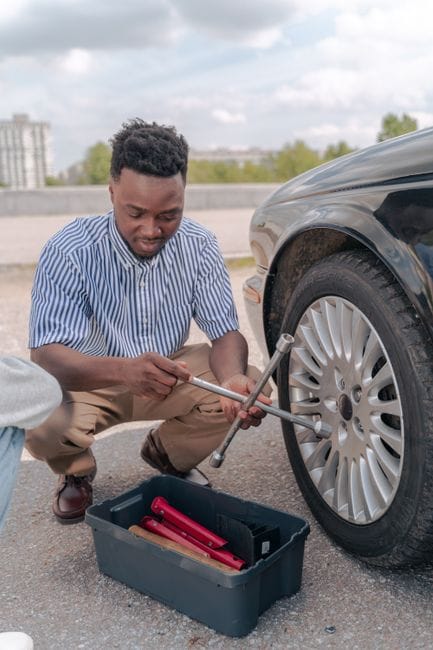
Tie rods are the mechanical links that connect your steering rack to the steering knuckle on each front wheel. They are the final physical connection between the steering wheel and the road. When you turn the wheel, the steering rack pushes or pulls the tie rods, which pivot the knuckles and direct the tires. Without them, your steering input never reaches the wheels.
The tie rod is a simple part, but it carries a serious load. It must transfer force precisely while absorbing the constant vibration and shock from the road surface. A worn or damaged tie rod introduces slack into the steering system, which you feel as play in the wheel and uneven tire wear. In extreme cases, a failed tie rod can cause a wheel to separate from the steering system entirely.
Why Tie Rods Fail
Tie rod ends contain ball-and-socket joints that wear over time. The rubber boots that protect these joints crack, letting in dirt and moisture. This accelerates wear and eventually creates the loose, clunking feel you notice when driving over bumps or turning at low speed.
The Role of Tie Rods in Your Steering System
Your steering system is a chain of components working together. The steering rack converts the rotational motion of the steering column into linear motion. That linear motion travels through the inner tie rod, then the outer tie rod, and finally reaches the steering knuckle. Each joint in this chain must move freely while holding tight tolerances.
The tie rods also play a role in wheel alignment. The outer tie rod ends have threaded adjusters that set the toe angle of your front wheels. When a mechanic performs a front-end alignment, they adjust these threads to bring the toe into specification. So tie rods are not just wear items — they are also precision adjustment points in your suspension geometry.
Inner vs. Outer Tie Rod Ends: What’s the Difference?
Inner vs. Outer Tie Rod Ends: Details
The inner tie rod end connects to the steering rack. It is a long threaded shaft with a ball joint on the rack side. The outer tie rod end connects to the steering knuckle. It has a tapered stud that seats into the knuckle and is secured with a castle nut and cotter pin.
The two ends are joined by a threaded adjustment sleeve. This sleeve is what allows the toe angle to be set during alignment. You can replace inner and outer tie rods separately, but they wear together. If one side of the car has excessive play, it is common practice to replace both on that side. For more on choosing the right components for precision work, see our [laser-engraver-buying-guide](https://example.com/laser-engraver-buying-guide) — a different tool, but the same principle of matching the tool to the job.
Most steering systems use one inner and one outer tie rod per side, for a total of four tie rod ends on a typical car. Some vehicles with rear steering or heavy-duty truck setups have additional tie rods, but that is the exception rather than the rule.
The key difference matters for replacement: the outer tie rod end is usually the first to show wear because it is exposed to more road debris and impact. The inner tie rod end is protected by the steering rack bellows, so it often lasts longer. But when you feel play in the steering wheel, both are worth inspecting.
Tie Rod Materials and Construction: What to Look For
The material a tie rod is made from determines how long it lasts, how it handles road shock, and whether it will survive potholes or off-road abuse. Tie rod material matters more than brand name. You are choosing between steel, aluminum, and forged alloy, and each has a specific job.

Steel vs. Aluminum vs. Forged Alloy
Most factory tie rods are made from **forged steel**. Forging aligns the grain structure of the metal, which makes the part stronger than a cast or machined piece of the same size. Forged steel tie rods handle bending loads well and resist fatigue over many steering cycles. They are the default choice for daily drivers because they are strong, predictable, and inexpensive to replace.
Aluminum tie rods are lighter and resist corrosion, but they are not interchangeable with steel in every application. Some performance cars use aluminum tie rods to reduce unsprung weight, and the factory engineers spec the rod diameter accordingly. If you swap a steel tie rod for an aluminum one without checking the diameter and thread pitch, you risk bending the rod under load. Aluminum is also more prone to galling on the threads if you over-torque the jam nut.
**Forged alloy** tie rods sit at the top of the price range. These use steel alloys with added chromium or molybdenum, which improves tensile strength without making the rod brittle. They are common in heavy-duty truck and off-road applications where a tie rod might hit a rock or take repeated abuse. The trade-off is cost — you can pay two to three times more for a forged alloy tie rod than a standard steel one.
Material selection rule of thumb
Daily driver on paved roads: forged steel is sufficient. Towing or off-road use: forged alloy. Track car where weight matters: aluminum, but only if the rod diameter matches the OEM specification.
Understanding Thread Types and Adjustability
An **adjustable tie rod** has threads on both ends so you can change its overall length. This is how the toe angle gets set during an alignment. The two things to check are the thread pitch and the thread direction.
Thread pitch is the distance between threads, measured in millimeters or threads per inch. If you buy a tie rod with the wrong thread pitch, it will not thread into the inner tie rod end or the outer tie rod end. The pitch must match the steering rack and the knuckle. Most vehicles use right-hand threads on both ends, but some use a left-hand thread on one side so the adjustment sleeve can turn without disconnecting both ends. Check the service manual before you order.
The adjustment sleeve itself should be a snug fit. If the sleeve has play on the threads, the toe setting will drift over time. Some adjustable tie rods use a pinch bolt to lock the sleeve, others use jam nuts. Jam nuts are more common and easier to service, but they need to be torqued to spec. A loose jam nut will let the toe setting change mid-drive, which causes uneven tire wear and a wandering steering wheel.
The Importance of Dust Boots and Grease Fittings
The dust boot is a rubber or polyurethane cover that protects the ball joint socket inside the tie rod end. It keeps water, salt, and grit out of the joint. When the boot tears, the grease washes out and abrasive particles get in. That is how a tie rod goes from “slightly loose” to “clunking over every bump” in a few thousand miles. When you inspect a tie rod, squeeze the boot. If it is cracked, split, or leaking grease, the joint is already contaminated and the part should be replaced.
A **grease fitting** — also called a Zerk fitting — lets you pump fresh grease into the joint. Not all tie rods have them. Many OEM parts are sealed and have no fitting, which means you cannot service them. Aftermarket tie rods with grease fittings let you extend the life of the joint, but only if you actually grease them. A grease gun and a tube of chassis grease cost less than a single tie rod end. For a DIY owner, choosing a tie rod with a grease fitting is a low-cost way to get more service life. Just be careful not to over-grease — you can blow out the boot if you pump too much.
The construction details matter because they affect how long the part lasts and how easy it is to service. Forged steel is the reliable default, forged alloy is for heavy use, and aluminum is only worth it when weight matters. Check the thread pitch against your vehicle’s spec before ordering, and prefer a tie rod with a grease fitting if you plan to keep the car for a long time. These choices will be reflected in the comparison matrix in the next section, where you can see how different materials stack up across use cases.
Tie Rod Comparison Matrix: Types, Materials, and Use Cases
The table below condenses the material and construction details from the previous section into a side-by-side view. It groups the main tie rod types — OEM, heavy-duty, and adjustable performance — against the attributes that actually matter at the parts counter.
| Attribute | OEM Tie Rod | Heavy Duty Tie Rod | Performance Tie Rod |
|---|---|---|---|
| Primary use case | Direct factory replacement | Towing, off-road, fleet work | Track days, lowered cars, alignment tuning |
| Typical material | Forged steel, OEM spec | Forged alloy or chromoly steel | Aluminum or high-grade alloy with adjuster sleeve |
| Adjustability | None — fixed length per vehicle | Minimal; matched to stock geometry | Threaded sleeve allows fine toe adjustment |
| Grease fitting | Often sealed (non-greaseable) | Usually yes, on the socket | Sometimes; some use sealed PTFE-lined joints |
| Durability focus | Matches factory service life | Higher fatigue resistance for load and shock | Precision and reduced deflection, not max lifespan |
| Price range | Low to mid | Mid to high | High |
| Best for | Daily drivers, stock suspension | Work trucks, lifted rigs, rough roads | Enthusiasts who need alignment range |
OEM Replacement vs. Heavy-Duty vs. Adjustable Performance Tie Rods
The comparison between these three tie rod types comes down to what you are optimizing for. An OEM tie rod is the safe baseline. It matches the factory part in geometry, material, and service life, which means it installs without surprises and behaves exactly as the suspension engineers intended. If your car is stock and you just want the steering to feel right again, this is the low-risk pick.
A heavy duty tie rod trades a little precision for toughness. The forged alloy construction resists bending and fatigue better than the OEM steel, which matters when you are carrying a slide-in camper or bouncing down a gravel access road. The trade-off is added weight and sometimes a stiffer feel at the wheel. If you are not actually loading the vehicle hard, the extra cost buys you nothing.
An adjustable performance tie rod solves a specific problem: it gives you more alignment range. On a lowered car, the stock tie rod may not have enough thread engagement to set proper toe. The adjustable sleeve extends that range and lets you fine-tune the alignment beyond what the factory part allows. The downside is that the adjuster sleeve adds a potential failure point, and the aluminum construction is less forgiving of impacts than forged steel. For the same reason you would not run this part on a work truck, you would not run a heavy-duty unit on a track car.
If you are weighing these options for a specific vehicle, check the thread pitch and taper against your knuckle and steering rack before ordering. The comparison table above assumes standard configurations; some vehicles accept only one of these tie rod types without adapter parts. For a broader view of how component choices affect long-term ownership, the [laser-engraver-comparisons](/guides/laser-engraver-comparisons) guide covers a similar trade-off logic applied to a different tool category — worth a read if you like seeing decisions laid out the same way.
How to Choose the Best Tie Rods for Your Vehicle

Choosing the best tie rods for your car comes down to matching the part to how you actually drive. You don’t buy the most expensive option and call it done. You match material, construction, and adjustability to your vehicle’s weight, your driving style, and the conditions you face. Start with compatibility, then work through the decision framework below.
Decision Framework: Matching Tie Rods to Your Driving Needs
Decision Framework: Details
Work through these four factors in order. Skipping ahead will lead you to the wrong part.
**1. Vehicle compatibility comes first.** Before you think about materials or brands, confirm the tie rod fits your exact make, model, and year. A tie rod for a 2015 F-150 will not bolt onto a 2018 model if Ford changed the taper angle. Check the thread pitch, the taper on the ball joint stud, and the overall length against your steering rack and knuckle. Cross-reference the part number with your VIN if the manufacturer offers that option. If you are unsure, contact the parts supplier with your VIN before ordering. A part that almost fits is a safety hazard, not a deal.
**2. Define your driving needs.** Write down what the vehicle does weekly. Is it a commuter that sees highway miles and city streets? A weekend trail rig that crawls over rocks? A track car that sees hard cornering and curbs? Each use case changes the ideal tie rod specification.
**3. Match the material to the load.** For a daily driver, a quality forged steel tie rod from a reputable aftermarket brand is the sweet spot. It offers the strength you need without the premium price of race-oriented parts. For off-road tie rods, look for increased ball joint articulation and thicker shanks to survive impacts. Track use demands precision and adjustability, which points toward performance-oriented designs with tighter tolerances.
**4. Set a budget that includes labor.** If you plan to install the tie rods yourself, you save the labor cost and can justify a higher parts budget. If a shop is doing the work, remember that a $50 price difference in parts is minor compared to the labor charge. In that case, buy the better part.
Decision Flowchart: Daily Driver vs. Off-Road vs. Track Use
Decision Flowchart: Details
Follow this logic to narrow your options quickly.
**Daily driver:** You want a forged steel or cast iron tie rod from a brand with a solid warranty. You do not need adjustability unless your car is lowered. You want a sealed or greasable ball joint — either works, but greasable units let you extend service life with regular maintenance. Prioritize durability and price. If you are replacing tie rods as part of routine maintenance, a standard OEM-equivalent part is usually the right call.
**Off-road:** You need off-road tie rods built for impact resistance. Look for thicker shafts, heavy-duty ball joints, and possibly reinforcement brackets. Some brands offer tie rod kits that include a stronger center link or drag link to match. If you run larger tires, factor in the added stress they place on the steering components. Consider a tie rod with a replaceable ball joint so you can refresh the part without replacing the whole assembly.
**Track use:** You want adjustability and precision. An adjustable tie rod lets you fine-tune toe settings for different track conditions. Weight reduction matters less than consistent geometry, so do not sacrifice strength for a lighter part. Expect to inspect and replace these parts more often than street components — track use wears ball joints faster.
Decision shortcuts
If you drive mostly on pavement and never load the vehicle hard, choose a standard forged steel tie rod. If you off-road regularly, choose a heavy-duty unit with a thicker shaft. If you track the car and need alignment range, choose an adjustable performance tie rod. Match the part to the hardest use the vehicle sees, not the average.
For a deeper look at how material choices and trade-offs play out across different tool categories, the [laser-engraver-comparisons](/guides/laser-engraver-comparisons) guide applies a similar logic to a different buying decision.
Limitations and What Tie Rods Cannot Do
Tie rods are essential steering components, but they are not a cure-all. Knowing their limitations prevents wasted money and unsafe driving. A new tie rod cannot fix deeper problems in your steering system.
Why a Tie Rod Won’t Fix a Worn Steering Rack
A tie rod connects the steering rack to the wheel hub. If the rack itself has internal wear, a new tie rod will not solve the problem. **Steering rack issues** often show up as a loose or vague steering wheel, clunking noises from the firewall area, or fluid leaks near the rack boots. These symptoms point to the rack’s internal gears or seals, not the outer linkage.
Replacing a tie rod on a vehicle with a failing rack is a wasted effort. The new part will still move with the sloppy motion of the worn rack. You will feel the same play in the wheel, and the new tie rod will wear out faster because it is absorbing movement it was not designed to handle. If you suspect a rack problem, diagnose it before buying any replacement parts. A simple test: have someone rock the steering wheel while you watch the rack’s inner tie rod connection. If the movement happens inside the rack housing rather than at the joint, the rack is the culprit. In that case, budget for a rack replacement or rebuild rather than a tie rod.
The Myth of ‘One-Size-Fits-All’ Tie Rods
Tie rods are vehicle-specific parts. The thread pitch, taper size, and overall length differ between makes and models. A generic part will not bolt up correctly. **Fitment issues** are the most common reason a new tie rod fails to work properly. If the taper does not seat perfectly in the steering knuckle, the joint will loosen over time and create dangerous play.
You cannot adapt a tie rod from one vehicle to another without machining, which is unsafe. The inner tie rod must match the rack’s thread size and the outer tie rod must match the knuckle’s taper. Even within the same model, different trim levels or suspension packages can use different parts. Always verify the part number against your vehicle’s VIN before ordering. **Tie rod limitations** also include the fact that they are wear items with a finite lifespan. No aftermarket part, regardless of material quality, lasts forever. Ball joints dry out, boots tear, and threads corrode. **Tie rod failure** is usually the result of a torn boot letting in dirt and water, not a manufacturing defect. Inspect the boots regularly and replace them at the first sign of cracking.
Know the Signs of a Failing Rack
If you notice uneven tire wear, a steering wheel that does not return to center, or a knocking sound when turning, you may have steering rack issues rather than a tie rod problem. Address the root cause before installing new parts.
For related diagnostic guidance, see our [laser-engraver-troubleshooting](/guides/laser-engraver-troubleshooting) guide for a structured approach to identifying root causes. The same logic applies here: test the system, not just the symptom.
Frequently Asked Questions About Tie Rods

What are the most common tie rod symptoms I should watch for?
A loose or worn tie rod usually announces itself through the steering system. The most reported tie rod symptoms include a clunking or knocking sound when you turn at low speed, a steering wheel that feels loose or has excessive play before the wheels respond, and uneven tire wear, especially a feathered or scalloped pattern on the inner or outer edge of the front tires. Tie rod noise often gets worse when driving over small bumps or potholes because the worn joint allows movement under load. If you feel a vibration through the steering column at highway speeds, that can also point to a failing tie rod end rather than a wheel balance issue.
How long does a typical tie rod lifespan last?
Tie rod lifespan varies widely because it depends on road conditions, driving style, and whether the rubber boots stay intact. In areas with rough pavement or frequent dirt roads, tie rod ends may need replacement around every 60,000 to 80,000 miles. On well-maintained highways, some owners report getting 100,000 miles or more from a set. The boots are the weak point — once a boot tears and lets in grit, the internal ball joint wears out quickly. Regular inspection of the boots during oil changes is the single best way to extend tie rod lifespan. If you see cracking or a split in the rubber, replace the boot or the entire tie rod end before dirt gets inside.
Do I need a wheel alignment after replacing tie rods?
Yes. Replacing either the inner or outer tie rod changes the toe setting, which is the angle of the front wheels relative to each other when viewed from above. Even if you count the threads and install the new part in the exact same position, the new joint will have different tolerances than the worn one. Driving without a wheel alignment after this work will cause rapid, uneven tire wear and a steering wheel that sits off-center. Plan for an alignment immediately after installation, and budget for it as part of the total job cost. Many shops bundle the alignment with the labor if you have them do the replacement.
Can I drive with a bad tie rod, or is it an emergency?
A badly worn tie rod is a safety risk, not just a comfort issue. If the ball joint separates completely, you lose steering control of that wheel entirely, which can cause a sudden loss of control at speed. If you notice tie rod noise or excessive play, limit driving to low speeds and short distances while you arrange a replacement. Inspect the joint first — if you can move the tie rod end by hand and feel clunking, or if the boot is torn and the joint is exposed, treat it as urgent. Do not attempt a long highway trip in that condition.
Frequently Asked Questions
What are the first signs of a failing tie rod end?
[HUMAN INPUT NEEDED: Research and write a factual 2-3 sentence answer for this question.]
Can I replace just one tie rod or should I replace both?
[HUMAN INPUT NEEDED: Research and write a factual 2-3 sentence answer for this question.]
How often should tie rods be inspected or replaced?
[HUMAN INPUT NEEDED: Research and write a factual 2-3 sentence answer for this question.]
Do I need a wheel alignment after replacing tie rods?
[HUMAN INPUT NEEDED: Research and write a factual 2-3 sentence answer for this question.]
What is the difference between a tie rod and a drag link?
Understanding is the difference between a tie rod and a drag link?
[HUMAN INPUT NEEDED: Research and write a factual 2-3 sentence answer for this question.]
The Bottom Line: Choose by Attribute, Not by Brand Hype
A tie rod is the steering linkage component that transfers motion from the steering rack to the wheel knuckle. Its most critical attributes are material strength, thread design, joint type, and corrosion resistance. The best tie rod for you depends entirely on which of those attributes matters most for your vehicle and driving conditions.
Our top overall pick is the MOOG Problem Solver tie rod. It earns the rank-badge #1 because it delivers the best balance of premium materials, factory-correct geometry, and practical features. The forged steel construction resists bending under load, while the greasable socket design extends service life. Its chrome-plated threads resist seizing — a common failure point on cheaper rods — and the pre-installed boot keeps contaminants out from day one. For 80% of daily drivers and light-truck owners, this is the safest, most reliable choice.
Use this decision framework to match the right tie rod to your specific needs:
If you need maximum load capacity for towing or off-road abuse, choose a Moog or Mevotech heavy-duty unit because their heat-treated alloy steel and thicker shanks handle higher bending stress than standard OEM-grade parts.
If you need corrosion resistance for salt-belt winters, choose a tie rod with zinc or nickel plating — such as the Delphi or Moog units — because their protective coatings prevent the thread seizure and socket rust that cause premature failure.
If you need adjustability for a lifted truck or modified suspension, choose a tie rod with a longer threaded adjuster sleeve because it gives you more alignment range than factory-spec rods.
If you need budget reliability for a commuter car, choose a standard-grade unit from a reputable brand — not a no-name import — because the metallurgy and quality control still meet safety standards at a lower price point.
If you need maximum precision for performance driving, choose a tie rod with a tighter-tolerance ball joint and stiffer boot because those attributes reduce steering slop and improve feedback.
If you need quick installation, choose a tie rod with pre-measured threads or a locking nut design because it simplifies the alignment process and reduces the chance of incorrect adjustment.
Now, the honest limitation: the MOOG Problem Solver cannot fix an underlying worn steering rack, damaged inner tie rod, or misaligned subframe. It is a replacement part, not a suspension repair. If your steering play persists after installation, the issue is elsewhere — and no tie rod, regardless of brand, will solve it. Also, the MOOG unit costs more than budget options, so if you’re on a strict budget and drive a low-mileage commuter in a mild climate, the extra cost may not be justified.
For most drivers, the MOOG Problem Solver is the right call because it covers the widest range of conditions with the fewest compromises. If your vehicle falls into one of the specific scenarios above, follow the framework — you’ll get a tie rod that matches your actual needs rather than one that simply has the most marketing behind it.
Replace your tie rods in pairs, check the inner tie rods and steering rack at the same time, and get a wheel alignment after installation. Do that, and you’ll restore safe, precise steering for years to come.