Opening: A Mechanic’s Tale of Timing
It was a sweltering July afternoon in the shop, the kind of heat that makes wrenches burn to the touch. A 2005 Hyundai Elantra rolled in, towed behind a flatbed, its engine locked up tighter than a drum. The owner, a college student on a budget, had ignored the “60,000-mile timing belt” sticker I’d slapped on his windshield two years earlier. “I didn’t hear any noise,” he said. I popped the hood, pulled the valve cover, and there it was: a snapped belt, pistons kissing valves, and a $3,500 estimate staring him in the face.
That’s the thing about timing belts—they don’t give warnings. Chains, on the other hand? They’ll rattle, whine, and beg for attention before they let go. Hyundai’s switch from belts to chains over the years has saved countless engines (and wallets), but it’s also left a lot of owners confused. Which does your Hyundai have? Let’s break it down by model, year, and engine, so you don’t end up like that Elantra owner.
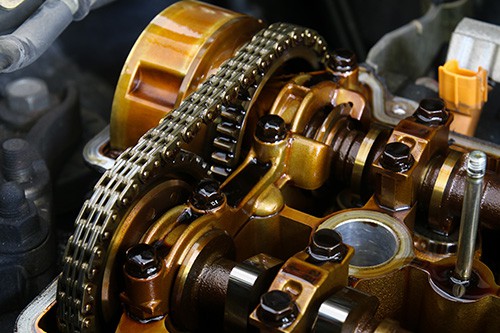
Hyundai Timing Belt vs. Chain: The Full Breakdown
1. Hyundai Elantra: Belt or Chain?
- 1992–2010: All Elantras used timing belts (interference engines). Replace every 60,000–100,000 miles—no exceptions. I’ve seen belts snap at 70K in hot climates.
- 2011–2025: All Elantras switched to timing chains (also interference). No scheduled replacement, but listen for rattling on cold starts—that’s your chain or tensioner crying for help.
2. Hyundai Sonata: The Mixed Bag
- 1989–2006: Most Sonatas had timing belts. The 2.4L (2006) was the last holdout.
- 2007–2025: All Sonatas use timing chains (interference). The 3.3L V6 got chains even earlier (2006+).
- Exception: The 2.7L V6 (2001–2006) used a timing belt—replace it at 60K miles or risk a $4K engine rebuild.
3. Hyundai Tucson: All Chains, All the Time
- 2005–2025: Every Tucson engine uses a timing chain (interference). No belt replacements here—just inspect the chain for stretch or noise after 100K miles.
4. Hyundai Santa Fe: Belt or Chain?
- 2001–2006: 2.7L V6 used a timing belt (replace at 60K).
- 2007–2025: All engines switched to timing chains (interference). Inspect at 100K miles for stretch or guide wear.
5. Hyundai Kona, Venue, and Newer Models
- 2018–2025 Kona: Timing chain (no replacement interval).
- 2020–2025 Venue: Timing chain (interference).
- All newer Hyundais (post-2011): Assume it’s a chain unless your owner’s manual says otherwise.
Timing Belt Replacement: Step-by-Step (1992–2010 Elantra Example)
Step 1: Prep the Engine
Start by disconnecting the battery to avoid any electrical surprises. Next, remove the serpentine belt—it’s the big belt you see when you open the hood. If you’re replacing the water pump (which you should, since you’re already in there), . You’ll also need to because you have to remove the right engine mount to access the timing belt. Safety first: make sure the jack is secure and the car is on jack stands.
Step 2: Remove the Timing Cover
Now, unbolt the upper and lower timing covers. These covers are usually , so don’t pry them off—they can crack or bend easily. If they’re stuck, tap them gently with a rubber mallet to loosen them. Patience is key here; forcing it will only cause headaches (and extra costs).
Step 3: Align the Marks
This is where precision matters. Rotate the crankshaft until the engine is at . You’ll see and the cylinder head—these need to line up perfectly. The crankshaft mark should also align with the oil pump. If you’re unsure, use a timing light to confirm. Never guess—misalignment can ruin your engine.
Step 4: Replace the Belt and Components
Time to swap out the old belt. Remove the old timing belt, tensioner, and idler pulleys. When installing the new belt, follow this order: crankshaft → water pump → camshaft. Once the belt is on, torque the tensioner to 30–35 foot-pounds. This ensures the belt stays tight and everything runs smoothly. Don’t skip this step—improper tension can lead to .
Step 5: Reassemble and Test
Put everything back together: reinstall the timing covers, refill the coolant, and start the engine. . If the engine runs quietly, you’ve done it right. If you hear rattling or unusual noises, you might have missed an alignment mark or forgotten to torque something properly. Double-check your work before driving anywhere.
CRITICAL SAFETY WARNING
Never turn the crankshaft or camshaft after removing the timing belt. Doing so can if they contact the pistons. If you’re unsure about anything—alignment, torque, or even which way the belt goes—stop and . It’s better to ask for help than to risk destroying your engine.
This is how I’d walk you through the process if you were in my shop. Take your time, follow each step carefully, and don’t hesitate to reach out if you hit a snag. Happy wrenching, Fahim! Let me know if you need any clarification or run into issues.
Timing Chain Inspection: What to Listen For
- Cold-start rattle (lasts 1–2 seconds): Normal.
- Persistent rattling or whining: Stretched chain or worn tensioner.
- Metal-on-metal grinding: Chain slapping the cover—stop driving immediately.
Cost Breakdown: Timing Belt vs. Chain
1. Timing Belt Replacement
- DIY Cost (Parts Only): \150to150 to \\300
- This includes the belt, tensioner, idler pulleys, and sometimes the water pump.
- Shop Cost (Parts + Labor): \500to500 to \\900
- Labor is the big expense here, as it’s a .
2. Timing Chain Inspection
- DIY Cost: \$0
- You can inspect the chain yourself by (if you’re comfortable opening the timing cover).
- Shop Cost (Diagnostic Only): \100to100 to \\200
- Mechanics will charge for their time to inspect the chain and related components.
3. Chain/Tensioner Replacement
- DIY Cost (Parts Only): \400to400 to \\600
- Chains and tensioners are pricier than belts, but you can save on labor if you DIY.
- Shop Cost (Parts + Labor): \1,200to1,200 to \\1,800
- This is a , so labor costs are higher. The chain itself is , it’s worth fixing.
FAQ: Your Hyundai Timing Questions Answered
Q: My 2015 Sonata has a timing chain. Do I ever need to replace it?
, but that doesn’t mean you should ignore them. If you hear unusual noises (like rattling or whining) or your Sonata has over 150,000 miles, it’s wise to inspect the chain and tensioner. I’ve seen chains last up to 200,000 miles without issues, but I’ve also replaced some as early as 120,000 miles because they were stretched or worn out. Bottom line: .
Q: Can I drive with a noisy timing chain?
No, Fahim—don’t risk it. , which means the valves and pistons in your engine could collide. That’s a recipe for a very expensive repair. If your chain is rattling, get it checked within 500 miles to avoid serious damage.
Q: How much does a timing belt job cost at a shop?
For a 2005 Elantra, you’re looking at $500–$900 if you take it to a shop. . If you’re handy with tools and want to save money, you can do it yourself for $150–$300—just the cost of parts. But remember, this job requires patience and precision. If you’re not confident, it’s better to pay a professional.
Q: My mechanic says my 2010 Elantra’s chain needs replacement. Is this a scam?
It could be, Fahim. , so unless your chain is noisy or your Elantra has very high mileage (200,000+ miles), replacement isn’t usually necessary. Get a second opinion before agreeing to the work. A trustworthy mechanic will show you the issue—whether it’s a stretched chain, a failing tensioner, or something else—before recommending a repair.
Conclusion: Belt, Chain, or Headache?
If your Hyundai’s older than 2011, assume it’s a belt and budget for replacement at 60K miles. If it’s newer, you’ve got a chain—just keep your ears open and use good oil. The switch to chains was a game-changer, but it’s not a free pass. Inspect, don’t ignore.
And remember: The cheapest repair is the one you do on time. Don’t be the guy with a locked-up Elantra on my lift.