When to Replace Your Clutch: Mileage And Warning Signs
A manual transmission clutch connects and disconnects engine power from the gearbox during shifting. Most clutches last between 50,000 and 100,000 miles. Replace the clutch when you notice slipping, hard shifting, burning smells, or abnormal pedal feel. Aggressive driving, towing, and city traffic shorten clutch lifespan significantly.
Clutch Replacement at a Glance
- Average lifespan: 50,000–100,000 miles
- Top warning signs: Slipping, burning smell, hard shifting
- Average replacement cost: $500–$1,200
- Typical labor time: 3–6 hours
- Most replaced parts: Clutch disc, pressure plate, release bearing
Table of Contents
How Long Does a Clutch Last? Average Mileage Expectations by Vehicle Type
Most clutches last between 50,000 and 100,000 miles under normal driving conditions. Highway driving extends clutch life because drivers shift less often. City traffic, towing, and aggressive launches increase friction and heat. Vehicle weight, clutch design, and driving habits all affect clutch mileage expectancy and replacement timing.
What is the average clutch lifespan in miles?
The average clutch lifespan ranges from 50,000 to 100,000 miles. Some highway-driven vehicles exceed 120,000 miles with careful driving. Heavy towing, stop-and-go traffic, and performance driving can wear out a clutch before 40,000 miles. Clutch mileage expectancy depends more on driving habits than vehicle age.
Clutch Lifespan by Vehicle Category — Comparison Table
| Vehicle Type | Expected Mileage | Influencing Factor |
|---|---|---|
| Compact car | 60,000–100,000 miles | Light vehicle weight |
| Pickup truck | 40,000–80,000 miles | Towing loads |
| Sports car | 30,000–70,000 miles | Aggressive launches |
| Diesel van | 70,000–120,000 miles | Low-RPM torque |
| City commuter | 40,000–70,000 miles | Constant stop-and-go |
| Highway driver | 80,000–120,000 miles | Fewer clutch engagements |
Does a Clutch Last Longer on the Highway Than in the City?
Yes, highway driving usually extends clutch lifespan because drivers shift less frequently. City driving creates more clutch heat through repeated engagement and disengagement. Riding the clutch in traffic also accelerates wear. Proper driving habits play a major role in extending clutch lifespan.
7 Warning Signs Your Clutch Needs Replacing (Don’t Ignore These)
A worn clutch usually gives several warning signs before complete failure. Slipping, grinding, pedal changes, and burning smells often appear first. Drivers should not ignore these symptoms because delayed repairs can damage the flywheel and transmission. Early diagnosis reduces repair costs and prevents unexpected breakdowns.
Slipping Clutch — What It Feels Like and Why It Happens
A slipping clutch causes engine RPM to rise without matching vehicle acceleration. This usually happens during hard acceleration or hill climbs. Worn friction material reduces grip between the clutch disc and flywheel. Read more about recognizing clutch failure before damage worsens.
Difficulty Shifting Gears or Grinding Noises
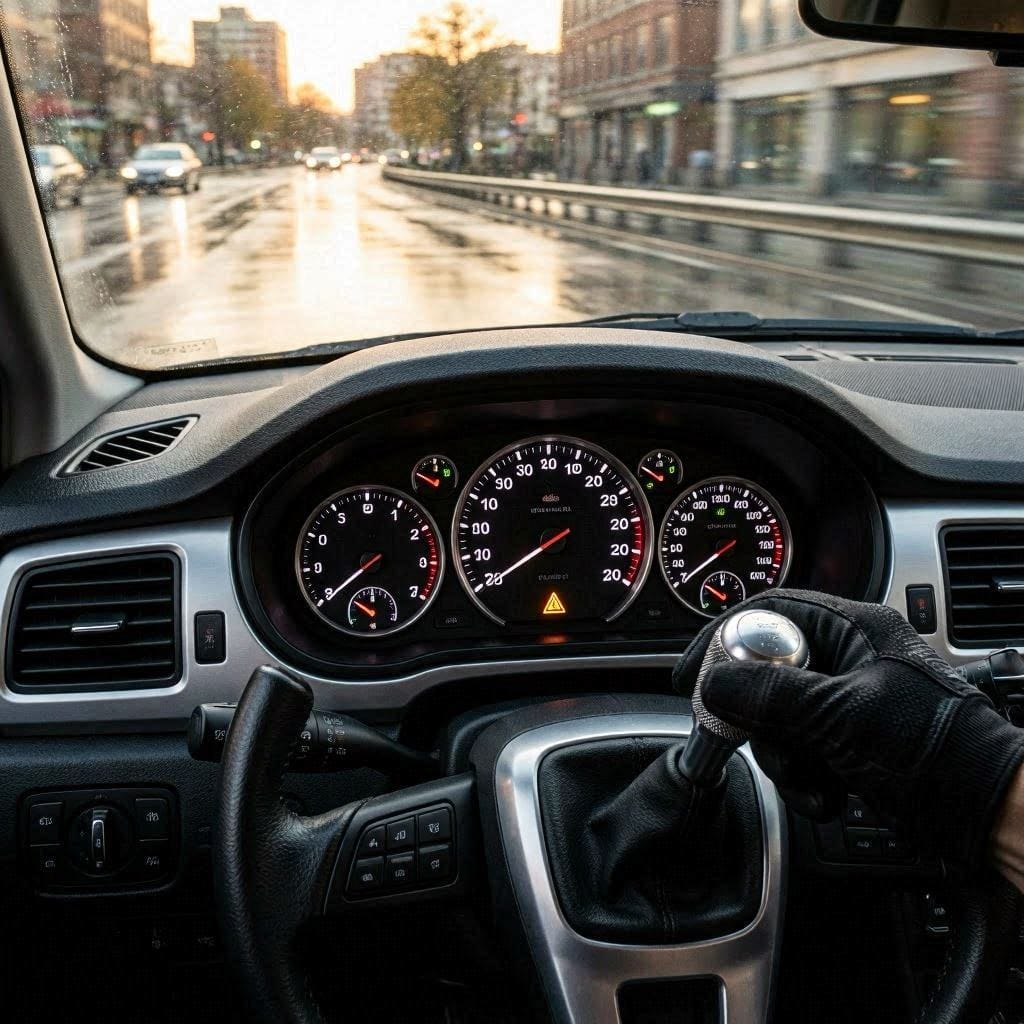
Hard shifting often points to clutch disengagement problems. Drivers may notice grinding when selecting reverse or first gear. A worn clutch disc, stretched cable, or failing hydraulic system can cause these symptoms. Transmission synchronizer issues can create similar grinding noises, so accurate diagnosis matters.
Burning Smell When Driving — Is That Your Clutch?
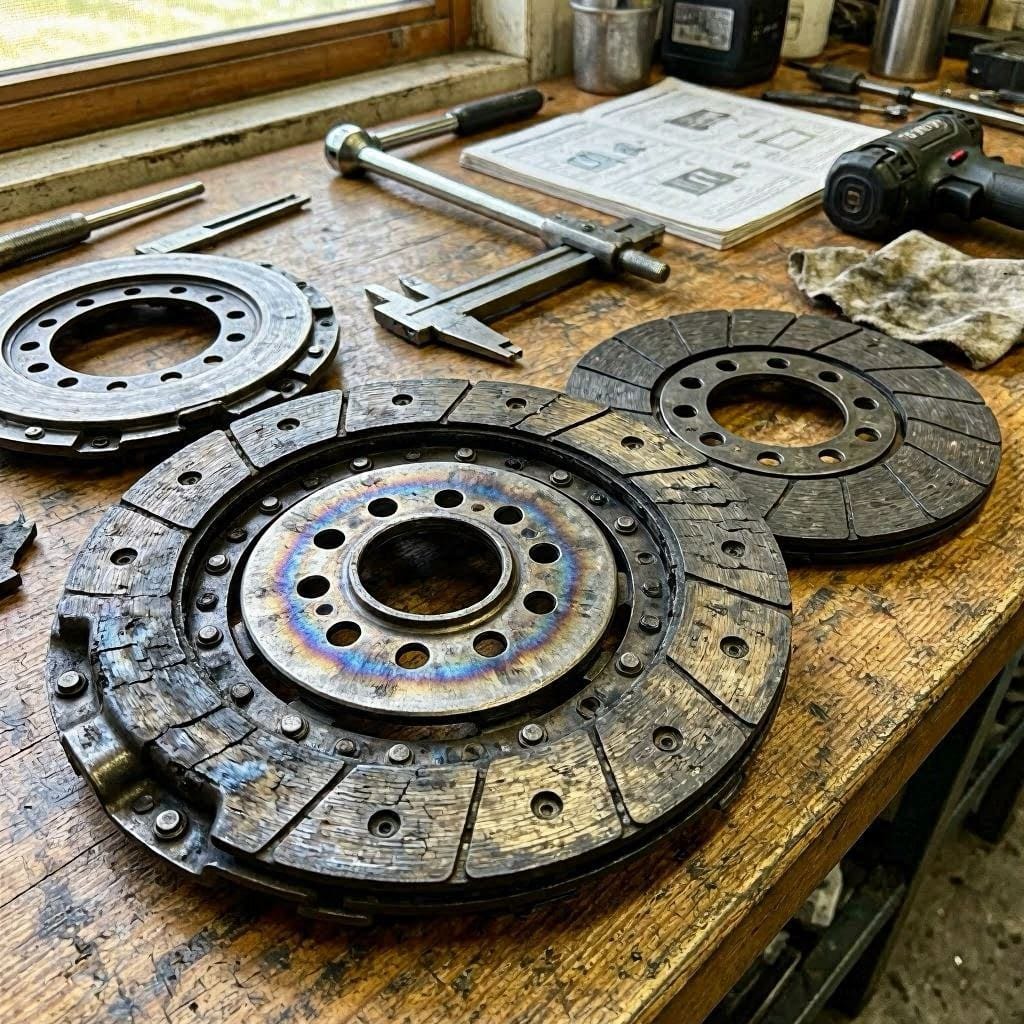
A burning smell often indicates clutch overheating. The friction material generates excessive heat when the clutch slips repeatedly. Occasional odor after steep hill starts may be normal. Persistent burning smells usually mean severe clutch wear or flywheel heat damage requiring immediate inspection.
Spongy, Sticky, or High Clutch Pedal
A soft or sticky clutch pedal often indicates hydraulic problems or clutch wear. High engagement points usually suggest a worn clutch disc. Some cable-operated systems allow minor clutch adjustments to restore proper pedal freeplay before replacement becomes necessary.
Shuddering or Juddering on Clutch Engagement
Clutch shudder causes vibration during takeoff. Oil contamination, warped flywheels, or uneven pressure plate surfaces often create this problem. Worn engine mounts can also contribute. Dual-mass flywheel failure sometimes produces severe vibration under light throttle engagement.
Clutch Pedal Stays on the Floor
A clutch pedal that stays down often indicates hydraulic failure or a broken clutch cable. Drivers may lose the ability to disengage the clutch completely. This creates dangerous shifting conditions.
Noise When the Clutch Pedal is Depressed
A squealing or rattling noise during pedal operation often points to a failing release bearing. Some noises disappear when the pedal releases. Others occur only during clutch engagement. Throw-out bearing failure usually requires full clutch kit replacement because labor overlap is significant.
Clutch Replacement vs. Adjustment: Which Does Your Car Actually Need?
Some clutch problems require simple adjustment instead of complete replacement. Cable-operated systems often develop excessive freeplay over time. Hydraulic systems usually self-adjust automatically. Slipping, burning smells, and severe shudder typically indicate worn clutch components that adjustment alone cannot fix.
When Can a Clutch Be Adjusted Instead of Replaced?
A clutch can sometimes be adjusted when pedal freeplay falls outside specifications. Most cable-operated clutches require 0.5–1.0 inch of pedal freeplay. Hydraulic systems rarely need manual adjustment. Learn more about proper clutch adjustments before replacing parts unnecessarily.
Adjust vs. Replace Decision Table
| Symptom | Adjustment Fixes It? | Replacement Needed? | Urgency |
|---|---|---|---|
| High engagement point | Sometimes | Possible | Medium |
| Slipping under acceleration | No | Yes | High |
| Burning smell | Rarely | Usually | High |
| Shuddering | No | Usually | Medium |
| Pedal stays on floor | No | Often | Urgent |
What Parts Are Replaced in a Clutch Kit?
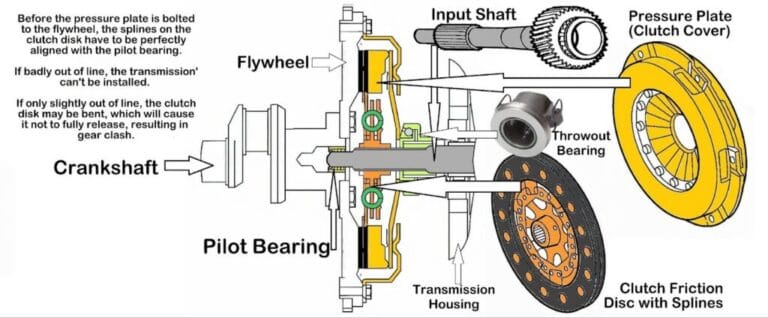
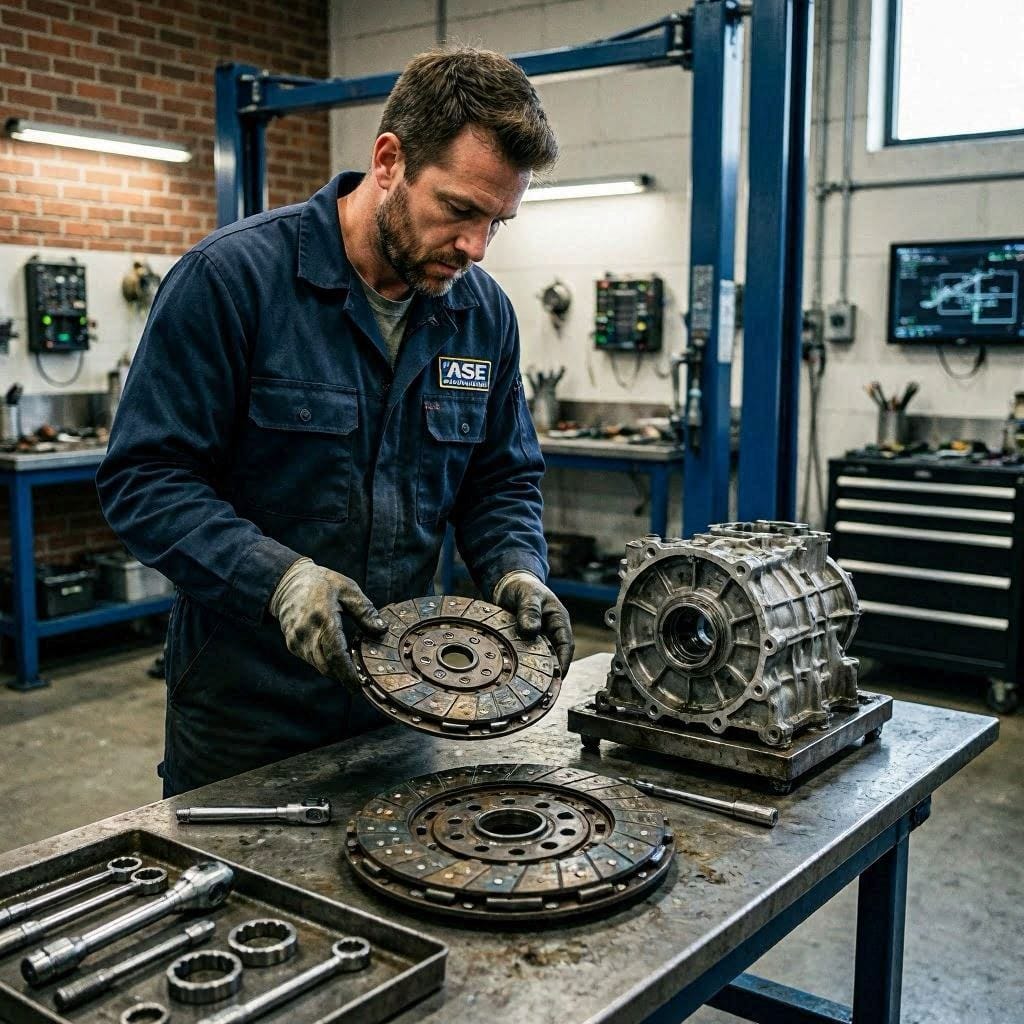
A full clutch kit usually includes the clutch disc, pressure plate, and release bearing. Many technicians also replace the pilot bearing and rear main seal. Flywheel resurfacing often costs extra. Partial replacements save money initially but increase long-term labor risk.
Clutch Replacement Cost Breakdown: What to Expect at the Shop
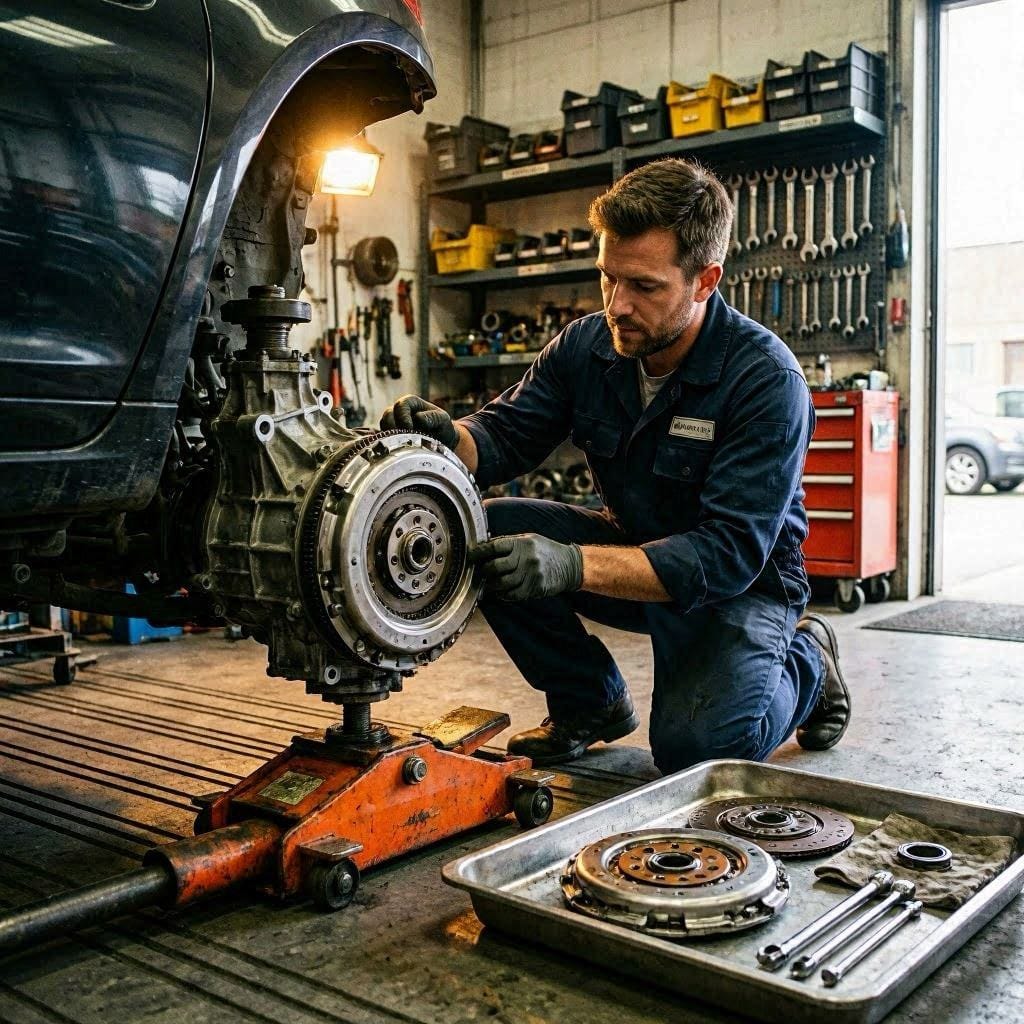
Clutch replacement usually costs between $400 and $1,500 depending on vehicle design and labor difficulty. Front-wheel-drive cars often require more labor because technicians must remove subframes and axles. Performance vehicles and dual-mass flywheel systems increase costs significantly due to expensive replacement parts.
Average Clutch Replacement Cost (Parts + Labor)
The average clutch replacement cost ranges from $400 to $1,500. Economy cars cost less because parts remain affordable and access is simpler. Luxury and performance vehicles require more labor hours and specialized components.
- Clutch kit parts: $150–$600
- Labor cost: $250–$900
- Flywheel resurfacing: $50–$120
- Dual-mass flywheel replacement: $400–$1,200
Clutch Replacement Cost by Vehicle Type — Table
| Vehicle | Parts Cost | Labor Hours | Total Estimate |
|---|---|---|---|
| Economy car | $150–$300 | 3–5 hours | $400–$800 |
| Mid-size sedan | $250–$450 | 4–6 hours | $700–$1,100 |
| SUV/Pickup | $300–$600 | 5–8 hours | $900–$1,500 |
| Sports car | $400–$800 | 6–10 hours | $1,200–$2,000 |
| Performance vehicle | $700–$1,500 | 8–12 hours | $2,000+ |
Is It Cheaper to DIY a Clutch Replacement?
DIY clutch replacement saves labor costs but requires advanced mechanical skill. Most jobs need a transmission jack, torque wrench, clutch alignment tool, and socket set. Bellhousing bolts commonly use 14mm, 15mm, or E-Torx fasteners. Review proper replacement procedures before attempting this repair.
Flywheel Resurfacing or Replacement — Hidden Extra Cost
Many shops recommend flywheel resurfacing during clutch replacement. Heat scoring, cracks, or excessive runout prevent proper clutch engagement. Dual-mass flywheels usually require full replacement instead of machining. Ignoring flywheel damage often causes vibration and premature clutch failure.
How Driving Habits Affect Clutch Wear (And What Shortens Clutch Life)
Driving habits directly affect clutch lifespan more than mileage alone. Aggressive launches, towing, and riding the clutch create excessive heat. Smooth engagement and proper shifting reduce friction material wear. Drivers who understand clutch operation usually avoid expensive transmission repairs and premature replacement.
Riding the Clutch — Why It’s the #1 Cause of Premature Wear
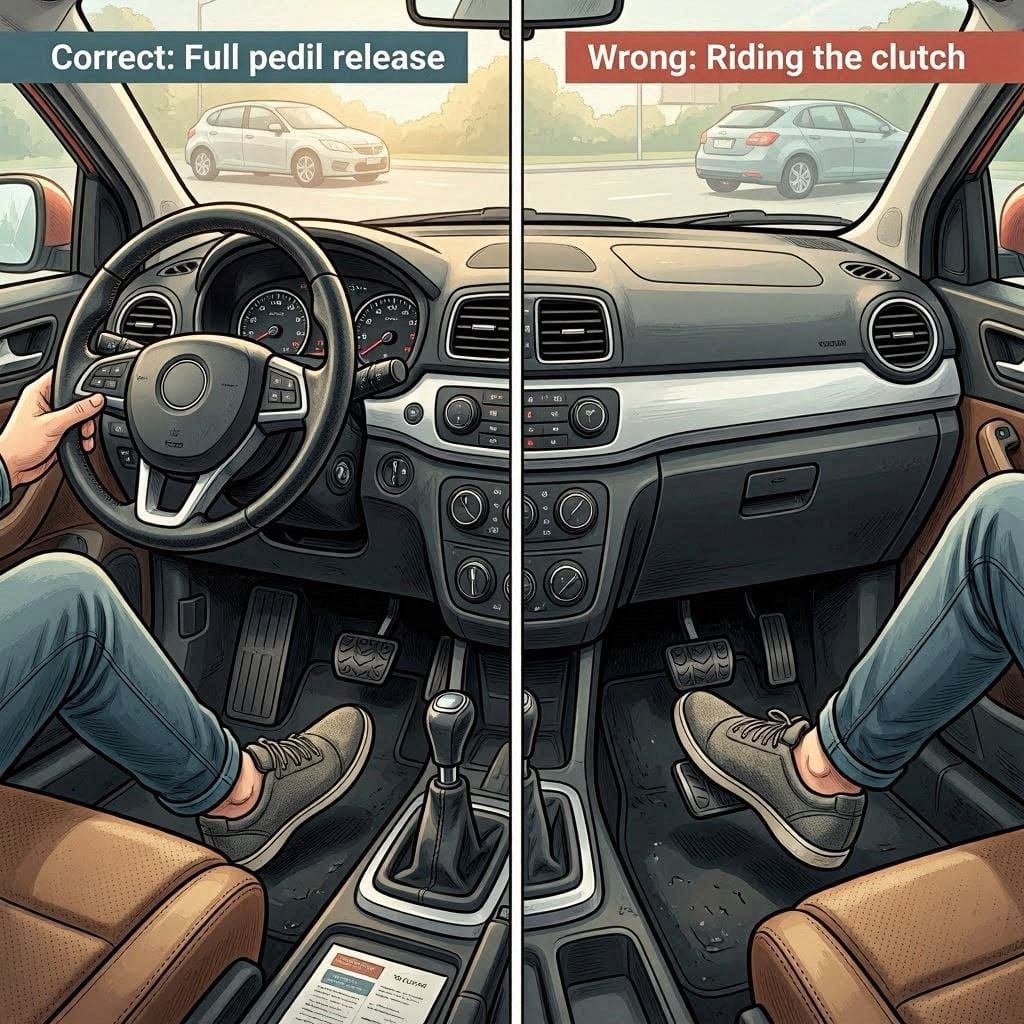
Riding the clutch keeps the disc partially engaged while driving. This creates constant friction and heat buildup. Friction material wears rapidly under partial engagement conditions. Learn more about how driving habits affect clutch wear and extending clutch lifespan.
Hill Starts, Towing, and Track Driving — High-Wear Scenarios
Hill starts place extra load on the clutch because drivers balance throttle and engagement simultaneously. Heavy towing increases clutch temperature dramatically. Track driving and launch control abuse also shorten clutch life rapidly.
Habits That Extend Clutch Life — Expert Tips
Smooth driving habits significantly increase clutch lifespan. Fully release the pedal after each shift. Avoid resting your foot on the clutch pedal. Shift earlier during daily driving to reduce heat buildup.
Beginner Mistakes When Diagnosing a Worn Clutch (And How to Avoid Them)
Many drivers misdiagnose clutch problems because transmission symptoms overlap with clutch wear symptoms. Incorrect diagnosis wastes money and delays repairs. Understanding common mistakes helps drivers communicate better with mechanics and avoid unnecessary parts replacement or overlooked transmission damage.
Confusing Transmission Problems With Clutch Problems
Transmission issues often cause grinding, popping out of gear, or whining noises during driving. Clutch problems usually appear during pedal operation or acceleration. Noise while depressing the clutch pedal often indicates release bearing failure rather than internal gearbox damage.
Assuming Clutch Always Needs Full Replacement
Some clutch symptoms result from hydraulic leaks or incorrect pedal adjustment. Cable-operated systems may only need freeplay correction. Always inspect hydraulic fluid level and linkage condition first. Review common clutch adjustments before approving major repairs.
Ignoring Early Wear Indicators Until the Clutch Fails Completely
Delaying repairs often damages the flywheel, pressure plate, and transmission input shaft bearings. Minor slipping eventually creates severe heat scoring and vibration.
Clutch Replacement: Pros, Cons, and What to Ask Your Mechanic
Replacing a clutch early reduces breakdown risk and prevents expensive flywheel damage. Waiting longer may save money temporarily but increases repair risk. Drivers should understand clutch kit quality, labor warranty coverage, and related component inspection before approving transmission removal work.
Pros and Cons of Replacing the Clutch Early vs. Waiting
| Replace Early | Wait Longer |
|---|---|
| Protects flywheel surface | Risks flywheel damage |
| Prevents roadside breakdown | May cause total clutch failure |
| Predictable repair timing | Unexpected downtime possible |
| Reduces transmission stress | Higher future repair cost |
| Better driving performance | Increased slipping and heat |
5 Questions to Ask Your Mechanic Before Approving Clutch Work
- Does the flywheel need resurfacing or replacement?
- Which clutch kit brand are you installing?
- What warranty covers parts and labor?
- Will you inspect the gearbox input shaft seal?
- Is this a complete clutch kit replacement?
OEM vs. Aftermarket Clutch Kits — Which Should You Choose?
OEM clutch kits provide factory-level engagement and durability. Aftermarket kits vary widely in performance and pedal feel. Popular brands include LuK, Exedy, and Sachs. High-performance clutches increase holding power but often reduce comfort. Review professional replacement procedures before choosing upgraded components.
Troubleshooting Clutch Problems: Diagnostic Checklist
Drivers can identify many clutch problems without specialized tools. Pedal feel, engagement height, smells, and noises reveal important diagnostic clues. Early testing helps determine whether the vehicle needs adjustment, monitoring, or immediate repair before serious transmission damage develops.
Step-by-Step Clutch Self-Diagnosis (No Tools Required)
Clutch Self-Diagnosis Checklist
- Check pedal feel for softness or sticking
- Test for slipping during uphill acceleration in third gear
- Listen for squealing when depressing the pedal
- Smell for burning friction material after hard driving
- Observe clutch engagement height during takeoff
When to See a Mechanic Immediately vs. Monitor Over Time
| Symptom | Urgency Level | Recommended Action |
|---|---|---|
| Slightly high pedal | Monitor | Inspect during next service |
| Minor shudder | Service Soon | Inspect clutch and mounts |
| Slipping under load | Urgent | Schedule immediate repair |
| Pedal stays on floor | Urgent | Do not drive vehicle |
| Burning smell daily | Service Soon | Inspect clutch immediately |
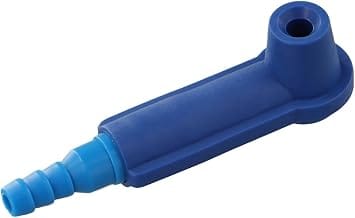
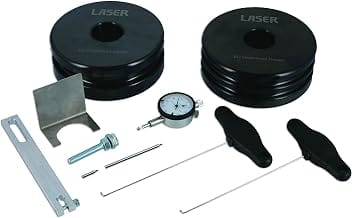
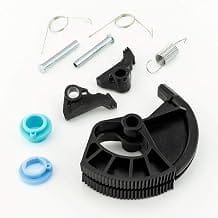
Top When To Replace Your Clutch – Our Picks
Frequently Asked Questions: When to Replace Your Clutch
How do I know when my clutch needs replacing?
A clutch usually needs replacement when slipping, hard shifting, burning smells, and pedal changes appear together. Most worn clutches also engage higher than normal. Drivers should inspect the clutch immediately if RPM rises without matching vehicle speed during acceleration.
Can I drive with a slipping clutch?
You can sometimes drive short distances with a slipping clutch, but continued driving creates excessive heat and flywheel damage. Severe slipping may leave the vehicle unable to move. Stop driving immediately if the clutch burns strongly or loses engagement completely.
How long does it take to replace a clutch?
Most clutch replacements take 3–6 labor hours. Rear-wheel-drive vehicles usually require less time than front-wheel-drive layouts. Sports cars and all-wheel-drive vehicles often need additional disassembly, increasing repair time significantly.
Does a new clutch need to be broken in?
Yes, most new clutches require a break-in period of 300–500 miles. Avoid aggressive launches and high-RPM shifts during this period. Proper bedding-in helps the friction surfaces mate evenly and improves long-term clutch durability.
Is clutch replacement covered by warranty or insurance?
Most factory warranties exclude clutch replacement because manufacturers classify clutches as wear items. Some extended warranties cover hydraulic components or premature failure. Insurance policies rarely cover clutch wear unless an accident directly causes the damage.
How do I make my new clutch last longer?
Avoid riding the clutch and release the pedal fully after shifting. Shift smoothly and avoid excessive slipping during hill starts. Follow proper driving techniques for extending clutch lifespan and reducing heat buildup.
A clutch usually needs replacement when slipping, burning smells, difficult shifting, and abnormal pedal feel appear together. Most clutches last 50,000–100,000 miles, but driving style matters more than mileage alone. Early diagnosis prevents expensive flywheel and transmission damage while maintaining safe drivability.
You might also like: Flywheel Resurfacing vs. Replacement: Which Should You Do?, Clutch Adjustment Guide: Cable & Self-Adjusting Clutches, Cable vs Hydraulic Clutch: Which System Is Better for Your Car?
Related: Brakes Grinding When Not Applied: Is It the Backing Plate or Something Worse?