It Was 7:15 AM, Cold, and the Jetta Wouldn’t Start
I still remember the morning clearly. Late fall, gray sky, and just enough chill in the air that your fingers go numb pulling gloves on too slowly. A regular customer rolled in his 2012 VW Jetta 2.0L on a tow truck, already apologizing before I even asked what happened. “It just died at the light,” he said. No warning lights, no noises—just silence.
Five minutes later, the upper timing cover told the whole story. Stripped teeth on the belt. Interference engine. Bent valves. That repair bill hurt, and it didn’t have to. The car had 118,000 miles on the original Volkswagen timing belt, and the service interval had come and gone.
After 15+ years in the shop, I’ve seen this exact scenario play out hundreds of times. VW engines are fantastic when maintained correctly, but they don’t forgive missed timing belt services. This guide is everything I explain to customers at the counter—real costs, real intervals, and what you’re actually getting into if you plan to tackle a vw timing belt replacement yourself.
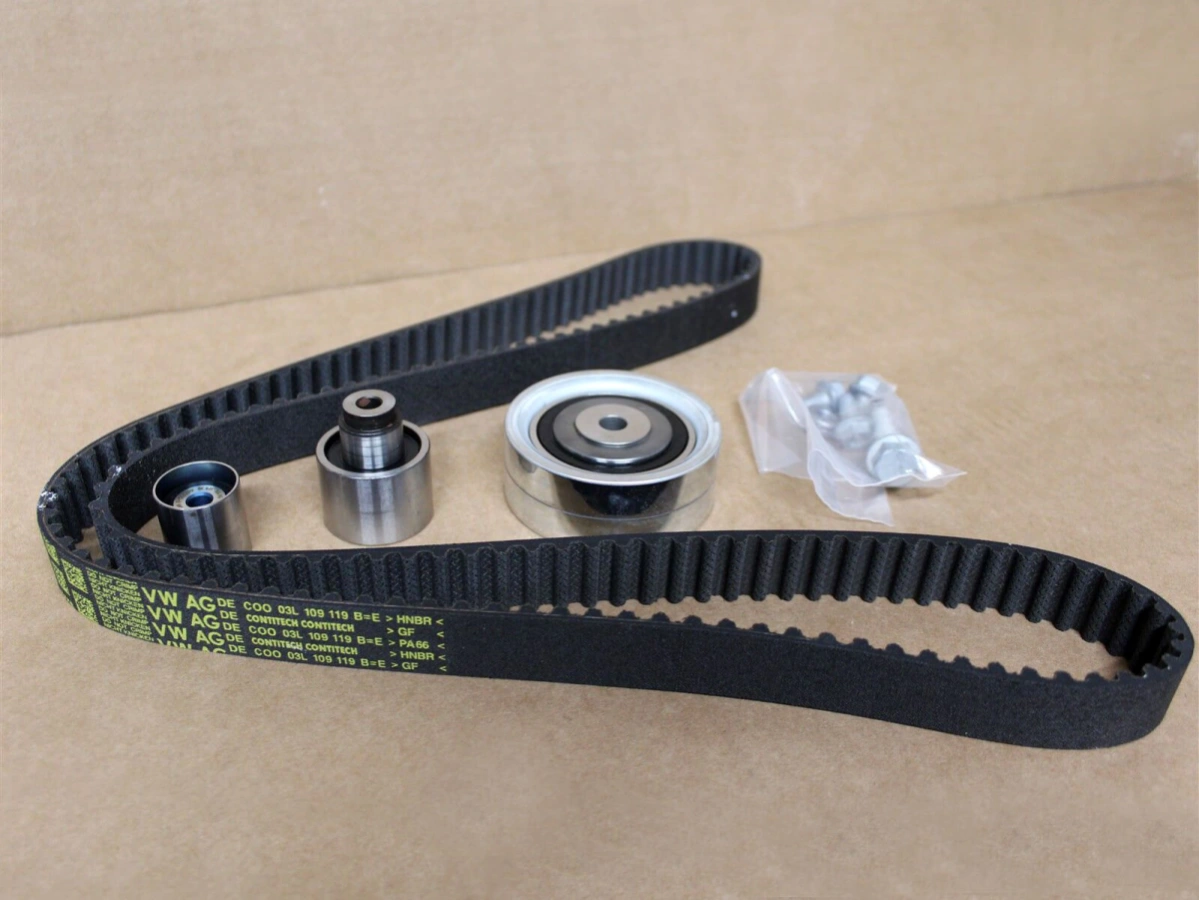
What the Timing Belt Does on Volkswagen Engines
On Volkswagen engines, the timing belt synchronizes the crankshaft and camshaft(s), keeping pistons and valves from occupying the same space at the same time. Most VW engines are interference designs. When the belt fails, valves bend. Pistons can crack. Cylinder heads come off.
This applies whether you’re working on a VW Jetta timing belt service or a VW Passat timing belt job—the consequences are the same.
VW Timing Belt Replacement Interval (By Engine)
Volkswagen intervals vary by engine, year, and sometimes market. Always verify using your VIN or factory service literature. For a deeper explanation of intervals across brands, read our guide on
timing belt replacement intervals.
| Engine | Common Models | Typical Interval |
|---|---|---|
| 2.0L SOHC (8v) | Jetta, Golf | 100,000–120,000 miles |
| 1.8T | Passat, Jetta | 80,000–100,000 miles |
| 2.0T TSI | Passat, GTI | 90,000–120,000 miles |
| TDI (ALH, BEW) | Jetta TDI | 80,000–100,000 miles |
VW Timing Belt Replacement Cost
This is the question I get every single day. If you want broader comparisons, see our in-depth breakdown on
timing belt costs.
Professional Shop Pricing
- Independent VW/German specialist: $700–$1,100
- Dealer service department: $1,000–$1,400
DIY Cost Breakdown
- Complete timing belt kit (belt, tensioner, rollers): $180–$350
- Water pump (metal impeller recommended): $60–$120
- Coolant (VW G12/G13): $30–$50
- Specialty tools (if needed): $80–$200
I always recommend replacing the water pump during a Volkswagen timing belt service. I’ve seen too many pumps start leaking 10,000 miles later—pulling everything back apart costs more than doing it once.
OEM vs Aftermarket Timing Belt Kits
VW OEM belts are typically manufactured by Continental or Gates. Reputable aftermarket kits from Gates, INA, or Continental are usually safe bets. Avoid no-name kits. I’ve replaced failed bargain belts under 40,000 miles.
Tools & Materials Required
- Metric socket set (8mm–19mm) – Must have
- Torque wrench (ft-lb and Nm capable) – Must have
- Cam/crank locking tools (engine-specific) – Must have
- Breaker bar – Must have
- Floor jack & jack stands – Must have
- Cooling system funnel – Nice to have
VW Timing Belt Replacement: DIY Overview
Disconnect the battery and raise the vehicle securely.
Remove accessory belts, engine covers, and timing covers. [Image: upper timing cover removed]
Set engine to TDC and install cam/crank locking tools. Verify alignment twice.
Remove engine mount (support engine!) and old timing belt components.
Install new rollers, tensioner, water pump, and belt. Torque fasteners to factory spec.
Exact torque values vary widely by engine. This is where I stop customers and say: check your factory service manual. Guessing here can destroy an aluminum block.
Common VW Timing Belt Problems & Troubleshooting
- If you hear chirping: Check tensioner alignment
- If engine won’t start: Verify timing marks and locking tools
- If coolant leaks: Recheck water pump seal
Frequently Asked Questions
How long does a VW timing belt replacement take?
Professionally, 4–6 hours. DIYers should plan a full weekend, especially the first time.
Can I drive if my timing belt is overdue?
You can—but I wouldn’t. I’ve seen belts fail one mile after a service reminder.
Is the VW timing belt replacement difficult?
Moderate to difficult. Locking tools and patience are mandatory.
Do all Volkswagens have timing belts?
No. Some newer engines use timing chains. For comparisons, see our article on
German car timing belts.
Conclusion: A Mechanic’s Final Take
A vw timing belt replacement isn’t glamorous work, but it’s some of the most important maintenance you’ll ever do on a Volkswagen. Ignore it, and you’re gambling with the entire engine. Do it right, on time, and these cars easily run well past 200,000 miles.
From my perspective behind the lift, this job sits firmly in the moderate-to-difficult category for DIYers. The cost savings are real, but only if you respect the details. Take your time, follow factory specs, and don’t cut corners. I’d rather see you spend an extra hour double-checking timing than a month sourcing a used cylinder head.