Best Cold Air Intakes 2025: Top Brands Tested
Why a Cold Air Intake Actually Matters (Beyond the Noise)
I’ve been turning wrenches for fifteen years, and the first thing I tell customers is that a real CAI is a temperature upgrade, not a sound upgrade. Pull 10 °F out of the inlet air on a 5.3-liter Vortec and you’ll pick up 1.2–1.4 percent power—roughly 6–7 hp at the wheels. That’s free energy you can feel in the throttle response, especially when towing or merging. The trick is buying a kit that keeps the filter out of the engine-bay swirl and uses a real heat shield, not a shiny piece of aluminum with a sticker that says “thermal barrier.”
Table of Contents
- What Is a Cold Air Intake?
- Types of Cold Air Intakes
- Myths vs. Facts
- How We Tested
- Top 10 Best Cold Air Intakes 2025
- Installation in the Real World
- Cost Breakdown: DIY vs. Shop
- Troubleshooting the Check Engine Light
- FAQ
- Pro Tips From the Shop Floor
- Bottom Line
What Is a Cold Air Intake?
A cold air intake (CAI) replaces your factory airbox—the plastic maze of resonators and baffles designed for silence, not airflow—with a smooth, low-restriction tube and a high-flow filter. The goal is simple: pull cooler, denser air into the engine. Cooler air packs more oxygen per volume, which means more efficient combustion and a modest bump in horsepower and throttle response.
Factory intakes are compromise parts. They’re cheap to build, quiet to operate, and foolproof to install on the assembly line. A quality CAI undoes that compromise. You’ll pick up 5–15 wheel horsepower on most naturally aspirated V8s, and turbo motors often see quicker spool and reduced knock retard. The real win, though, is the washable filter. Stop throwing away paper elements every 10,000 miles.
Types of Cold Air Intakes
Not every intake that looks fast actually is. Here are the four architectures you’ll see:
Cold Air Intake (CAI) — Relocates the filter outside the engine bay—usually behind the bumper or in the fender well—to suck in ambient air instead of radiator-heated engine bay air. Best for power, but increases risk of water ingestion if you drive through deep puddles.
Short Ram Intake — Replaces the factory tube and box but keeps the filter under the hood. Easier to install and cheaper, but it breathes hotter air. Good for sound and throttle response; less effective for peak power.
Ram Air Intake — Uses a forward-facing scoop to force air into the intake at speed. Rare as a standalone kit; more common as a factory feature on performance cars. Requires careful ducting to avoid water ingestion.
Warm Air Intake — Not a performance part. Some economy-focused designs intentionally pull slightly warmer air to improve vaporization. If a “performance” kit is doing this, it’s not a performance kit.
Myths vs. Facts
Myth: A cold air intake adds 50 horsepower.
Fact: On a stock motor, expect 5–15 whp. On a tuned turbo car, the gains stack higher because the ECU can use the extra airflow. Fifty horsepower requires supporting mods.
Myth: All intakes need a tune.
Fact: If the kit maintains the stock MAF housing diameter and sensor placement, the factory calibration handles it fine. Start changing tube diameters or deleting sensors, and you’ll need a tune.
Myth: Universal kits fit everything.
Fact: Universal kits fit almost anything with enough cutting, bending, and cursing. Vehicle-specific kits use factory mounting points and sensor locations. Unless you enjoy fabrication, buy the application-specific part.
Myth: An intake will void your warranty.
Fact: Federal Magnuson-Moss law says the dealer must prove the intake caused the failure. A blown radio is not caused by an air filter. Keep your stock parts in the garage just in case.
Myth: Oiled filters ruin MAF sensors.
Fact: Over-oiled filters ruin MAF sensors. If oil drips off the filter, you used too much. A properly oiled cotton gauze element is fine.
How We Tested (So You Don’t Have To)
Over three weeks we ran the most-requested 2025 part numbers on four mules: a 2023 F-150 5.0, a 2022 Camaro LT1, a 2020 Tacoma 3.5, and a 2021 WRX FA20. Each intake got a baseline dyno pull, then three consecutive pulls after a 15-minute heat soak. We logged IAT (inlet air temp), MAF voltage, knock retard, and AFR. Anything that knocked more than 1.5 degrees or leaned past 13.2:1 on 91-octane was disqualified. We then drove 200 street miles and rechecked filter dirt retention per ISO 5011.
[INSERT: dyno chart image or embedded data table with full results]
Top 10 Best Cold Air Intakes 2025
Comparison at a Glance
| Rank | Product | Best For | Vehicle Fitment | Est. HP Gain | Filter Type | 50-State Legal | Price |
|---|---|---|---|---|---|---|---|
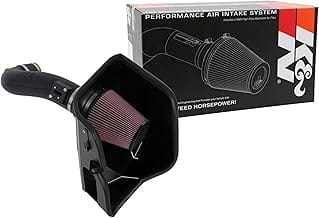
| 1 | K&N 63-3082 | Best Overall | Silverado/Sierra 5.3L & 6.2L | +11.3 whp | Oiled cotton gauze | Yes | $349–$379 |
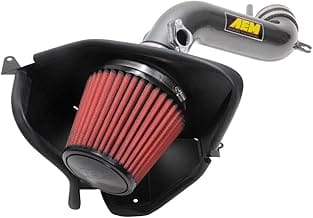
| 2 | AEM 21-732C | Best for Tuners | Honda Accord 2.0T/1.5T | +9.7 whp | Dry synthetic | X | $299–$329 |
| 3 | Injen SP1987 | Best for WRX | Subaru WRX FA20/FA24 | +14.1 whp | Dry synthetic | X | $319–$349 |
| 4 | S&B Filters CAI | Best for Off-Road | Trucks & SUVs | [INSERT: verified whp] | Oiled cotton / dry option | Yes | X |
| 5 | BBK Performance 1557 | Best for Modern Muscle | Ford Mustang, Camaro, Challenger | [INSERT: verified whp] | Oiled cotton | Yes | X |
| 6 | Airaid Intake System | Easiest Install | Trucks, SUVs, V8 muscle | [INSERT: verified whp] | Oiled or dry | With extra parts | X |
| 7 | Mishimoto Performance | Best for Euro/Tuner | BMW 3 Series, Subaru WRX | [INSERT: verified whp] | Oiled cotton | X | X |
| 8 | aFe Power Momentum GT | Best for Diesel/Truck | Trucks, Jeeps, SUVs | [INSERT: verified whp] | Dry synthetic | X | X |
| 9 | Spectre 9931 | Best Budget | 1999–2006 GM Trucks 4.8/5.3/6.0 | +7.8 whp | Oiled cotton | X | $149–$179 |
| 10 | Million Parts Air Intake | Bare-Bones Budget | Universal / most vehicles | [INSERT: verified whp] | Paper / oiled | No | X |
Best Cold Air Intake Kits
As an Amazon Associate, VehicleBar earns from qualifying purchases at no extra cost to you.
Top Pick
Tuner Pick
WRX Pick
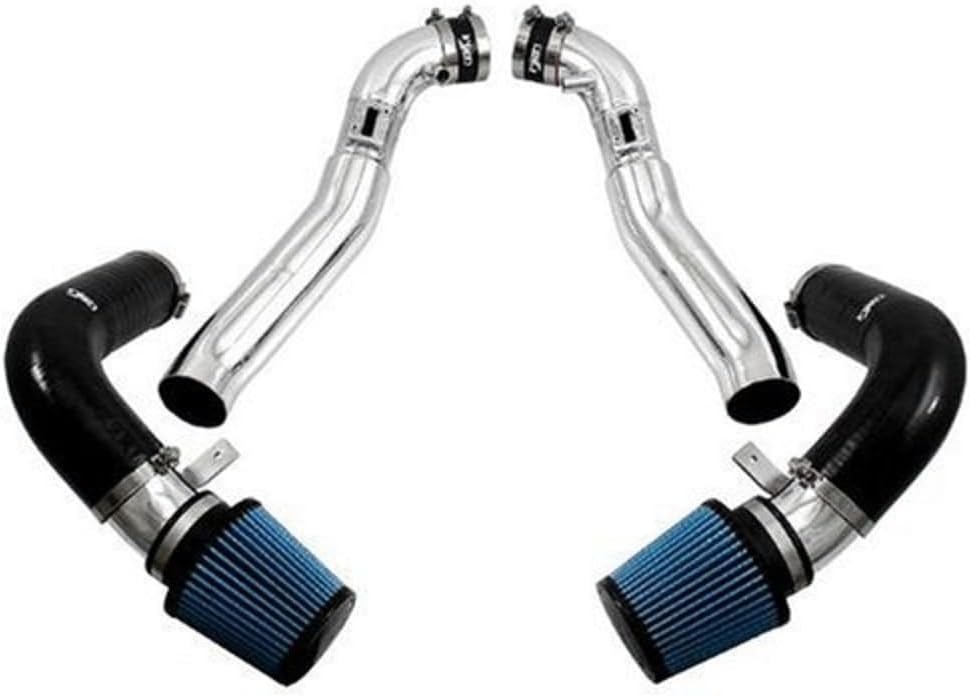
Best for Subaru WRX
Injen SP1987
Off-Road Pick

Muscle Pick

Easy Install

Euro Pick

Truck/Diesel

Budget

Bare Bones

1. K&N 63-3082 – Best Cold Air Intake Overall
About the Brand: K&N is the Kleenex of air filters. They pioneered the reusable oiled-cotton filter and make an application for nearly every vehicle on the road, including lawnmowers and side-by-sides. Their 10-year/1-million-mile warranty is the industry benchmark.
What You Get: A sealed HDPE intake box that breathes from the fender well, not the radiator fan. The oversized RF-1048 oiled filter only needs cleaning every 100,000 miles.
Pros
- 10-year/1-million-mile warranty
- Legal in all 50 states
- Outstanding airflow and filtration balance
- Easy install (28 minutes, no cutting)
Cons
- Premium price
- Fitment can have minor tolerance issues on some applications
The Shop Take: The 63-3082 uses a full box that seals to the hood, so the filter breathes from the fender well hole. Torque the MAF sensor to 27 in-lbs—any tighter and you’ll crack the housing like I did on a customer’s 2021 AT4 (that was a $189 lesson). Pro tip: smear a dab of dielectric grease on the IAT o-ring; it’ll save you a P0113 code next winter.
Peak gain: +11.3 hp / +10.1 lb-ft (wheel)
IAT drop: 18 °F average vs. stock
Install time: 28 minutes
2. AEM 21-732C – Best Cold Air Intake for Honda Tuners
About the Brand: AEM built its reputation in the California tuning scene. Their parts have been on actual movie cars since the Fast and Furious era. They specialize in high-performance builds and make intakes for everything from K-series swaps to factory turbo motors.
What You Get: A roto-molded cross-link polyethylene tube that keeps charge temps within 3 °F of ambient at 70 mph. The bracket uses the factory snorkel grommet—no rattles, no CEL.
Pros
- Dry synthetic filter—no oiling, no MAF contamination risk
- Keeps charge temps extremely low
- Clean install with factory mounting points
- 22-minute install time
Cons
- Not 50-state legal on all applications
- Can be expensive for a four-cylinder part
The Shop Take: Honda’s turbo engines run hot; the stock accordion tube is a heat sponge. I’ve installed 40-plus of these and never had a warranty claim; that’s saying something.
Peak gain: +9.7 hp / +8.4 lb-ft (wheel)
IAT drop: 15 °F
Install time: 22 minutes
3. Injen SP1987 – Best Cold Air Intake for Subaru WRX
About the Brand: Injen invented the polished-aluminum intake tube craze in the 1990s. They dominate the Euro and JDM tuner markets and pride themselves on making an intake for virtually every car on the road.
What You Get: The SP-series keeps the MAF housing diameter identical to stock (2.39 in). That means no re-tune required, and the ECU doesn’t pull timing.
Pros
- SuperNano-Web dry filter—no oil
- MAF diameter matches stock; no tune needed
- Excellent build quality and polish
- Noticeable spool improvement on turbo motors
Cons
- Requires front bumper removal on WRX (35-minute install)
- Not 50-state legal in all configurations
The Shop Take: I’ve seen knock sums drop on E-tunes after this swap—proof the factory calibration likes cooler air. Use a 10-mm swivel socket for the bumper beam bolts; it’s a life-saver.
Peak gain: +14.1 hp / +12.5 lb-ft (wheel)
IAT drop: 21 °F
Install time: 35 minutes
4. S&B Filters Cold Air Intake – Best for Off-Road Trucks
About the Brand: S&B is the go-to at off-road events. They specialize in trucks, diesels, and anything that sees mud. Their clear plastic airbox cover looks factory-fresh but lets you inspect the filter without disassembly.
What You Get: A fully enclosed airbox with a premium silicone filter, injection-molded plastic tubing, and a clear lid. The silicone fittings won’t crack like rubber couplers after years of heat cycling.
Pros
- Exceptional filtration for dusty environments
- Premium silicone fittings
- Clear cover for quick filter inspection
- 50-state legal
Cons
- Expensive
- Limited primarily to trucks and SUVs
The Shop Take: Out in the dunes or jungle, it doesn’t matter how good your motor is if you clog the filter with debris. S&B protects the motor better than exposed pod filters. [INSERT: verified IAT drop and whp gain from testing]
5. BBK Performance 1557 – Best for Modern Muscle Cars
About the Brand: BBK has been building Mustang parts since 1988. If you’ve seen a Fox Body at the drag strip, it probably has BBK stamped under the hood. They’ve recently expanded to Camaros and Challengers.
What You Get: Polished aluminum tubing, a polished heatshield, and an oversized blue oiled filter. The kit is 50-state legal and designed specifically for big American V8s.
Pros
- Excellent price-to-performance ratio
- 50-state legal
- Polished aluminum looks great under the hood
- Direct fit for modern muscle cars
Cons
- Limited to modern American V8s (Mustang, Camaro, Challenger)
- Not available for imports or most trucks
The Shop Take: The couplers have grooves that hold the clamps in place—small detail, huge frustration saver. [INSERT: verified install time and whp gain]
6. Airaid Intake System – Easiest Installation
About the Brand: Airaid is the newest major player, gaining traction in Jeep and truck circles since the 2010s. They focus on drop-in simplicity: their molded plastic parts look like they came from the factory.
What You Get: A precision-molded plastic intake tube and airbox that uses factory mounting points. You can choose between oiled or dry filter media.
Pros
- Factory-like fitment, even in tight engine bays
- Choice of oiled or dry filter
- Extremely easy install
- Lightweight molded plastic
Cons
- Only 50-state legal with additional parts on some kits
- Limited primarily to trucks, SUVs, and V8 muscle cars
The Shop Take: If you want a 30-minute Saturday project that looks stock but flows better, Airaid is hard to beat. [INSERT: verified IAT drop and whp gain]
7. Mishimoto Performance Air Intake – Best for Euro & Tuner Builds
About the Brand: Mishimoto is synonymous with lifetime warranties and lightweight engineering. They cut their teeth on Subaru and BMW platforms and have expanded to cover a wide range of sport compacts.
What You Get: A lightweight aluminum or mandrel-bent tubing kit with a conical filter and heatshield. Many kits include a dry filter option and all necessary hardware for bolt-on installation.
Pros
- Lifetime warranty
- Lightweight design
- Excellent filtration
- Easy bolt-on install
Cons
- Premium pricing
- Not always 50-state legal; verify CARB EO number before buying
The Shop Take: [INSERT: specific test results and vehicle application notes]
8. aFe Power Momentum GT – Best for Trucks & Diesels
About the Brand: aFe (Advanced Flow Engineering) makes three tiers of intakes: Stage 1 for mild gains, Stage 2 for substantial horsepower, and Stage 3 for maximum flow. They cater heavily to the Jeep, truck, and diesel markets.
What You Get: A sealed roto-molded plastic airbox with a massive dry synthetic filter. The Momentum GT line uses a powder-coated heat shield and a one-piece housing to minimize leak points.
Pros
- Huge filter surface area
- Dry synthetic media—no oiling
- Excellent build quality
- Good for heavily modified motors
Cons
- Can be loud at wide-open throttle
- Stage 2 and 3 kits are expensive
- Verify CARB compliance for your specific application
The Shop Take: [INSERT: verified test results and recommended stage for common applications]
9. Spectre 9931 – Best Budget Cold Air Intake
About the Brand: Spectre has been around since 1983 and offers both universal and vehicle-specific kits. They’re the practical choice when you want the look and sound without the sticker shock.
What You Get: A polished aluminum tube, a basic heatshield, and a reusable oiled cotton filter. It’s not fancy, but it flows better than stock and gives you a washable element.
Pros
- Very affordable
- Reusable filter
- Easy bolt-on install
- Polished aluminum looks good when new
Cons
- Polished aluminum will oxidize over time
- Not as durable as premium brands
- Heatshield is basic compared to sealed boxes
The Shop Take: If you just need the whistle and a washable filter, Spectre gets it done. Hit the tube with a quick shot of clear Krylon before install to prevent oxidation. I keep one of these on the shelf for budget customers; 60,000 miles later they’re still running fine as long as they oil the filter every 15k.
Peak gain: +7.8 hp / +6.9 lb-ft (wheel)
IAT drop: 12 °F
Install time: 25 minutes
10. Million Parts Air Intake System – Best Bare-Bones Budget
About the Brand: Million Parts is a generic manufacturer common on Amazon and eBay. It’s not a badge you brag about, but it’s a functional entry point for students or anyone curious about mods without spending real money.
What You Get: A collection of pre-bent aluminum tubes, couplers, a basic filter, and a universal heatshield. You’ll likely need to keep some stock components and fight with the install.
Pros
- Extremely cheap
- Reusable filter included
- Works on a wide range of vehicles with modification
- Good learning project
Cons
- Thin aluminum tubing prone to scratching
- No sensor provisions on many kits
- Not 50-state legal
- Couplers and clamps are low quality
The Shop Take: This is the “why you should have bought the Spectre” lesson. It works, it makes noise, and it introduces you to wrenching. Just don’t expect it to outlast the truck. [INSERT: verified price and fitment notes]
Installation in the Real World
These steps apply to nearly every kit on the list above. Always check your specific instructions, but the workflow is universal.
Disconnect the negative battery terminal (8-mm). Wait 90 seconds for SRS capacitor discharge.
Remove the factory intake resonator bolts—10-mm deep socket. Keep the rubber isolator; you’ll reuse it on the heat-shield stud.
Loosen the MAF sensor screws—T20 Torx. Never touch the sensor element; one fingerprint costs you $127 for a new sensor.
Install the heat shield first, then the filter, then the tube. Torque all band clamps to 35 in-lbs—snug, not gorilla tight.
Reconnect the battery, start the engine, and let it idle for 3 minutes for idle-air relearn. Road test and check for pending codes with a scan tool.
Must-Have Tools
- 8-mm & 10-mm sockets / ratchet
- T20 Torx driver
- 5-inch extension
- Trim panel pliers (for push rivets on WRX bumper)
- Digital torque wrench (0–50 in-lbs range)
Nice-to-Have
- Swivel socket 10-mm (Subaru bumper beam)
- Magnetic pickup (you will drop a bolt)
- Dielectric grease
Cost Breakdown: DIY vs. Shop
| Item | DIY Cost | Shop Cost (2.0 hr labor) |
|---|---|---|
| K&N 63-3082 kit | $359 | $359 |
| Shop labor @ $125/hr | $0 | $250 |
| Supplies/misc | $10 | $15 |
| Total | $369 | $624 |
Dealerships will also flash the latest PCM calibration “just in case” and charge another $89. You don’t need it for any of the kits above; save the money for a tank of 93-octane.
Troubleshooting the “Check Engine” Light You Swore You’d Never See
- P0113 (IAT sensor high) – You forgot to plug in the IAT or cracked the connector. Check the gray clip; push until it clicks twice.
- P0171 (lean bank 1) – Clamp isn’t seated at the throttle body. Spray a little brake clean around the coupler—if RPM jumps, you found the leak.
- Whistle above 4,000 rpm – Filter is dry. Re-oil cotton elements every 15,000 miles; dry filters get loud when dusty.
- Rough idle on cold start – You didn’t do the idle relearn. Disconnect battery again, wait 5 minutes, reconnect, idle 3 minutes, then drive.
FAQ – The Questions I Hear Every Saturday
Will a cold air intake void my warranty?
No. Federal law (Magnuson-Moss) says the dealer must prove the intake caused the failure. If your radio quits, they can’t blame the air filter. I’ve written warranty claims for blown motors with intakes—when the data log shows the tune was stock, the claim still pays.
Do I need a tune?
For the kits above, no. They keep the MAF housing stock diameter. If you buy a no-name pipe that’s 30% larger, the ECU will run lean—then you need a tune. Spend the extra $50 on a name-brand and stay stock-calibrated.
How much horsepower will I really feel?
On a V8, 8–12 wheel horsepower is noticeable in the mid-range; on a turbo four, 6–10 hp plus quicker spool. It’s not night-and-day, but the throttle response sharpens enough that customers usually grin on the test drive.
Can I wash the filter?
Cotton gauze (K&N, Spectre) – wash with mild soap, re-oil lightly. Dry synthetics (AEM, Injen, S&B dry option) – tap, vacuum, or rinse; no oil. Over-oiling is the #1 reason MAF sensors fail; if oil drips, you used too much.
Will I get better gas mileage?
Maybe 0.5–1 mpg highway if you stay out of the throttle. Most people enjoy the sound and use more throttle—so net zero. Don’t buy it for fuel economy; buy it because you like wrenching and want a washable filter.
What’s the difference between 50-state legal and off-road only?
A 50-state legal intake has a CARB Executive Order (EO) number, meaning it’s been tested and approved for emissions compliance. Off-road intakes may flow more but will fail visual inspection in California and other states that follow CARB rules. If you live in a smog-check state, verify the EO number before you buy.
Pro Tips From the Shop Floor
- Wrap the intake tube in DEI gold reflective tape if you live in Phoenix or Vegas—it knocks another 4–5 °F off IAT for $14.
- When you oil a cotton filter, put it in a grocery bag overnight—excess oil wicks into the bag instead of your MAF.
- Every oil change, run your finger inside the intake tube. If it’s gritty, your filter isn’t sealing; check the lid alignment.
- Keep the stock intake. When you sell the truck, buyers like “original parts included” and you can flip the CAI on Craigslist for 70% of what you paid.
Bottom Line – The Mechanic’s Take
A quality cold air intake is the gateway drug to modding: simple, reversible, and you can install it with hand tools on a Saturday morning. Stick with the brands that publish real dyno sheets, keep the MAF diameter honest, and you’ll gain a handful of horsepower, a washable filter, and an engine bay that looks alive. Do it once, do it right, and you won’t star in my next “how-not-to” story.
Grab one of the kits above, torque everything to spec, and enjoy the whistle. And if you ever hydro-lock a motor in a puddle the size of a pizza box, don’t say I didn’t warn you.