Carburetor vs Fuel Injection: Differences and Pros/Cons
Quick Answer: A carburetor mixes fuel and air using engine vacuum and mechanical circuits; fuel injection meters fuel electronically through injectors guided by sensors and an ECU. Fuel injection delivers better fuel economy (10-20% improvement), more reliable cold starts, lower emissions, and precise tuning. Carburetors remain cheaper, simpler to service, and popular on classic cars, off-road builds, and small engines.
This guide compares both systems attribute by attribute: how they work, performance differences, fuel economy, reliability, maintenance costs, cold-weather and altitude behavior, and what a conversion in either direction actually costs.
Whether you are restoring a classic, debating an EFI swap, or just want to understand what changed between a 1970s engine bay and a modern one, this comparison covers the real-world trade-offs mechanics actually see in the shop.
What Is a Carburetor and How Does It Work?
A carburetor is a purely mechanical fuel-metering device mounted on the intake manifold. Air flowing through the venturi (a narrowed throat) creates a pressure drop that draws fuel through calibrated jets, mixing it with the incoming air before the mixture enters the cylinders.
The Core Circuits
Carburetors use several overlapping circuits to cover the full operating range: the idle circuit for low RPM, the main jet circuit for cruising, the accelerator pump that squirts extra fuel when you snap the throttle open, the power valve that enriches the mixture under heavy load, and the choke that restricts airflow for cold starts. Each circuit has fixed jet sizes, so the air-fuel ratio is a compromise set by machining and tuning, not by moment-to-demand.
Strengths and Limits
Strengths: no electronics, no sensors, rebuildable with a $30 kit, tolerant of dirty power systems, and instantly understandable. Limits: mixture accuracy drifts with air temperature, altitude, and humidity; a carb set up at sea level runs rich in the mountains and lean in dense cold air. Dual-quad and spread-bore designs add tuning complexity.
Common Carburetor Families
The Holley 4150 series dominates American V8 performance work, Edelbrock (Carter AFB) designs favor driveability and simple tuning, Quadrajet spread-bores excel at small-primary economy with big-secondary flow, and Keihin/Mikuni CV carbs power most classic motorcycles. Weber DCOE side-drafts remain the classic choice for inline engines.
What Is Fuel Injection and How Does It Work?
Fuel injection meters fuel through electrically operated injectors, with quantity and timing calculated dozens of times per second by the engine control unit (ECU). Sensors report manifold pressure, airflow or both, throttle position, coolant and air temperature, oxygen content in the exhaust, and knock activity. The ECU continuously trims the mixture to a target air-fuel ratio, usually stoichiometric (14.7:1) for gasoline in normal driving.
Throttle Body vs Port vs Direct Injection
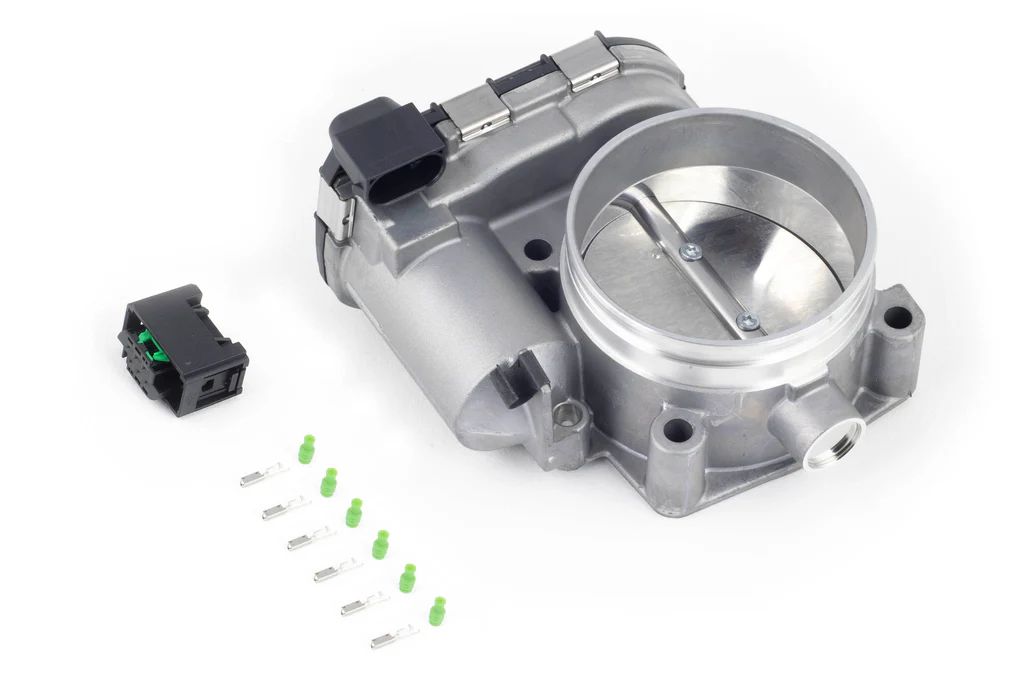
Throttle-body injection (TBI) sprays fuel at a single point above the throttle plates, essentially an electronic carburetor. Port (multipoint) injection places an injector at each intake runner, metering fuel per cylinder for tighter control. Direct injection fires fuel straight into the combustion chamber at very high pressure, enabling higher compression and better economy but introducing carbon-buildup concerns on intake valves.
Closed-Loop Control
The oxygen sensor closes the loop: the ECU reads exhaust oxygen, adjusts pulse width, and self-corrects for altitude, temperature, fuel quality, and engine wear. This self-correction is the single biggest practical difference between the systems, and the reason injected engines hold their tune for years while carburetors drift with the seasons.
Carburetor vs Fuel Injection: Head-to-Head Comparison
| Attribute | Carburetor | Fuel Injection |
|---|---|---|
| Air-fuel accuracy | Fixed jets, drifts with conditions | Self-correcting, closed-loop |
| Fuel economy | Baseline | 10-20% better typical |
| Cold starts | Choke needed, can flood | Automatic, reliable |
| Altitude compensation | Manual re-jetting | Automatic |
| Power potential | Good with tuning | Equal or better, per-cylinder control |
| Emissions | Poor, hard to certify | Meets modern standards |
| Initial cost | $300-$900 | Higher; retrofit kits $1,500-$3,500 |
| Service complexity | Rebuild kit, hand tools | Sensors, diagnostics, wiring |
| Failure modes | Float, jets, gunk when parked | Pumps, sensors, injectors |
| Classic-car appeal | Period-correct, visual appeal | Looks modern (some judge against) |
Fuel Economy and Emissions
Fuel injection’s per-cylinder metering and closed-loop feedback typically return 10-20% better mileage than an equivalent carbureted setup, and the gap widens in city driving where transient fueling dominates. Emissions are the strongest argument for injection: precise mixture control, along with catalytic converters that need that control to survive, is what allows modern engines to certify at a fraction of legacy emission levels. A carbureted engine simply cannot hold mixture tight enough for a modern three-way catalyst to work correctly.
Real-World Numbers
The classic example is the small-block Chevy: the carbureted 350 in a 1980s pickup struggled to reach the high teens in mpg, while the later Vortec-injected 5.7L in a similar truck returned low-20s with more usable torque. Restomod owners swapping a carbureted V8 to a self-learning EFI system typically report 2-5 mpg gains plus dramatically better cold-start behavior.
Performance and Driveability
At wide-open throttle, a well-tuned carburetor is competitive with port injection; the mixture demands are simple and the carburetor’s atomization is adequate. The injection advantage shows everywhere else: crisp tip-in response with no accelerator-pump stumble, no lean surge at cruise, no rich stumble on cold mornings, and per-cylinder trimming that compensates for intake distribution quirks. Turbocharged and supercharged engines effectively require injection, because boost changes fueling demands faster than any mechanical circuit can respond and injectors provide the pressure head a carburetor cannot when manifold pressure exceeds atmospheric.
Altitude and Weather
A carburetor jetted for sea level runs roughly 5-8% rich at 5,000 feet and worse at altitude, fouling plugs and washing cylinders; the fix is re-jetting. An injected engine measures the thinner air and adjusts within seconds. The same applies to temperature swings: winter dense air leans a carbureted mixture, summer heat richens it, while injection compensates continuously.
Reliability and Maintenance Costs
Carburetors fail in understandable, fixable ways: stale fuel varnishes the jets, floats sink, gaskets leak, and accelerator pumps crack. A rebuild kit costs $25-$60 and a few hours of bench time; diagnosis requires no scan tool. The trade-off is that this maintenance is recurring, especially on vehicles that sit.
Injection hardware itself is durable, with injectors routinely lasting 150,000+ miles, but the system’s dependency chain is longer: fuel pumps (in-tank pumps fail more often than the mechanical pumps they replaced), pressure regulators, crank and O2 sensors, MAF/MAP sensors, and wiring. When something fails, you need diagnostics rather than a screwdriver, though a $30 OBD scanner now covers most of it.
Sitting Vehicles
Ethanol-blended fuel is hard on both systems, but it is especially hostile to carburetors: varnish clogs small orifices within months of storage. Injectors also gum up, but fuel-injection systems pressurize and self-clean better, and stabilizers work more effectively in closed fuel rails.
Converting: Carb-to-EFI and EFI-to-Carb
Carburetor to Fuel Injection
Self-learning throttle-body and port-injection retrofit kits (Holley Sniper, FiTech, Edelbrock, FAST, MSD Atomic) have made this swap straightforward: most install in a weekend using an intake-compatible throttle body, a wideband O2 sensor, a high-pressure fuel pump, and basic wiring. Expect $1,500-$2,500 for a basic TBI-style kit and $2,500-$3,500+ for port conversion. Gains: cold start, idle quality, mileage, and the ability to change cams and still self-tune.
Fuel Injection to Carburetor
Done for simplicity in off-road, race, or emission-exempt applications: a carbureted intake manifold, mechanical fuel pump or low-pressure regulator, and distributor work replace the ECU harness. Common on trail rigs where sensor vulnerability and wiring damage are real concerns, and on race classes that mandate or reward simplicity.
Which System Is Right for You?
Keep the carburetor if the vehicle is a period-correct classic, competes in a class that requires it, lives where replacement electronics are scarce, or your priority is simplicity and visual originality. Choose injection for a daily driver, anything turbocharged, emissions-controlled use, mountain driving, or a restomod that needs to start on the first crank every time. Convert to EFI when the classic is driven often and the cold-start ritual has lost its charm.
Frequently Asked Questions
Does a carburetor make more power than fuel injection?
At wide-open throttle with proper tuning the difference is small; a race-calibrated carburetor can match port injection on peak numbers. Injection wins in average power delivery, response, and consistency across conditions, which is why nearly all competition engines outside carb-mandated classes moved to injection.
Why do carbureted engines struggle in cold weather?
Gasoline vaporizes poorly when cold, so the choke enriches the mixture to get a combustible charge, causing rough idle, fouling, and flooding risk. Injection calculates cold-enrichment precisely and adjusts as the engine warms, which is why fuel-injected cars start instantly in conditions that require a ritual with a choke.
How much does an EFI conversion kit cost?
Self-learning throttle-body kits run $1,500-$2,500 including the fuel pump and sensors; full port-injection conversions with a new intake run $2,500-$3,500 or more. Professional installation and dyno tuning adds $500-$1,500 if you do not install it yourself.
Can you pass emissions with a carburetor?
In most modern emissions testing programs it is difficult: carbs cannot hold the tight mixture control a catalytic converter needs. Some jurisdictions exempt vehicles over 25-30 years old, which is why classic-car owners in those areas can keep carburetors legally.
Do carburetors need premium fuel?
No. Carburetors are agnostic to octane; the engine’s compression ratio determines octane needs. What carburetors are sensitive to is fuel freshness, because ethanol-blended fuel varnishes the small passages during storage.
Why did manufacturers stop using carburetors?
Emissions regulation drove the change through the 1980s, followed by fuel-economy standards. The last carbureted passenger cars in the US appeared in the early 1990s; feedback carburetors briefly bridged the gap but could not meet tightening standards the way injection could.
Final Verdict: Carburetor vs Fuel Injection
Fuel injection is the better technology for nearly every practical measure: economy, emissions, cold starts, altitude tolerance, and consistency. Carburetors win on simplicity, cost, serviceability with hand tools, and character, which is exactly why they survive in classics, small engines, and motorsport classes that mandate them.
Recommendation: if the vehicle is a working classic, a self-learning EFI retrofit gives you injection-grade drivability while the carburetor sits on the shelf for shows. If the vehicle is already injected, there is almost no reason to go back.
Top Carburetor Vs Fuel Injection – Our Picks
Related Fuel and Air System Guides
- 10 Best Brake Rotors 2026
- Spark Plug Gap Chart: Proper Gaps for Every Make & Model
- Spark Plug Wires: When to Replace
- Fuel Pressure Regulator Test: Steps and Tools Needed
- Cold Air Intake Installation: Complete Guide & Benefits
- MAF Sensor Replacement Guide: Symptoms and DIY Steps
- Carburetor Rebuild Kit Guide: How to Choose the Right Kit
- Carburetor Adjustment: How to Tune for Best Performance