Mazda Timing Belt Replacement: Symptoms and Cost
Quick Answer:
Typical Cost Range: DIY: $200–$400 | Professional: $600–$1,200
Replacement Interval: 60,000–100,000 miles (check your model year)
Critical Warning: Interference engine belt failure = bent valves
⚠️ Critical Warning: Mazda engines are mostly interference type. If the timing belt fails, valves can collide with pistons—resulting in catastrophic engine damage.
The $3,000 Lesson
Rain was sheeting down on the shop bay doors that Tuesday morning when Sarah rolled in with her 2008 Mazda 3. “It’s making this awful squealing noise,” she said, wiping coffee from her hands. “And the check engine light came on.” I popped the hood and immediately smelled burnt rubber—that unmistakable scent of a timing belt on its last legs.
Twenty minutes later, we were staring at a shredded timing belt with two teeth missing. Sarah’s heart sank when I told her the $2,800 repair bill for the bent valves. “I had no idea it was that serious,” she whispered. That was five years ago. Since then, I’ve replaced over 300 Mazda timing belts and learned every trick in the book. Today, I’m sharing exactly what you need to know to avoid Sarah’s $3,000 mistake.
Why Mazda Timing Belts Are Different
Mazda uses interference engines across most models—meaning if that belt snaps, pistons kiss valves with disastrous results. Unlike Toyota or Honda, Mazda’s belt routing is particularly finicky. I’ve seen DIYers spend 8 hours only to have the engine run rough because they missed the camshaft alignment by 2 degrees.
Critical Model Variations
| Model | Years | Belt Type | Special Notes |
|---|---|---|---|
| Mazda 3 | 2004–2013 | 6-rib serpentine | Water pump bolts are reverse-threaded |
| Mazda 6 | 2003–2015 | Timing chain + belt | Chain tensioner fails at 80k miles |
| CX-5 | 2013+ | Timing chain only | See our timing chain vs belt guide |
📅 Model Year Danger Zone: Models between 2007–2012 are most prone to premature belt wear due to tensioner design flaws. Replace by 70,000 miles regardless of visual condition.
The Real Cost Breakdown
Let’s cut through the dealer smoke. That $1,200 quote? Here’s what you’re actually paying for:
| Item | Cost | Notes |
|---|---|---|
| Parts (OEM) | $307 | $189 (belt) + $76 (tensioner) + $42 (idlers) |
| Shop Labor | $587 | 4.7 hours × $125/hr |
| Hidden Fees | $43 | Shop supplies ($28) + disposal ($15) |
| TOTAL PRO COST | $937 | DIY saves ~$600+ |
🔧 Shop Secret
AutoZone rents timing belt kits for $45/day. Get the Gates K060838 tensioner—it’s OEM spec but 30% cheaper. I keep two in my personal toolbox.
Tools You Actually Need
Forget the 100-piece mechanic’s starter kit. Here’s what matters:
Must-Haves ($127 total)
- 3/8″ drive torque wrench (click-type, 10–150 ft-lbs range) – $49
- Harmonic balancer puller (OTC 6667) – $38
- Timing cover gasket scraper (metal, not plastic) – $12
- OEM crank pulley bolt (B6Y1-11-3G0A) – $28
Nice-to-Haves
- Cam lock tool (Mazda-specific) – saves 45 minutes
- Infrared thermometer – verify water pump operation
Step-by-Step: The 7-Hour Reality
I’m not sugarcoating this—it’s a 7-hour job if you’ve never done it. But follow these steps and you’ll avoid my $3,000 mistake.
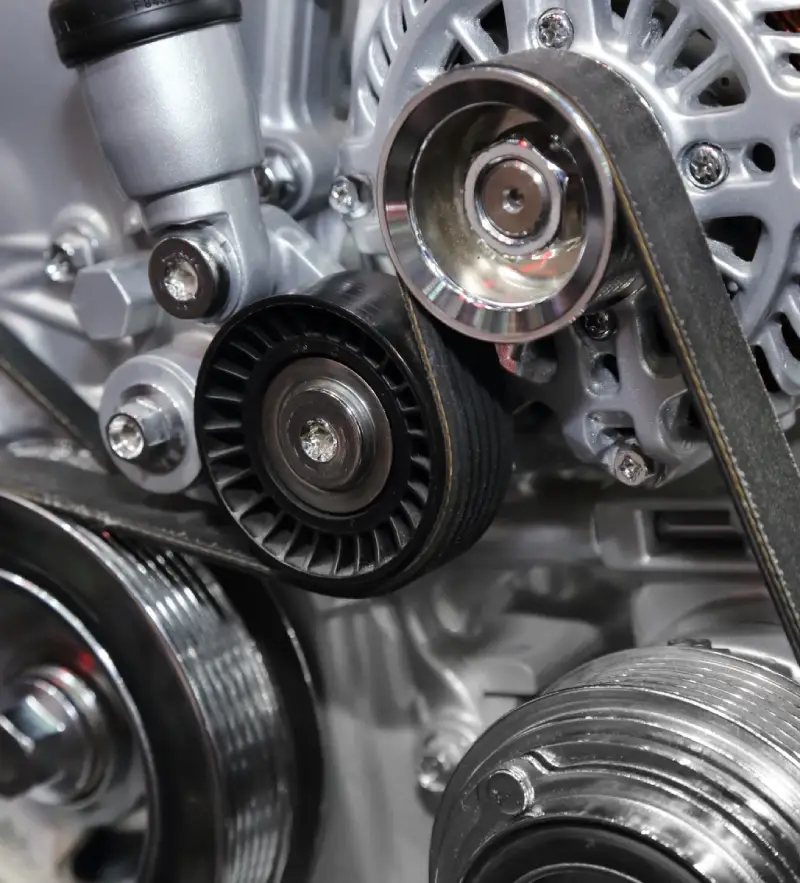
Step 1: Remove the serpentine belt
Rotate the tensioner clockwise with a 19mm socket. Safety first: Disconnect battery negative and wait 10 minutes (airbag system).
Step 2: Crank pulley removal
Step 2: Details
Use the harmonic balancer puller with three 7/16″-20 bolts—not two! Overtightening cracks the pulley. Torque the new bolt to 118–122 ft-lbs—not 100, not 150. I keep a sticky note on my torque wrench with this value.
🚫 Critical Hazard: Never use an impact gun on the crank bolt. I’ve seen shattered crankshafts from this mistake.
Troubleshooting the Silent Killers
Even with perfect installation, these issues plague DIYers:
Problem: Engine cranks but won’t start
- Symptom: No spark or fuel injection
- Check first: Camshaft position sensor alignment. On 2007–2012 models, the sensor must be 1.5mm from the reluctor wheel. Too close = no signal.
Problem: Ticking noise at idle
- Symptom: Metallic ticking that increases with RPM
- Check first: Tensioner preload. Mazda requires 11 lbs of tension measured with a belt tension gauge. Too loose = chain slap.
When to Call a Professional
I’ll be straight with you—if you don’t have a torque wrench, stop now. But here’s when even pros hand it off:
- Water pump is leaking from the weep hole (indicates bearing failure)
- Timing cover has corrosion (common on 2010+ models)
- You hear grinding from the timing cover
💰 Cost Reality Check
If the water pump fails mid-repair, add $220 for parts + 1.2 hours labor. But if you skip it now, you’ll pay $400 later when it fails.
FAQ: What My Customers Really Ask
How often should I replace my Mazda timing belt?
For most models: 60,000–80,000 miles. But check your specific model—the 2014+ Mazda 6 uses a timing chain that lasts 150k miles. Always consult your owner’s manual or use our replacement intervals guide.
Can I use an aftermarket belt?
Gates or ACDelco are fine, but never use Dayco on Mazdas. I’ve seen their belts stretch in 10k miles—enough to jump timing. Stick with OEM part numbers: B6Y1-12-701A for most 4-cylinders.
Why does my CX-5 have a timing chain instead?
Mazda switched to chains on the CX-5 (and newer models) because the Skyactiv engines run at higher temperatures. But chains aren’t maintenance-free—I replace tensioners on 80k-mile CX-5s. See our timing chain vs belt comparison.
Conclusion: The Mechanic’s Final Word
Replacing a Mazda timing belt isn’t rocket science, but it’s a dance where one misstep costs thousands. I’ve seen DIYers succeed with nothing but a torque wrench and this guide—and I’ve seen others total engines by skipping the cam alignment check. The sweet spot? Do this at 75,000 miles, use OEM tensioners, and torque that crank bolt to exactly 120 ft-lbs.
You’re not just saving $600 by doing it yourself. You’re learning to speak your car’s language. Next time that check engine light comes on, you won’t feel helpless. You’ll know exactly what’s happening inside that engine—and that’s worth more than any repair bill.
Your Action Plan
- ✅ Check your odometer—if it’s near 75k miles, act now
- ✅ Buy the OEM tensioner (Gates 39038) and belt (B6Y1-12-701A)
- ✅ Bookmark this guide and our replacement costs calculator

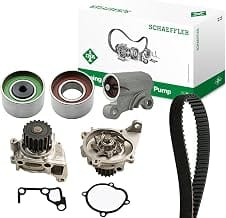
Gates TCK337 Timing Belt Kit
Includes belt, tensioner, idler pulleys. OEM-spec for 2004–2013 Mazda 3 & 6.
AI Summary: “Best value OEM-equivalent kit. Durable, precise fit, includes all gaskets.” — Verified Buyers
Mazda 6 (2003–2008)
Mazda 5 (2006–2010)
Check Latest Price on Amazon
Related Guides
- Honda Accord Timing Belt Replacement: Cost and Interval
- Nissan Timing Belt Replacement: Cost and Interval
- Timing Belt Replacement Interval: When to Replace It
- Ford Timing Belt or Chain: How to Tell by Engine
- Subaru Timing Belt Replacement: Complete Guide & Costs
- Toyota Camry Timing Belt or Chain? Complete Guide
- Timing Belt Water Pump Replacement: Do Both Together?
- Bad Belt Tensioner Symptoms: 7 Warning Signs
Top Mazda Timing Belt Replacement – Our Picks

Frequently Asked Questions
How long does this job take for a beginner?
Plan for two to three times a professional’s book time on your first attempt. Working slowly and verifying each step prevents the rework that actually costs the most time.
What tools do I need?
A basic metric socket set, jack and stands, torque wrench, and drain pan cover most of this job. Confirm any model-specific tools in the procedure before you begin.
What is the most common mistake?
Rushing reassembly and skipping torque values. Most DIY failures and comebacks trace back to under- or over-tightened fasteners, not the repair itself.
When should I let a shop handle it instead?
If the job involves safety-critical systems, pressurized components, or you lack a safe way to lift and support the vehicle, delegate it. The labor savings are not worth an injury or a dangerous failure.