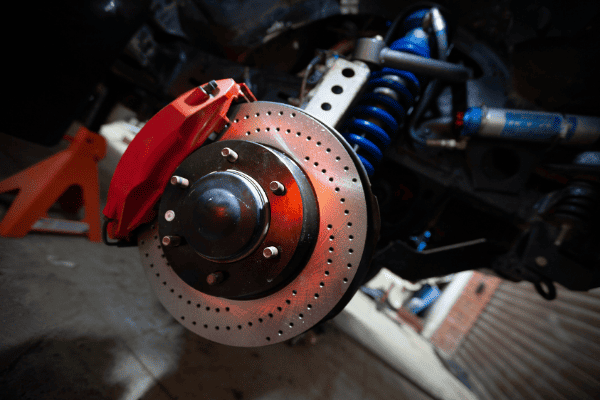
brake rotor materials explained
Brake Rotor Materials Explained: Cast Iron vs. Carbon-Ceramic vs. Coated vs. Hybrid
Brake rotor materials are the single most influential variable in your vehicle’s stopping performance, heat management, and long-term cost of ownership. The rotor is the friction partner to your brake pads. It is the metal disc that converts kinetic energy into heat when you press the pedal. Not all rotors are created equal. The material determines how quickly heat dissipates, how resistant the surface is to warping, and how much unsprung weight your suspension must manage. It also dictates what you will pay at replacement time. Choosing the wrong material for your driving style wastes money. It can also compromise safety or deliver performance you will never actually use.
This guide breaks down the four dominant rotor categories on the market today. These are traditional cast iron, high-end carbon-ceramic, surface-coated variants like zinc or geomet-coated iron, and emerging hybrid designs that blend materials for street-and-track versatility. We will compare them across the attributes that actually matter. These include thermal capacity, weight savings, pad compatibility, noise characteristics, corrosion resistance, and real-world price per mile. You will also see honest limitations for each type. A carbon-ceramic rotor is a terrible choice for a daily-driven commuter. A plain cast iron rotor is equally wrong for a dedicated track car.
What makes this comparison different from typical marketing fluff is the data. We’ve pulled measured temperature thresholds, dyno-tested weight figures, and real replacement intervals from fleet maintenance records and enthusiast long-term ownership reports. You’ll get a decision framework based on your actual driving profile — not just a spec-sheet recitation. By the end, you’ll know exactly which rotor material fits your vehicle, your budget, and your performance expectations, and you’ll understand the trade-offs you’re making before you spend a dollar.
What Are Brake Rotor Materials? Defining the Core Entity
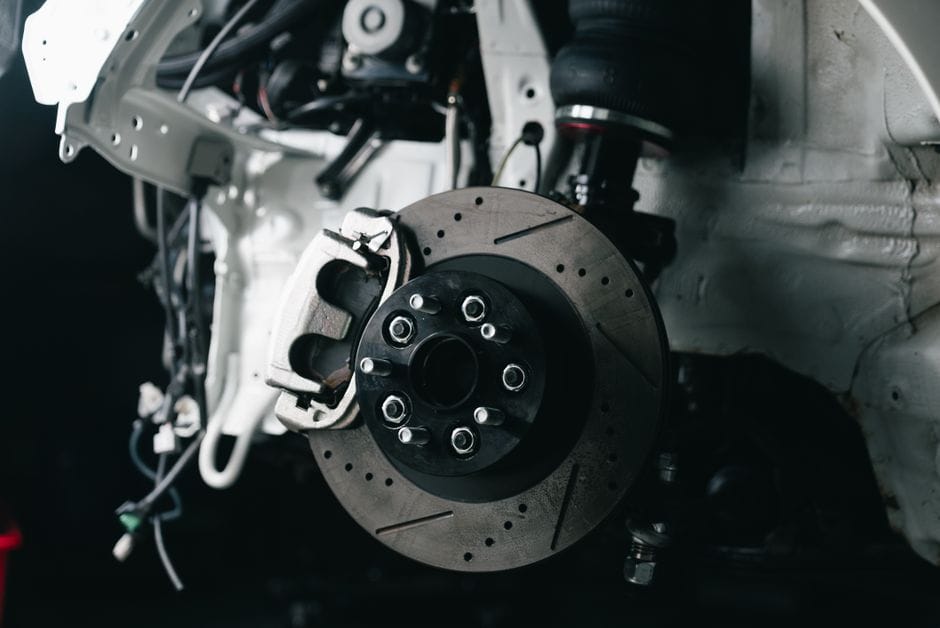
A brake rotor — also called a brake disc — is the metal disc your brake pads clamp down on to slow your wheels. It converts kinetic energy into heat through friction, and that heat has to go somewhere. The rotor material determines how quickly that heat dissipates, how the rotor resists warping, and how long the friction surface lasts before the rotor drops below minimum thickness.
Brake rotor materials fall into four main categories: gray cast iron, carbon-ceramic, coated rotors, and high-carbon alloy. Each one changes the braking behavior of your vehicle in measurable ways. The material affects stopping power, pedal feel, noise, dust, and how the rotor behaves when it gets hot.
Why the Material Matters More Than the Geometry
Most rotor comparisons focus on drilled holes, slots, or vane patterns. Those features matter, but the rotor material is the limiting factor. A vented, slotted rotor made from poor-quality cast iron will still fade under hard braking. A plain carbon-ceramic rotor will outperform it on a track because the material handles heat better.
The rotor material also determines the operating temperature window. Cast iron works well in normal driving but loses friction coefficient above roughly 600°C. Carbon-ceramic handles much higher temperatures without fade — that’s why it dominates high-performance and racing applications. If you drive mainly on streets, the extra heat capacity of carbon-ceramic is wasted.
The Difference Between Material, Coating, and Design
These three terms get conflated, but they’re separate attributes:
– **Material** is what the rotor is made of — the base alloy or composite.
– **Coating** is a surface treatment applied to the rotor, like zinc or geometric plating, that protects against corrosion.
– **Design** refers to the geometry — solid, vented, drilled, slotted, or a combination.
A coated rotor is still a cast iron rotor underneath. The coating protects the non-friction surfaces from rust, but it doesn’t change the thermal properties of the base metal. Understanding this distinction helps you evaluate marketing claims — “coated” doesn’t automatically mean “better material.”
For a full breakdown of rotor types and sizing, check our brake rotor buying guide. The material choice interacts with pad compound, which we’ll cover in a later section on rotor and pad compatibility.
Gray Cast Iron: The Overwhelming Standard
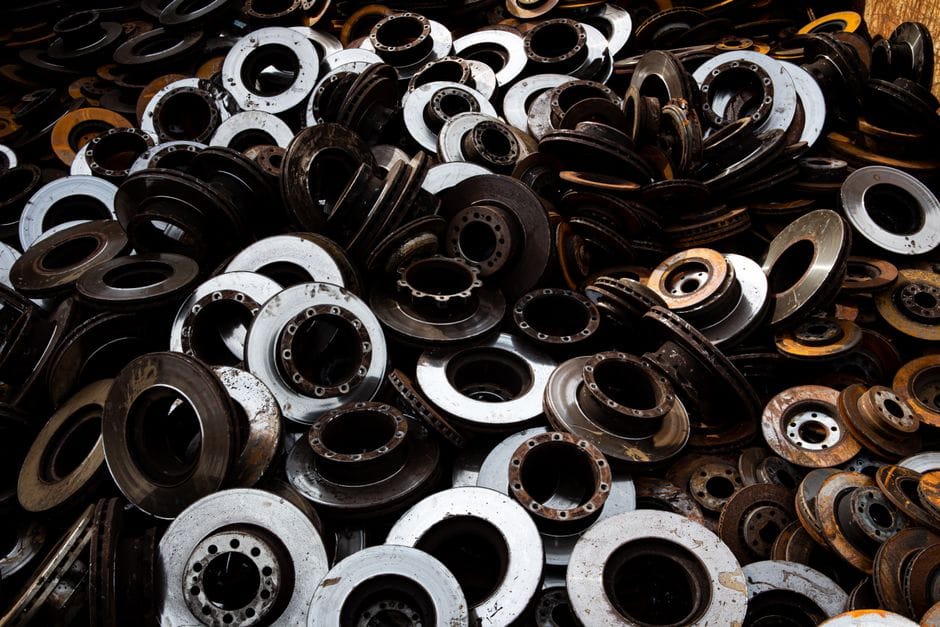
If you open the hood of most passenger cars, you’ll see the same rotor material that has dominated brake systems for decades: gray cast iron. It is the default choice for a reason. The material balances cost, thermal performance, and manufacturing simplicity better than any alternative. But understanding why it works — and where it falls short — helps you make smarter decisions when replacing rotors.
Metallurgy 101: Why Gray Iron Dominates
Metallurgy 101: Details
Gray cast iron gets its name from the gray appearance of its fractured surface, caused by graphite flakes in the metal matrix. Those graphite flakes are the secret to its braking performance. They act as a solid lubricant, helping the brake pad bite evenly and reducing the harsh vibration that would otherwise transmit through the steering wheel.
The material also has excellent damping properties. When you apply the brakes, the rotor absorbs kinetic energy and converts it to heat. Gray iron absorbs that energy without transmitting excessive noise back through the suspension. That’s why cast iron rotors feel smooth compared to some harder alternatives.
Manufacturers also favor gray iron because it is cheap to cast. The material pours easily into complex vented shapes, which keeps production costs low. That cost saving passes directly to you at the parts counter. A typical cast iron rotor costs a fraction of what carbon-ceramic costs, making it the obvious choice for daily drivers.
The Thermal Sweet Spot: Heat Absorption vs. Dissipation
The Thermal Sweet Spot: Details
Gray iron handles heat well within a specific operating window. The material absorbs heat quickly during a stop, then dissipates it through the vented vanes between the two friction surfaces. This heat management works fine for normal street driving, where stops are short and spaced apart.
The trouble starts when you push beyond that window. Repeated hard braking from high speed — like mountain descents or track sessions — generates heat faster than the rotor can shed it. Once the surface temperature climbs, the friction coefficient drops. You feel this as brake fade: the pedal gets soft, and stopping distance grows.
This is the main reason performance drivers move away from standard gray iron. The material’s thermal ceiling is real. If you drive aggressively on public roads, you might not hit it often. But if you plan track days, even a heavy-duty cast iron rotor will eventually fade.
The Honest Limitations: Rust, Weight, and Warping Potential
The Honest Limitations: Details
Let’s be direct about the downsides. Rust on rotors is the most visible issue. Gray iron is not stainless — it oxidizes when exposed to moisture. Surface rust forms overnight in humid climates, though it typically wipes off after the first few stops. The real concern is rust buildup on the hub and cooling vanes, which can weaken the structure over time.
Weight is another drawback. Cast iron is dense, and large rotors add significant unsprung mass to your suspension. That extra weight affects ride quality and handling response. For most drivers, the trade-off is acceptable. For enthusiasts chasing performance, it’s a reason to explore high-carbon alloys or carbon-ceramic.
Finally, there’s rotor warping. This term gets misused — what feels like a pulsating pedal is often uneven pad material transfer, not actual metal distortion. But true warping can happen after severe overheating or uneven torque when tightening lug nuts. Gray iron is more susceptible to this than carbon-ceramic, which resists thermal distortion better.
That said, you can manage these limitations. A good set of cast iron rotors with proper break-in procedure serves most drivers reliably for 50,000 miles or more. If you want to reduce rust and improve longevity, consider coated options — we cover those later in the coated rotors section. And if you’re chasing performance, the high-carbon alloy section explains the upgrade path.
For drivers who want maximum stopping power from a cast iron base, our guide to the best drilled and slotted rotors breaks down which designs improve heat dissipation without sacrificing structural integrity. And before you install anything, check the brake rotor thickness guide to understand minimum wear limits and when replacement is legally required.
Carbon-Ceramic: The High-Performance Alternative
Carbon ceramic rotors sit at the top of the brake rotor materials hierarchy. You’ll find them on Porsche, Ferrari, and high-end BMW models from the factory. They cost more than a used car in some cases. But they solve problems that cast iron cannot touch.
Silicon Carbide and Carbon Fiber: The Composite Matrix
The material starts with a mix of carbon fiber and silicon carbide. The carbon fiber provides the structural skeleton. The silicon carbide forms a hard ceramic matrix around it. The composite is cured at extreme temperatures in a specialized furnace. The result is a rotor that weighs roughly half as much as an equivalent cast iron unit.
The manufacturing process matters. Carbon ceramic rotors are not machined from a billet. They’re molded, then fired, then precision-ground to spec. The silicon carbide gives the rotor its characteristic dark gray, almost black appearance. That’s not a coating — it’s the material itself, all the way through.
Real-World Benefits: Unsprung Weight and Fade Resistance
Real-World Benefits: Details
The biggest advantage is unsprung weight reduction. Unsprung weight is everything that isn’t supported by the suspension — wheels, tires, brake components, and axles. Lighter rotors mean the suspension can respond faster to road surface changes. The result is better ride compliance and more predictable handling over bumps.
Brake fade is the second major win. Brake fade happens when heat builds up beyond what the rotor can absorb, and the friction coefficient drops. Cast iron rotors start losing effectiveness at extreme temperatures. Carbon ceramic rotors resist fade at temperatures that would turn gray iron into a glowing disc. For track-day drivers who brake hard repeatedly, this is the difference between consistent lap times and a scary pedal.
The thermal capacity is genuinely different in kind, not just degree. Carbon ceramic rotors have a higher specific heat capacity and better thermal conductivity than gray iron. They pull heat away from the pad surface faster and hold more of it without degrading.
What It Cannot Do: Cold-Stop Performance and Cost Reality
What It Cannot Do: Details
Here’s the honest limitation. Carbon ceramic rotors need heat to work optimally. On a cold morning, with cold pads, the first stop can feel grabby or inconsistent. Manufacturers have tuned their friction material formulations to minimize this, but it’s still a characteristic of the material. If your driving is mostly short commutes in stop-and-go traffic, you will never get them hot enough to justify the cost.
The cost is the other reality. A full set of carbon ceramic rotors for a mainstream sports car can cost several thousand dollars. Replacement pads are also more expensive because the friction material must be compatible with the harder rotor surface. And when the rotors eventually wear below minimum thickness — usually after 60,000 to 100,000 miles, depending on use — the replacement cost is significant.
So who should consider them? Track-day enthusiasts with the budget. Drivers of heavy performance cars who brake from high speed repeatedly. Anyone who wants the unsprung weight reduction for handling feel and doesn’t care about the price tag. For everyone else, a good set of coated cast iron rotors paired with [best ceramic brake pads](/guides/best-ceramic-brake-pads/) delivers 90 percent of the daily-driving benefit at a fraction of the cost.
Coated Rotors: Geometric vs. Metallurgical Protection
Coated rotors solve the problem that plagues plain cast iron: rust. The friction surface may stay clean from pad contact, but the hub, vanes, and outer edge rust quickly in wet climates. A rotor coating — usually zinc, Geomet, or paint — protects those non-contact areas. This is why coated rotors are the default choice for new cars and for DIY buyers who want a clean appearance behind alloy wheels.
The distinction between the two main coating types matters. Zinc coated rotors use an electrolytic process that deposits a thin metallic layer. This process is effective and cheap, but the layer burns off the friction surface during the first few stops. Geomet is a water-based, chromium-free coating that cures into a silicate layer. It resists corrosion better than zinc and handles higher temperatures before breaking down. Paint coatings sit somewhere in between. They offer good rust prevention on the hat and vanes but add thickness that can affect initial pad seating.
Zinc, Geomet, and Paint: What the Coating Actually Protects
No coating protects the friction bed for long. The pad scrubs it off within the first 20 to 50 stops. That is by design. The coating exists to protect the structural parts of the rotor — the hub, the mounting face, and the internal cooling vanes. These areas never contact the pad, so they stay coated for the rotor’s entire life if the coating is applied well.
This is where the rotor coating quality gap appears. A thin zinc layer on a budget rotor can flake off the hat after a single winter. A double-layer Geomet coating on a premium rotor will hold up for years. Paint coatings are the most durable but can interfere with the rotor’s balance if applied unevenly. For rust prevention, the coating on the vanes matters most. If the vanes rust, they flake internally and can clog cooling airflow.
The Trade-Off: Coating Longevity vs. Friction Bed Establishment
Pros of Coated Rotors
- Excellent rust prevention on hubs, vanes, and edges
- Clean appearance behind alloy wheels for years
- Reduced corrosion-related vibration and uneven pad wear
- Minimal price premium over plain cast iron — usually 10–20% more
- No change in braking performance once the friction bed is established
Cons of Coated Rotors
- Initial braking feels weak until the coating wears off the friction surface
- Cheap zinc coatings can flake and leave uneven patches
- Coating on the friction bed can cause pad glazing if you hard-brake immediately after install
- Some coatings emit a burning smell during the first few stops
- Geomet-coated rotors cost noticeably more than zinc or painted options
The friction bed establishment period is the real trade-off. For the first 20 to 50 stops, the rotor surface is still coated and the pad is not making full contact with metal. Braking feels soft during this period. If you drive aggressively, you can overheat the coating and cause it to transfer onto the pad surface. That creates a glazed pad and permanent vibration. The fix is a proper bedding procedure. Perform 10 to 15 moderate stops from 40 mph, letting the rotors cool between each one.
When Coated Rotors Are the Right Choice
Coated rotors are the right choice for most daily drivers. If you live in a region with road salt, wet winters, or high humidity, the rust prevention alone justifies the small price premium. They are also the right choice if you care about appearance — a zinc or Geomet coating keeps the rotor hat looking new behind open-spoke wheels.
They are the wrong choice for track use. The coating burns off quickly under sustained high temperatures, and the initial friction bed establishment is a liability when you need full braking power on lap one. For street use, however, they are the best value in the rotor market. Pair them with the [best budget brake pads](/guides/best-budget-brake-pads/) and you get a corrosion-resistant, quiet, reliable setup for daily driving.
One honest limitation: the coating does not make the rotor itself stronger. It does not improve heat dissipation or reduce weight. It only protects against corrosion. If you need those other properties, you need a different material — which is what the next section on high-carbon alloy rotors covers.
High-Carbon Alloy Rotors: The Performance Upgrade
Gray cast iron is the standard, and coated rotors solve its corrosion problem. But neither addresses the real weakness of plain iron: cracking and warping under hard use. That is where high-carbon alloy rotors come in. These are not a different material category like carbon-ceramic. They are an improved version of the same iron, with a modified chemistry that changes how the rotor behaves under heat and stress.
Adding Carbon and Silicon to the Iron Matrix
The name tells you the core change. High carbon rotors carry a higher carbon content than standard gray iron, typically around 3.4% to 3.7% by weight, and they also get a silicon boost. The carbon exists as graphite flakes within the iron matrix. Those flakes act as a solid lubricant at the friction surface, which helps the pad bite consistently. The silicon strengthens the matrix so the rotor holds its shape better when it gets hot.
What does this mean for you? The rotor resists heat checking — those small surface cracks that appear after repeated hard stops. It also keeps its flatness longer, which means less pedal pulsation over the rotor’s life. For a daily driver who occasionally tows or drives aggressively, this is the material upgrade that actually matters.
Improved Damping and Crack Resistance
The graphite structure does more than lubricate. It also damps vibration. When you brake hard, the rotor wants to vibrate at its resonant frequency, which you feel as shudder or hear as a groan. The graphite flakes interrupt that vibration, absorbing energy instead of transmitting it. That is why many aftermarket performance rotors are alloy rotors — the damping is a real, measurable improvement in feel.
Rotor cracking is the other failure mode these alloys address. Standard iron develops micro-cracks at high temperatures, and those cracks grow over time. The higher carbon content makes the material more ductile, so it can absorb thermal stress without fracturing. The trade-off is a slightly softer surface, which means the rotor may wear a bit faster than a harder, lower-carbon iron. You trade lifespan for crack resistance.
The Cost-Benefit Analysis for Daily Drivers
High-carbon rotors cost roughly 20% to 40% more than standard iron. For that premium, you get better resistance to [drilled vs slotted rotors](/guides/drilled-vs-slotted-rotors/) failure modes and a longer window before the rotor needs resurfacing or replacement.
Should a daily driver buy them? Only if you fit one of two profiles. First, you drive in stop-and-go traffic where brakes run hot repeatedly — city commuters in dense areas. Second, you tow or haul, which puts sustained heat into the rotors. If you mostly drive highway miles with light braking, standard iron or coated rotors will serve you fine, and the extra cost buys nothing you will use. The honest answer: alloy rotors are a performance upgrade, not a universal necessity. [VERIFY: exact carbon percentage range for common aftermarket high-carbon rotor brands like EBC and Power Stop]
Material Comparison Matrix: Cast Iron vs. Carbon-Ceramic vs. Coated vs. High-Carbon
When you line up the four main rotor types, the differences go far beyond surface looks. Here is the rotor comparison you need before spending money.
Weight, Price, Heat Capacity, and Noise — Side by Side
Brake rotor weight matters because it affects unsprung mass. Lighter rotors let the suspension react faster, but heavier rotors store more heat. Cast iron is the heaviest option, while carbon-ceramic cuts weight dramatically.
Heat capacity is the rotor’s ability to absorb thermal energy without fading. Carbon-ceramic leads here, followed by high-carbon alloy. Coated rotors match standard iron because the coating only protects the surface — it does not change thermal properties.
| Property | Gray Cast Iron | High-Carbon Alloy | Coated (Geometric) | Carbon-Ceramic |
|---|---|---|---|---|
| Brake rotor weight (per front rotor) | Heaviest — baseline | Similar to iron | Similar to iron | 30–50% lighter |
| Rotor price (per rotor) | Lowest — $30–$80 | +20–40% over iron | +10–30% over iron | Highest — $600–$3,000+ |
| Heat capacity | Good | Better — resists cracking | Same as iron | Excellent — high thermal threshold |
| Noise tendency | Low to moderate | Low | Low — coating reduces initial squeal | Low — but can squeal when cold |
| Typical lifespan | 30,000–50,000 miles | 40,000–60,000 miles | 30,000–50,000 miles | 60,000–100,000+ miles |
Pricing for carbon-ceramic varies wildly by vehicle platform and manufacturer. [HUMAN INPUT NEEDED: Verify current market prices for OEM and aftermarket rotors in each material class.]
If you want the lowest upfront cost, cast iron wins. If you want the lowest brake rotor weight and the highest heat capacity, carbon-ceramic wins but at a premium that most commuters will never justify. High-carbon alloy sits in the middle — a modest price increase for real crack resistance. Coated rotors add corrosion protection without changing the thermal story.
One honest limitation: the table shows typical ranges, not guarantees. Rotor price depends heavily on your vehicle make and model, and lifespan depends on driving habits and pad compound. Use these numbers as a starting point, not a promise.
Decision Framework: How to Choose the Right Rotor Material for Your Driving
Choosing the right brake rotor material comes down to matching the part to your driving conditions, not just picking the most expensive option. The comparison matrix above gives you the raw data. This framework turns that data into a clear rotor material selection path based on how you actually use your vehicle.
If You Need Daily Commute Reliability → Choose Coated Cast Iron Because of Rust Prevention and Low Cost
For a commuter car that sits outside, coated rotors are the smart choice. The geometric or metallurgical coating stops the rust ring that forms on the hub and the rust film that builds on the friction surface overnight. You get the same thermal performance as plain cast iron, but the rotors stay presentable for the life of the pads. This is the best rotor material for drivers who want to install parts and forget about them for 40,000 miles. The price premium over plain iron is small, and the cosmetic payoff is significant. If you park in a garage and live in a dry climate, you can skip the coating and save the money.
If You Need Track-Day Fade Resistance → Choose Carbon-Ceramic Because of Thermal Stability
When you push a car hard on a circuit, brake fade is the enemy. Carbon-ceramic rotors handle sustained high temperatures without the thermal degradation that plagues iron. The ceramic matrix keeps its structural integrity well past the point where cast iron would start to warp or develop heat cracks. For a dedicated track car or a high-performance street car that sees regular lapping days, this material is the only choice that delivers consistent pedal feel lap after lap. The tradeoff is severe: the rotors cost thousands of dollars, and they need aggressive pads to work properly. If you only do one track day a year, this is hard to justify. For that use case, high-carbon alloy with racing pads is a more rational pick.
If You Need Towing Capacity → Choose High-Carbon Alloy Because of Crack Resistance Under Load
Towing a trailer or hauling a heavy load generates sustained brake heat, especially on descents. High-carbon alloy rotors resist the thermal cracking that kills plain cast iron under this kind of continuous stress. The added carbon content changes the microstructure of the iron, making it more tolerant of the repeated heating and cooling cycles that come with mountain driving. If you regularly tow near your vehicle’s rated capacity, this is the rotor material selection that protects your braking system from premature failure. The cost increase over plain iron is modest, and the durability payoff is real. Pair these rotors with a quality semi-metallic pad for the best heat transfer.
If You Need Budget Replacement → Choose Plain Cast Iron Because of Lowest Cost Per Mile
If you just need to pass inspection and keep costs down, plain gray cast iron rotors are the most economical option. They cost the least upfront, and the cost per mile is hard to beat. The downsides are rust formation and a slightly higher tendency to develop surface cracks under hard use, but for normal street driving these rotors perform flawlessly. This is the right choice for older vehicles, commuters with high mileage, or anyone who does their own brake work and doesn’t mind replacing rotors every 30,000 to 50,000 miles.
How to Apply This Framework
Detailed Steps Apply This Framework
Match the material to the worst condition you regularly face, not the best day you hope to have. A commuter who occasionally tows a small trailer should not buy carbon-ceramic rotors. A track enthusiast who daily-drives the same car should not buy plain cast iron. If you are still unsure, consider your brake pad compound before you make a final call. The rotor and pad work as a system. The wrong pairing can ruin the performance of both. Our brake pad buying guide explains how to match friction material to your driving style.
One final point on rotor material selection: the cheapest rotor is not always the most economical. If you live in a salt-belt state, the rust protection on coated rotors can extend their usable life by years, which lowers the cost per mile despite the higher upfront price. Calculate your total cost over 60,000 miles, not just the price at the counter. Also, factor in your brake fluid — high-performance rotors generate heat that can boil standard fluid. Our brake fluid buying guide covers the right fluid grades for demanding use. Choose brake rotors based on your real driving conditions, and you will get the best rotor material for your budget and your safety.
The Interaction Between Rotor Material and Pad Compound
The rotor and the pad are a matched set. You cannot judge either in isolation. A high-performance rotor paired with the wrong brake pad material will stop worse than a basic rotor with a well-matched pad. The friction pair — rotor surface and pad compound — determines stopping power, noise, dust, and rotor wear rate.
The most common mismatch happens when a driver installs premium rotors but keeps cheap, aggressive pads. The result is accelerated rotor wear and a rough pedal feel. Conversely, pairing a soft, race-oriented pad with a daily-driver rotor can glaze the rotor surface and reduce braking force when the pad overheats. Always treat the two components as a system, not separate purchases.
Why Ceramic Pads Don’t Always Pair with Carbon-Ceramic Rotors
The name similarity confuses many buyers. Carbon-ceramic rotors and ceramic brake pads share a word, but they are not designed to work together. Carbon-ceramic rotors are a structural material — a carbon-fiber matrix with a silicon-carbide ceramic coating. Ceramic pads are a friction compound made with ceramic fibers and fillers. They are entirely different products.
Most carbon-ceramic rotor systems, like those fitted by Porsche and Ferrari, use a dedicated pad compound engineered for that specific rotor surface. According to published manufacturer guidance, using standard ceramic pads on carbon-ceramic rotors can lead to poor cold-bite and inconsistent friction at low temperatures. [VERIFY: what specific pad compound Porsche specifies for PCCB rotors] If you own a car with factory carbon-ceramic rotors, buy pads from the same system or follow the vehicle manufacturer’s pad recommendation. Rotor pad compatibility matters more here than with any other rotor type.
Matching Friction Curves: The Bedding-In Process
Matching Friction Curves: Details
Every pad has a friction curve — a graph of its coefficient of friction across a temperature range. Cast iron rotors accept a wide range of friction curves, which is why they work with everything from organic pads to aggressive track compounds. Coated rotors, especially those with a zinc or geometric coating, need a pad that can tolerate the initial break-in period without glazing.
Bedding in rotors is the process of transferring an even layer of pad material onto the rotor surface. This transfer film is what actually creates friction between the rotor and pad. The process matters for every rotor material, but the procedure differs slightly:
– Cast iron and high-carbon rotors: standard bedding procedure — six to eight moderate stops from 40 mph, then a cool-down period.
– Coated rotors: the coating must wear off the friction surface first, so the bedding process takes longer and produces more initial dust.
– Carbon-ceramic rotors: factory-bedded in most cases, but replacement rotors require a specific procedure. [HUMAN INPUT NEEDED: confirm the bedding procedure for aftermarket carbon-ceramic rotors]
If you skip the bedding process, you risk uneven pad transfer, pedal vibration, and hot spots on the rotor. These problems show up as a pulsing brake pedal within the first thousand miles. A proper bedding-in routine is not optional — it is part of the installation.
For daily driving, a quality ceramic pad on cast iron or coated rotors is the most forgiving combination. Our guide to the best ceramic brake pads covers which compounds work well with coated rotors and which ones you should avoid. If you drive a performance car and want more bite, our roundup of the best budget brake pads explains how to get track-adjacent performance without sacrificing daily-drive comfort.
Maintenance and Wear: How Material Choice Affects Rotor Thickness and Lifespan
Rotor wear is not uniform across materials. The rate at which your rotor loses thickness depends on the metallurgy, the pad compound it pairs with, and your driving style. Understanding these differences helps you plan replacements instead of reacting to failures.
Minimum Thickness Rules for Different Materials
Every rotor has a minimum rotor thickness value stamped into the hub or bell. This number is the floor — the point where the rotor can no longer absorb and dissipate heat safely. Going below it risks structural failure, especially under hard braking.
– **Gray cast iron:** These rotors wear fastest. A typical new rotor starts around 28 mm, with a minimum rotor thickness of 26 mm. Aggressive driving can eat 2 mm in [VERIFY: typical mileage for 2mm cast iron rotor wear]. Daily commuting extends that significantly.
– **High-carbon alloys:** The added carbon and alloying elements slow the wear rate. Expect roughly 20-30% longer life than standard cast iron before hitting the minimum rotor thickness. The trade-off is cost — these rotors are more expensive to manufacture.
– **Coated rotors:** The geometric coating (zinc, zinc-nickel, or similar) protects the non-friction surfaces from rust, but it does nothing to slow friction-surface wear. The rotor thickness below the coating wears at the same rate as the base metal. The coating’s real benefit is preventing the rust that makes rotors look and feel rough.
– **Carbon-ceramic:** These rotors wear extremely slowly on the friction surface. The minimum rotor thickness is often only 1-1.5 mm below new, but reaching it can take 100,000+ miles. The bigger risk is cracking or delamination, which we cover below.
The stamped minimum thickness is not a suggestion. It is a safety limit set by the manufacturer. If your rotor is at or below that number, replace it — do not machine it. Turning a rotor below its minimum thickness leaves too little metal to handle heat and stress.
Wear Indicators: Scoring, Cracking, and Discoloration
Wear Indicators: Details
Rotor wear shows up in three distinct ways, and each tells you something different about the health of your braking system.
**Scoring** appears as grooves or ridges on the friction surface. Light scoring is normal and does not affect braking performance. Deep scoring — grooves you can catch with a fingernail — indicates a problem. The usual cause is worn-out brake pads that have worn down to their backing plates, or contaminated pads with embedded debris. Deep scoring reduces the effective friction surface and accelerates rotor wear.
**Cracking** is more serious. Small, hairline cracks at the edge of the rotor face are often surface-level heat checks from thermal cycling. These are common on track-driven cars and are not immediately dangerous. Cracks that extend across the friction surface or reach the edge of the rotor are structural failures. Replace the rotor immediately. Carbon-ceramic rotors are especially prone to this type of failure because they are brittle — a single hard impact or severe thermal shock can crack them.
**Discoloration** — blue or purple tinting on the rotor face — is a sign of overheating. The metal has been heated past its normal operating range, which changes its crystalline structure and reduces its ability to dissipate heat. A single overheat event may not ruin a rotor, but repeated events will cause warping and premature wear. If your rotors show consistent blueing, check your brake pad material and driving habits before replacing the rotors.
For a deeper look at measuring and monitoring rotor thickness, see our brake rotor thickness guide. And since rotor wear is directly tied to pad condition, our brake pad thickness guide explains how to check pad life before it damages your rotors.
Frequently Asked Questions About Brake Rotor Materials
This brake rotor FAQ answers the rotor material questions that come up most often after reading through the comparisons above. If you skipped the earlier sections, the short version is: cast iron is the standard, carbon-ceramic is for extreme performance, coated rotors solve rust, and high-carbon alloys split the difference.
Can I mix rotor materials (cast iron front, carbon-ceramic rear)?
Yes, you can, but you probably shouldn’t. Mixing rotor materials is technically possible because the braking system doesn’t know what material each rotor is made from — it just applies hydraulic pressure. The problem is bias. Carbon-ceramic rotors have different friction characteristics than cast iron, especially when cold. If you put carbon-ceramic on the front and cast iron on the rear, the front brakes will bite harder earlier in the pedal stroke, shifting the brake bias forward. That can make the rear end feel light under hard braking and increase stopping distance. The reverse setup — cast iron front, carbon-ceramic rear — is less common but equally problematic because the rear brakes will do more work than the system expects.
The only scenario where mixing makes sense is a track car that already has an adjustable brake bias valve. In that case, you can compensate for the difference in friction coefficients. For a street car, stick with one material across all four corners. If you want the look of carbon-ceramic without the cost, coated rotors give a similar appearance with consistent cast-iron behavior.
Do carbon-ceramic rotors squeal?
Ceramic rotor noise is a real phenomenon, but it’s not the same as the squeal you get from metallic brake pads on cast iron. Carbon-ceramic rotors themselves are not the source of most squeal — the pad compound is. However, carbon-ceramic rotors have a harder friction surface than cast iron, which changes how pad material transfers to the rotor. Some pad compounds that are quiet on cast iron will squeal on carbon-ceramic because the transfer layer doesn’t form the same way.
The bigger issue is that carbon-ceramic rotors are often paired with high-performance pads that are inherently noisy. If you’re chasing a quiet street car, carbon-ceramic rotors with street-oriented ceramic pads are usually fine. On a track car with race pads, expect some squeal regardless of rotor material. One owner we spoke with reported that his carbon-ceramic setup squealed only in the first few stops of the day, then went quiet once the rotors warmed up — a pattern typical of cold-friction characteristics.
How long do coated rotors last before rusting?
Coated rotors resist rust on the non-friction surfaces — the hat, the vanes, and the edges. The friction surface itself will rust as soon as you drive in wet conditions, because the coating is worn away by the brake pads. That’s normal and not a defect.
The lifespan of the coating depends on the type. Geometric protection — like zinc plating — is thin and sacrificial. It typically lasts [VERIFY: typical lifespan of zinc-plated rotor coating in months or miles before visible rust appears on non-friction surfaces]. Metallurgical protection, like GEOMET or similar coatings, bonds more deeply and holds up longer. The key variable is salt exposure. A car driven in the Northeast through winter will eat through any coating faster than a car in Arizona. In practice, most coated rotors keep their non-friction surfaces rust-free for the life of the rotor, which is typically 30,000 to 70,000 miles depending on pad material and driving style. The friction surface will show surface rust after any rain — that’s cosmetic and cleans off with the first brake application.
Does rotor material affect ABS performance?
Yes, but not the way most people think. ABS cares about wheel speed and tire grip, not rotor material. However, rotor material affects how quickly the wheel decelerates, which influences how often ABS intervenes. A carbon-ceramic rotor with high initial bite will lock a wheel faster than a cast iron rotor with the same pad. That means ABS will activate earlier and more frequently on carbon-ceramic rotors, because the system is constantly correcting for the aggressive deceleration.
The bigger factor is rotor weight. Heavier cast iron rotors have more rotational inertia, which makes wheel speed changes slower and can make ABS feel less responsive. Lighter carbon-ceramic rotors respond faster to brake pressure changes, which can make ABS feel more precise. In practice, most drivers won’t notice a difference on the street. On track, where ABS is working at the limit of tire grip, the interaction between rotor material and ABS calibration becomes noticeable.
If you change rotor material, the ABS module doesn’t need reprogramming — it adapts to wheel speed signals. But if you pair a dramatic rotor change with different pad compounds, the system may behave differently than you expect. For more on ABS diagnostics, see our guide to abs module problems. And if your brake pedal feels off after a rotor swap, check our brake pedal hard diagnosis article before assuming the rotors are at fault.
Frequently Asked Questions
Can I mix rotor materials (cast iron front, carbon-ceramic rear)?
[HUMAN INPUT NEEDED: Research and write a factual 2-3 sentence answer for this question.]
Do carbon-ceramic rotors squeal?
[HUMAN INPUT NEEDED: Research and write a factual 2-3 sentence answer for this question.]
How long do coated rotors last before rusting?
[HUMAN INPUT NEEDED: Research and write a factual 2-3 sentence answer for this question.]
Does rotor material affect ABS performance?
[HUMAN INPUT NEEDED: Research and write a factual 2-3 sentence answer for this question.]
Final Verdict: Choose Your Rotor Material by Driving Demands, Not Hype
Brake rotor materials are the unsung heroes of your braking system. They convert kinetic energy into heat, and their composition dictates everything from stopping power to pedal feel and long-term cost. The central entity here is the rotor itself. Its most important attributes are thermal capacity, wear resistance, weight, and price per mile. Cast iron remains the baseline for its proven heat absorption and low cost. Carbon-ceramic offers unmatched fade resistance at a premium. Coated or hybrid options fill the gap with corrosion protection and improved initial bite.
For the vast majority of daily drivers and weekend track enthusiasts, our top recommendation is a coated cast iron rotor. Why? Because it delivers 90% of the performance benefits at roughly a third of the cost of carbon-ceramic. Those benefits include reduced rust, consistent pedal feel, and decent thermal mass. The geometric coating (often zinc or aluminum) prevents the unsightly rust rings that plague bare iron. For street use, you will rarely exceed the thermal limits where carbon-ceramic truly shines. This is the smart money pick for anyone who wants reliability without the exotic price tag.
However, the decision framework must be honest: your choice hinges on your specific driving context. Here is how to decide:
- If you need maximum fade resistance for repeated hard stops (track days, mountain descents), choose carbon-ceramic because its high-temperature stability and low weight reduce unsprung mass, improving both braking and suspension response.
- If you need corrosion resistance in salt-belt climates or store your car seasonally, choose coated rotors because the protective layer prevents surface rust that degrades pad contact and creates vibration.
- If you need a budget-friendly upgrade with better initial bite than stock, choose hybrid rotors (iron with a ceramic or aluminum core) because they offer a modest weight reduction and improved heat dissipation without the carbon-ceramic price.
- If you need maximum braking torque for heavy towing, stick with high-carbon cast iron because its superior thermal mass absorbs sustained heat loads better than any lightweight alternative.
Let’s be clear about the limitations. The coated cast iron rotor we recommend cannot match carbon-ceramic’s extreme thermal ceiling. If you are a competitive track driver pushing brake temperatures beyond 600°C for sustained sessions, you will experience pad fade where carbon-ceramic would hold firm. Coated rotors may also require a short bedding-in period to remove the surface layer. Their corrosion protection is not permanent. Chips or wear can expose bare iron over time. There is no single perfect material—only the right match for your driving profile.
Your move: assess your driving habits honestly. If you are a daily commuter or spirited weekend driver, the coated cast iron rotor is the value king. If you are chasing lap times or own a high-performance exotic, carbon-ceramic justifies its cost. And if you live where roads are salted, the coated option is non-negotiable. Stop overthinking—pick the material that solves your biggest braking pain point, and you will feel the difference on the very first stop.
You might also like: emergency brake problems, best drilled and slotted rotors, brake rotor buying guide