Hard Starting Engine: Diagnosis and Repair
Quick Answer:A “hard starting engine” typically means the engine cranks but takes longer than usual to fire up. This is usually caused by a loss of fuel pressure overnight,failing ignition components, or sensor data errors (like a bad Coolant Temperature Sensor).
The Tuesday Morning Troublemaker
It was 7:15 AM on a biting cold Tuesday in February. I had a steaming mug of black coffee in one hand and my trusty clipboard in the other. The first customer of the day, a regular named Dave, was pacing outside the bay. His 2008 Chevrolet Silverado with the 5.3L V8 was sitting on the lift, looking innocent.
“She’s fighting me, Doc,” Dave said, using his nickname for me. “Turns over fine, but takes about five seconds of cranking before she catches. Only does it in the morning.”
I’ve seen this a thousand times. To a DIYer, a hard starting engine feels like a mystery. Is it the battery? The starter? The ghost of Christmas past? To me, it’s a logic puzzle. Dave’s truck didn’t have a [hard to start engine, difficult starting, cranking problems](engine-cranks-no-start,fuel-system-problems,bad-spark-plugs) where it wouldn’t run; it just didn’t want to wake up. By 9:00 AM, we had pinpointed a leaking fuel pressure regulator. It’s a common issue, but if you don’t know the symptoms, you’ll waste money on parts you don’t need.
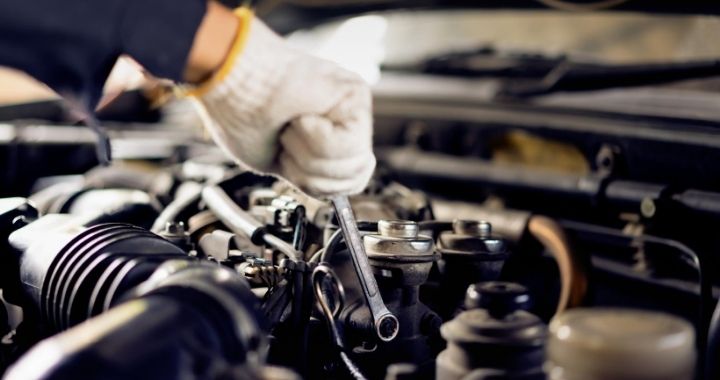
Let’s pop the hood and get dirty. I’m going to walk you through how I diagnose a hard starting engine, exactly how I do it on the lift.
Understanding the “Hard Start”
Before we throw parts at the car, we need to define the symptom. “Hard starting” is vague. In the shop, we categorize it into three distinct feelings:
- Extended Cranking:You turn the key, the engine spins happily, but it takes 3-10 seconds to fire. This is usually a fuel or air metering issue.
- Slow Cranking:The engine sounds like it’s struggling to turn over. Labored. That’s usually electrical—battery, cables, or starter motor.
- Cold Start Problems:Runs fine all day, but acts like it’s dead after sitting overnight.
Technical Specifications: What You Need to Know
While I can’t list specs for every car ever made, here are the industry standards I use when diagnosing common vehicles.Always verify these with your specific service manual.
Fuel Pressure Specs (Port Injection)
Loss of fuel pressure is the #1 cause of extended cranking. If the check valve in the fuel pump fails, fuel drains back to the tank, leaving the lines empty.
- GM (Ecotec / LS V8s):55-62 PSI.
- Ford (Modular / Coyote):35-45 PSI (returnless system), usually requires 40 PSI minimum to start.
- Toyota (2ZR / GR系列):38-44 PSI.
- Honda (K-series / R-series):45-50 PSI.
Ignition Coil Resistance
While modern cars use “smart” coils, checking resistance on older vehicles can save you:
- Primary Resistance:0.5 to 2.0 Ohms.
- Secondary Resistance:5,000 to 15,000 Ohms (varies wildly by manufacturer).
Tools & Materials List
You don’t need a lift, but you do need the right gear. Here is my “Must Have” list for diagnosing a hard starting engine.
- OBD2 Scanner:Not just a code reader. You need one that shows live data (Mode $06). TheInova 3160gor a Bluetooth dongle withTorque Proapp works.
- Fuel Pressure Gauge Kit:Get a master kit like theActron CP7838. It needs to fit Schrader valves and various banjo bolts. Cost: ~$80-$150.
- Digital Multimeter:For checking voltage drop.Klein Tools MM700is my go-to.
- Noid Light Set:To check injector pulse. Cost: ~$30.
- Spark Tester:The adjustable kind with a visible gap, not just a pen that lights up. Cost: ~$15.
Troubleshooting Phase 1: The Electrical Check (Slow Crank)
If your engine sounds weak, stop looking at fuel sensors. A starter needs amps, not volts. A battery can show 12.6V but drop to 6V the second you hit the key.
Troubleshooting Phase 2: The Fuel System (Extended Cranking)
This is where Dave’s Silverado was failing. If the car cranks fine but takes time to start, suspect the fuel system is “bleeding down.”
If it starts immediately after priming:You have a fuel pressure loss issue. The check valve in the pump is weak, or an injector is leaking into the cylinder.
If it drops rapidly:Pinch the return line (if equipped) or the supply line (carefully!). If the pressure holds when pinched, the pump is bad. If it still drops, the injector or regulator is leaking.
Troubleshooting Phase 3: The Ignition & Sensors
If you have good fuel pressure and strong cranking, but it still struggles, we look at spark and data.
The Coolant Temperature Sensor (CTS)
This is the “brain” of the cold start. The CTS tells the computer (ECU) how cold the engine is. If it tells the ECU “It’s 80 degrees out” when it’s actually 20 degrees, the ECU won’t inject enough extra fuel to start the cold engine.
Spark Plugs and Coils
Worn spark plugs require higher voltage to fire. When you are cranking, the battery voltage drops (down to maybe 9-10V). If your plugs are gapped at 0.060″ (a common OE spec) but are worn to 0.080″, the coil simply can’t make the jump.
Specification:Most modern cars (Ford, GM, Toyota) use plugs gapped between 0.028″ and 0.045″. If you have extended cranking issues, pull a plug. If it looks chalky white or the electrode is rounded, replace them. I use NGK or Motorcraft plugs exclusively. I’ve seen cheap Autolite plugs fail out of the box on Japanese vehicles.
Step-by-Step Repair: Common Fixes
Repair A: Replacing a Fuel Filter (If serviceable)
Time Estimate: 30 mins
Difficulty: Easy
Repair B: Replacing the Coolant Temp Sensor
Time Estimate: 20 mins
Difficulty: Easy
Cost Analysis: DIY vs. Professional
I’ve seen shops charge wildly different rates for this kind of diagnosis. Here is the reality check.
| Repair | DIY Cost (Parts) | Shop Cost (Parts + Labor) | Notes |
|---|---|---|---|
| Fuel Pump Assembly | $120 – $400 | $600 – $1,100 | High labor due to tank dropping. OEM pumps (Delphi,Bosch) are highly recommended over cheap parts store brands. |
| Coolant Temp Sensor | $15 – $40 | $150 – $250 | Labor is mostly diagnostic time. The part is cheap. |
| Spark Plugs (Set of 4/6/8) | $40 – $120 | $250 – $500 | Depends if plug is accessible (easy) or under the intake manifold (hard). |
| Starter Motor | $100 – $250 (Reman) | $400 – $700 | Prices spike for high-torque diesel or performance starters. |
FAQ Section
A: This is classic “Cold Start Enrichment” failure. Your engine needs a richer mixture (more fuel) when cold because fuel doesn’t vaporize easily in low temperatures. Check the Coolant Temperature Sensor first. If the computer thinks the engine is warm, it won’t add that extra fuel spray.
A: Expect to pay $100-$150 for a professional diagnosis at a reputable independent shop. This should include checking fuel pressure, charging system output, and scanning for codes. Avoid places that say “it’s just a tune-up” without scanning.
A: Absolutely. If the gap is too wide, the spark is weak. During cranking, battery voltage is low. If the plug requires high energy, it might not fire until the engine spins faster or the battery recovers slightly, leading to that extended crank.
A: No. A “no start” means the engine runs but never catches on its own. A “hard start” means it eventually starts and runs. We differentiate because the diagnostic path is different. If you have a complete [engine-cranks-no-start](engine-cranks-no-start,fuel-system-problems,bad-spark-plugs), you check spark and fuel delivery immediately. If it’s hard start, you look for degradation (weak parts, slow leaks).
Top Hard Starting Engine – Our Picks


Conclusion
Dealing with a hard starting engine is frustrating, but it’s rarely a ghost in the machine. It’s almost always a loss of fuel pressure, a weak spark, or a confused sensor. If you start with the basics—checking for codes with a scanner and verifying fuel pressure—you’ll solve the problem 90% of the time.
Don’t be like the guy who throws a $300 starter at a car that just needed a $20 battery cable clean-up. Be methodical. Use a multimeter. And remember, if you get in over your head, there’s no shame in towing it to a pro. We have the scan tools and the lift to make quick work of what takes you all Saturday.
Drive safely, and keep your plugs gapped.