
How to Change Oil in Your Toyota Camry: Step-by-Step Guide
Changing the oil in your Toyota Camry is one of the easiest and most important maintenance tasks you can perform. This comprehensive guide covers all Camry generations from 1997 to 2025, including the specific oil capacities, filter types, and torque specifications for your model year. You’ll save $30-50 per oil change by doing it yourself, and the entire process takes just 30-45 minutes.
Understanding Your Toyota Camry’s Oil Change Requirements
Before you begin, it’s crucial to understand that Toyota Camry oil change requirements vary by generation and engine type. Using the correct oil specification and capacity is essential for engine longevity and optimal performance.
Oil Specifications by Generation
Oil Specifications by Generation
Oil Specifications by Generation
| Generation | Years | Engine Options | Oil Capacity | Recommended Oil | Filter Type |
|---|---|---|---|---|---|
| XV20 | 1997-2001 | 2.2L 4-cyl, 3.0L V6 | 3.8 qt / 4.3 qt | 5W-30 | 90915-YZZF2 |
| XV30 | 2002-2006 | 2.4L 4-cyl, 3.0L/3.3L V6 | 4.0 qt / 5.0 qt | 5W-30 | 90915-YZZF1 |
| XV40 | 2007-2011 | 2.4L 4-cyl, 3.5L V6 | 4.4 qt / 6.4 qt | 5W-30 | 90915-YZZJ1 |
| XV50 | 2012-2017 | 2.5L 4-cyl, 3.5L V6 | 4.7 qt / 6.4 qt | 0W-20 | 90915-YZZJ2 |
| XV70 | 2018-2023 | 2.5L 4-cyl, 3.5L V6 | 4.8 qt / 6.4 qt | 0W-20 | 90915-YZZJ3 |
| XV80 | 2024-2025 | 2.5L 4-cyl Hybrid | 4.4 qt | 0W-16 | 90915-YZZK1 |
Do NOT use 5W-30 oil in 2018 or newer Toyota Camry models.These engines are designed for 0W-20 (2018-2023) or 0W-16 (2024+) oil. Using thicker oil can reduce fuel efficiency by 2-3 MPG and may cause premature engine wear due to inadequate oil flow during cold starts.
Tools and Materials You’ll Need
Having the right tools makes the job safer and faster. Here’s everything you’ll need for a professional-quality oil change:
Cup-style or strap wrench. Cup-style (64mm for most Camrys) provides better use.
For drain plug removal. Use a 6-point socket to prevent rounding.
Rated for at least 3 tons. Never work under a car supported only by a jack.
Minimum 6-quart capacity to handle oil and initial spillage.
Long-neck funnel prevents spills when adding new oil.
Protect your hands from hot oil and contaminants.
For cleanup and wiping components.
Ensures proper drain plug torque (27-29 lb-ft for most Camrys).
Required Materials
- Engine Oil:5 quarts for 4-cylinder, 7 quarts for V6 (see specifications table above)
- Oil Filter:Genuine Toyota or quality aftermarket (Wix, Mobil 1, Fram Ultra)
- Crush Washer:New drain plug gasket (OEM part #90430-12031) – highly recommended
- Oil Disposal Container:For taking used oil to recycling center
Cost Breakdown: DIY vs. Professional Service
| Item | DIY Cost | Dealer Cost | Quick Lube Cost |
|---|---|---|---|
| Synthetic Oil (5 qts) | $25-35 | Included | Included |
| Oil Filter | $8-15 | Included | Included |
| Drain Plug Washer | $2-4 | Included | Often skipped |
| Labor | Your time (30-45 min) | $40-60 | $25-40 |
| Total Cost | $35-54 | $75-110 | $55-85 |
If you change your oil 4 times per year, DIY oil changes save you$160-224 annuallycompared to dealership service, or $80-124 compared to quick lube shops. Over 10 years of ownership, that’s$1,600-2,240 in savings.
Safety Precautions Before You Begin
- Never work under a vehicle supported only by a jack.Always use jack stands rated for your vehicle’s weight.
- Allow the engine to cool for 15-20 minutesbefore starting. Hot oil can cause severe burns.
- Wear safety glassesto protect your eyes from dripping oil.
- Work on a level surfaceto prevent the vehicle from rolling.
- Engage the parking brakeand place the transmission in Park (automatic) or first gear (manual).
- Keep a fire extinguisher nearbywhen working with automotive fluids.
- Never smoke or work near open flameswhen handling gasoline-powered vehicles.
Step-by-Step Oil Change Instructions
Preparation Phase (5-10 minutes)
Preparation Phase (5-10 minutes)
Preparation Phase (5-10 minutes)
1
Warm Up the Engine
Start your Camry and let it run for 3-5 minutes. Warm oil flows faster and carries more contaminants out of the engine. Don’t run it too long—you want the oil warm, not scalding hot. After warming, turn off the engine and wait 2-3 minutes for oil to settle in the pan.
2
Lift and Support the Vehicle
Position your floor jack under the front jacking point (reinforced area behind the front bumper, marked with triangular notches). Lift the vehicle until you have comfortable working clearance (18-24 inches).Immediately place jack stands under the pinch weld reinforcement points on both sides. Lower the vehicle onto the jack stands and give it a firm shake to ensure stability before crawling underneath.
If you have car ramps, they’re actually safer and faster than jacking. Simply drive your Camry up the ramps (have a spotter guide you), engage the parking brake, and place wheel chocks behind the rear wheels. This provides excellent access without the need for jack stands.
3
Locate the Drain Plug and Oil Filter
Slide under the vehicle from the driver’s side. The oil drain plug is located on the bottom of the oil pan, toward the rear. It’s a 14mm hex bolt. The oil filter is accessible from below on most Camrys—it’s a cylindrical canister (4-cylinder models) or cartridge-style housing (V6 models) located on the passenger side of the engine.
Draining the Old Oil (10-15 minutes)
Draining the Old Oil (10-15 minutes)
Draining the Old Oil (10-15 minutes)
4
Position the Drain Pan
Place your drain pan directly under the drain plug, but slightly offset toward the rear of the vehicle. When you first remove the plug, oil will shoot out at an angle, not straight down. Position the pan to catch the initial stream, then adjust as the flow decreases and falls more vertically.
5
Remove the Drain Plug
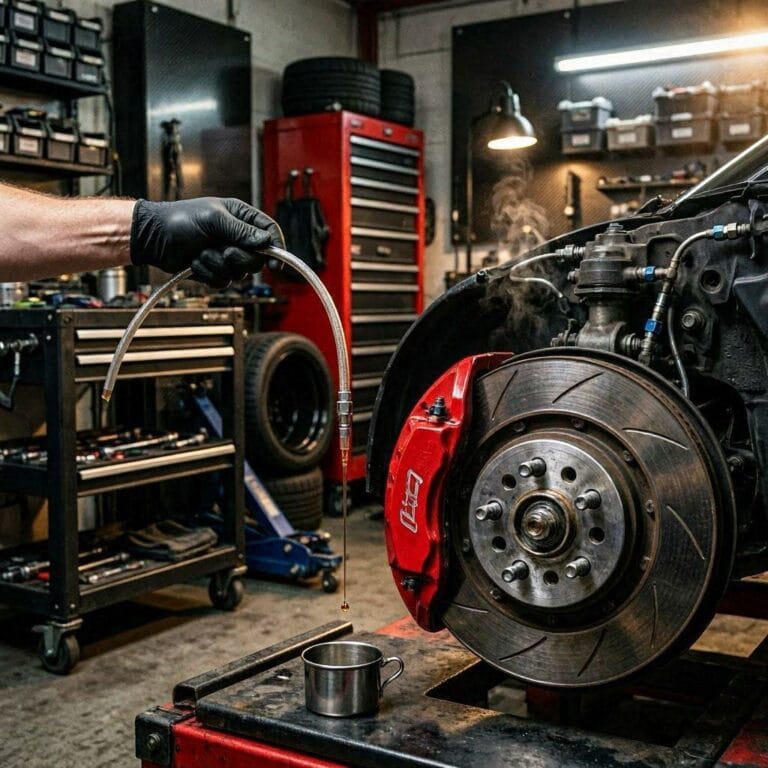
Using your 14mm socket and ratchet, loosen the drain plug by turning counterclockwise. Once loose, finish unscrewing by hand while maintaining upward pressure on the plug. When you feel it release, quickly pull it away (horizontally, not downward) as the oil begins to flow. Be prepared—the initial stream comes fast!
Many DIYers drop the drain plug into the oil pan when removing it. Keep firm upward pressure on the plug as you unscrew the last few threads, then pull it straight toward you (not down) as you remove it. This prevents the plug from falling into the hot, dirty oil.
6
Let Oil Drain Completely
Allow 8-10 minutes for complete drainage. The flow will start fast, then slow to a trickle. While waiting, inspect the drain plug and old crush washer. If the washer is crushed flat or the drain plug threads show damage, now is the time to replace these components. Clean the drain plug with a shop rag to remove old gasket material and metal shavings.
Removing the Old Oil Filter (5 minutes)
Removing the Old Oil Filter (5 minutes)
Removing the Old Oil Filter (5 minutes)
7
Position Pan Under Filter
Move your drain pan under the oil filter location. Even though filters have anti-drainback valves, they still contain 1/4 to 1/2 cup of oil that will spill when removed.
8
Remove the Old Filter
Place your oil filter wrench on the old filter and turn counterclockwise. If it’s stuck, use a strap wrench for better grip, or (last resort) carefully pierce the filter body with a screwdriver and use it as a lever.For cartridge-style filters (common on V6 models), use a 64mm cartridge wrench to unscrew the housing cap. Once loose, let any remaining oil drain before fully removing.
9
Clean the Filter Mounting Surface
Use a clean shop rag to wipe the filter mounting surface on the engine block (or the inside of the filter housing if cartridge-style). Remove any old gasket material, dirt, or oil. A clean surface ensures proper sealing and prevents leaks.
Installing New Components (10 minutes)
Installing New Components (10 minutes)
Installing New Components (10 minutes)
10
Install New Drain Plug Washer
Slide the new copper or aluminum crush washer onto the drain plug. The washer should sit flat against the plug head. If using an aftermarket reusable washer (rubber or nylon), ensure it’s the correct size for your specific Camry model.
11
Reinstall the Drain Plug
Thread the drain plug in by hand to ensure proper alignment—if it feels tight or cross-threaded, stop immediately and realign. Once hand-tight, use your socket and ratchet (or torque wrench) to tighten. The specification is 27-29 lb-ft for most Camrys. If you don’t have a torque wrench, tighten firmly but not excessively—you should feel resistance but shouldn’t need to strain. The new crush washer should compress about 50%.
The number one cause of stripped oil pan threads is over-tightening the drain plug. Remember: you’re threading into aluminum (the oil pan), not steel. The drain plug only needs to be snug, not gorilla-tight. If you can hang your full body weight on the ratchet, you’re over-tightening.
12
Prepare and Install New Filter
For spin-on filters:Open your new oil filter box and locate the filter. Apply a thin film of new oil to the rubber gasket using your finger—this ensures proper sealing and prevents the gasket from binding during installation. Thread the filter on by hand, turning clockwise. Once the gasket makes contact with the mounting surface, tighten an additional 3/4 turn (270 degrees). Do not over-tighten—hand-tight plus 3/4 turn is sufficient.
For cartridge-style filters:Remove the old filter element from the housing and install the new element. Replace the O-rings (usually included with the filter). Lightly oil all O-rings before installation. Thread the housing cap back on and tighten to 18 lb-ft (or hand-tight plus 1/4 turn).
Adding New Oil (10 minutes)
Adding New Oil (10 minutes)
Adding New Oil (10 minutes)
13
Lower the Vehicle
Carefully raise the vehicle off the jack stands using your floor jack, remove the stands, and lower the vehicle to the ground. Give the car another firm shake to ensure everything is secure.
14
Locate the Oil Fill Cap
Open the hood and locate the oil filler cap on top of the engine. It typically has an oil can symbol on it. Remove the cap—this allows air to enter as you pour oil, preventing glugging and overflow.
15
Add New Oil
Place your funnel in the oil filler opening. Refer to your capacity specifications (see table above), but add approximately 1/2 quart less than the total capacity initially. For example, if your 4-cylinder Camry holds 4.7 quarts, add 4 quarts first.
Pour slowly and allow time for the oil to drain down into the pan. Rushing this step can cause overflow and mess.
16
Check Oil Level
Wait 1-2 minutes for oil to settle, then pull out the dipstick (marked with a yellow or orange handle), wipe it clean, reinsert it fully, and pull it out again to check the level. The oil should be between the “Low” and “Full” marks on the dipstick. Add oil in 1/4-quart increments if needed, checking after each addition.
The dipstick has two marks: LOW (or MIN) and FULL (or MAX). The space between these marks typically represents about 1 quart of oil. Your oil level should be near the FULL mark but not over it. Overfilling can cause foaming, increased oil pressure, and potential seal damage.
Final Checks (5 minutes)
Final Checks (5 minutes)
Final Checks (5 minutes)
17
Start Engine and Check for Leaks
Replace the oil filler cap, start the engine, and let it idle for 30 seconds. Watch the oil pressure light on your dashboard—it should turn off within 2-3 seconds of starting. Look under the vehicle for any drips from the drain plug or filter area. If you see leaks, shut off immediately and address the issue (usually a loose drain plug or filter).
18
Final Level Check
Shut off the engine and wait 5 minutes for oil to settle back into the pan. Check the dipstick one final time. The level may have dropped slightly as oil filled the new filter and circulated through the engine. Top off if necessary to reach the FULL mark.
19
Reset Maintenance Reminder
For 2018+ Camry models:Turn the ignition to ON (don’t start engine), press and hold the TRIP button on the instrument cluster, turn ignition OFF, then release the button. This resets the maintenance reminder light.
For 2012-2017 models:Turn ignition to ON, set odometer to Trip A, turn ignition OFF, hold the trip button down, and turn ignition back to ON while holding. Keep holding until the display shows “000000.”
For older models:Some require a diagnostic scanner to reset. Alternatively, disconnect the battery negative terminal for 30 seconds (this will also clear radio presets and clock).
20
Dispose of Old Oil Properly
Pour your used oil into a sealable container (old oil bottles work great). Take the used oil and filter to an auto parts store (AutoZone, O’Reilly, Advance Auto) or recycling center—most accept used oil for free.Never pour used oil down drains, on the ground, or into trash cans. Used motor oil is toxic and illegal to dispose of improperly.
Choosing the Right Oil for Your Camry
Synthetic vs. Conventional Oil
| Factor | Synthetic Oil | Conventional Oil |
|---|---|---|
| Cost per change | $25-40 | $15-25 |
| Change interval | 7,500-10,000 miles | 3,000-5,000 miles |
| Cold weather performance | Excellent (flows at -40°F) | Good (thickens in extreme cold) |
| High temperature protection | Superior (maintains viscosity) | Adequate (breaks down faster) |
| Engine cleanliness | Excellent detergent properties | Good but forms sludge faster |
| Fuel economy | 1-2% better | Baseline |
| Annual cost | $40-80 (2 changes) | $60-125 (4-5 changes) |
Use synthetic oil in your Toyota Camry.While the upfront cost is higher, you’ll actually spend less per year due to extended change intervals (10,000 miles vs 5,000 miles). More importantly, synthetic provides superior protection, especially during cold starts when most engine wear occurs. Toyota recommends synthetic for all 2018+ Camry models and it’s required for 2024+ models using 0W-16 oil.
Best Oil Brands for Toyota Camry
- Mobil 1:Industry-leading synthetic, excellent cold-start protection, extended performance
- Castrol Edge:Strong film strength for high-temperature protection, good value
- Pennzoil Platinum/Ultra Platinum:Made from natural gas (GTL technology), keeps engines extremely clean
- Valvoline Full Synthetic:Budget-friendly option, meets all Toyota specifications
- Royal Purple:Premium synthetic with additive package for high-mileage engines
- Toyota Genuine Motor Oil:OEM-branded oil (usually rebadged Mobil 1), guaranteed compatibility
Oil Change Frequency: How Often Should You Change Oil?
Official Toyota Recommendations
Official Toyota Recommendations
Official Toyota Recommendations
2018+ Camry models (0W-20 or 0W-16 synthetic):10,000 miles or 12 months, whichever comes first.
2012-2017 Camry models (0W-20 synthetic):10,000 miles or 12 months (normal driving); 5,000 miles or 6 months (severe conditions).
2011 and older Camry models (5W-30):5,000 miles or 6 months (conventional oil); 7,500 miles (synthetic oil).
What Qualifies as “Severe Driving Conditions”?
Understanding Qualifies as “Severe Driving Conditions”?
Understanding Qualifies as “Severe Driving Conditions”?
You should follow the severe service schedule (shorter intervals) if you regularly:
- Drive less than 5 miles per trip in normal temperatures
- Drive less than 10 miles per trip in freezing temperatures
- Operate in extremely hot conditions (over 90°F) or dusty environments
- Tow a trailer or use a car-top carrier frequently
- Drive in stop-and-go traffic for extended periods
- Drive on rough, muddy, or salt-covered roads
- Use your vehicle for taxi, police, or delivery service
While Toyota’s 10,000-mile interval is safe with modern synthetic oils, I recommend changing oil every 7,500 miles for peace of mind, especially if you live in extreme climates or drive in severe conditions. Oil is cheap; engines are expensive. The extra $20-30 per year is good insurance for a $5,000-8,000 engine replacement.
Common Oil Change Mistakes to Avoid
1. Over-Tightening the Drain Plug
This is the most common mistake that leads to stripped oil pan threads—a $300-800 repair. The drain plug threads into soft aluminum. Tighten to 27-29 lb-ft or hand-tight plus 1/4 turn with a standard ratchet.
2. Skipping the Crush Washer Replacement
Reusing old crush washers causes slow leaks because the washer doesn’t seal properly after being compressed once. New washers cost $2-4 and prevent messy drips.
3. Not Pre-Filling the Oil Filter
While not critical on the Camry (the filter is mounted horizontally or inverted), pre-filling when possible reduces the time the engine runs without oil pressure. If your filter mounts vertically, pour oil into it until full before installing.
4. Using the Wrong Oil Viscosity
Stick to your owner’s manual specifications. Using 5W-30 in a 2018+ Camry designed for 0W-20 reduces fuel economy and can cause long-term wear. Using 10W-30 or 10W-40 in any modern Camry is asking for trouble.
5. Not Checking for Leaks After First Start
Always run the engine for 30 seconds after an oil change, then shut it off and check underneath for leaks. Finding a leak immediately prevents oil loss and potential engine damage.
6. Mixing Oil Brands or Types
While all oils meeting the same specification (e.g., API SP, ILSAC GF-6) are compatible, different additive packages can interact unpredictably. If you must top off between changes, use the same brand and type when possible.
Troubleshooting Common Oil Change Problems
Oil Leak After Oil Change
Oil Leak After Oil Change
Oil Leak After Oil Change
Likely causes:
- Drain plug not tightened enough or cross-threaded
- Missing or improperly installed crush washer
- Oil filter gasket not properly seated or double-gasketed (old gasket stuck to engine)
- Oil filter not tightened enough (should be 3/4 turn past gasket contact)
Solution:Immediately shut off engine. Jack up vehicle, locate leak source, and correct the issue. Never run engine with active oil leak.
Oil Pressure Light Stays On
Likely causes:
- Insufficient oil (check dipstick immediately)
- Wrong oil filter causing inadequate oil flow
- Oil drain plug not installed (oil lost during test run)
Solution:DO NOT continue running the engine. Check oil level and look for leaks. If level is correct and no leaks exist, you may have a faulty oil pressure sensor.
Can’t Remove Oil Filter
Solutions in order of aggression:
- Use a proper oil filter wrench (cup-style preferred)
- Use a strap wrench for better grip
- Tap the wrench handle with a rubber mallet while applying turning force
- As a last resort: carefully drive a long screwdriver through the filter body near the base (away from the engine), then use it as a lever. This damages the filter but it’s being replaced anyway.
Stripped Drain Plug Threads
Stripped Drain Plug Threads
Stripped Drain Plug Threads
If you’ve stripped the oil pan threads (plug spins freely but won’t tighten):
Temporary solutions:
- Oversized drain plug (e.g., Dorman 65314 – slightly larger thread pitch)
- Self-tapping oversized drain plug
Permanent solution:Install a HeliCoil or TimeSert thread repair kit ($15-30 for kit, 1 hour labor if DIY, $150-300 at shop). This restores the threads to original specifications.
Frequently Asked Questions (FAQ)
Not realistically. While the drain plug might be accessible from the ground on some models, you won’t be able to properly access the oil filter or safely work under the vehicle. Use ramps or jack stands for safe, easy access.
If your Camry has over 75,000 miles and shows signs of minor oil consumption or small leaks, high-mileage oil (Valvoline MaxLife, Castrol GTX High Mileage) can help. These oils contain seal conditioners and friction modifiers designed for older engines. However, if your engine is running well with no leaks or consumption, standard synthetic works fine.
Absolutely yes. Synthetic and conventional oils are fully compatible. You can switch at any time. The myth that switching to synthetic will cause leaks is false—synthetic actually cleans deposits better, which might reveal pre-existing leaks that were previously plugged by sludge. If your engine is healthy, synthetic is always the better choice.
Expect 30-45 minutes for your first time, including setup and cleanup. Once familiar with the process, you can complete an oil change in 20-25 minutes. This is faster than driving to a shop, waiting, and driving home.
Yes, you should. Crush washers (also called drain plug gaskets) are designed to compress once and form a perfect seal. Reusing them often results in slow leaks. At $2-4 each, it’s cheap insurance against oil drips and environmental contamination.
Overfilling by 1/2 quart typically causes no immediate harm. However, overfilling by 1 quart or more can cause oil foaming (reduced lubrication), increased crankcase pressure (seal damage), and potential catalytic converter contamination if oil enters the combustion chamber. If significantly overfilled, drain excess oil through the drain plug until level is correct.
Yes, all oils meeting the same API/ILSAC specifications are compatible and can be mixed. However, for optimal performance, use the same brand and type throughout an oil change interval. Different brands use different additive packages that work best on their own.
Both are fine if you choose quality aftermarket brands. Toyota OEM filters are excellent but cost $8-15. High-quality alternatives include Wix (51515 or 57060), Mobil 1 M1-110A, K&N HP-1010, and Fram Ultra XG7317. Avoid cheap economy filters (basic Fram, SuperTech) as they use inferior filter media.
No, oil turns black quickly—within 500-1,000 miles—because it’s doing its job of suspending combustion byproducts and contaminants. Color is not an indicator of oil condition. As long as you follow proper change intervals, black oil is normal and expected.
Let the filter drain completely into your oil pan (takes 8-12 hours), then wrap it in newspaper or place it in a plastic bag. Take it to any auto parts store or recycling center that accepts used oil—they’ll also take filters. Do not throw filters in regular trash as they contain 6-8 ounces of residual oil.
When to Seek Professional Help
While oil changes are generally DIY-friendly, consider taking your Camry to a professional mechanic if:
- Stripped drain plug threads:Requires HeliCoil installation or oil pan replacement
- Oil leak from unknown source:Could indicate failing seals, gaskets, or engine problems
- Excessive oil consumption:More than 1 quart between changes suggests internal engine wear
- Milky or foamy oil:Indicates coolant contamination (head gasket failure)
- Metallic particles in oil:Signs of internal engine component wear
- Burning oil smell:External leak dripping onto hot exhaust components
Maintaining Your Oil Change Records
Keep a maintenance log in your glove box or use a smartphone app (like Fuelly or Car Minder) to track:
- Date of oil change
- Mileage at change
- Oil brand, viscosity, and quantity used
- Filter brand and part number
- Any observations (leaks, unusual noises, etc.)
This documentation proves maintenance history if you sell the car and helps you identify patterns or problems over time.
Related Articles You May Find Helpful
Related Articles You May Find Helpful
Related Articles You May Find Helpful
- Best Motor Oil for Toyota Camry: Complete Buyer’s Guide
- Toyota Camry Maintenance Schedule: What to Service and When
- How to Check Your Oil Level: The Right Way
- 5 Signs Your Toyota Camry Needs an Oil Change Now
- Toyota Camry Common Problems by Generation: What to Watch For
- How to Reset the Maintenance Required Light on Toyota Camry
- Best Oil Filters for Toyota Camry: OEM vs Aftermarket Comparison
- Understanding Engine Oil Specifications: API, ILSAC, and SAE Explained
- DIY Car Maintenance: 10 Tasks You Can Do at Home to Save Money
- Toyota Camry Buyer’s Guide: Best Years to Buy and Avoid
Final Thoughts
Changing your Toyota Camry’s oil is one of the most rewarding DIY maintenance tasks you can perform. Not only will you save $160-220 annually compared to professional service, but you’ll also gain confidence in your mechanical abilities and ensure your engine receives proper care with quality products.
The process takes less than an hour once you’re familiar with it, and the peace of mind knowing exactly what oil and filter went into your engine is invaluable. Follow this guide, work safely, and your Camry’s engine will reward you with hundreds of thousands of miles of reliable service.
- Use the correct oil specification for your model year (see table)
- Synthetic oil is worth the extra cost for most drivers
- Always replace the drain plug crush washer
- Hand-tighten the filter plus 3/4 turn—never use a filter wrench to install
- Torque drain plug to 27-29 lb-ft or hand-tight plus 1/4 turn
- Check for leaks immediately after first engine start
- Dispose of used oil properly at any auto parts store
- Keep maintenance records for resale value
Top How To Change Oil In Your Toyota Camry – Our Picks
Top How To Change Oil In Your Toyota Camry – Our Picks
Top How To Change Oil In Your Toyota Camry – Our Picks


Have questions about your specific Camry model or encountered a problem during your oil change?Drop a comment below, and our ASE-certified mechanics will help you troubleshoot. Happy wrenching!