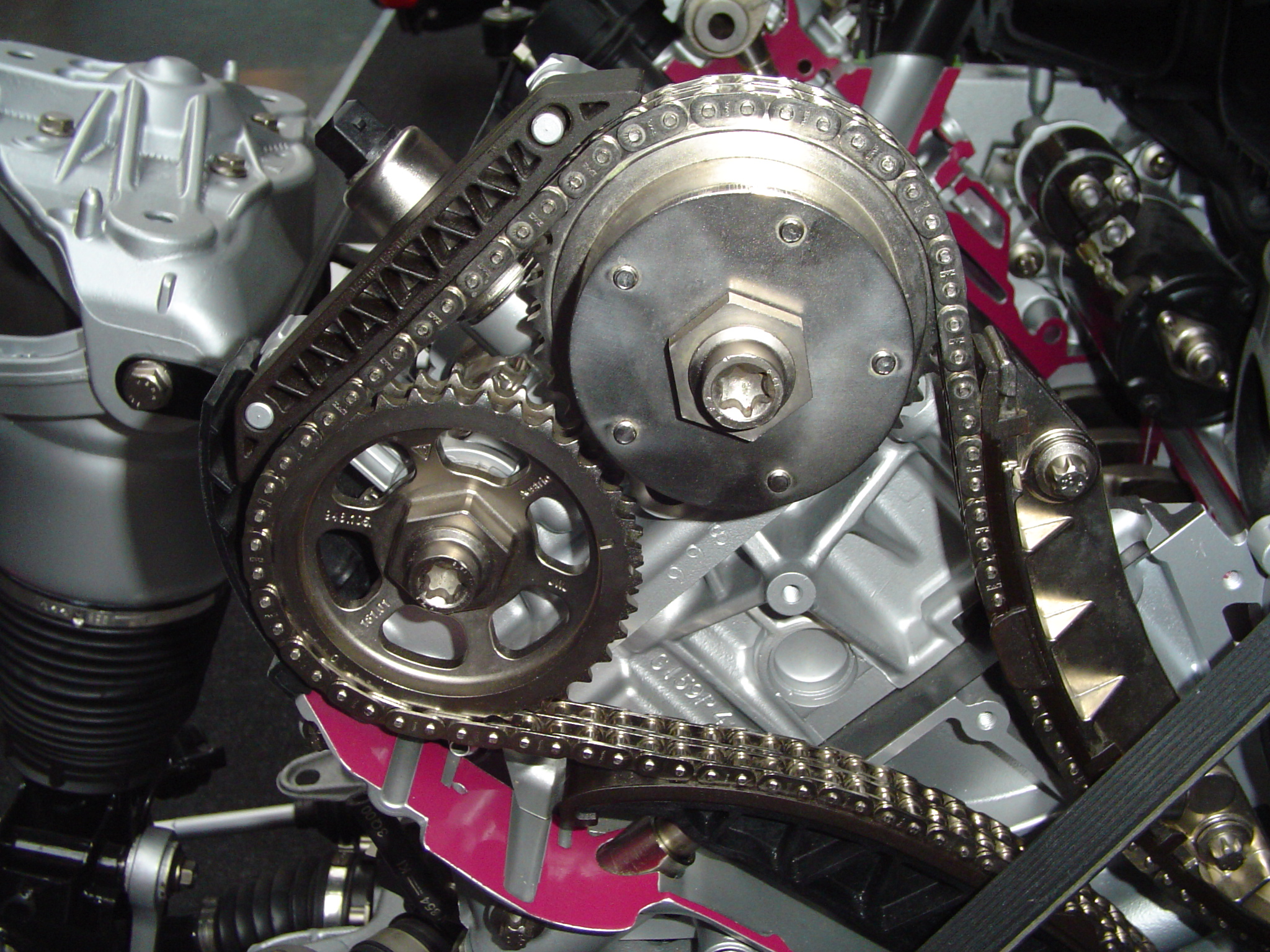
Ford Timing Belt or Chain: The Complete Model-by-Model Breakdown
After 15 years of turning wrenches on everything from rusty Rangers to pristine Mustangs, I’ve learned one absolute truth: Ford loves to keep us guessing. They’ve switched from belts to chains (and sometimes back again) faster than a teenager changes Spotify playlists. Let’s cut through the confusion and get you the straight dope on what’s actually spinning your camshafts.
Before we dive deep, if you’re wondering about the fundamental differences between these two systems, check out this solid breakdown on [timing chain vs belt comparison, Ford timing chain problems, replacement intervals](timing-chain-vs-timing-belt, ford-timing-chain-problems, timing-belt-replacement-interval). Trust me, understanding the “why” behind Ford’s choices will save you headaches down the road.
Four-Cylinder Engines: The Belt-to-Chain Revolution
Ford Focus (2000-2018)
Here’s where Ford’s inconsistency really shines. The early Focus (2000-2004) with the 2.0L Zetec engine? Timing belt, no question. Replace every 120,000 miles or 10 years, whichever comes first. I’ve seen these belts look perfect at 150K and others ready to grenade at 90K—age matters more than mileage on the older rubber.
The 2005-2011 models got the Duratec 2.0L, still belt-driven but with a different interval: 100,000 miles. Then Ford went all-in on chains for the 2012+ models with the Ti-VCT 2.0L. The chain models? They’re supposed to last the life of the engine. “Supposed to” being the operative phrase—I’ve replaced plenty of stretched chains on 120,000-mile Focuses that were anything but “lifetime.”
Ford Fiesta (2011-2019)
Every single Fiesta sold in North America rocks the 1.6L Sigma engine with a timing chain. Good news, right? Well, sorta. The chain itself rarely fails, but the tensioners are another story. I’ve replaced more Fiesta timing chain tensioners than I can count, usually around 80,000-100,000 miles. The symptom? A rattling noise on cold start that sounds like a coffee can full of marbles. Ignore it long enough and you’ll be looking at chain guides turned into plastic confetti.
Ford Escape (2001-2023)
This is where customers get the most confused, and honestly, I don’t blame them. The Escape has flip-flopped more than a politician in election season:
- 2001-2004: 2.0L Zetec – Timing belt (120K mile interval)
- 2005-2012: 2.5L Duratec – Timing belt (100K mile interval)
- 2013-2019: 1.6L/2.0L EcoBoost – Timing chain (lifetime, sorta)
- 2020+: 1.5L/2.0L EcoBoost – Timing chain with major issues
That 2013 customer I mentioned? He’d read online that “all Escapes have chains now” and assumed his 2013 was safe. Nope. The base 2.5L kept the belt through 2012, and Ford didn’t switch the Escape to all-chain until 2013. Even then, only the turbo models got chains initially.
V6 and V8 Engines: When Size Doesn’t Determine Design
Ford Taurus (1996-2019)
The Taurus timeline reads like a engineering soap opera. The bulletproof 3.0L Vulcan (1996-2007) used a timing chain that would probably outlast civilization. I’ve seen these with 300,000 miles on original chains. Then Ford introduced the 3.5L Duratec in 2008, which also uses chains, but with a twist—the water pump is internal and driven by the timing chain. When that pump seizes (and they do), it’s chain replacement time whether you need it or not.
Ford Explorer (1991-2023)
Explorer owners, pay attention because this gets messy:
- 1991-2003: 4.0L Cologne V6 – Timing chain (dual overhead cams)
- 2002-2010: 4.0L SOHC – Timing chain with plastic guides that fail
- 2011+: 3.5L/2.3L EcoBoost – All chains, all problematic
The 4.0L SOHC deserves special mention—it’s chain-driven but uses plastic chain guides that turn brittle after 100,000 miles. I’ve replaced these guides more times than I care to remember, usually after customers ignore the increasingly loud chain rattle for 20,000 miles. By then, the chain has usually eaten through the guide completely and started wearing into the aluminum timing cover. A $600 guide job becomes a $2,500 timing set plus cover replacement.
The EcoBoost Reality Check
Ford’s EcoBoost engines were supposed to be the future—small displacement, turbocharged, timing chain reliability. Reality? These chains stretch worse than my old yoga pants. The 1.6L, 2.0L, and 3.5L EcoBoost engines all suffer from chain stretch issues, typically showing up around 80,000-120,000 miles.
The problem isn’t the chain itself—it’s the combination of extended oil change intervals (thanks, Ford) and direct injection carbon buildup. The timing chain tensioner relies on oil pressure, and when that pressure drops due to sludge or worn components, the chain gets sloppy. Real sloppy.
Symptoms of Timing Chain Stretch (EcoBoost Specific)
- P0016/P0017 codes: Camshaft position correlation errors
- Rough idle: Especially when cold, feels like a minor misfire
- Extended cranking: Takes 3-4 seconds to start instead of immediate
- Loss of power: Turbo boost reduced due to incorrect valve timing
I’ve diagnosed dozens of EcoBoost vehicles with these symptoms, and 9 times out of 10, it’s chain stretch. The fix? Usually $1,200-$1,800 for chain, guides, and tensioners. On the 3.5L, add another $400 because you have to pull the engine to get the timing cover off. Yeah, you read that right.
If you’re experiencing any of these issues, don’t just throw parts at it. Learn about proper [timing chain vs belt comparison, Ford timing chain problems, replacement intervals](timing-chain-vs-timing-belt, ford-timing-chain-problems, timing-belt-replacement-interval) to avoid expensive misdiagnosis.
DIY Replacement: What You’re Actually Getting Into
Timing Belt Replacement (Duratec 2.5L Example)
Must-Have Tools:
- Camshaft locking tool – OTC 6484 or equivalent ($89 on Amazon)
- Crankshaft holding tool – Lisle 60250 ($34)
- Torque wrench – Must read 20-175 ft-lbs accurately
- Serpentine belt tool – Long handle 3/8″ drive
- Basic socket set – 8mm-18mm, mostly 10mm and 13mm
Nice-to-Have Tools:
- Impact gun – For crank bolt removal
- Timing belt tensioner gauge – For perfect belt tension
- Service manual – Alldata or Motor ($30/day access)
Step-by-Step: Duratec 2.5L Timing Belt
Preparation (30 minutes): Remove engine cover, battery negative terminal, and right front wheel. Support engine with jack and wood block under oil pan. Remove upper motor mount.
Lock the cams (15 minutes): Rotate engine to TDC (Top Dead Center) using crank bolt. Install camshaft locking tool through holes in rear of camshafts. If they don’t line up, rotate engine another full revolution.
Remove components (45 minutes): Take off serpentine belt, tensioner, and both timing covers. Mark belt direction with paint pen if reusing (don’t reuse if over 80K miles).
Replace belt (30 minutes): Loosen tensioner pulley, remove old belt. Install new belt starting at crank, then right cam, left cam, tensioner. Ensure all timing marks align perfectly.
Reassembly (60 minutes): Reverse removal procedure. Torque crank bolt to **85 ft-lbs plus 90 degrees**. Yes, it’s a torque-to-yield bolt—replace it if you’re smart.
DIY Cost Breakdown (Duratec 2.5L)
- Gates timing belt kit – $147 (includes belt, tensioner, idlers)
- Camshaft seals – $24 (replace while you’re in there)
- Crankshaft seal – $18
- Coolant – $35 (you’ll lose some during water pump removal)
- Tools (if buying everything) – $200
- Total DIY – $424 (assuming you need all tools)
Professional Cost Comparison
- Dealer price – $1,200-$1,500
- Independent shop – $800-$1,100
- DIY savings – $376-$1,076
Common Ford Timing System Failures (From Real Shop Experience)
The 4.0L SOHC “Death Rattle”
Mentioned earlier but worth repeating—if you own a 2002-2010 Explorer or Ranger with the 4.0L SOHC, listen for chain rattle on startup. The plastic chain guides fail around 100K miles, and when they do, it’s expensive. I’ve seen quotes from other shops for $3,500+ because they want to replace everything “just in case.” Reality? If caught early, you’re looking at $800 in parts and 8 hours labor. Still not cheap, but better than a new engine.
The EcoBoost Chain Stretch Saga
Every EcoBoost owner needs to know this: change your oil every 5,000 miles, not the 10,000-mile interval Ford suggests. The timing chain tensioner is hydraulic, and dirty oil kills it. I’ve got a customer with a 2015 F-150 3.5L EcoBoost that’s pushing 180,000 miles on the original chain. His secret? 5,000-mile oil changes with full synthetic and a new filter every time. His brother has the same truck, ignored the oil changes, and paid $1,800 for a timing set at 95,000 miles.
The Zetec Belt Tensioner Catastrophe
Early Focus and Contour models with the 2.0L Zetec had a nasty habit of throwing timing belt tensioners. Not just failing—literally breaking apart and letting the belt skip teeth. If you’ve got a Zetec engine, replace the tensioner every belt change, no exceptions. I’ve seen too many “I just did the belt” engines come in with bent valves because someone cheaped out on the tensioner. The part is $89. A valve job is $2,000. You do the math.
Maintenance Schedules That Actually Make Sense
Ford’s official maintenance schedules are written by lawyers, not mechanics. Here’s what I tell my customers based on what I’ve seen actually fail:
| Engine | Ford’s Interval | Real-World Recommendation | Why |
|---|---|---|---|
| 2.0L Zetec (belt) | 120K miles | 100K miles or 8 years | Rubber ages, tensioners fail |
| 2.5L Duratec (belt) | 100K miles | 80K miles or 7 years | Water pump seizes, takes belt with it |
| 4.0L SOHC (chain) | “Lifetime” | Check guides at 100K | Plastic guides fail predictably |
| EcoBoost (chain) | “Lifetime” | Check stretch at 80K | Chains stretch, tensioners fail |
Confused about when to actually service your timing components? This guide on [timing chain vs belt comparison, Ford timing chain problems, replacement intervals](timing-chain-vs-timing-belt, ford-timing-chain-problems, timing-belt-replacement-interval) breaks down real-world intervals based on actual failure data, not marketing fluff.
Buying Used: Red Flags to Spot
After 15 years of post-purchase inspections, I’ve developed a nose for timing system problems. Here’s what to look for when shopping for a used Ford:
The Cold Start Test
Always insist on a cold start. A warm engine can hide a multitude of timing sins. Listen for:
- Chain rattle: Should quiet down within 2-3 seconds max
- Belt slap: Listen for slapping sounds from timing cover
- Extended cranking: More than 3 seconds indicates possible timing issues
The Paper Trail Inspection
Ask for service records and look specifically for:
- Timing belt receipts: Should show belt, tensioner, and idler replacement
- Oil change intervals: Skip the 10K+ mile cars for EcoBoost models
- Chain-related TSBs: Check if recalls were performed
The Professional Inspection
Spend the $150 for a pre-purchase inspection. A good mechanic will:
- Pull the cam sensor and check for metal shavings
- Scan for pending timing-related codes
- Check oil condition (sludged oil = timing problems incoming)
- Listen with a mechanic’s stethoscope for chain noise
Frequently Asked Questions (The Real Ones Customers Ask)
Q: My dealer says my chain is “lifetime” but I’m at 120K miles. Should I worry?
A: “Lifetime” is marketing speak for “until it fails.” On EcoBoost engines, have a mechanic check chain stretch with a scan tool. If you’re showing cam correlation codes or the engine rattles on startup, it’s time. I’ve replaced “lifetime” chains on 90,000-mile trucks and seen others last 200K. Maintenance matters more than marketing.
Q: Can I just replace the timing belt myself to save money?
A: If you’ve got solid mechanical skills, yes. But—and this is huge—if it’s an interference engine (most Fords are) and you get the timing wrong by even one tooth, you’ll bend valves. I’ve seen DIY attempts that saved $800 turn into $3,000 valve jobs. If you’re not 100% confident, pay a professional. Your engine will thank you.
Q: Why does my friend’s Honda go 200K on original timing belts but my Ford needs replacement at 100K?
A: Different engineering philosophies. Honda uses beefier belts and non-interference designs on many engines—break a belt, the engine just stops. Ford prioritizes performance and packaging, using interference designs that squeeze more power from smaller displacements. Trade-off: shorter belt life but better fuel economy and power. Plus, Honda’s recommended intervals are conservative; Ford’s are… optimistic.
Q: My 2015 Escape EcoBoost rattles for 2 seconds on cold start. Is this normal?
A: Two seconds is borderline. One second or less is normal. Three seconds plus means your chain tensioner is failing. At 2 seconds, change your oil immediately (5W-30 full synthetic) and see if it improves. If it doesn’t quiet down within 500 miles, budget for chain tensioner replacement. I’ve seen these go from “minor rattle” to “engine damage” in under 10,000 miles.
Q: Should I replace the water pump when doing the timing belt?
A: Absolutely, positively yes. The water pump is driven by the timing belt on most Fords, and it’s a $60 part that requires $400 worth of labor to access. I’ve seen customers cheap out on the pump, only to have it fail 20,000 miles later. Then they’re paying for the entire timing belt job again just to replace a $60 pump. Replace it while you’re in there—every single time.
Q: What’s the real cost difference between dealer and independent shop timing chain replacement?
A: Dealers typically charge $1,800-$2,500 for EcoBoost chain jobs because they replace everything (chains, guides, tensioners, phasers) and warranty the work. Independents range $1,200-$1,800 depending on what they replace. The catch? Some independents cut corners by only replacing the stretched chain. Six months later, you’re back for the tensioners that should’ve been replaced the first time. Ask for an itemized quote and compare parts lists, not just bottom-line prices.
Q: Can I prevent timing chain problems with better maintenance?
A: On chain engines, absolutely. Change oil every 5,000 miles with full synthetic, use quality filters, and don’t ignore check engine lights. Chain stretch is directly related to oil quality and change intervals. For belt engines, not really—rubber ages regardless. But you can prevent catastrophic failures by following realistic replacement intervals, not the extended ones in your owner’s manual.
Q: My 2008 Explorer 4.0L sounds like a diesel at startup. Is this the timing chains?
A: Bingo. The 4.0L SOHC is notorious for chain guide failure. That diesel clatter is the timing chain slapping around because the plastic guides have disintegrated. Get it fixed ASAP—I’ve seen these eat through the timing cover when ignored, turning a $1,200 repair into a $3,000 nightmare. The guides fail due to heat and age, not mileage. I’ve seen them fail at 80K and others last 180K.
conclusion
After 15 years of replacing timing components, here’s the straight truth: Ford’s timing systems are neither universally terrible nor universally bulletproof. They’re like any mechanical component—designed by engineers, built by the lowest bidder, and maintained (or neglected) by owners. The difference between a Ford that hits 200,000 miles trouble-free and one that grenades at 90K usually comes down to two things: following realistic maintenance schedules and addressing problems when they’re small, not when they’re expensive.
Whether your Ford rocks a timing belt or chain, the key is knowing which one you have and what it actually needs—not what the marketing department claims. Check your specific engine code, follow the real-world intervals I’ve outlined, and don’t ignore the early warning signs. That rattle on startup might cost $200 to fix today, but $2,000 to fix next year. Your engine (and your wallet) will thank you for paying attention.
And remember—that customer with the snapped timing belt on his wife’s Escape? He now owns a Toyota. Sometimes the best timing system is the one you don’t have to think about. But if you’re sticking with Ford (and honestly, most of us do), at least now you know exactly what you’re dealing with under that timing cover.