Replace your fuel filter every 30,000-50,000 miles for most vehicles, or 15,000 miles if you frequently drive on dusty roads or use lower-quality fuel. DIY cost: $15-60 for parts. Professional service:$80-180 depending on location and vehicle type.
It’s a humid Tuesday morning in July, and Mr. Rodriguez’s 2012 Silverado just rolled into my bay on the back of a flatbed. “Truck just died on the highway,” he says, sweat dripping despite the shop’s AC. “Has 127,000 miles, never had any problems.” I pop the hood, grab my fuel pressure gauge, and get 8 PSI at the rail when I should see 55-62 PSI. “When’s the last time you changed the fuel filter?” I ask. He looks at me like I just spoke French. “Trucks got one of those?”
Three hours later, I’ve cut open his original factory filter—127,000 miles of gasoline varnish and rust particles packed solid. The paper element looks like it’s been dipped in molasses. “This filter’s been slowly killing your fuel pump for the last 50,000 miles,” I tell him, handing him the $1,200 estimate for a new pump assembly. “A $25 filter every 30,000 miles would’ve prevented this.” He stares at the estimate, then at the blackened filter, understanding dawning on his face.
This story plays out weekly in my shop. I’ve seen fuel pumps die at 80,000 miles because owners thought “lifetime filter” meant forever. Let me show you how to avoid becoming another expensive lesson in fuel system neglect.
What Does a Fuel Filter Actually Do?
Parts & Tools You’ll Need
As an Amazon Associate, VehicleBar earns from qualifying purchases at no extra cost to you.
Parts

Tools
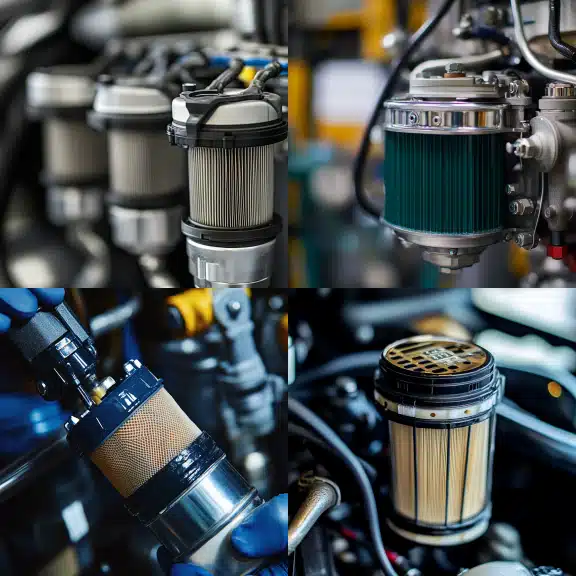
Before we get our hands dirty, you need to understand why this seemingly simple component matters so much. Your fuel filter is the last line of defense between contaminants in your gas tank and your expensive fuel injectors.
The Real Story Behind Fuel Contamination
I’ve cut open hundreds of fuel filters over the years, and I’ve found everything from rust flakes to plastic shavings to what looked suspiciously like glitter. That “clean” gasoline you’re pumping? It picks up contaminants from storage tanks, delivery trucks, and even your own vehicle’s fuel tank as it ages.
Filter Efficiency:Most fuel filters remove particles as small as 10 microns—that’s 0.0004 inches. Your fuel injectors have openings around 50-200 microns, so that filter is catching debris that would absolutely destroy your fuel system components.
Why Modern Fuel Filters Matter More Than Ever
Your grandpa’s carbureted 350 could run with a dirty fuel filter for years. Modern direct-injection engines? They’ll strand you on the highway with a filter that’s only 70% clogged. I’ve seen 2018 vehicles with 60,000 miles lose power and set misfire codes because the factory filter was restricting flow by just 15%.
When to Replace Your Fuel Filter
Here’s where I see the most confusion. Everyone asks about mileage intervals, but the real answer depends on multiple factors:
Fuel Filter Change Interval Guidelines
Standard Conditions:
- Most Vehicles:Every 30,000-50,000 miles
- Highway Cruising:Every 50,000 miles
- City/Stop-and-Go:Every 30,000 miles
Severe Conditions (Cut intervals in half):
- Dusty/Dirt Roads:Every 15,000-25,000 miles
- Lower-Quality Fuel:Every 20,000 miles
- Frequent Short Trips:Every 25,000 miles
- Vehicle Sits for Months:Every 2 years regardless of miles
Pro Tip:I replace the filter on my personal vehicles every 25,000 miles regardless of what the owner’s manual says. At $25 for a filter versus $800 for a fuel pump, it’s the cheapest insurance you can buy. I’ve got 280,000 miles on my 2004 F-150 with the original fuel pump—proof that clean filters save pumps.
Fuel Filter Symptoms: What to Watch For
I can diagnose a clogged fuel filter in my sleep after 15 years. Here’s what I look for:
The Classic Warning Signs
1. Power Loss Under Load
This is the big one. Your car runs fine around town but falls on its face climbing hills or merging onto the highway. The engine computer demands more fuel, but the clogged filter can’t deliver. I’ve seen vehicles that could barely maintain 45 mph on highway grades with a severely restricted filter.
2. Random Misfires and Hesitation
Starved for fuel, cylinders run lean and misfire. The check engine light comes on with P0300 (random misfire) codes. Customers describe it as “bucking” or “surging” during acceleration. I’ve chased these symptoms for hours before realizing it was just a dirty filter.
3. Hard Starting (Especially When Hot)
Requires extended cranking to start, particularly after sitting in traffic. Hot fuel is thinner, making it harder to push through a restricted filter. I’ve had customers swear they needed a new fuel pump when it was just a $20 filter.
4. Engine Stalls at Idle
The filter is so clogged that even at idle, fuel flow is marginal. Any additional load (A/C compressor kicking on, turning the wheel) causes the engine to stumble or die. This is end-stage filter clogging—don’t ignore it.
Critical:These symptoms mimic fuel pump failure, dirty fuel injectors, and even ignition problems. I always check fuel pressure and volume before condemning any component. Learn about [fuel pump diagnosis, fuel injector cleaning,acceleration issues, fuel pressure problems](fuel-pump-problems-diagnosis,fuel-injector-cleaning-guide,poor-acceleration-causes,fuel-pressure-regulator-problems) before throwing parts at the problem.
Fuel Filter Types and Locations
Not all fuel filters are created equal, and finding yours is half the battle:
Inline Fuel Filter (Most Common)
These screw into the fuel line between the tank and engine. Usually mounted under the vehicle along the frame rail. I love these—they’re accessible and serviceable. Most 90s-2000s vehicles use this design.
Common Locations:
– Driver-side frame rail (Ford trucks)
– Passenger-side frame rail (GM trucks)
– Under rear seat access panel (some Hondas)
– Engine compartment firewall (older vehicles)
Cartridge Filter (Modern Nightmare)
Built into the fuel pump assembly inside the tank. “Lifetime” filters that aren’t really lifetime. Requires dropping the tank or accessing through an interior panel. I charge 2-3 hours labor because it’s genuinely a pain.
Integral Filter (The Worst)
Part of the fuel pump assembly and not serviceable separately. When it clogs, you replace the entire $400-800 pump assembly. Thanks, engineers. Most 2010+ vehicles use this design to “reduce maintenance.”
DIY Fuel Filter Replacement: Tools and Reality Check
I’ve guided hundreds through this job. Some save $150 in 20 minutes; others create expensive problems. Here’s what you actually need:
Must-Have Tools
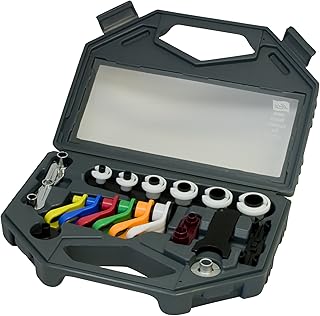
- Fuel Line Disconnect Tools:$8-15 (plastic set works fine)
- Safety Glasses:$5-10 (fuel in your eyes ruins your day)
- Drain Pan:$10-15 (catches spilled fuel)
- Shop Rags:$5 (you’ll need many)
- Jack and Jack Stands:$50-100 (if no lift access)
Nice-to-Have Tools
- Fuel Pressure Gauge:$25-40 (for testing after installation)
- Line Clamps:$12-20 (minimizes fuel spillage)
- Fire Extinguisher:$20-30 (gasoline + sparks = bad day)
- Service Manual:$20-40 (for torque specs and procedures)
CRITICAL SAFETY:Gasoline is extremely flammable. Work on a cold engine, disconnect the battery negative terminal, and have a fire extinguisher nearby. I’ve seen fuel spray ignite from a shop light bulb—use only sealed LED lights. Work outdoors or in a well-ventilated garage. If you smell fuel, stop and find the leak.
Step-by-Step: Inline Fuel Filter Replacement
Here’s my proven process for safe, spill-free filter replacement:
Relieve fuel pressure.Remove fuel pump fuse or relay, start engine and let it run until it dies. This removes pressure from lines—skip this and you’ll get a gasoline shower. Crank engine 5 seconds after it dies to remove remaining pressure.
Disconnect battery negative terminal.Prevents accidental sparks when working with fuel lines. I’ve seen guys skip this and get lucky—until they didn’t.
Locate and access the filter.Usually along frame rail. May need to remove plastic shielding. Position drain pan under filter—expect 1-2 cups of fuel spillage.
Note fuel flow direction.Filters have arrows showing flow direction. New filter must go same way. I’ve seen guys install backwards—car runs for 5 minutes then dies.
Disconnect fuel lines.Use proper disconnect tool—don’t force lines. Push tool into connector, then pull line straight off. Some require squeezing tabs while pulling. Expect some fuel spillage.
Remove filter mounting bracket.Usually one 10mm or 13mm bolt. Support filter while removing—don’t let it fall and bend lines.
Install new filter.Mount in bracket first, then connect lines. Lines should click/snap into place firmly. Tug gently to confirm connection.
Reinstall fuel pump fuse/relay and battery connection.Turn key to “on” position for 5 seconds (don’t start) to pressurize system. Check for leaks. Repeat 2-3 times.
Start engine and check for leaks.Let idle 5 minutes, checking all connections. Rev engine to 2500 RPM several times—pressure increases under load. No leaks? You’re done.
Pro Tip:Take photos before disconnecting anything. Fuel line routing can be confusing, and a quick photo saves hours of head-scratching. I learned this the hard way after spending 45 minutes figuring out which line went where on a Ford Ranger.
Cost Analysis: DIY vs Professional
Let’s talk real money—I’ve done this job hundreds of times on both sides:
DIY Fuel Filter Replacement Costs
Parts:
- Fuel Filter:$12-45 (depends on vehicle)
- Shop Supplies:$5-10 (rags, cleaner)
- Total Parts:$17-55
Tools (if needed):
- Line Disconnect Set:$8-15
- Drain Pan:$10-15
- Safety Equipment:$15-25
- Total Tools:$33-55 (one-time cost)
Total DIY Cost:
- First Time:$50-110 (including tools)
- Subsequent Services:$17-55
- Time Investment:30-90 minutes
Professional Service Costs
Independent Shop:
- Labor:$60-120 (0.7-1.5 hours)
- Parts Markup:$20-60
- Total:$80-180
Dealership:
- Labor:$90-150 (0.7-1.5 hours)
- OEM Parts:$35-80
- Total:$125-230
Add-on Services (often recommended):
- Fuel System Cleaning:$50-100
- Fuel Pressure Test:$25-45
- Fuel Injector Service:$80-150
Troubleshooting Common Problems
I’ve fielded hundreds of post-service calls. Here’s what goes wrong and how to fix it:
“It still runs rough after the new filter”
Check:Did you actually solve the problem? A clogged filter rarely causes rough running—it causes power loss and stalling. You might have dirty fuel injectors or ignition issues. I’ve seen customers chase fuel delivery problems for weeks when they had bad spark plugs.
“Fuel is leaking from the connections”
Check:Lines aren’t fully seated. Push connectors in until you hear/feel the click. Some require significant force. If still leaking, you may have damaged the quick-connect fittings—replace the fuel line section. I’ve done this more times than I care to admit.
“The engine won’t start after filter replacement”
Check:Did you reconnect everything? Fuel pump fuse/relay back in? Battery reconnected? Lines installed backwards? I once spent an hour troubleshooting a no-start only to realize I’d left the fuel pump relay on my toolbox.
“It starts but dies immediately”
Check:System isn’t staying pressurized. Look for leaks, but also check that you installed the filter in the correct direction. Reverse installation allows fuel to bypass the filter element. The engine runs for 30-60 seconds until the small amount of filtered fuel in the lines is used up.
Professional Repair Costs for DIY Mistakes:
- Damaged fuel lines:$150-400 (line replacement)
- Fire damage:$500-2,500 (wiring, fuel lines, paint)
- Towing:$75-150 (when car won’t start)
- Diagnostic time:$80-120/hour (for mystery problems)
Money-Saving Tips from the Shop
I’ve learned tricks that save customers hundreds without cutting corners:
Buy Quality Filters, Not Expensive Ones
Fram, Wix, and Purolator make excellent filters for $12-25. Don’t pay $45 for a “premium” filter unless you’re driving a performance vehicle. I’ve cut open $50 filters and $15 filters—same paper element inside, different paint job.
Combine with Other Maintenance
Doing oil change or other under-car work? Do the fuel filter while you’re down there. I charge less labor when the car’s already on the lift for other services. Many shops will discount the second service.
Know When to Skip It
Some modern vehicles have “lifetime” filters in the tank. If your service manual doesn’t list replacement intervals and you can’t find an external filter, don’t create problems by looking for one. I get customers who want me to “find” their fuel filter on vehicles where it’s integral to the pump.
Prevent the Problem
Buy fuel from busy stations with high turnover. Avoid stations during fuel delivery—stirred-up sediment gets pumped into your tank. I’ve seen filters clog prematurely on customers who always use the same slow-turnover station.
Frequently Asked Questions
How much does fuel filter replacement cost?
DIY costs $15-60 for the filter plus $10-30 for basic tools if you don’t have them. Professional service runs $80-180 at independent shops, $125-230 at dealerships. The difference is mostly labor—it’s a 30-minute job on most vehicles but shops charge minimum labor times. I’ve done filters in 15 minutes on Ford Rangers and spent 2 hours fighting rusted lines on Northeast trucks.
How often should I change my fuel filter?
Every 30,000-50,000 miles for most vehicles, or 15,000-25,000 if you drive on dusty roads or buy fuel from sketchy stations. Check your owner’s manual, but ignore “lifetime” claims—I’ve replaced too many “lifetime” filters that looked like tar. City driving with frequent stops is harder on filters than highway cruising. If your vehicle has 100,000 miles and unknown filter history, change it immediately.
Can a clogged fuel filter damage my engine?
Not directly, but it will kill your fuel pump. The pump works harder to push fuel through a restricted filter, generating heat and wearing out faster. I’ve seen $25 filters cause $800 pump failures. Running lean from fuel starvation can also damage catalytic converters over time. The real damage is financial—neglect a $25 filter and you’re buying a $400-800 pump assembly.
What are the symptoms of a bad fuel filter?
Power loss under load (climbing hills, highway merging), engine stumbling during acceleration, hard starting especially when hot, and random misfires. The classic sign is running fine at idle but falling on its face when you need power. I’ve diagnosed hundreds of “mystery” performance issues that were just clogged filters. If your car feels like it’s running out of gas but the tank is full, check the filter.
Is it hard to change a fuel filter yourself?
On most vehicles, it’s a moderate DIY job taking 30-90 minutes. You need basic tools and comfort working with fuel systems. The hardest part is often access—some filters are tucked up in frame rails. Rusty fuel line connections can be challenging in Northern states. If you’re not comfortable working with gasoline or don’t have proper tools, pay a professional. The fire risk isn’t worth saving $100.
What’s the difference between inline and in-tank filters?
Inline filters are external, serviceable units along the frame rail or engine compartment. In-tank filters are part of the fuel pump assembly inside the gas tank. Most 2005+ vehicles use in-tank “lifetime” filters that aren’t really lifetime. I can replace an inline filter in 20 minutes for $25. In-tank filters require dropping the tank or accessing through the floor—2-3 hours labor and $200-400 total cost.
Will changing my fuel filter improve gas mileage?
Only if your old filter was severely restricted. A slightly dirty filter won’t affect mileage enough to measure. If your filter is clogged enough to hurt fuel economy, you’ll notice power loss and drivability issues first. I’ve had customers claim 2-3 MPG improvements after filter changes, but these are usually vehicles with 80,000+ mile filters that were genuinely restricting flow. Don’t expect miracles from a routine filter change.
Can I clean and reuse a fuel filter?
Absolutely not. Fuel filters use special paper elements that can’t be cleaned effectively. I’ve seen guys try to blow them out with compressed air—it removes the big stuff but leaves the varnish and fine particles that cause real problems. Plus, you can’t inspect the internal element for tears or damage. At $15-40 for a new filter, it’s not worth the risk of injecting debris into expensive fuel injectors.
The Bottom Line
After 15 years of cutting open fuel filters and explaining $1,200 fuel pump replacements, here’s my mechanic’s perspective:fuel filter replacementis the most overlooked maintenance that saves the most money. It’s a $25 part that prevents $800 pump failures, and it takes less time than an oil change on most vehicles.
The difficulty level ranges from easy (inline filters on trucks) to moderate (cars with access issues) to difficult (in-tank designs). If you’ve got basic tools and common sense, tackle the external filters yourself. For in-tank designs or if you’re not comfortable with fuel systems, pay a professional—it’s still cheaper than a new fuel pump.
Whether you do it yourself or pay someone, change that filter before you notice symptoms. Because when a fuel filter fails completely, it doesn’t strand you in your driveway—it leaves you on the side of the highway wondering why you didn’t spend that $25 when you had the chance. I’ve towed too many vehicles that could’ve been saved by a simple filter change. Don’t be the next lesson I use to teach customers about fuel system maintenance.