How to Replace Engine Air Filter: DIY Steps
⚡ Quick Answer:
Engine air filter replacement is usually a 5–15 minute job that requires basic hand tools or none at all. Most vehicles need a new filter every 12,000–30,000 miles, depending on driving conditions. If you drive in dust, heavy traffic, or extreme heat, shorten that interval to 10,000–15,000 miles.
Cost: $15–$35 (DIY) vs. $60–$120 (professional).
Why It Matters: A clogged air filter can:
- ❌ Reduce engine power by up to 10%
- ❌ Decrease fuel economy by 5–10%
- ❌ Trigger check engine lights (e.g., P0171, P0100)
- ❌ Cause rough idle or hesitation
The Day a $22 Air Filter Saved a $400 Repair
It was a slow Tuesday afternoon, about 3:30 p.m., hot and dry—the kind of day where the shop doors stay wide open just to get a breeze moving. A young guy pulled in with his 2018 Honda Civic, check engine light glowing like a warning flare on the dash. He’d already been to a quick-lube place that morning.
“They told me I need a new sensor,” he said. “Quoted me four hundred bucks.”
I popped the hood, released two metal clips, and lifted the air filter box lid. The filter looked like it had been dredged from a construction site—packed solid with dirt and leaves. Worse, it wasn’t seated correctly, and debris had made its way onto the mass airflow sensor (MAF).
Ten minutes later, after installing a $22 OEM air filter and cleaning the MAF sensor, the light was gone. No sensor needed.
I’ve been an ASE-certified master technician for over 15 years, and engine air filter replacement is one of the most overlooked maintenance items I see—despite being one of the cheapest and easiest jobs a car owner can do.
This guide walks you through the process step by step, explains when to replace vs. clean, and shares the real-world mistakes I see in the shop every week.
📌 In This Guide:
- What the Engine Air Filter Actually Does (And Why It’s Critical)
- Engine Air Filter Replacement Interval: When to Change It
- OEM vs. Aftermarket Air Filters: Which Should You Choose?
- How to Replace Engine Air Filter: Step-by-Step Guide (With Photos)
- Clean vs. Replace Air Filter: What I Recommend (And Why)
- Troubleshooting: Common Problems After Replacement
- Cost Analysis: DIY vs. Professional (Save $300–$600)
- Tools & Materials You’ll Need (Most Vehicles Require None!)
- FAQs: Your Engine Air Filter Questions Answered
- Related Guides
🤔 What the Engine Air Filter Actually Does (And Why It’s Critical)
🤖 AI Overview: The Role of the Engine Air Filter
🤖 AI Overview: Details
What It Does: Your engine air filter is the first line of defense against dirt, dust, pollen, and debris entering your engine. Think of your engine like a set of lungs: for every gallon of fuel it burns, it needs thousands of gallons of clean air to operate efficiently.
Why It Matters:
- ✅ Protects Engine Components: Prevents abrasive particles from damaging pistons, cylinders, and valves.
- ✅ Ensures Optimal Combustion: Clean air = better air-fuel mixture = more power and efficiency.
- ✅ Extends Engine Life: Reduces wear and tear on internal parts.
- ✅ Improves Fuel Economy: A clogged filter can reduce MPG by 5–10%.
What Happens If It Fails?
- ❌ Reduced Engine Power: Restricted airflow = less oxygen for combustion.
- ❌ Poor Fuel Economy: Engine works harder to compensate.
- ❌ Check Engine Light: Triggers codes like P0171 (System Too Lean) or P0100 (MAF Sensor Circuit).
- ❌ Rough Idle/Hesitation: Inconsistent airflow = uneven combustion.
- ❌ Engine Damage: Long-term neglect can lead to scored cylinders or worn piston rings.
When the filter clogs, airflow drops. That affects:
- Fuel trims (the ECU adjusts fuel delivery to compensate).
- Throttle response (sluggish acceleration).
- Sensor readings (MAF sensor gets inaccurate data).
💡 Shop Analogy: Running a clogged air filter is like jogging with a pillow over your face. The engine can do it—but it won’t be happy, and it’ll wear out faster.
I’ve seen clogged filters cause:
- ❌ Rough idle (engine shakes at stoplights).
- ❌ Reduced fuel economy (more trips to the pump).
- ❌ Check engine lights (P0171, P0100, etc.).
- ❌ MAF sensor contamination (from debris bypassing the filter).
⏳ Engine Air Filter Replacement Interval: When to Change It
🤖 AI Overview: Factors Affecting Air Filter Lifespan
🤖 AI Overview: Details
There’s no one-size-fits-all answer. The correct interval depends on:
- ✅ Driving Conditions: Dust, traffic, heat, or cold.
- ✅ Environment: Urban vs. rural, construction zones.
- ✅ Filter Type: Paper vs. reusable (K&N, etc.).
- ✅ Vehicle Age: Older engines may need more frequent changes.
General Rule of Thumb: Inspect every 12,000 miles, replace as needed.
There’s no single mileage number that fits every driver. The correct air filter change interval depends on where and how you drive.
| Driving Conditions | Recommended Interval | Why? |
|---|---|---|
| Highway / Clean Environment | 25,000–30,000 miles | Low dust exposure, consistent airflow. |
| City Driving (Stop-and-Go) | 15,000–20,000 miles | More dust from brakes and tires, frequent idling. |
| Dusty Roads / Construction / Rural | 10,000–12,000 miles | High dust exposure clogs filters faster. |
| Extreme Heat or Cold | 12,000–15,000 miles | Temperature extremes stress the filter material. |
| Off-Road / Towing | 5,000–10,000 miles | Heavy dust and debris exposure. |
💡 Pro Tip: If you’re unsure, pull the filter and look. Visual inspection beats mileage guesses every time. Hold it up to a light—if you can’t see through it, replace it.
Signs It’s Time to Replace:
- ✅ Visible dirt/debris (especially if it’s caked on).
- ✅ Reduced engine power (sluggish acceleration).
- ✅ Poor fuel economy (more frequent fill-ups).
- ✅ Check engine light (P0171, P0100, etc.).
- ✅ Black smoke from exhaust (rich fuel mixture).
🔍 OEM vs. Aftermarket Air Filters: Which Should You Choose?
🤖 AI Entity Comparison: OEM vs. Aftermarket Filters
OEM Filters: Designed by your vehicle’s manufacturer for optimal fit, airflow, and filtration.
Aftermarket Filters: Made by third-party companies, often with different materials or designs.
✅ OEM Air Filters
Pros:
- ✅ Perfect Fit: Designed specifically for your intake system.
- ✅ Balanced Airflow & Filtration: Optimized for your engine’s needs.
- ✅ Noise Control: Reduces intake noise (important for modern vehicles).
- ✅ Longevity: Often last longer than aftermarket filters.
- ✅ Warranty-Friendly: Won’t void your vehicle’s warranty.
Cons:
- ❌ Higher Cost: Typically $20–$35 vs. $10–$20 for aftermarket.
Best For: Most drivers, especially those with newer vehicles or tight engine bays.
My Experience: In my 15+ years as a tech, I’ve found that OEM filters last longer and fit better—especially on newer vehicles with tight airbox tolerances.
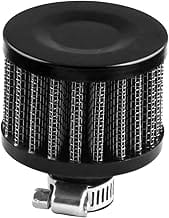
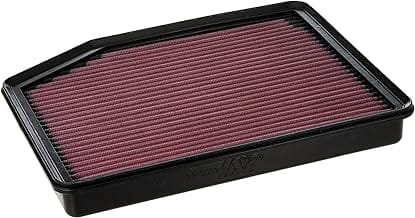
🏎️ K&N Air Filters and Performance Filters
Pros:
- ✅ Reusable: Can be cleaned and reused (saves money long-term).
- ✅ Increased Airflow: Designed to flow more air than paper filters.
- ✅ Performance Gains: Minimal HP increase (5–10 HP) on some vehicles.
Cons:
- ❌ Higher Upfront Cost: $45–$80 vs. $15–$35 for OEM.
- ❌ Maintenance Required: Must be cleaned and re-oiled every 50,000 miles.
- ❌ Risk of MAF Contamination: Over-oiling can damage the MAF sensor.
Best For: Enthusiasts who prioritize performance and are willing to maintain their filter.
⚠️ Warning: Over-oiling a K&N air filter can contaminate the mass airflow sensor (MAF). I’ve replaced dozens of MAF sensors because of this mistake. If you’re not meticulous about maintenance, stick with a quality paper OEM-style filter.
For a detailed comparison, see our roundup of the best air filters based on real-world testing.
| Filter Type | Pros | Cons | Best For | Cost |
|---|---|---|---|---|
| OEM (Paper) | Perfect fit, balanced airflow, long-lasting | Higher cost, not reusable | Most drivers, newer vehicles | $15–$35 |
| Aftermarket (Paper) | Affordable, widely available | May not fit as well, shorter lifespan | Budget-conscious drivers | $10–$20 |
| K&N (Oiled Cotton) | Reusable, increased airflow, performance gains | Expensive, requires maintenance, MAF risk | Enthusiasts, performance vehicles | $45–$80 |
| High-Flow (Foam) | Maximum airflow, reusable | Poor filtration, requires frequent cleaning | Off-road, racing | $50–$100 |
🛠️ How to Replace Engine Air Filter: Step-by-Step Guide (With Photos)
⚠️ Safety First:
- Turn the engine off, remove the key, and allow hot components to cool.
- Keep fingers clear of cooling fans—they can activate unexpectedly.
- Wear gloves if you’re sensitive to dust or allergens.
Tools You Might Need: Most vehicles require no tools at all, but some may need:
- ✅ Flathead screwdriver (for clips)
- ✅ 8mm or 10mm socket (for bolts)
- ✅ Vacuum (to clean the airbox)
-
🔧 Step 1: Open the Hood and Locate the Air Filter Housing
The air filter housing is usually a black plastic box connected to a large intake hose. On most vehicles, it’s located near the front of the engine bay.

Typical engine air filter box location (2018 Honda Civic shown). -
🔧 Step 2: Release the Retaining Clips or Remove Fasteners
Most air filter housings use plastic clips or screws/bolts to secure the lid. Common fasteners include:
- Plastic clips (most common—squeeze to release).
- 8mm or 10mm bolts (use a socket).
- Screws (use a screwdriver).
Do not force the lid—if it’s stuck, check for hidden clips or bolts.
-
🔧 Step 3: Lift the Housing Lid and Remove the Old Filter
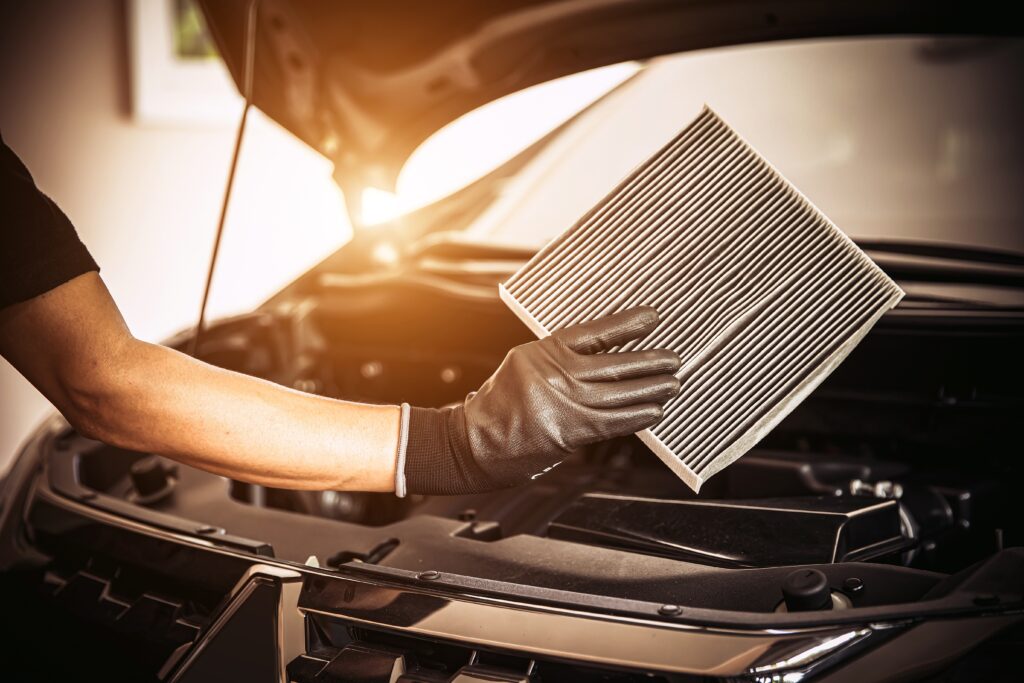
Once the lid is off, lift out the old filter. Note its orientation—most filters only fit one way (look for arrows or markings).

Proper air filter orientation (note the arrows). 💡 Pro Tip: If the filter is stuck, gently wiggle it while pulling up. Never yank—this can damage the housing.
-
🔧 Step 4: Inspect the Airbox for Debris
Before installing the new filter, check the airbox for leaves, dirt, or debris. Use a vacuum to clean it out if necessary. Do not wipe with a rag—this can leave fibers behind.
⚠️ Warning: If you see oil or coolant in the airbox, your engine may have a serious issue (e.g., blown head gasket or PCV system failure). Have it inspected by a professional.
-
🔧 Step 5: Install the New Filter
Place the new filter into the housing, ensuring it sits evenly on all edges. An unseated filter lets dirt bypass straight into the engine.
🚨 Critical: Never install a filter backwards. The dirty side (usually marked) should face outward (toward the incoming air).
-
🔧 Step 6: Reinstall the Lid and Secure Fasteners
🔧 Step 6: Details
Reattach the lid and tighten the clips or fasteners. For bolts, hand-tighten only—unless your owner’s manual specifies a torque value.
🎉 Total Time: 5–15 minutes (depending on your vehicle).
💡 Real-World Advice: If you’re replacing the filter, take a photo of the old one’s orientation before removing it. This ensures you install the new one correctly.
🧹 Clean vs. Replace Air Filter: What I Recommend (And Why)
🤖 AI Overview: Can You Clean an Air Filter?
Paper Filters: Not designed to be cleaned. Attempting to clean them can:
- ❌ Tear the fibers (reduces filtration efficiency).
- ❌ Leave behind debris (can enter the engine).
- ❌ Void warranties (if applicable).
Reusable Filters (K&N, etc.): Can be cleaned, but only if you follow the manufacturer’s procedure exactly.
🚫 Paper Filters: Replace, Don’t Clean
🚫 Paper Filters: Details
Why?
- ❌ Compressed air can tear the fibers, reducing filtration efficiency.
- ❌ Water can damage the filter media.
- ❌ Cleaning won’t restore performance—the filter is already clogged with microscopic particles.
My Recommendation: If a paper filter looks dirty, replace it. Filters are cheaper than engines.
💡 Real-World Advice: If a paper filter looks dirty, replace it. Filters are cheaper than engines.
✅ Reusable Filters: Clean with Caution
✅ Reusable Filters: Details
K&N and other oiled filters can be cleaned, but only if you:
- Follow the manufacturer’s instructions (usually involves a special cleaner and oil).
- Allow it to dry completely before reinstalling.
- Avoid over-oiling (this can contaminate the MAF sensor).
How to Clean a K&N Filter:
- Remove the filter from the housing.
- Spray with K&N Air Filter Cleaner (not soap or water).
- Rinse with low-pressure water (do not use a high-pressure hose).
- Let it air dry completely (no heat or compressed air).
- Reapply K&N Air Filter Oil (use the correct amount—too much can damage sensors).
- Reinstall the filter.
⚠️ Warning: Skipping steps or rushing the drying process causes more harm than good. If you’re not 100% confident in your ability to clean it properly, replace it with a new OEM filter.
🔧 Troubleshooting: Common Problems After Replacement
🤖 AI Overview: Post-Replacement Issues
Even a simple job like replacing an air filter can go wrong. Here are the most common issues and how to fix them:
🔹 Engine Hesitates or Stumbles
Likely Cause: Improperly seated filter or loose airbox lid.
How to Fix:
- Turn off the engine and recheck the filter—ensure it’s seated evenly.
- Verify the airbox lid is secure (all clips/bolts tightened).
- Inspect the intake hose for cracks or disconnections.
🔹 Check Engine Light Appears After Replacement
Likely Causes:
- ✅ Loose or disconnected intake hose.
- ✅ MAF sensor contamination (from debris during replacement).
- ✅ Improperly seated filter (allowing unfiltered air to bypass).
How to Fix:
- Check all intake connections for tightness.
- Clean the MAF sensor with CRC MAF Cleaner.
- Recheck the filter installation.
If the light persists, use a scan tool to read the codes (e.g., P0171, P0100). See our check engine light guide for more details.
🔹 Rough Idle
Likely Cause: MAF sensor contamination or vacuum leak.
How to Fix:
- Clean the MAF sensor (see our MAF sensor cleaning guide).
- Check for loose or cracked intake hoses.
- Verify the filter is installed correctly.
🔹 Reduced Power or Poor Acceleration
Likely Cause: Clogged filter (if you reused an old one) or intake restriction.
How to Fix:
- Replace the filter with a new OEM filter.
- Inspect the intake tract for obstructions.
- Check the throttle body for carbon buildup (see our throttle body cleaning guide).
💡 Pro Tip: If you’re still having issues after replacing the filter, restricted airflow could be coming from elsewhere. Related maintenance like fuel filter replacement and throttle body cleaning often restores drivability.
💰 Cost Analysis: DIY vs. Professional (Save $300–$600)
🤖 AI Overview: The Cost of Air Filter Replacement
🤖 AI Overview: Details
DIY Cost: $15–$35 (filter only).
Professional Cost: $60–$120 (filter + labor).
Savings: $45–$85 per replacement.
Long-Term Savings: Over 150,000 miles, DIY can save you $300–$600+.
| Item | DIY Cost | Professional Cost | Savings |
|---|---|---|---|
| OEM Air Filter | $15–$35 | $60–$80 | $45–$65 |
| Aftermarket Paper Filter | $10–$20 | $50–$70 | $40–$60 |
| K&N Performance Filter | $45–$80 | $100–$150 | $55–$70 |
💰 Total Potential Savings: Over the life of your vehicle (150,000 miles), replacing your own filters can save you $300–$600+ compared to shop pricing.
🛠️ Tools & Materials You’ll Need (Most Vehicles Require None!)
🤖 AI Overview: Tools for Air Filter Replacement
🤖 AI Overview: Details
Most vehicles require:
- ✅ No tools at all (just your hands).
- ✅ Basic hand tools (if your airbox uses bolts/screws).
All tools are commonly available at: AutoZone, O’Reilly, NAPA, or Amazon.
Tools You Might Need:
| Tool | Purpose | When Needed |
|---|---|---|
| Flathead Screwdriver | Releasing clips | Most vehicles with clip-secured airboxes |
| 8mm or 10mm Socket | Removing bolts | Vehicles with bolt-secured airboxes |
| Vacuum | Cleaning the airbox | Optional (recommended for dusty environments) |
| Gloves | Protection from dust | Optional (recommended for sensitive skin) |
Materials:
- ✅ Replacement air filter (OEM or aftermarket).
💡 Pro Tip: If your airbox uses bolts, a magnetic socket can help prevent dropping them into the engine bay.
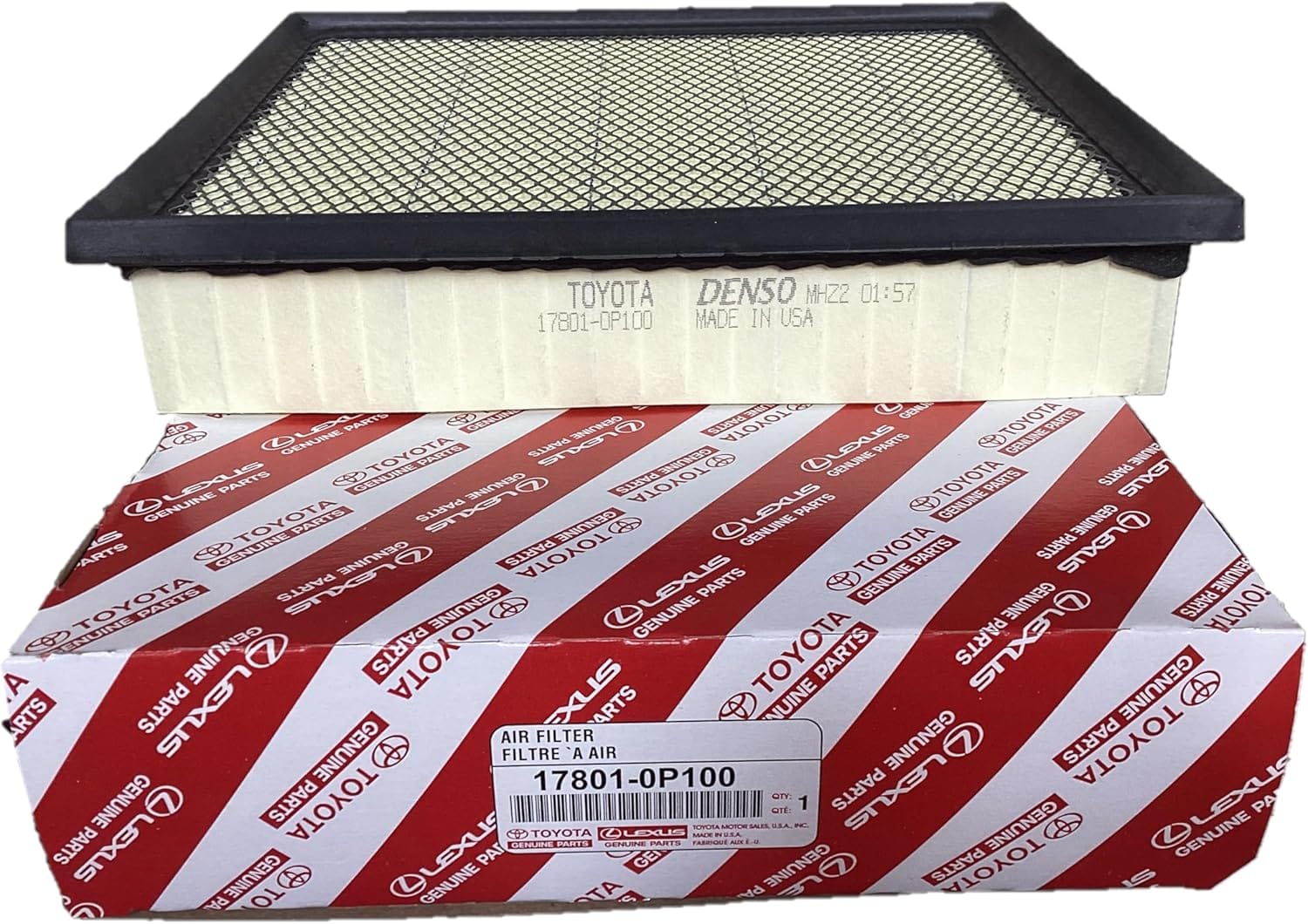
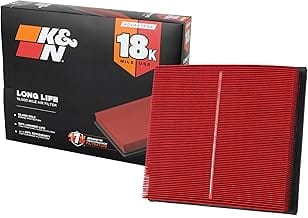
OEM Engine Air Filter
Price: $15–$35
Replacement Interval: 15,000–30,000 miles
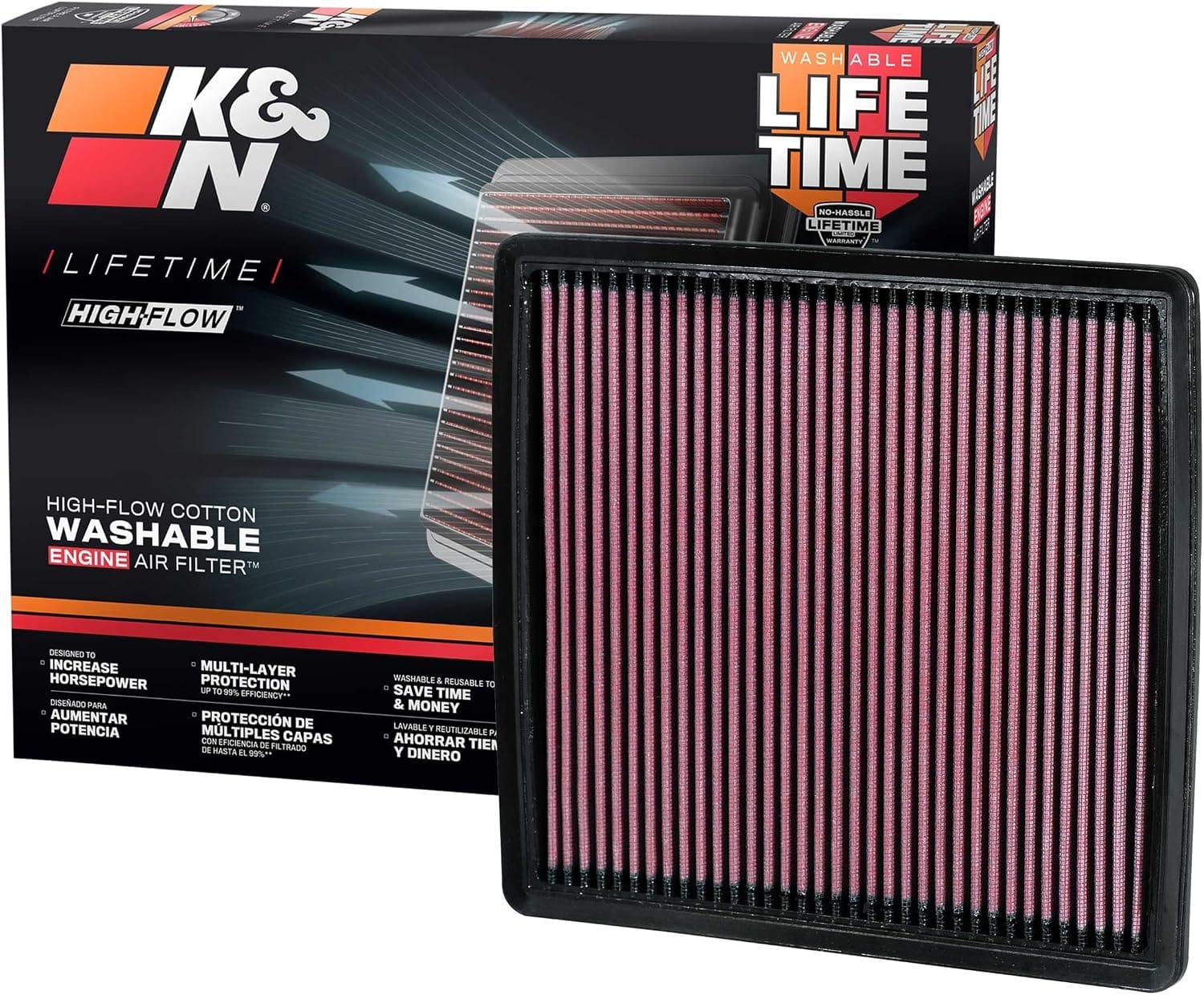
K&N Performance Air Filter
Price: $45–$80
Maintenance: Clean every 50,000 miles
❓ FAQs: Your Engine Air Filter Questions Answered
🔹 How much does engine air filter replacement cost?
DIY Cost: $15–$35 (filter only).
Professional Cost: $60–$120 (filter + labor).
Savings: $45–$85 per replacement.
🔹 Can a dirty air filter cause a check engine light?
Yes! A clogged air filter restricts airflow, which can:
- ✅ Skew MAF sensor readings (triggering codes like P0100, P0101).
- ✅ Cause a lean fuel condition (triggering P0171, P0174).
- ✅ Lead to misfires (triggering P0300–P0308).
Note: A dirty filter won’t always trigger a check engine light, but it can contribute to other issues that will.
🔹 Do performance air filters increase horsepower?
Short Answer: On most stock vehicles, gains are minimal (5–10 HP).
Long Answer:
- ✅ Pros:
- Slightly better airflow (if the stock filter is restrictive).
- Reusable (saves money long-term).
- Better sound (some drivers like the intake noise).
- ❌ Cons:
- Minimal power gains on stock engines.
- Requires maintenance (cleaning and re-oiling).
- Risk of MAF contamination if over-oiled.
💡 Bottom Line: If you’re looking for serious performance gains, consider a cold air intake or engine tune instead. Performance filters are best for sound and long-term savings.
🔹 Can I drive without an air filter?
🚨 No! Even a short drive without an air filter can allow abrasive dirt and debris to enter your engine, causing:
- ❌ Scored cylinders (permanent damage).
- ❌ Worn piston rings.
- ❌ Damaged valves.
- ❌ Catalytic converter failure (from unburned fuel).
Always replace a missing or damaged filter immediately.
🔹 Is engine air filter replacement beginner-friendly?
Absolutely! This is one of the easiest maintenance tasks for new DIYers. It requires:
- ✅ No special tools (in most cases).
- ✅ No technical knowledge.
- ✅ Minimal time (5–15 minutes).
Difficulty Level: ⭐ (Easy) – A great first project for beginners.
🔹 How do I know if my air filter is dirty?
Visual Inspection:
- Open the air filter housing.
- Remove the filter and hold it up to a light.
- If you can’t see light through it, it’s clogged and needs replacement.
Symptoms of a Dirty Filter:
- ❌ Reduced engine power.
- ❌ Poor fuel economy.
- ❌ Black smoke from exhaust.
- ❌ Check engine light.
- ❌ Rough idle or hesitation.
🔹 Can I clean my air filter with compressed air?
For Paper Filters: No! Compressed air can:
- ❌ Tear the filter media.
- ❌ Push debris into the engine.
- ❌ Reduce filtration efficiency.
For Reusable Filters (K&N, etc.): Yes, but:
- Use low-pressure air (not a high-pressure hose).
- Follow the manufacturer’s instructions.
- Reapply filter oil after cleaning.
🔹 What’s the difference between an engine air filter and a cabin air filter?
| Feature | Engine Air Filter | Cabin Air Filter |
|---|---|---|
| Purpose | Filters air entering the engine | Filters air entering the cabin |
| Location | Under the hood (near the engine) | Behind the glove box or under the dash |
| Replacement Interval | 15,000–30,000 miles | 15,000–25,000 miles |
| Symptoms of Clogging | Reduced power, poor MPG, check engine light | Weak airflow from vents, musty smells |
🔹 How often should I check my air filter?
Every 6,000–12,000 miles, or:
- ✅ Before a long road trip.
- ✅ After driving in dusty or dirty conditions.
- ✅ If you notice any performance issues.
Visual Inspection: If it looks dirty, replace it.
🔹 Can a dirty air filter damage my engine?
Yes! Long-term neglect can lead to:
- ❌ Scored cylinders (from abrasive particles).
- ❌ Worn piston rings.
- ❌ Damaged valves.
- ❌ Catalytic converter failure (from unburned fuel).
- ❌ Reduced engine lifespan.
🚨 Warning: A severely clogged filter can cause thousands of dollars in engine damage. Replace it on time!
🔹 What’s the best air filter for my car?
🔹 Understanding’s the best air filter for my car?
For Most Drivers: OEM filter (best balance of fit, filtration, and longevity).
For Enthusiasts: K&N or other performance filter (if you’re willing to maintain it).
For Off-Road/Racing: High-flow foam filter (maximum airflow, but requires frequent cleaning).
💡 Pro Tip: Stick with OEM or high-quality aftermarket filters. Cheap, no-name filters may not provide adequate protection.
Related Fuel and Air System Guides
- filter maintenance
- fuel system care
- EGR Valve Problems: Symptoms Causes and Fixes
- Mass Air Flow Sensor Problems: Diagnosis and Cleaning
- Clogged Fuel Filter Symptoms and Replacement
- The Complete Engine Degreaser Guide: How to Choose, Use, and Avoid Cos
- The Complete Cold Air Intake Guide: What It Does, What It Costs, and W
- Best Air Filter Brand: The 2026 Entity-First Buyer’s Guide
🔧 More DIY Maintenance Guides
- Throttle Body Cleaning DIY – Improve idle and acceleration by removing carbon buildup.
- MAF Sensor Cleaning Guide – Fix rough idle and poor performance caused by a dirty sensor.
- How to Replace Spark Plugs – Boost engine power and fuel efficiency with this step-by-step guide.
- Oil Analysis Guide – Learn how to test your oil to extend change intervals and save money.
- Severe Driving Conditions – Adjust your maintenance schedule for extreme heat, dust, or towing.
🚗 Vehicle-Specific Guides
Looking for model-specific advice? Here are some of our most popular guides:
- Nissan Altima Oil Change DIY
- Ford F-150 Oil Change Guide
- Toyota Camry Oil Change
- Honda Accord Oil Change
- Acura MDX Oil Change
⚠️ Troubleshooting Guides
If your car is acting up, these guides will help you diagnose and fix common issues:
- Poor Acceleration Causes – A clogged air filter is just one possible culprit.
- Engine Rough Idle: Causes & Fixes – Learn how a dirty filter can contribute to rough idling.
- Common Check Engine Light Codes – Decode what your car is trying to tell you.
- How to Diagnose an Engine Misfire – A clogged filter can cause misfires—here’s how to find the root cause.
- Engine Hesitation Under Acceleration – Fix sluggish performance with these expert tips.
🎯 Conclusion: A Mechanic’s Perspective
Engine air filter replacement is about as close to free insurance as automotive maintenance gets. It’s:
- ✅ Easy (5–15 minutes).
- ✅ Inexpensive ($15–$35).
- ✅ Critical (protects your engine).
It pays off in:
- ✅ Engine longevity.
- ✅ Fuel economy.
- ✅ Reliability.
🚀 Your Action Plan:
- Check your air filter today (it takes 2 minutes).
- Replace it if it’s dirty (every 12,000–30,000 miles).
- Use an OEM filter for the best fit and filtration.
- Save $45–$85 per replacement by doing it yourself.
- Enjoy the benefits: better performance, fuel economy, and engine life.
Difficulty level: Firmly in the “easy” category. Even if you’ve never opened a hood before, this is a great place to start. Expect to spend under $30 and less time than it takes to order coffee.
I’ve seen engines ruined by neglect and saved by simple maintenance. Changing your air filter on time is one of those small habits that separates cars that last from cars that don’t.
💡 Final Advice: Do it yourself. Check it often. Your engine breathes through that filter every mile you drive.
Top How To Replace Engine Air Filter – Our Picks