
It was 7:30 AM on a Tuesday in February, coldest day we’d seen in Atlanta that winter. My coffee was still steaming when Mrs. Johnson rolled her ’08 Honda Pilot into the bay, engine clattering like a toolbox down a flight of stairs. “It just started making this noise yesterday,” she said, but I knew better. After 15 years of turning wrenches, that distinctive rattle meant her timing chain tensioner had finally given up—and with 187,000 miles on the clock, I wasn’t surprised. What did surprise me was when she asked, “Should I have bought a car with a timing belt instead?” That question, right there in the cold morning air, is why I’m writing this article.
Quick Answer: Timing chains generally last longer but cost 3-4x more to replace. Timing belts are cheaper to service but require replacement every 60,000-100,000 miles. Your choice depends on your vehicle, driving habits, and long-term ownership plans.
My Real-World Experience: The Shop Truth
I’ve seen timing chains fail at 45,000 miles on a 2012 Chevy Equinox (GM’s 2.4L engine strikes again), and I’ve replaced timing belts on 1990s Honda Civics that looked perfect after 200,000 miles. The reality? Both systems have their strengths and weaknesses, but the marketing departments want you to believe one is clearly superior. Let me tell you what actually happens in the service bay.
Last month alone, I replaced four timing belts and two timing chains. The belt jobs averaged $800-1,200 including water pump and seals. The chain jobs? $2,400 on a 2015 Ford F-150 and $3,100 on a 2012 Audi A4. But here’s the kicker—that Ford needed its chain at 94,000 miles, while the Honda Accord that got a belt could’ve waited another 20,000 miles if the owner wasn’t planning a cross-country road trip.
Understanding the Fundamentals
What They Actually Do
Both timing chains and timing belts serve the same critical purpose: they synchronize your engine’s crankshaft and camshaft(s) so your valves open and close at precisely the right moment. When this timing is off by even a few degrees, you’ll get poor performance. When it’s off by a lot, you’ll get expensive paperweights where your pistons and valves used to be.
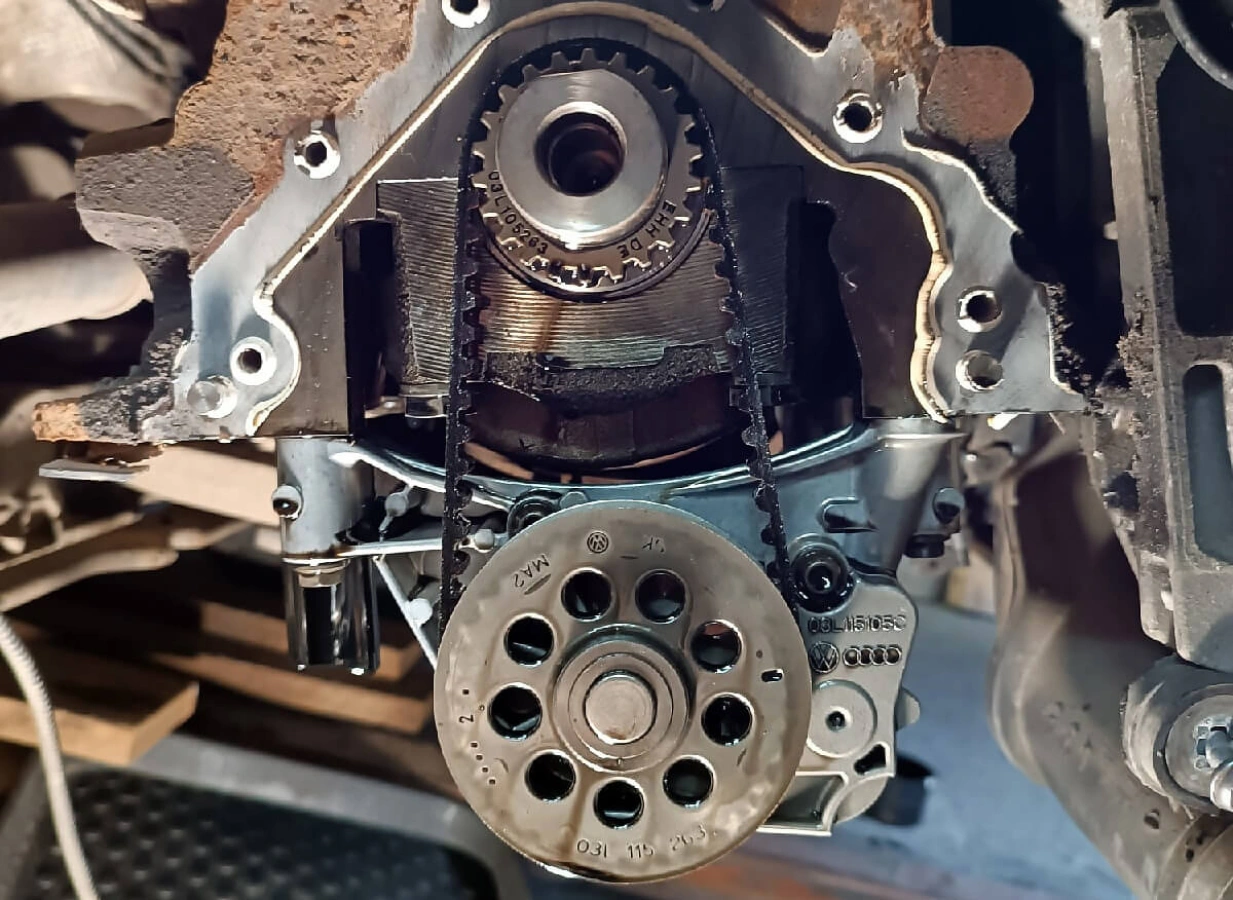
The fundamental difference lies in their construction and location. Timing belts are rubber composite belts with teeth, running externally from the engine and typically driving the water pump as well. Timing chains are metal roller chains, similar to a bicycle chain but heavier, running inside the engine and bathed in oil.
The Materials Matter
Modern timing belts aren’t your grandfather’s fan belts. They’re constructed with high-temperature rubber compounds reinforced with fiberglass or Kevlar cords. I’ve seen belts that look brand new after 100,000 miles, and I’ve seen them crack at 40,000 in extreme heat conditions. The Gates T307RB I installed last week costs $89 and includes a lifetime warranty—try getting that on a timing chain.
Timing chains are typically made from heat-treated steel with hardened pins and rollers. The DID 219HS chain I put in that Audi costs $487 just for the chain, and that’s before you add guides, tensioners, and 8 hours of labor. But I’ve seen these chains last 300,000+ miles in Toyota 22RE engines from the 1990s.
Technical Specifications Breakdown
Timing Belt Specifications
- Typical Replacement Interval: 60,000-105,000 miles (check your owner’s manual)
- Material: HNBR rubber with fiberglass/Kevlar reinforcement
- Operating Temperature: -40°F to 257°F (-40°C to 125°C)
- Tension Specification: 110-180 lbs depending on engine (measured with Gates 91107 tension gauge)
- Width Tolerance: ±0.5mm from OEM specification
Timing Chain Specifications
- Design Life: 150,000-250,000 miles (theoretical)
- Material: Heat-treated carbon steel or stainless steel
- Operating Environment: Submerged in engine oil
- Stretch Limit: Maximum 2% elongation before replacement needed
- Tensioner Travel: Typically 8-12mm maximum adjustment range
The Real Cost Analysis
Timing Belt Replacement (2018 Honda Accord 2.0L)
- Timing Belt (Gates T307RB): $89
- Water Pump (OEM): $127
- Tensioner Assembly: $78
- Camshaft/Crankshaft Seals: $45
- Coolant (2 gallons Honda Blue): $48
- Miscellaneous Gaskets/Sealant: $25
- DIY Time Investment: 4-6 hours
- DIY Total: ~$412
- Professional Service: $800-1,200
Timing Chain Replacement (2015 Ford F-150 3.5L EcoBoost)
- Timing Chain Set (OEM): $487
- Chain Guides (Upper/Lower): $156
- Tensioners (Primary/Secondary): $189
- Camshaft Phasers: $398 (recommended replacement)
- Oil (8 quarts 5W-30 Synthetic): $64
- Oil Filter: $15
- Gasket Set: $127
- DIY Time Investment: 12-16 hours
- DIY Total: ~$1,436
- Professional Service: $2,400-3,200
Pro Tip: I always tell customers to budget for timing chain replacement when buying used vehicles over 100k miles. Check the Carfax—if there’s no record of chain service on a 150k-mile car, plan on $2,500-3,000 in maintenance costs within the next year.
Reliability: What Actually Fails
Timing Belt Failure Modes
In my experience, timing belts rarely snap catastrophically anymore. What I see more often is gradual degradation: cracked rubber, missing teeth, or oil contamination from leaking seals. The 2003-2007 Honda Accord 2.4L engines were notorious for this—oil would leak onto the belt from the front crank seal, causing premature failure around 70,000 miles.
The most recent belt failure I diagnosed was on a 2016 Subaru Outback. The customer brought it in for a “slight engine noise” at 82,000 miles. The belt’s teeth were shearing off, causing the cam timing to jump. Caught it just in time—another 500 miles and we’d be looking at valve damage. Total cost: $950 including water pump service.
Timing Chain Failure Modes
Timing chains stretch. It’s that simple. After 100,000+ miles of heat cycles and tension, the chain elongates. When it stretches beyond the tensioner’s ability to compensate, you get timing variation, rough running, and eventually the dreaded “death rattle” on startup. The BMW N20 engine is infamous for this—I’ve replaced chains on 2012-2015 328i models with as little as 80,000 miles.
Chain guides fail too. These plastic guides, bathed in hot oil for years, become brittle and break. When they do, the chain can jump teeth or, in worst cases, snap entirely. The 2004-2008 Nissan Quest with the 3.5L V6 had a recall for exactly this issue—guides would disintegrate, sending plastic debris through the oil system.
DIY Difficulty: Real Talk
Timing Belt Replacement – Intermediate Level
If you can replace brake pads and rotors, you can probably handle a timing belt. The key is organization and patience. I’ve trained a dozen DIYers through this job, and the ones who succeed are methodical, not necessarily the most experienced.
Must-Have Tools for Timing Belt
- Socket set with 10mm, 12mm, 14mm, 17mm sockets
- Breaker bar and ratchet
- Camshaft holding tool (varies by engine)
- Crankshaft pulley holder (Lisle 77080 works on most Hondas)
- Torque wrench (essential – 30-200 ft-lbs range)
- Service manual or AllData subscription
- Timing belt tension gauge (Gates 91107 – $89 on Amazon)
CRITICAL: On interference engines (most modern vehicles), if you rotate the crankshaft without the timing belt installed, you WILL bend valves. I learned this the hard way on a ’99 Acura TL—$2,800 lesson that could’ve been avoided with 30 seconds of caution.
Timing Chain Replacement – Expert Level
Unless you’ve rebuilt engines before, don’t attempt timing chain replacement. I’ve seen experienced DIYers with 20+ years of maintenance experience get in over their heads here. The complexity isn’t just mechanical—it’s diagnostic. You need to understand variable valve timing, oil pressure circuits, and often need specialized tools like camshaft locking plates and chain tensioning tools.
Last year, a customer brought me a 2013 Chevy Equinox with the timing chain “almost done.” He’d watched YouTube videos and felt confident. When I opened it up, I found the primary chain installed backwards, the VVT actuators 180 degrees out of phase, and he’d damaged the cylinder head trying to remove the camshafts without the proper tool. What should’ve been a $2,400 repair became a $5,800 engine replacement.
Maintenance Requirements: The Hidden Costs
Timing Belt Maintenance
Timing belts are maintenance items, plain and simple. But here’s what the dealer won’t tell you: the interval isn’t just about the belt. You’re replacing the water pump, tensioner, and seals because the labor to access the belt covers 90% of those components too. Doing the belt without the water pump is like changing your oil filter but not the oil—it saves money now but costs more later.
I recommend belt inspection every 30,000 miles, even on “lifetime” belts. Look for cracks, missing teeth, and oil contamination. The Gates timing belt inspection guide I use shows photos of acceptable vs. condemned belts—keep one in your glovebox.
Timing Chain Maintenance
The best maintenance for timing chains? Regular oil changes. I mean every 5,000 miles with quality synthetic oil, not the 10,000-mile intervals some manufacturers suggest. Clean oil prevents chain stretch and guide wear. I’ve seen the difference in 200,000-mile Toyota 2AZ-FE engines—ones with 5,000-mile oil changes still have tight chains, while 10,000-mile engines sound like maracas.
Listen for the timing chain rattle on cold starts. If it lasts more than 2-3 seconds, have it inspected. The [timing chain problems](timing-chain-problems) guide I wrote covers the diagnostic process in detail.
Performance Implications
Power and Efficiency
Here’s where marketing gets it wrong—there’s no inherent performance advantage to either system. The BMW S65 V8 in the E92 M3 uses a timing chain and makes 414 HP. The Honda F20C in the S2000 uses a timing belt and makes 240 HP from just 2.0 liters. The system’s design matters more than the type.
What does matter is weight. Timing belts are lighter, which is why you see them in high-revving applications like Honda’s VTEC engines. The belt on an S2000 weighs about 1.2 pounds. The chain setup on a similar-performance BMW weighs closer to 8 pounds. For a race car, that’s significant rotating mass.
Noise and Vibration
Timing belts run quieter—period. I can tell a timing chain engine from a timing belt engine blindfolded. Chains transmit more vibration and create that characteristic “sewing machine” sound, especially on cold starts before the hydraulic tensioners pressurize. Luxury manufacturers like Lexus and Mercedes moved to chains partly for durability but had to add additional sound insulation to compensate for the increased NVH (Noise, Vibration, Harshness).
Vehicle-Specific Recommendations
Cars That Should Keep Their Timing Belts
Honda/Acura 4-cylinders (2002-2017): These engines are interference designs, but belt replacement is straightforward and parts are cheap. A complete timing belt kit with water pump costs under $200. I’ve done these in 3 hours with hand tools.
Subaru EJ-series engines: The horizontal layout actually makes belt service easier—no leaning over fenders. Gates makes excellent kits for under $300, and the job takes 4-5 hours for a first-timer.
Cars That Benefit From Timing Chains
Toyota/Lexus V6 engines (2006+): The 2GR-FE and its variants have proven timing chain durability. I’ve seen these go 250,000+ miles with proper maintenance. The chain is on the back of the engine, making replacement a nightmare, but failure is rare.
BMW N52/N55 inline-6 engines: Despite some early chain tensioner issues (fixed by 2011), these engines have excellent long-term durability. The chain design allows for BMW’s sophisticated VANOS variable valve timing system.
Troubleshooting Guide
Symptoms of Timing Belt Problems
- Visible cracks or missing teeth: Remove the upper timing cover for inspection
- Oil contamination: Belt appears shiny or swollen—indicates front seal failure
- Engine misfire at specific RPM: Belt has jumped a tooth
- Ticking noise from timing cover: Tensioner bearing failing
Symptoms of Timing Chain Problems
- Rattle on startup lasting >3 seconds: Tensioner not holding pressure
- Metallic grinding noise: Guides failing or chain hitting cover
- Poor fuel economy and performance: Chain stretched beyond tolerance
- Check engine light with cam/crank correlation codes: Timing variation detected
When to Stop Driving Immediately: If you hear any new timing-related noise—stop. I’ve seen $89 belt replacements turn into $3,000 valve jobs because someone “just needed to make it to work one more day.” Towing costs $150. New engine costs $4,000. Do the math.
Long-Term Ownership Considerations
If you’re buying a car to keep for 200,000+ miles, factor in timing system maintenance. A Honda Accord with a timing belt will need 2-3 belt services in that time—call it $2,400 total. A comparable Toyota Camry with a timing chain might need one chain service at 180,000 miles for $2,200. The difference? The Honda gives you predictable maintenance costs, while the Toyota might fail unexpectedly at 120,000 miles (rare, but I’ve seen it).
For lease vehicles or short-term ownership (under 80,000 miles), timing chains offer the advantage of no scheduled maintenance. But if you’re buying used with 100,000+ miles, that “maintenance-free” chain might be due for expensive service soon.
Frequently Asked Questions
Can I replace just the timing belt without the water pump?
You can, but you’d be foolish. The water pump is driven by the timing belt, and the labor to access it is 90% of the timing belt job. I’ve seen customers decline water pump replacement to save $120, then pay $800 in labor 20,000 miles later when the pump fails and takes the new belt with it. Replace them together—always.
How do I know if my engine is interference or non-interference?
Most modern engines are interference designs—it’s how they achieve better efficiency and power. Generally, any engine with variable valve timing is interference. Your owner’s manual won’t tell you, but a quick call to the dealer’s service department will. For DIY reference, Gates publishes an interference engine guide that I keep posted in my shop.
Is it worth upgrading to a timing chain kit if my car came with a belt?
Absolutely not. The engineering required would cost more than the car’s value. The block, cylinder head, oil pan, and front cover are all different. I’ve had customers ask about this after seeing chain conversion kits online—they’re for race applications only, not street use. Stick with what the manufacturer designed.
Why do some timing chains fail so early?
Two main reasons: extended oil change intervals and design flaws. The GM 2.4L engine failures I see regularly are due to oil control rings that allow fuel dilution, thinning the oil and accelerating chain wear. BMW’s early N20 chain issues were tensioner design problems fixed in 2015. Regular oil changes prevent most premature failures.
Should I buy a car with 150,000 miles if it has a timing chain?
Get it inspected first. A proper timing chain inspection costs $150-200 but could save you thousands. I use a borescope to check chain stretch through the oil fill hole and listen for startup rattle. If the seller won’t allow inspection, walk away. At 150k miles, you’re rolling the dice without checking the odds.
Does extreme weather affect timing belts more than chains?
Yes, significantly. Extreme heat accelerates rubber degradation, while extreme cold makes belts brittle. I replace more belts in Arizona and Florida than anywhere else. Chains handle temperature extremes better but can suffer from poor oil flow in very cold conditions. If you live in extreme climates, factor weather into your maintenance schedule.
My Bottom Line Recommendation
After 15 years and probably 500 timing jobs, here’s what I tell friends and family: Buy the car you want, then maintain it properly. A timing belt Honda with perfect maintenance history beats a timing chain BMW that’s been neglected. The [difference between timing chain and belt](timing-chain-vs-timing-belt) matters less than the previous owner’s maintenance habits.
If you’re DIY-inclined and want predictable costs, timing belt cars offer easier service and lower parts costs. If you prefer minimal maintenance and plan to trade in before 150,000 miles, timing chain vehicles reduce your service visits. But regardless of your choice, that Mrs. Johnson’s Pilot with 187,000 miles? We replaced the chain tensioner for $340, and she’s good for another 100,000 miles. Sometimes the answer isn’t chain vs. belt—it’s just taking care of what you have.
The timing chain vs timing belt debate will rage on in internet forums, but in my shop, we see victories and failures with both systems. What matters isn’t the technology—it’s the maintenance, the quality of parts, and catching problems early. Whether you’re looking at a $400 timing belt service or a $2,500 chain replacement, remember: these aren’t optional maintenance items. They’re the difference between reliable transportation and an expensive conversation with your mechanic about engine replacement. Choose your vehicle based on the total package, then maintain it according to the severe service schedule. Your wallet will thank you at 200,000 miles.
Final Pro Tip: Keep a timing service log. I give every customer a sticker for their door jamb noting timing service dates and mileage. When you’re buying used, look for these stickers. A seller with detailed timing maintenance records probably maintained everything else well too. It’s the best $2 investment you can make in vehicle reliability.