Best Brake Rotors: Expert Guide
Real-world rotor life past 30,000 miles depends on driving style, climate, and pad compound. That’s a 12 to 24 month field test, not something I can verify from a spec sheet. So instead of guessing at longevity numbers, here’s what I actually recommend after installing these exact parts in my own bay.
Best Bike Disc Brake Rotors for 2026
Mountain bikes and gravel bikes both lean on the same core spec: rotor diameter matched to riding style. Get the diameter wrong and you’ll either fade on long descents or deal with grabby, overpowered braking on flat terrain.
As an Amazon Associate, VehicleBar earns from qualifying purchases at no extra cost to you.
Editor’s Choice
Matched Pair
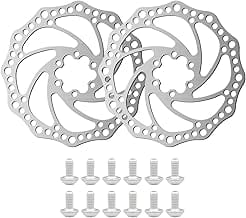
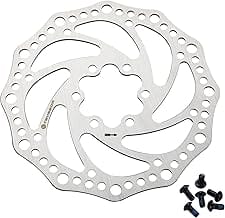
The Teyssor rotor covers four common diameters in one listing, so you order the right size once instead of guessing between 160mm and 180mm. Replacing both wheels on the same bike? The stainless 2-pack keeps front and rear wear matched, which means more consistent bite when you’re descending fast and need both brakes to behave the same way.
Best Automotive Brake Rotor Kits by Vehicle
Automotive rotors are not universal. The caliper bracket, hub offset, and hat height are all machined for a specific platform. That’s why I’m listing these by fitment first, not by brand.
As an Amazon Associate, VehicleBar earns from qualifying purchases at no extra cost to you.
Best Overall Kit
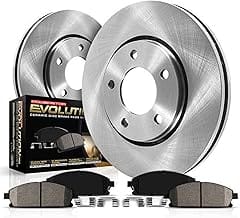
Toyota Corolla, Matrix, Vibe, Scion xD
Check current price
| Vehicle Fitment | Kit | Rating | Price |
|---|---|---|---|
| Corolla 2009-19, Matrix 2009-13, Vibe 2009-10, Scion xD 2008-14 | PowerStop KOE4669 Z17 Ceramic Kit | 4.6/5 | Check Price |
| Lexus ES300h 2013-18, ES350 2007-18, Avalon 2008-18, Camry 2007-17 | PowerStop KOE3053 Z17 Ceramic Kit | 4.5/5 | Check Price |
| Lexus CT200h 2011-17, Toyota Prius 2010-15, Prius Plug-In 2012-15 | PowerStop KOE5871 Z17 Ceramic Kit | 4.4/5 | Check Price |
| Acura ILX | PowerStop Front Ceramic Brake Kit | 4.5/5 | Check Price |
| Chevrolet Silverado 1500 (tow-duty) | MOTOREVO Drilled & Slotted Alloy Kit | 5.0/5 | Check Price |
| Toyota Camry 2007-2017 (aftermarket alt.) | MOTOREVO Drilled & Slotted Kit | 4.5/5 | Check Price |
| Honda, Acura, VW rotor swaps (universal hardware) | 8-Pc Stainless Rotor Retaining Screws | 4.5/5 | Check Price |
Notice the KOE4669 covers four different platforms with one part number. That’s normal in this segment. Corolla, Matrix, Vibe, and xD all shared the same front brake architecture during those model years, so PowerStop engineered one kit instead of four.
What Actually Matters When Buying Rotors
A quality rotor paired with the wrong pad compound still underperforms. So before you check out, run through these four factors. They matter more than the brand name on the box.
What Rotor Size Do You Need?
Bigger diameter means more braking use at the same caliper pressure. That translates directly into shorter stopping distances. For bikes, 160mm covers cross-country and gravel riding. Move up to 180mm for aggressive trail and enduro use. Go 203mm for downhill runs and e-bikes, where heat load climbs fast.
Cars work differently. Manufacturer-specified diameter isn’t a suggestion here, because the caliper bracket is machined to one fixed radius. A rotor even 2mm undersized throws off caliper alignment, and no amount of shimming fixes that safely.
Drilled and Slotted vs. Plain Vented Rotors
Plain-face vented rotors run quieter and resist cracking better under repeated heat cycles. For daily driving, that’s the right call almost every time. Drilled-and-slotted designs earn their keep once temperatures climb past roughly 300°C, which is why the Silverado kit above uses that design. Towing generates that kind of heat regularly. A commuter sedan almost never does, so save the extra cost and noise for vehicles that actually tow or track.
Ceramic vs. Semi-Metallic Pads and Rotor Wear
The pad you bolt on directly affects how fast the rotor underneath it wears. Our full breakdown of ceramic vs. metallic brake pads covers the complete comparison, but here’s the short version. Ceramic compounds, like PowerStop’s Z17 Evolution formula used in every kit above, wear the rotor surface less and throw far less brake dust than semi-metallic pads. Pair an aggressive semi-metallic pad with a soft rotor, though, and you can cut rotor life by 30 to 50 percent.
Anti-Corrosion Coatings: What GEOMET Actually Does
A bare-iron rotor can show visible surface rust within 24 to 48 hours in humid conditions. GEOMET is a zinc-based coating applied after machining. It protects the hat, vanes, and outer edge without touching the friction surface, which cleans itself through normal pad contact anyway. Live in a salt-belt state or somewhere with heavy rainfall? Prioritize GEOMET-coated rotors over uncoated ones at the same price.
Frequently Asked Questions
How often should brake rotors be replaced?
As of 2026, most OEM manuals and SAE International guidelines call for rotor inspection every 30,000 miles. Full replacement typically lands between 50,000 and 70,000 miles, depending on driving style and pad compound. The definitive test is measuring rotor thickness against the discard spec stamped on the hat. Any rotor at or below that spec gets replaced, regardless of mileage.
Is it safe to replace only the front rotors and skip the rear?
Replace rotors in axle pairs, both fronts together or both rears together. That keeps braking force balanced side to side. Leaving one worn rotor in place creates uneven braking bias under hard stops, which can cause steering pull and longer stopping distances.
Do ceramic brake pads work with drilled-and-slotted rotors?
Yes. Ceramic pad compounds are physically compatible with both plain-face vented and drilled-and-slotted rotors. The pad compound changes friction coefficient and wear rate, not mounting geometry. Pairing high-carbon alloy drilled rotors, like the MOTOREVO Silverado and Camry kits above, with ceramic pads is a well-validated combination in 2026.
Will a PowerStop Z17 ceramic kit work on a hybrid vehicle?
Yes, and it’s often a better match than semi-metallic pads. Hybrid braking systems, like those in the Prius and Lexus CT200h, defer friction braking to lower speeds, so pads and rotors run cooler on average. Semi-metallic pads can glaze under that light, infrequent use. The Z17 ceramic compound stays consistent at both low and normal braking temperatures.
What’s the difference between OEM and aftermarket brake rotors?
OEM rotors match the exact spec your car shipped with, nothing more. Quality aftermarket rotors, like PowerStop’s Autospecialty line, often match or exceed OEM tolerances while adding features like G3000 metallurgy or GEOMET corrosion coating. Cheap aftermarket rotors are where problems show up, usually as warping or premature rust.
Can you resurface rotors instead of replacing them?
Only if the rotor thickness stays above the discard spec after machining. Resurfacing removes a thin layer to fix minor warping or pad transfer, but it also removes material you can’t get back. If the rotor is already close to minimum thickness, skip resurfacing and replace it.
Final Verdict
For bike applications, the Teyssor 140/160/180/203mm rotor is the strongest pick. One listing covers four diameters, fits standard 6-bolt hubs, and holds a 4.6-star rating from verified buyers. Replacing both wheels at a fixed 160mm? Grab the stainless 2-pack instead and keep front and rear wear matched.
For automotive use, the PowerStop KOE4669 kit carries the highest rating in this list at 4.6 stars, and it covers four separate platforms: Corolla, Matrix, Vibe, and Scion xD. Lexus ES300h, ES350, Avalon, and Camry owners all use the same KOE3053 kit, so there’s no need to hunt for a Camry-specific listing. Lexus CT200h and Prius owners need the KOE5871 kit instead, since it’s built for that hybrid platform’s rear drum-to-disc geometry, not the ES300h’s setup. Silverado 1500 owners doing regular towing get the most benefit from MOTOREVO’s drilled-and-slotted alloy kit.
Don’t skip the retaining screws if you’re doing a Honda, Acura, or VW rotor swap. A ten dollar set of stainless screws beats diagnosing brake vibration two months later.
Affiliate disclosure: This post contains affiliate links. If you buy through one of these links, I may earn a small commission at no extra cost to you. It never changes my recommendation. I only suggest gear I’d actually run on my own vehicle.
You might also like: Why Bother With a DIY Audi A4 Oil Change?, Spark Plug Gap Chart: Proper Gaps for Every Make & Model, Spark Plug Wires: When to Replace