
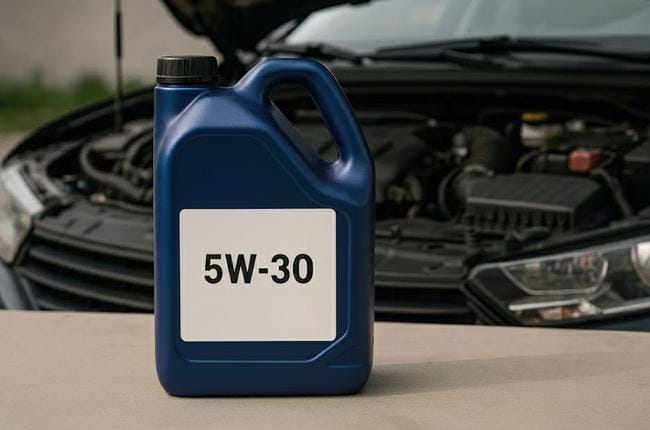
Oil Weight Guide: What 0W-20, 5W-30 & 10W-40 Mean
Understanding engine oil viscosity helps you choose an oil that meets your engine’s lubrication requirements. The correct grade supports reliable cold starts, proper lubrication at operating temperature, and the performance expected by the engine manufacturer. However, viscosity is only one part of oil selection. The required API, ILSAC, ACEA, or manufacturer-specific approval may be equally important.
What Is Oil Weight? Defining the Central Entity

Before you can pick the right oil for your engine, you need to understand what the numbers on the bottle actually mean. An **oil weight guide** isn’t about how heavy the liquid feels in your hand. It’s about **oil viscosity** — a fluid’s resistance to flow. In simple terms, viscosity measures how thick or thin the oil is at a given temperature.
The Society of Automotive Engineers (SAE) created the rating system that standardizes these numbers. When you see a label like “5W-30,” the SAE rating tells you how the oil behaves in both cold and hot conditions. This system exists so a driver in Minnesota and a driver in Arizona can both pick the correct oil for their climate without guessing.
The SAE Rating System: Decoding the ‘5W-30’ on the Bottle
The SAE rating system breaks down into two parts, separated by the letter “W” (which stands for winter, not weight). The first number — the “5” in 5W-30 — is the **winter rating**. It describes how the oil flows at low temperatures, specifically at -30°C for a 5W oil. The lower this number, the thinner the oil at cold temperatures, which means easier cold starts and faster oil circulation to critical engine parts.
The second number — the “30” in 5W-30 — is the **high-temperature rating**, measured at 100°C (212°F), which is roughly your engine’s normal operating temperature. This number indicates the oil’s thickness when the engine is hot. A higher number means the oil stays thicker at high temperatures, providing a more solid lubricating film between moving parts.
Viscosity vs. Weight: Why ‘Weight’ is a Misnomer
The term “oil weight” is a common name for an SAE engine-oil viscosity grade. It does not describe the oil’s physical weight. SAE J300 classifies engine oils using viscosity-related limits measured under specified temperature and test conditions.
Two oils carrying the same SAE grade can still differ in base oils, additives, volatility, oxidation resistance, and manufacturer approvals. Therefore, matching the viscosity grade alone does not guarantee that two oils are interchangeable. Always check the vehicle manufacturer’s required oil specifications as well.
The Two Numbers Explained: Cold-Weather Flow and High-Temperature Protection

The ‘W’ Number: Winter Viscosity and Cold Starts
The “W” number is the most misunderstood part of the oil weight guide. It does not stand for “weight” — it stands for “winter.” This rating is determined by two tests: the cold cranking simulator (CCS) and the mini-rotary viscometer (MRV). The CCS test measures the oil’s apparent viscosity at low temperatures, simulating the load on your starter motor during a cold start. The MRV test measures the oil’s pumpability — whether it can actually flow to the oil pump and throughout the engine when temperatures drop.
A 0W oil is tested at -35°C, a 5W at -30°C, a 10W at -25°C, and so on. The lower the W number, the better the oil performs in freezing conditions. This is why 0W-20 and 5W-30 are now standard recommendations for modern vehicles — they provide immediate lubrication on cold mornings, reducing wear during the critical first seconds after startup when most engine wear occurs.
The Second Number: Operating Temperature Viscosity
The number after the dash identifies the oil’s SAE high-temperature viscosity grade. SAE J300 uses kinematic viscosity at 100°C and, for applicable grades, additional high-temperature high-shear requirements to classify engine oils. A higher second number generally indicates a higher kinematic-viscosity range at 100°C, but it does not automatically mean better engine protection.
The correct grade depends on the engine’s design, operating conditions, and manufacturer specifications. Using a viscosity that is too high or too low for the application can affect oil circulation, fuel economy, hydraulic engine systems, and component protection.
Single-Grade vs. Multi-Grade: The Evolution of Engine Oils
Before the 1950s, all engine oils were single-grade. A straight 30-weight oil was thick when cold and thin when hot — a compromise that forced drivers to switch oils seasonally. In winter, you’d use a 10W or 20W oil; in summer, you’d switch to a 30W or 40W. This was inconvenient and error-prone, and using the wrong grade could lead to severe engine damage.
Multi-grade oils solved this problem through the use of viscosity index improvers (VIIs) — long-chain polymer molecules that expand as temperature rises. These additives allow a 5W-30 oil to flow like a thin 5W oil at cold temperatures while behaving like a thicker 30-grade oil at operating temperature. The result is a single oil that works year-round in most climates. However, VIIs are susceptible to shear — the mechanical chopping of polymer chains under stress — which is why high-quality synthetics with shear-stable VIIs are recommended for severe service.
Common Oil Weights and Their Applications
0W-20 and 0W-16: The Modern Fuel-Economy Standards
These ultra-thin oils are the current industry trend, driven by Corporate Average Fuel Economy (CAFE) standards. They’re specified for most modern gasoline engines from Toyota, Honda, Ford, and others. The 0W cold rating ensures excellent cold-start flow, while the 20 or 16 hot rating minimizes parasitic drag on the engine. These oils are not suitable for older engines with looser tolerances or high-mileage engines with worn seals.
5W-30: The Versatile All-Rounder
5W-30 is the most common oil weight in North America, specified for millions of vehicles across all major manufacturers. It offers an excellent balance of cold-start protection and high-temperature durability. It’s suitable for a wide range of climates, from cold northern winters to hot southern summers. Many high-mileage formulations use 5W-30 as their base grade.
10W-30 and 10W-40: The Older Engine Workhorses
10W-30 and 10W-40 were the standard grades for decades, and they remain relevant for older vehicles, small engines, and high-mileage applications. The 10W cold rating means the oil thickens noticeably in freezing temperatures, which can make cold starts harder and increase wear. However, these oils are often preferred for engines with higher clearances or for use in warmer climates where cold-start performance is less critical. 10W-40, with its thicker hot rating, is sometimes recommended for older engines that burn oil or have worn bearings, as it can help reduce oil consumption.
15W-40 is the standard for most diesel engines, including those in pickup trucks and commercial vehicles. It provides a solid oil film under high loads and high temperatures, which is essential for diesel engines’ higher compression ratios and soot loads. 20W-50 is a classic performance and classic car oil, often used in air-cooled engines, vintage muscle cars, and high-performance builds with large bearing clearances. These thick oils are not suitable for modern gasoline engines with variable valve timing or turbochargers, as they can cause sluggish hydraulic operation and inadequate flow to critical components.
How to Choose the Right Oil Weight for Your Engine
The Owner’s Manual Is the Ultimate Authority
The single most reliable source for the correct oil weight for your vehicle is the owner’s manual. Manufacturers spend millions of dollars testing engines to determine the optimal viscosity for performance, fuel economy, and longevity. The manual will list the recommended grade for normal driving conditions, as well as alternative grades for extreme cold or hot climates. If you deviate from these recommendations, you risk reduced fuel economy, increased wear, or even engine damage.
Climate Considerations: Matching Oil to Temperature
While multi-grade oils are designed to work across a wide temperature range, extreme conditions can push them beyond their limits. In very cold climates (below -20°F/-29°C), a 0W oil is strongly recommended to ensure adequate cold-start flow. In very hot climates or under heavy towing, a slightly thicker hot-grade oil may be beneficial, but only if the manufacturer approves it. The owner’s manual typically includes a temperature-viscosity chart that shows which grades are acceptable for different ambient temperature ranges.
High-Mileage Engines: When to Switch Grades
High-mileage oils (typically for vehicles over 75,000 miles) often use the same viscosity grades as standard oils but include seal conditioners and additives that help reduce oil consumption and leaks. In some cases, a mechanic may recommend stepping up one grade (e.g., from 5W-30 to 10W-40) for an older engine with worn bearings or excessive oil consumption. However, this should only be done with the manufacturer’s approval, as thicker oil can cause problems in engines designed for thinner grades.
Oil Types and Additives: How They Interact with Viscosity
Conventional vs. Synthetic vs. Synthetic Blend
The base oil type significantly affects how an oil performs at a given viscosity grade. Conventional oils are refined from crude oil and have a lower viscosity index, meaning they thin out more at high temperatures. Synthetic oils are chemically engineered to have a higher VI, better shear stability, and superior low-temperature flow. Synthetic blends combine conventional base oils with a percentage of synthetic oil to offer improved performance at a moderate cost. For the same SAE grade, a synthetic will typically provide better protection and longer service life than a conventional oil.
Viscosity Index Improvers and Shear Stability
Multi-grade oils rely on viscosity index improvers (VIIs) to achieve their wide temperature range. These polymer additives are susceptible to mechanical shear — the physical chopping of polymer chains as oil passes through tight clearances in the engine. Over time, this shear can cause the oil to permanently thin out, effectively dropping its high-temperature grade. High-quality synthetics use shear-stable VIIs that resist this breakdown, maintaining their viscosity for the full oil change interval. This is why synthetic oils are often recommended for severe service conditions.
High-Temperature High-Shear (HTHS) Viscosity
The SAE grade at 100°C doesn’t tell the whole story. The high-temperature high-shear (HTHS) viscosity, measured at 150°C under high shear rates, is a critical parameter for engine protection. HTHS values indicate how well the oil maintains a lubricating film between moving parts under extreme pressure and heat. A higher HTHS value generally means better wear protection, but it also means higher internal friction and lower fuel economy. Many modern engines are designed for low-HTHS oils (below 2.9 cP) to maximize fuel efficiency, while performance engines may require high-HTHS oils (above 3.5 cP) for adequate protection.
Common Myths and Misconceptions About Oil Weight
Myth: Thicker Oil Always Provides Better Protection
This is one of the most persistent myths in automotive maintenance. While thicker oil does maintain a stronger film at high temperatures, it also flows more slowly, which can lead to inadequate lubrication during cold starts and in tight-clearance modern engines. Thicker oil also increases internal friction, which raises operating temperatures and reduces fuel economy. Modern engines are engineered with precise tolerances that require the specific viscosity grade specified by the manufacturer — using a thicker oil can actually cause more harm than good.
Myth: The ‘W’ Stands for Weight
As discussed earlier, the “W” in oil grades stands for “winter,” not “weight.” This misconception leads many people to believe that 5W-30 is a “5-weight” oil that gets thicker when hot. In reality, the “W” rating is a cold-weather performance indicator, and the number after the dash is the hot-temperature viscosity grade. Understanding this distinction is essential for correctly interpreting the oil weight guide.
Myth: You Should Always Use the Same Oil Weight for Life
While it’s true that most modern vehicles use the same oil weight for their entire service life, this isn’t a universal rule. Some manufacturers recommend different grades for different climates or driving conditions. Also, high-mileage engines may benefit from a slightly thicker grade if they’re burning oil or showing signs of wear. Always consult the owner’s manual and consider your specific driving environment before changing grades.
Oil Weight and Engine Performance: Real-World Trade-offs
Fuel Economy vs. Engine Protection
The choice of oil weight is a direct trade-off between fuel economy and engine protection. Thinner oils reduce parasitic drag on the engine, improving fuel economy by 1-3% compared to thicker oils. However, thinner oils provide a thinner lubricating film, which can be inadequate under extreme loads or high temperatures. Thicker oils offer a more solid film but increase friction, reducing fuel economy and potentially causing the engine to run hotter. The manufacturer’s recommended grade is the optimal balance for your specific engine.
Turbocharged Engines: The Need for Heat Resistance
Turbocharged engines generate significantly more heat than naturally aspirated engines, especially in the turbocharger itself, which can reach temperatures above 1,000°F (538°C). This heat can cause oil to thin out and break down, leading to coking and turbo failure. For this reason, turbocharged engines often require oils with higher HTHS values and better thermal stability. Many modern turbo engines specify 0W-20 or 5W-30 synthetic oils that are specifically formulated to withstand these extreme conditions.
High-Performance and Track Use
For track days and high-performance driving, engines are subjected to sustained high RPMs, extreme heat, and high lateral loads that can cause oil to slosh and uncover the oil pickup. In these conditions, a slightly thicker oil (e.g., 5W-40 or 10W-40) may be beneficial, as it maintains a stronger film at high temperatures and resists aeration. However, this should only be done with the manufacturer’s approval, and the oil should be changed more frequently due to the increased stress on the oil.
Oil Weight and Oil Change Intervals
How Viscosity Affects Oil Degradation
The viscosity grade of your oil directly influences how quickly it degrades. Thinner oils (0W-20, 5W-20) tend to shear down faster under stress, meaning their viscosity can drop below the acceptable range for their grade sooner than thicker oils. This is particularly true in high-temperature, high-load conditions. Thicker oils (10W-40, 20W-50) are generally more resistant to shear but can suffer from oxidation and sludge formation if the additive package is depleted. Regardless of grade, all oils degrade over time, which is why following the manufacturer’s recommended oil change interval is critical.
Severe Service vs. Normal Service Intervals
Most owner’s manuals list two oil change schedules: normal service and severe service. Severe service includes frequent short trips, extreme temperatures, dusty conditions, towing, or stop-and-go traffic. Under severe service, the oil change interval is typically halved. The oil weight you use doesn’t change this schedule, but using a higher-quality synthetic oil with a solid additive package can help extend the oil’s life under severe conditions. However, you should never exceed the manufacturer’s maximum interval, regardless of oil quality.
The Role of Oil Filters in Maintaining Viscosity
The oil filter plays a crucial role in maintaining the oil’s viscosity by removing contaminants that can thicken the oil or cause abrasive wear. A clogged or low-quality filter can allow particulates to circulate, accelerating oil degradation and increasing viscosity. When changing oil, always replace the filter with a quality unit that meets the manufacturer’s specifications. Some high-performance filters also include anti-drainback valves that keep oil in the filter when the engine is off, ensuring immediate oil pressure on startup.
Oil Weight and Engine Capacity
Why Capacity Matters When Choosing Viscosity
Engine oil capacity — the total volume of oil the engine holds — interacts with viscosity in several ways. Larger capacity engines (typically 5-8 quarts) have more oil to absorb heat and dilute contaminants, allowing them to run longer between changes. Smaller capacity engines (3-4 quarts) are more sensitive to oil degradation and may require more frequent changes. The oil weight itself doesn’t change the capacity, but using the wrong viscosity can cause the oil to foam or aerate, reducing its effective volume and leading to oil starvation.
Oil Consumption and Viscosity
Engines that consume oil — either through worn piston rings, valve seals, or turbocharger seals — may benefit from a slightly thicker oil. A thicker oil is less likely to slip past worn seals and rings, reducing oil consumption. However, this is a band-aid solution, not a fix. If your engine is consuming more than one quart of oil between changes, it’s a sign of mechanical wear that should be addressed by a mechanic, not masked by switching to a thicker oil.
Checking Oil Level: The Importance of Viscosity at Operating Temperature
When checking your oil level, it’s important to do so at operating temperature, as the oil expands when hot. The dipstick markings are calibrated for the oil’s viscosity at operating temperature. If you check the oil when the engine is cold, the oil will be thicker and may read higher than the actual level. Conversely, checking immediately after a hard drive may give a falsely low reading. Always park on level ground, wait a few minutes after turning off the engine, and then check the dipstick.
Oil Weight and Engine Compatibility: API and ILSAC Standards
The API Service Categories
The American Petroleum Institute (API) classifies engine oils by service category, indicated by letters like “SN,” “SP,” or “CK-4.” These categories specify the performance level of the oil, including its ability to protect against sludge, varnish, and wear. The API category is independent of the SAE viscosity grade — a 5W-30 oil can be rated SN, SP, or even higher. When choosing an oil, you must match both the viscosity grade and the API category specified in your owner’s manual.
ILSAC GF-6: The Latest Standard for Gasoline Engines
The International Lubricant Standardization and Approval Committee (ILSAC) sets standards for passenger car motor oils, with the latest being GF-6. This standard includes stricter requirements for fuel economy, piston cleanliness, and protection against low-speed pre-ignition (LSPI) in turbocharged engines. ILSAC GF-6 oils are typically 0W-16, 0W-20, or 5W-30 grades. Using an oil that meets the ILSAC standard specified by your manufacturer ensures optimal performance and protection.
ACEA Standards for European Vehicles
European vehicles often require oils that meet ACEA (Association des Constructeurs Européens d’Automobiles) standards, which differ from API/ILSAC. ACEA categories like A3/B4 or C3 specify different performance requirements, including higher HTHS viscosity for certain applications. If you drive a European vehicle, it’s essential to use an oil that meets both the SAE viscosity grade and the ACEA category specified in your owner’s manual. Using an oil that only meets API standards may not provide adequate protection for European engines.
Oil Weight and Extreme Conditions: A Decision Framework
Arctic and Sub-Zero Climates
In temperatures below -20°F (-29°C), a 0W oil is essential. The 0W rating ensures the oil remains fluid enough to be pumped through the engine within seconds of startup. Even a 5W oil can become too thick in extreme cold, leading to dry starts and accelerated wear. If you live in an area with extreme winter temperatures, consider using a 0W-20 or 0W-30 oil, provided your manufacturer approves it.
Desert and Tropical Climates
In consistently hot climates (above 100°F/38°C), the high-temperature viscosity grade becomes more critical. A 5W-30 or 10W-30 oil is generally sufficient, but for heavy loads or towing, a 10W-40 may be beneficial. However, modern engines with tight tolerances are designed for thinner oils, and using a thicker oil can cause issues with variable valve timing systems and hydraulic lifters. Always check the owner’s manual for the maximum recommended viscosity grade for hot climates.
High-Altitude Driving
At high altitudes, the air is thinner, which can affect engine combustion and oil temperatures. However, altitude itself doesn’t require a different oil weight. The primary concern is engine load — climbing steep mountain grades puts additional stress on the engine, which may warrant a slightly thicker oil if the manufacturer approves it. For most drivers, the standard recommended grade is sufficient, even at high altitudes.
Oil Weight and Engine Types: Gasoline, Diesel, and Hybrid
Gasoline Engines
Most gasoline engines use 0W-20, 5W-20, or 5W-30 oils, depending on the manufacturer’s specifications. These oils are designed to provide excellent cold-start flow, fuel economy, and protection against sludge and varnish. Modern gasoline engines with direct injection and turbocharging may require oils with specific additive packages to prevent LSPI and fuel dilution.
Diesel Engines
Diesel engines operate at higher compression ratios and produce more soot and combustion byproducts than gasoline engines. They typically require heavier oils like 5W-40, 10W-30, or 15W-40, depending on the engine and application. Diesel oils have higher levels of detergents and dispersants to keep soot suspended and prevent sludge. The API category for diesel oils is indicated by “C” letters (e.g., CK-4, CJ-4). Using a gasoline oil in a diesel engine can lead to severe engine damage.
Hybrid and Electric Vehicles
Hybrid vehicles, which combine a gasoline engine with an electric motor, often use ultra-thin oils like 0W-16 or 0W-20 to maximize fuel economy. The engine in a hybrid runs less frequently and at lower temperatures, so the oil must be able to protect against corrosion and moisture buildup during extended periods of inactivity. Electric vehicles don’t have engine oil, but they may use specialized fluids for the gearbox and cooling systems, which are not covered by the oil weight guide.
Frequently Asked Questions About Oil Weight
What does 5W-30 mean in engine oil?
5W-30 is an SAE multi-grade viscosity rating. The 5W indicates the oil’s performance in specified cold-temperature tests, while 30 identifies its high-temperature viscosity grade. The correct oil also needs to meet your vehicle manufacturer’s performance specifications.
Is 5W-30 thicker than 0W-20?
At 100°C, SAE 30 oil generally has a higher kinematic-viscosity range than SAE 20 oil. However, the first number describes cold-temperature performance, so comparing the complete grades requires considering both ratings and the manufacturer’s requirements.
Can I use 10W-40 instead of 5W-30?
Only if the vehicle manufacturer permits 10W-40 for your engine and operating conditions. A thicker oil is not automatically better for an older engine, and an unsuitable grade can affect lubrication and engine-system operation.
Does synthetic oil have a different viscosity grade from conventional oil?
Not necessarily. Synthetic and conventional oils can carry the same SAE grade, such as 5W-30. Their formulations and performance characteristics may differ, so check the required industry specifications and manufacturer approvals.
What is the best oil weight for hot weather?
There is no single best viscosity grade for every vehicle in hot weather. Follow the temperature chart and oil specifications in your owner’s manual. Use a different grade only when the manufacturer permits it.
What is the difference between oil viscosity and API rating?
SAE viscosity describes an oil’s viscosity grade under specified test conditions. API service categories describe engine-oil performance requirements. A suitable oil must meet both the required viscosity and the applicable performance specifications.
