Best Engine Air Filters 2026: K&N vs OEM vs Aftermarket
⚡ Best Engine Air Filters 2026 — Quick Answer
- OEM Filters — Best for daily drivers: guaranteed fit, 99.5%+ filtration efficiency, warranty-safe.
- K&N Performance Filter — Best for enthusiasts: reusable, increased airflow, slight hp gain, requires maintenance.
- WIX / Purolator Aftermarket — Best value: matches OEM filtration at 30–50% lower cost per replacement.
5-Year Cost Snapshot: OEM $150–$250 · K&N $50–$80 (washable) · Aftermarket $75–$150 | Jump to full cost analysis ↓
🚗 A Shop Story You’ll Relate To
It was a dusty afternoon in the shop — the kind where the air smells of old oil and the hum of air tools never stops. A regular customer, let’s call him Raj, rolled in with his 2018 Toyota Camry — 100,000 miles on the clock and a complaint about rough idling. “I just put in a K&N filter last month,” he said. “Thought it’d give me more power, but now the engine feels like it’s choking.”
I popped the hood, pulled the filter — caked with dust, uneven oiling. The MAF sensor was coated with a fine layer of oil-bound grime, and the throttle body looked sandblasted. That moment crystallizes everything: not all engine air filters are created equal, and the “performance” option isn’t always the right choice for your engine’s long-term health.
If you’ve ever stood in an auto parts store staring at a wall of filters — K&N vs OEM vs FRAM vs WIX — this guide is for you. Based on 15 years of shop experience, I’ll break down the real differences, the real risks, and which filter is right for your specific situation.
📌 In This Guide
- K&N vs OEM vs Aftermarket: Key Differences
- Filtration Efficiency, Airflow & Technical Specs
- How to Install a K&N Air Filter (Step-by-Step)
- Troubleshooting: Common Problems & Fixes
- Cost Analysis: 5-Year DIY vs. Professional Comparison
- FAQs: Engine Air Filter Questions Answered
- Mechanic’s Verdict: Which Filter Should You Buy?
Best Engine Air Filters Reviewed (2026)
As an Amazon Associate, VehicleBar earns from qualifying purchases at no extra cost to you.
Top Pick
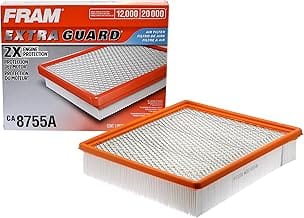
Best Value
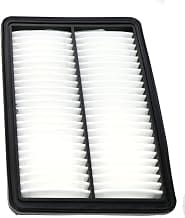
Budget
K&N vs OEM vs Aftermarket Air Filters: What’s the Real Difference?
OEM Air Filters — The Safe, Reliable Choice
What it is: The exact filter your vehicle shipped with, engineered by the manufacturer to precise tolerances for fit, filtration efficiency, and airflow balance.
Best for: Daily drivers, vehicles still under factory warranty, and anyone who prioritizes hassle-free maintenance over marginal performance gains.
✓ Pros
- Perfect fit — zero gaps or air leaks. Critical for accurate MAF sensor readings.
- 99.5%+ filtration efficiency per ISO 5011 testing standards.
- Warranty-safe. No dealer can dispute an OEM part.
- Engineered airflow balance for your specific engine’s fuel map.
✗ Cons
- Higher cost than quality aftermarket alternatives.
- Disposable — replacement every 15,000–30,000 miles adds up over time.
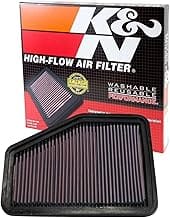
K&N Performance Air Filters — The Enthusiast Option
What it is: A reusable cotton gauze filter oiled to trap particles while allowing higher airflow than paper media. Designed to increase engine breathing for improved throttle response and modest power gains.
Best for: Enthusiasts, modified vehicles, and drivers who are committed to the cleaning and re-oiling maintenance schedule.
✓ Pros
- Up to 50% increased airflow vs. OEM paper filter.
- Reusable and washable — one filter can last the life of the vehicle.
- Lifetime warranty from K&N.
- Measurable throttle response improvement, especially on modified engines.
✗ Cons
- Requires cleaning and re-oiling every 50,000–100,000 miles (sooner in dusty conditions).
- Over-oiling is the #1 cause of MAF sensor failure — oil migrates onto the sensor wire and causes P0100–P0103 fault codes.
- Slightly lower filtration efficiency (98–99%) than OEM — fine particles pass through at a higher rate, which accelerates wear in high-dust environments.
⚠ MAF Sensor Warning
Over-oiling a K&N filter is the leading cause of MAF sensor contamination and throttle body grime. Always follow K&N’s specific oil application instructions — a light, even coat. If you notice MAF sensor symptoms (rough idle, hesitation, check engine light) after filter installation, this is the first thing to check.
Aftermarket Air Filters (WIX, FRAM, Purolator) — The Smart Budget Pick
What it is: Disposable paper or synthetic-blend filters manufactured by third parties to match OEM dimensions and performance specifications at lower cost.
Best for: Budget-conscious drivers, older vehicles past warranty, and anyone who changes filters frequently and wants good quality without OEM pricing.
✓ Pros
- 30–50% cheaper than OEM equivalents.
- Quality brands (WIX, Purolator) achieve 99%+ filtration efficiency — matching OEM.
- Widely available at any auto parts store.
✗ Cons
- Quality varies dramatically by brand — cheap no-name filters may fit poorly or use inferior filter media.
- Some budget filters clog faster, requiring more frequent replacement.
ℹ Aftermarket Brand Hierarchy
Recommended: WIX, Purolator, Denso, Bosch (aftermarket line) — consistently match OEM quality.
Acceptable: FRAM Extra Guard — adequate for normal conditions, lower-quality media than top tier.
Avoid: Unbranded, no-name, or ultra-cheap filters from unknown suppliers — filtration efficiency and fit are unverified.
Filtration Efficiency, Airflow & Technical Specs Compared
| Filter Type | Filtration Efficiency | Airflow vs. OEM | Filter Media | Maintenance | 5-Year Cost |
|---|---|---|---|---|---|
| OEM | 99.5%+ | Baseline | Multi-layer paper | Replace every 15k–30k mi | $150–$250 |
| K&N | 98–99% | Up to +50% | Oiled cotton gauze | Clean/re-oil every 50k–100k mi | $50–$80 |
| WIX / Purolator | 99%+ | Baseline | Synthetic-blend paper | Replace every 15k–30k mi | $75–$150 |
| FRAM Extra Guard | 97–98% | Baseline | SureGrip paper blend | Replace every 12k–15k mi | $60–$120 |
Efficiency percentages based on ISO 5011 air cleaner test standard. Results vary by vehicle, driving conditions, and maintenance compliance.
Real-World Performance: What the Data Shows
- Independent testing shows K&N filters provide a 1–2% improvement in throttle response and fuel economy when new on stock engines. On modified engines with enlarged throttle bodies or upgraded intake systems, gains can be more meaningful.
- OEM filters deliver the best filtration-to-airflow balance for unmodified, factory-tuned engines — the ECU fuel map is calibrated for OEM airflow resistance.
- WIX and Purolator aftermarket filters routinely match OEM test results at significantly lower cost per replacement.
- A severely clogged air filter of any type can reduce engine power by 10–15% and drop fuel economy by 2–4 MPG — making regular inspection and replacement more important than which brand you choose.
How to Install a K&N Engine Air Filter — Step-by-Step
Tools & Materials
Required:
- K&N air filter (verify the correct part number for your year/make/model at K&N’s site)
- Flathead screwdriver or 8mm/10mm socket (varies by vehicle)
- Clean shop rags
- K&N cleaning and re-oiling kit (if reinstalling a used filter)
Recommended:
- MAF sensor cleaner spray — inspect and clean the sensor while the airbox is open
- Torque wrench (for airbox bolts on German vehicles with specified torque values)
Installation Steps
- Turn off the engine and let it cool for at least 30 minutes. Never work near a hot intake manifold.
- Open the airbox: Unclip the spring clips or unscrew the fasteners on the airbox lid. Some vehicles require disconnecting the MAF sensor harness first — do this gently, straight pull, no prying.
- Remove the old filter: Note the orientation (arrow direction, if present). Inspect the airbox interior for debris, insects, or moisture.
- Clean the airbox: Wipe interior surfaces with a dry rag. Do not spray cleaners into the airbox — residue can reach the MAF sensor.
- Inspect the MAF sensor while you have access. Any visible contamination should be cleaned with dedicated MAF sensor cleaner (not throttle body cleaner — different chemistry).
- Install the K&N filter: Seat it firmly in the airbox. Verify there are no gaps around the perimeter — even a small air leak bypasses the filter entirely and sends unmetered air past the MAF sensor.
- Reassemble the airbox and reconnect any disconnected harnesses. Torque fasteners to spec if applicable.
- Start the engine and check for air leaks: Listen for whistling or hissing from the intake area. A stethoscope or simply placing your hand around the airbox perimeter at idle will reveal leaks.
💡 Pro Tip: Re-oiling a K&N Filter
💡 Pro Tip: Details
When reinstalling a cleaned K&N filter, apply oil in a thin, even bead along each pleat — not a heavy coat across the surface. Let it absorb for 20 minutes, then check for dry spots. Re-oil dry areas only. A correctly oiled K&N filter should appear uniformly red, not saturated. Over-oiling is always the problem — never under-oiling. An under-oiled filter passes more particles; an over-oiled filter destroys MAF sensors.
Troubleshooting: Common Air Filter Problems & Fixes
| Symptom | Likely Cause | Diagnosis | Fix |
|---|---|---|---|
| Rough idle after K&N install | Over-oiled filter contaminating MAF sensor | Scan for P0100–P0103 codes; inspect MAF wire visually | Clean MAF sensor with dedicated MAF cleaner; re-oil filter lightly |
| Check engine light — MAF codes (P0100–P0103) | K&N oil on MAF hot wire filament | Confirm code; inspect sensor element | Clean MAF; clear codes; if codes return, MAF may need replacement (~$80–$200) |
| Reduced power / sluggish acceleration | Clogged filter, poor seal, or air leak | Visual inspect filter; check airbox seal perimeter | Replace or clean filter; reseat and check for gaps |
| Whistling or hissing from intake | Air leak around filter or airbox | Run hand around airbox perimeter at idle | Reseat filter; check airbox gasket condition; replace if cracked |
| Poor fuel economy after filter change | MAF contamination disrupting fuel trim | Scan live fuel trim data (should be within ±5%) | Clean MAF; allow ECU to relearn over 50–100 miles of mixed driving |
| Lean codes (P0171, P0174) after install | Air leak bypassing filter and MAF | Smoke test intake; check for unseated filter | Reseat filter properly; inspect intake tubing for cracks |
Cost Analysis: DIY vs. Professional — 5-Year Comparison
DIY Air Filter Replacement
Professional Installation
| Filter Type | Initial Cost | Replacement Cost (5 yr) | Total DIY (5 yr) | Total w/ Labor (5 yr) |
|---|---|---|---|---|
| OEM | $30–$50 | $90–$150 (3 replacements) | $150–$250 | $260–$560 |
| K&N | $50–$80 | $0 (washable) | $50–$80 | $75–$140 (one-time install) |
| WIX / Purolator | $15–$30 | $45–$90 (3 replacements) | $75–$150 | $195–$420 |
⚠ Hidden Cost of K&N Neglect
K&N filters save money only if maintained. A neglected K&N filter that fouls a MAF sensor costs $80–$200 to replace — erasing years of filter savings instantly. If you won’t commit to the cleaning schedule, a quality aftermarket disposable filter is the better financial decision.
Engine Air Filter FAQs
Does a K&N filter really increase horsepower?
Yes, but modestly — 1–5 hp on most stock engines. The more noticeable improvement is throttle response, particularly on engines that were airflow-restricted. On modified engines with upgraded exhausts or forced induction, the gain can be more meaningful because the intake is a genuine bottleneck. Don’t buy a K&N expecting a dramatic power transformation on an unmodified daily driver.
Will a K&N air filter void my car warranty in 2026?
Not automatically. Under the Magnuson-Moss Warranty Act, a manufacturer cannot void your warranty simply because you installed an aftermarket part. They must demonstrate the aftermarket component caused the specific damage being claimed. However, if K&N oil demonstrably damages your MAF sensor — and a dealer can document the connection — that particular repair may not be covered. For warranty-sensitive vehicles, OEM is the risk-free choice.
How often should I replace my engine air filter?
Every 15,000–30,000 miles for OEM and quality aftermarket disposable filters under normal driving conditions. In dusty, rural, or unpaved road environments, inspect at 10,000 miles. A visibly grey, brown, or debris-packed filter should be replaced regardless of mileage — a clogged filter costs more in fuel economy losses than a new filter costs to buy.
Can a dirty air filter cause a check engine light?
Yes. A severely clogged filter restricts airflow enough to create lean fuel mixture codes (P0171, P0174) as the ECU detects insufficient air. An over-oiled K&N filter can directly contaminate the MAF sensor and trigger MAF fault codes (P0100–P0103). Both are common and straightforward to diagnose.
Are aftermarket air filters as good as OEM?
Quality brands — WIX, Purolator, Denso, Bosch — consistently match or exceed OEM filtration efficiency (99%+) at 30–50% lower cost. They’re an excellent value for most applications. Avoid no-name or ultra-cheap filters; poor media quality and imprecise fit allow unfiltered air and dust into the engine, accelerating wear on cylinder walls and piston rings.
How often should I clean a K&N air filter?
Every 50,000–100,000 miles under normal highway and city driving. If you regularly drive on unpaved roads, through construction zones, or in high-dust agricultural areas, inspect and clean every 15,000–25,000 miles. Use only the K&N cleaning kit — household cleaners can damage the cotton gauze media and degrade filter integrity.
What is the best engine air filter for a daily driver in 2026?
Understanding is the best engine air filter for a daily driver in 2026?
For most daily drivers, a WIX or Purolator OEM-replacement filter is the optimal choice: 99%+ filtration efficiency, perfect fit, affordable, and zero maintenance beyond scheduled replacement. K&N is the better pick if you want reusability, are willing to maintain it properly, or have a modified engine that benefits from higher airflow. Either way, a filter you replace or service on schedule outperforms a neglected premium filter every time.
Mechanic’s Verdict: Which Engine Air Filter Should You Buy?
For daily drivers and warranty-covered vehicles: Start with a quality OEM or WIX/Purolator replacement. You get guaranteed fit, 99%+ filtration, and zero complications. Replace every 15,000–30,000 miles and you’ll never think about it again.
For enthusiasts and modified vehicles: K&N Performance Filter is worth the investment — but only if you commit to the cleaning and re-oiling schedule. Neglect a K&N and you’ll pay more in MAF sensor repairs than you saved on filter replacements.
For budget-conscious drivers: WIX or Purolator are the smartest picks — near-OEM quality at a fraction of the cost. Avoid the cheapest no-name options; poor-quality filter media is false economy when cylinder wall wear is the price you pay.
The Bottom Line
The best engine air filter is the one that fits correctly, gets replaced or serviced on schedule, and matches your driving environment. A $20 WIX filter changed every 20,000 miles protects your engine better than a $50 K&N filter ignored for 80,000 miles. Consistency beats brand every time.
Related Guides on VehicleBar
- How to Replace an Engine Air Filter: Step-by-Step Guide
- MAF Sensor Problems: Symptoms, Causes & Fixes
- Cold Air Intake Installation: Performance Gains & Real Costs
- Rough Idle: Causes, Diagnosis & Fixes
- Engine Performance Upgrades: What Actually Works
- Engine Air Filter vs. Cabin Air Filter: Key Differences
- EGR Valve Problems: Symptoms Causes and Fixes
- Clogged Fuel Filter Symptoms and Replacement