K&N Air Filter Review: Worth the Investment? [2025]
I grabbed a K&N drop-in off the shelf and we swapped it right there. Two weeks later, Mike came back with cold sodas. “Truck finally breathes again on the climbs,” he said. That story is the K&N air filter review in a single paragraph — not magic, but for the right driver, a genuine improvement. After 15 years seeing these filters on everything from Civics to race cars, I know exactly where they shine and where they cause problems.
Quick Answer: Is a K&N Filter Worth It?
Quick Answer: Details
Yes — if you plan to keep your vehicle past 30,000 miles and you’ll commit to cleaning it on schedule. The horsepower gains are real but modest (1 to 4 HP on most engines). The real value is a reusable air filter that lasts the life of the vehicle. If you hate maintenance, stick to paper OEM filters and swap them every 15,000 miles.
K&N vs OEM Air Filter: The Technical Reality
OEM air filters are made from pleated cellulose — paper. They stop microscopic dust particles well. But they are restrictive by design. As they load up with dirt, they get more restrictive. Your engine has to work harder to pull air through them. That’s where the power and fuel economy losses come from on a clogged filter.
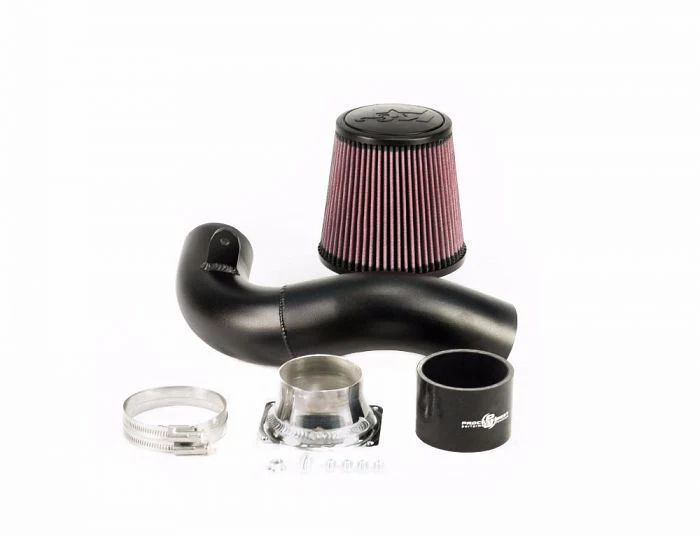
K&N uses 4 to 6 layers of cotton gauze sandwiched between aluminum wire mesh, then treated with a specialized oil. That oil is the real technology. The tacky coating creates a depth-loading filtration system — particles get trapped inside the fiber layers rather than sitting on the surface. Air flows through the gaps between fibers. Dirt gets held in place. That’s the key difference between K&N filter performance and a paper filter.
Think of it this way. A paper filter is a solid piece of cardboard with microscopic holes. A K&N is a screen door with a sticky coating. Both stop what you need to stop. But one lets far more air pass through freely.
As an Amazon Associate, VehicleBar earns from qualifying purchases at no extra cost to you.
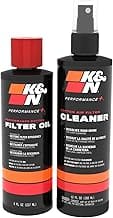
K&N Products — Best Prices
Performance Gains: What the Dyno Actually Shows
I’ve run trucks on the dyno before and after a drop-in swap. Don’t expect 20 horsepower from an air filter. You won’t get it. Realistic gains on a naturally aspirated V8 run 1 to 4 HP at peak. On a 4-cylinder commuter engine, you might see 1 to 2 HP — barely measurable.
The real difference is throttle response. The engine hits its peak torque curve slightly faster because it isn’t fighting a partial vacuum at the intake box. On Mike’s F-150 with the 5.0L Coyote under load, that difference matters on grades. Empty, you’d barely notice it.
Pro Tip: Pair the Filter with Your Exhaust
Pro Tip: Details
If you’re installing a high-flow filter for power gains, make sure your exhaust can handle the extra airflow. Increasing intake volume without improving exhaust flow is a common mistake. A freer-flowing intake with a restrictive stock exhaust doesn’t gain much. Check our cold air intake installation guide if you’re serious about performance over just maintenance savings.
K&N Filter Series: Which One Does Your Vehicle Need?
K&N isn’t one product. They have three distinct filter lines, each built for a different use case. Here’s what I actually install in the shop and why.
| Filter Series | Filter Material | Best For | Example Part # |
|---|---|---|---|
| High-Flow Drop-In | Oiled cotton gauze | Daily drivers, fuel economy | 33-2385 (late-model GM trucks) |
| Blackhawk Series | Dry synthetic media | Low-maintenance drivers | 71-3101 (trucks and SUVs) |
| Heavy Duty Diesel | Hybrid cotton-synthetic | Towing, diesel engines | 38-2001 (commercial vehicles) |
The standard oiled cotton filter operates from -40°F to 250°F — enough range for any US climate. One thing I always check at install: the rubber sealing gasket. K&N’s gasket is thicker than the paper filter it replaces. You may need to apply a little extra pressure to snap the airbox clips shut. Do not force it. If the airbox lid won’t close flush, the gasket isn’t seated right.
A loose K&N filter is worse than a dirty paper filter. Unmetered air bypasses the MAF sensor. The ECU sees it as a lean condition. That triggers a P0171 lean code and kills your fuel trims. Check the seal before you close the hood.
Does the K&N Filter Math Actually Work Out?
The sticker price scares people off. But over 100,000 miles, the numbers tell a different story.
Paper OEM Filters — 100,000 Miles
K&N Reusable Filter — 100,000 Miles
The savings are $67 to $217 over 100,000 miles depending on whether you pay dealer labor. Add a conservative 0.5 MPG improvement at 15,000 miles per year and $3.50 per gallon, and you save another $26 per year on fuel alone. Over 7 years, that’s over $180 in fuel savings on top of the filter savings.
How to Maintain a K&N Air Filter at 50,000 Miles
The biggest mistake I see is people cleaning their K&N too often. One customer cleaned his every 3,000 miles and wore out the cotton fibers faster than dirt ever would have. K&N filters actually filter better with a light layer of dirt on them — the particles help catch more particles. Clean at 50,000 miles on paved roads, or when you can see dirt level with the tops of the pleats.
Never Use Compressed Air on a K&N Filter
100+ PSI from a shop compressor blows holes through the cotton media. Those holes let unfiltered air and particles straight into your intake tract. A filter with blown fibers cannot be repaired. It must be replaced.
Step 1: Apply K&N Power Kleen Cleaner
Spray the K&N Power Kleen (Part #99-5000) liberally on both sides of the filter. Hold the can 6 inches away and soak each pleat. Let it sit for 10 minutes. Do not let it dry on the filter — once it dries, it becomes much harder to rinse out.
Step 2: Rinse from the Clean Side Out
Use low-pressure cold water — under 50 PSI. A garden hose on a shower setting works perfectly. Rinse from the clean side (inside of the filter) outward. This pushes dirt out in the direction it came in, rather than forcing it deeper into the gauze layers. If the rinse water still runs dark after two minutes, apply cleaner again and repeat.
Step 3: Air Dry Completely
Shake off excess water and set the filter on a clean towel. Allow it to air dry naturally. In normal shop conditions, this takes 2 to 4 hours depending on humidity. Do not install a wet filter. Water in the intake causes MAF sensor errors and in extreme cases can cause a hydrolocking event. Never use a heat gun or clothes dryer — temperatures above 200°F damage the gasket adhesive.
Step 4: Re-Oil the Cotton Gauze
Step 4: Details
Apply K&N aerosol recharge oil in a thin bead along the crown of each pleat. One light pass. Wait 20 minutes for the oil to wick down through the cotton layers. The cotton will turn red where it’s properly oiled. Touch up any white spots with a small additional spray. The filter is correctly oiled when no white spots remain and no oil drips off when you tap the side. See our full K&N filter cleaning guide for detailed photos of each stage.
K&N and MAF Sensors: Separating Fact from Forum Myths
The biggest criticism of K&N filters online is that they coat and ruin MAF sensors. In 15 years of professional shop work, I’ve seen this happen exactly twice. Both times, the owner had soaked the filter in oil until it was dripping. A properly oiled K&N filter does not contaminate MAF sensors.
Over-oiling is the only real risk. If you apply oil correctly — thin passes with drying time between — the oil stays in the cotton. It does not migrate. The problem comes from guys who spray oil on and reinstall immediately, or who apply three heavy coats in five minutes. The oil migrates into the intake tube and coats the hot wire sensor element.
Symptoms of K&N Oil Contamination on a MAF Sensor
Rough idle or stumbling under acceleration after a cleaning. The MAF sensor wire looks visibly fuzzy or has a brownish coating. Fix it with CRC Mass Air Flow Sensor Cleaner — spray directly on the wire element and let it air dry completely. Then reduce your oil amount by 0.5 oz on the next cleaning. The sensor cleaner is $8 to $9 and takes 10 minutes to fix.
Tools and Materials for K&N Filter Install
Installation on most vehicles takes 10 minutes. You probably have everything you need already.
What You Need
Understanding You Need
K&N Air Filter: The Real Pros and Cons
Pros
- Lasts the life of the vehicle with proper cleaning
- Better throttle response on loaded engines (towing, grades)
- 1 to 4 HP gain on most naturally aspirated engines
- 0.5 MPG average improvement in real-world use
- 10-minute DIY installation on most vehicles
- No warranty issues under Magnuson-Moss Warranty Act
- Filters better than new paper at slightly dirty state
Cons
- Requires cleaning every 30,000–50,000 miles (commitment)
- Over-oiling causes MAF sensor contamination
- Higher upfront cost ($55–$70 vs $20–$30 for paper)
- Not ideal for extreme dusty or off-road conditions without shorter intervals
- Wrong oil substitutes ruin the filter permanently
Related Guides on VehicleBar
- How to Clean a K&N Air Filter — Full Step-by-Step Guide with Photos
- Dirty Air Filter Symptoms: 7 Warning Signs to Watch For
- Cold Air Intake Installation Guide — What It Costs and What You Gain
- How to Clean a MAF Sensor — Symptoms, Cost, and Step-by-Step Fix
- Best Reusable Engine Air Filters for 2026 — Tested and Ranked
- Engine Air Filter vs Cabin Air Filter: What’s the Difference?
- When to Replace Air Filter: Mileage Guide & Warning Signs
- Best Engine Air Filters 2026: K&N vs OEM vs Aftermarket
K&N Air Filter — Frequently Asked Questions
Does a K&N air filter void my factory warranty?
No. Under the Magnuson-Moss Warranty Act, a manufacturer cannot void your warranty for using an aftermarket part unless they can prove that specific part caused the failure. A drop-in air filter cannot cause engine failure on its own. I’ve worked at dealerships — we do not care about your air filter unless it’s physically disintegrating into the turbo.
How often do I actually need to clean a K&N filter?
K&N recommends 50,000 miles for normal highway driving. If you live in a dusty area like West Texas, New Mexico, or Arizona desert, check it every 15,000 miles. A simple visual test works: if you can still see the aluminum wire mesh through the cotton, it’s fine. If the pleats are completely level with packed dirt, clean it. Over-cleaning wears out the cotton faster than dirt does.
Why did my K&N filter turn white or gray instead of staying red?
The red color is a dye in the K&N recharge oil that shows you where you’ve applied coverage. When the filter turns white or gray, it means the oil has dried out, washed away, or was never applied in that area. A white or gray filter is not protecting your engine from sub-10-micron particles. Re-oil it immediately using the K&N 99-5050 kit.
Can a K&N filter damage my MAF sensor?
Only if you over-oil it. A properly oiled K&N filter — applied in thin passes with drying time between each — stays in the cotton and does not migrate to the MAF. The contamination problem comes from applying too much oil too fast and reinstalling immediately before it absorbs. If it happens, clean the sensor with CRC Mass Air Flow Sensor Cleaner ($8) and use less oil next time.
Is K&N better than a standard OEM paper air filter?
For most daily drivers who keep their vehicles past 50,000 miles, yes. The K&N flows more air at equivalent contamination levels, delivers modest but measurable HP and fuel economy improvements, and replaces 6 to 10 paper filters over the vehicle’s life. The only case where paper is better: if you drive fewer than 10,000 miles per year and won’t commit to cleaning the K&N on schedule. A clogged K&N is worse than a fresh paper filter.
How much horsepower does a K&N air filter add?
Expect 1 to 4 HP on a naturally aspirated engine. Turbocharged engines may see slightly more because the turbo can spool faster with less intake restriction. The gains are real but won’t transform your car. Where you feel it most is throttle response under load — towing, passing, climbing grades. Don’t buy a K&N for horsepower alone. Buy it because it’s a better long-term investment than recurring paper filter costs.
Can I use K&N oil on other brands of reusable filters?
Technically yes — K&N oil is compatible with most cotton gauze filters including aFe, Spectre, and S&B. But each brand has its own oil formulation tuned to their gauze weave and layer count. Using K&N oil on an aFe filter may result in slightly different oil absorption. The safest approach is always to use the matching brand’s oil and cleaner for your specific filter.
Final Verdict from the Shop Floor
The K&N air filter is a quality upgrade for drivers who actually take care of their vehicles. The install is 10 minutes. The cost pays off by the second cleaning. The performance improvement is modest but real — especially under load.
If you treat your car like an appliance and barely remember oil changes, stick to paper. You’ll forget to clean the K&N, it’ll clog, and you’ll end up with worse airflow than a fresh OEM filter. But if you’re the kind of driver who does Saturday maintenance, the K&N is a buy-it-once solution. Keep the oil application light. Let it dry completely before reinstalling. Your engine will breathe cleaner air for the next 150,000 miles.