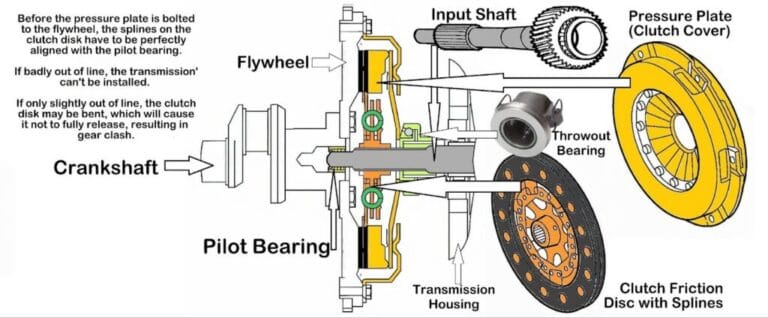
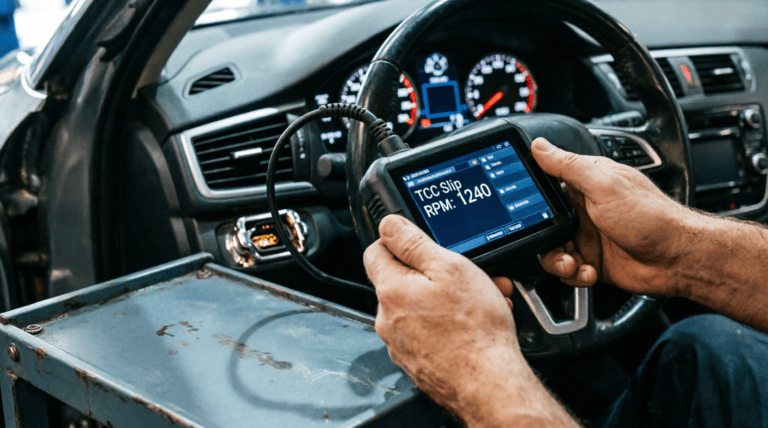
Transmission Overheating: Causes, Symptoms & Prevention (…
Transmission overheating occurs when fluid exceeds 200°F. Low fluid, heavy loads, or failing coolers cause this. Symptoms include burning smells, slipping gears, or warning lights. Immediate action prevents $500–$4,000+ in repairs. Prevention includes fluid changes, cooler upgrades, and avoiding excessive towing.
⚠️ WARNING: Driving with an overheating transmission can cause irreversible damage in as little as 10–15 minutes.
What Is Transmission Overheating? (And Why It’s a Big Deal)
Transmission overheating happens when fluid temperatures climb above 200°F. This degrades seals and clutches rapidly. Unlike engines, transmissions lack redundant cooling systems. Damage progresses faster, often costing over $2,500 to repair. Prevention is simple and inexpensive.
How Transmission Cooling Works
Transmission fluid lubricates moving parts. It also dissipates heat. In automatics, the torque converter generates significant heat. Built-in or auxiliary coolers help manage temperatures.
What Temperature Is Too Hot for a Transmission?
Normal operating range is 175–200°F. Warning zone begins at 200–220°F. Check engine lights may appear here. Danger zone starts at 240°F+. Severe damage risks increase dramatically.
Why Transmission Overheating Is Worse Than Engine Overheating
Transmissions have no backup cooling systems. Heat degrades seals, clutches, and gears quickly. Repair costs often exceed engine overheat repairs. Prevention is far cheaper than cure.
💡 INFO: A transmission at 220°F loses 50% of its lifespan compared to one at 175°F.
What Causes a Transmission to Overheat? (And How to Spot Them Early)
Transmission overheating stems from several causes. Low or degraded fluid loses cooling properties. Excessive towing overloads stock coolers. Failing coolers restrict heat dissipation. Clogged filters reduce fluid flow. Faulty solenoids disrupt circulation. Worn clutches generate friction. Debris blocks airflow.
| Cause | Why It Happens | Symptoms | Fix |
|---|---|---|---|
| Low/Old Transmission Fluid | Fluid degrades, loses lubrication/cooling properties | Burning smell, rough shifts, slipping | Fluid change (fluid maintenance) |
| Heavy Towing/Hauling | Excessive load increases heat beyond stock cooler capacity | Temp light, delayed shifts | Auxiliary cooler (cooler upgrades) |
| Failing Transmission Cooler | Clogged or leaking cooler restricts heat dissipation | Overheating at highway speeds | Cooler flush/replacement |
| Clogged Transmission Filter | Restricts fluid flow, reducing cooling efficiency | Erratic shifting, overheating | Filter replacement |
| Faulty Solenoids | Poor fluid flow due to electrical/mechanical issues | Harsh shifts, overheating | Solenoid replacement |
| Slipping Transmission | Worn clutches generate excessive friction/heat | RPM spikes, delayed acceleration | Transmission rebuild (slipping problems) |
| External Debris/Blockages | Dirt, bugs, or road debris blocking cooler airflow | Overheating in hot weather | Clean cooler fins |
🔍 Expert Tip: If your transmission overheats only when towing, your stock cooler is likely undersized. Upgrading to a larger auxiliary cooler (e.g., Hayden 403 or Derale 13500) can reduce temps by 30–50°F.
Overheating Transmission Symptoms: Warning Signs to Watch For
Overheating transmissions show dashboard warning lights. Burning smells indicate trouble. Slipping gears signal problems. Delayed shifts occur. Fluid leaks appear. Ignoring these signs risks severe internal damage.
Dashboard Warning Lights
Transmission temp light is the most direct indicator. Check engine light may show P0218, P0841–P0849 codes. Red “Hot” light appears on some vehicles.
Unusual Smells
Burning odor means overheated fluid. Sweet, syrup-like smell indicates coolant mixing with fluid.
Performance Issues
Slipping gears signal internal problems (symptoms of a slipping transmission). Delayed or harsh shifting occurs. Neutral “hunting” happens in automatics.
Physical Signs
Fluid leaks appear as red/brown puddles. Bubbling or foaming fluid shows on dipstick. Whining or grinding noises indicate wear.
⚠️ WARNING: If your transmission fluid is dark brown/black or smells burnt, stop driving immediately. Continuing can destroy your transmission within minutes.
My Transmission Is Overheating – What Should I Do? (Emergency Guide)
If your transmission overheats, pull over safely. Turn off the engine immediately. Check the fluid level if safe. Top up with correct type if low. Do not drive if fluid is burnt. Allow 30+ minutes for cooling.
Immediate Actions (First 5 Minutes)
Pull over and shut off the engine. Check transmission fluid level. Top up with Dexron VI or Mercon LV if low. Call a tow truck if fluid smells burnt. Wait 30+ minutes for cooling.
If You Must Drive Short Distances
Shift manually to avoid heavy loads. Turn off A/C to reduce strain. Keep RPMs below 2,500.
When to Call a Professional
Seek help if fluid is black or burnt. Visible leaks require professional attention. Persistent warning lights need diagnosis.
💡 Pro Tip: Carry a transmission fluid top-up kit. A 1-quart bottle of Dexron VI could save your transmission in an emergency.
How to Keep Your Transmission Cool: 10 Prevention Tips
Prevent transmission overheating with regular fluid changes every 30K–60K miles. Install auxiliary coolers for towing. Clean coolers annually. Use correct fluid types. Avoid stop-and-go traffic when possible.
Fluid Maintenance
Change fluid every 30K–60K miles (fluid maintenance). Use the correct type per your manual. Avoid “lifetime fluid” myths.
Cooler Upgrades & Maintenance
Install an auxiliary cooler for towing (cooler upgrades). Clean coolers annually. Choose plate-and-fin, tube-and-fin, or stacked-plate types.
Driving Habits
Avoid stop-and-go traffic. Warm up your car for 30–60 seconds in cold weather. Use Tow/Haul Mode if your vehicle has it.
Towing & Heavy Loads
Never exceed your vehicle’s towing capacity. Use a cooler if towing over 3,500 lbs (towing best practices). Downshift manually on steep grades.
Transmission Cooler Problems: How to Diagnose & Fix Them
Transmission cooler problems cause overheating at highway speeds. Fluid leaks near cooler lines indicate issues. Discolored fluid suggests mixing or burning. These problems restrict heat dissipation.
Signs of a Failing Transmission Cooler
Cooler can’t handle sustained loads. Leaks appear near cooler lines. Milky fluid means coolant mixing. Dark fluid indicates burning.
Types of Transmission Coolers (Pros & Cons)
| Type | Pros | Cons | Best For |
|---|---|---|---|
| Stock (In-Radiator) | No extra cost, integrated | Limited cooling, can mix with coolant | Daily driving, light loads |
| Auxiliary (Air-Cooled) | Better heat dissipation, easy to install | Adds complexity, cost | Towing, hot climates |
| Plate-and-Fin | High efficiency, compact | More expensive | Performance vehicles |
| Tube-and-Fin | Durable, good airflow | Less efficient than plate-and-fin | Heavy-duty towing |
How to Test Your Transmission Cooler
Detailed Steps Test Your Transmission Cooler
Visually inspect for leaks and debris. Use an infrared thermometer on cooler lines. Perform a pressure test for leaks.
| Task | DIY Difficulty | Estimated Cost (DIY) | Professional Cost |
|---|---|---|---|
| Fluid change | Easy | $50–$100 | $150–$250 |
| Cooler flush | Moderate | $20–$50 | $100–$200 |
| Auxiliary cooler install | Hard | $100–$200 | $300–$600 |
| Cooler replacement | Very Hard | $150–$300 | $400–$800 |
Automatic vs. Manual Transmission: Which Overheats More?
Automatic transmissions overheat far more often than manuals. Their torque converters and hydraulic systems generate and trap more heat. Manual transmissions have simpler designs. This makes them less prone to overheating.
| Factor | Automatic Transmission | Manual Transmission |
|---|---|---|
| Heat Sources | Torque converter, clutch packs | Clutch disc, synchros |
| Cooling Method | Fluid-based (relies on cooler) | Less heat, no torque converter |
| Overheating Risk | High (more components, fluid-dependent) | Low (simpler design) |
| Common Causes | Low fluid, towing, failing cooler | Aggressive driving, clutch slipping |
| Symptoms | Slipping, delayed shifts, temp light | Hard shifting, burning smell |
| Prevention | Regular fluid changes, auxiliary cooler | Smooth shifting, avoid riding clutch |
💡 Expert Insight: Automatic transmissions overheat 5x more often than manuals due to torque converter slippage and complex hydraulic systems. If you tow or drive in stop-and-go traffic, an auxiliary cooler is a must.
How Much Does It Cost to Fix an Overheating Transmission?
Fixing an overheating transmission ranges from $20 for a fluid top-up to over $7,000 for a full replacement. Costs depend on the issue, vehicle make, labor rates, and DIY vs. professional service. Always compare quotes from multiple shops.
Cost Breakdown by Issue
| Problem | Repair Type | Estimated Cost (Parts + Labor) | DIY Possible? |
|---|---|---|---|
| Low Fluid | Top-up | $20–$50 | ✅ Yes |
| Fluid & Filter Change | Service | $150–$300 | ✅ Yes |
| Transmission Cooler Flush | Service | $100–$250 | ⚠️ Moderate |
| Auxiliary Cooler Install | Upgrade | $300–$800 | ⚠️ Hard |
| Faulty Solenoid Replacement | Repair | $200–$500 | ❌ No (usually) |
| Clogged Cooler Replacement | Repair | $400–$1,000 | ❌ No |
| Transmission Rebuild | Major Repair | $1,500–$4,000+ | ❌ No |
| Full Transmission Replacement | Replacement | $3,000–$7,000+ | ❌ No |
Factors Affecting Cost
Vehicle make/model impacts prices. Labor rates vary by shop. Warranty coverage may apply.
Is It Worth Fixing?
Fix if vehicle is under 10 years old and in good condition. Consider replacement if transmission has over 150K miles or other major issues.
Cost-Saving Tips:
Compare quotes from 3+ shops. Ask about remanufactured transmissions. Check for recalls on Ford, GM, and Chrysler models.
DIY vs. Professional: Which Is Right for Your Transmission Problem?
Deciding between DIY and professional repair depends on task complexity and your skill. Simple fluid changes and cooler installations can be DIY. Internal issues like solenoid replacement require professionals. Know your limits to avoid costly mistakes.
When to DIY
Change fluid if you have proper tools. Install auxiliary coolers if mechanically inclined. Clean debris from cooler fins.
When to Call a Pro
Internal transmission issues need expert attention. Leaking cooler lines require special tools. Diagnostic codes like P0730 or P0841 need professional interpretation.
Risks of DIY Mistakes
Wrong fluid type causes immediate damage. Over/under-tightening cooler lines causes leaks or cracks. Incorrect cooler placement reduces airflow.
5 Common Mistakes New Drivers Make (And How to Avoid Them)
New drivers often ignore warning lights. They never check fluid. They use wrong fluid types. These mistakes cause overheating and costly repairs. Regular checks and proper maintenance prevent most issues.
Ignoring the Transmission Temp Light
Drivers mistake it for an engine light. Pull over immediately if it appears. Check fluid level and condition.
Never Checking Transmission Fluid
Fluid degrades over time. Check monthly like engine oil. Top up as needed.
Using the Wrong Fluid Type
Incompatible fluids cause foaming and poor lubrication. Always use the type in your manual. Dexron VI and Mercon LV are common.
Towing Without a Cooler Upgrade
Stock coolers can’t handle heavy loads. Install an auxiliary cooler before towing (cooler upgrades).
Riding the Brake in Traffic
Torque converter stays engaged, generating heat. Shift to neutral at long stops.
10 Pro Tips to Extend Your Transmission’s Life
Extend your transmission’s life with synthetic fluid. Use temperature gauges. Install deep pans. Follow seasonal maintenance. Avoid hard accelerations. Use engine braking. Flush fluid every 60K miles.
Upgrades Worth Considering
Deep transmission pans hold more fluid. Temperature gauges provide real-time monitoring. Synthetic fluids offer superior heat resistance.
Seasonal Maintenance
Use low-viscosity fluid like Mercon LV in winter. Check fluid levels more often in summer. Heat increases evaporation.
Performance Driving Tips
Avoid hard accelerations. Use engine braking by downshifting. Reduce strain on the transmission.
Long-Term Care
Flush fluid every 60K miles, even if “lifetime” fluid. Replace the transmission filter every 30K–60K miles. Inspect cooler lines annually for leaks.
🔥 Pro Tip: If you frequently tow or drive in mountains, consider a transmission oil cooler with a fan (e.g., Derale 13500). This can lower temps by an additional 20°F in extreme conditions.
Towing with an Automatic Transmission? Avoid These Costly Mistakes
Towing generates excessive heat. Stock coolers are often insufficient. Upgrading to an auxiliary cooler prevents damage. Use Tow/Haul Mode. Follow proper techniques to protect your transmission.
Why Towing Overheats Your Transmission
Increased load creates more torque converter heat. Stock coolers can’t handle sustained heavy loads.
Towing Capacity vs. Transmission Cooling
Upgrade your cooler if towing over 50% of max capacity. A Ford F-150 (max tow: 12,000 lbs) needs an auxiliary cooler for loads over 6,000 lbs.
Best Practices for Safe Towing
Use Tow/Haul Mode to adjust shift points. Install a transmission temperature gauge. Downshift on steep grades. Take breaks every 2–3 hours.
Recommended Transmission Coolers for Towing
| Cooler Model | Type | Cooling Capacity | Best For | Price |
|---|---|---|---|---|
| Hayden 403 | Plate-and-Fin | 11,000 GVW | Light towing (3,500–5,000 lbs) | $50–$80 |
| Derale 13500 | Plate-and-Fin | 15,000 GVW | Medium towing (5,000–8,000 lbs) | $80–$120 |
| B&M 70264 | Stacked-Plate | 20,000+ GVW | Heavy towing (8,000+ lbs) | $120–$180 |
| Flex-a-lite 4173 | With Fan | 18,000 GVW | Extreme towing (10,000+ lbs) | $200–$250 |
Top Transmission Overheating – Our Picks



🚨 Critical Warning: Never tow in Overdrive. This locks the torque converter, increasing heat. Always turn OD off when towing (towing best practices).
Transmission Overheating FAQs: Quick Answers to Common Questions
🔹 Can I drive with an overheating transmission?
No. Driving more than 5–10 minutes with an overheating transmission causes permanent damage. Pull over immediately. Check fluid level and condition. Let it cool before driving slowly to a repair shop.
🔹 Why does my transmission overheat when towing?
Stock coolers aren’t designed for heavy loads. The torque converter works harder, generating more heat. Upgrade to an auxiliary cooler (cooler upgrades) and use Tow/Haul Mode.
🔹 How do I check my transmission fluid?
Park on a level surface. Engine must be warm and running. Locate the dipstick near the firewall. Wipe, reinsert, then check level between Min and Max. Red or clear fluid is good. Brown or black fluid is bad.
🔹 What does a transmission temp warning light mean?
Your fluid is above safe operating temperature. Usually over 220°F. Pull over immediately. Check fluid. Do not drive until resolved.
🔹 How often should I change my transmission fluid?
Change every 30,000 miles for severe conditions. Every 60,000 miles for normal driving. Always check your owner’s manual. Experts recommend changing “lifetime” fluid anyway.
🔹 Can a bad radiator cause transmission overheating?
Yes. Many vehicles use the radiator to cool transmission fluid. A clogged radiator or failed internal cooler overheats both engine and transmission.
🔹 How long does it take for a transmission to cool down?
30–60 minutes if idling. 1–2 hours if turned off. Parking in shade speeds up cooling. Pop the hood to help dissipate heat.
🔹 Is transmission overheating covered under warranty?
Maybe. Manufacturer warranties cover defective parts. Neglect or modifications void coverage. Check your specific warranty terms.
🔹 Can I use engine coolant to cool my transmission?
No. Engine coolant and transmission fluid are not interchangeable. Mixing them destroys your transmission.
🔹 What’s the best transmission fluid for overheating prevention?
🔹 Understanding’s the best transmission fluid for overheating prevention?
Synthetic fluids resist heat better. Amsoil Signature Series and Mobil 1 Synthetic ATF are excellent. Always use the type recommended in your owner’s manual.
Want to Learn More? Check Out These Guides
- Slipping Transmission: Causes and Fixes – Learn why your transmission might be slipping and how to fix it.
- Transmission Fluid Change Guide – Step-by-step instructions for a proper transmission fluid change.
- How to Install a Transmission Cooler – DIY guide for upgrading your cooling system (cooler upgrades).
- Towing with Your Truck: Best Practices – Essential tips to protect your transmission while towing (towing best practices).
Transmission Overheating: The Bottom Line
Prevention is cheaper than repair. A $50 fluid change beats a $3,000 rebuild. Act fast if you see warning lights or symptoms. Every minute counts. Upgrade your cooler if you tow, drive in hot climates, or have an older vehicle.
Call to Action: Is your transmission running hot? Check your fluid today. It could save you thousands in repairs. Visit a trusted mechanic for a transmission temperature test if unsure.