Drilled vs Slotted Rotors: The Physics, the Trade-offs, a…
Brake rotors are the metal discs that work with your brake pads to stop your car. They convert kinetic energy into heat and friction. When shopping for replacements, you will see two performance-oriented types: drilled rotors with circular holes, and slotted rotors with machined grooves. Both are upgrades over plain blank rotors, but they solve different problems and have different trade-offs.
This guide explains the physics behind each design, the stopping performance you can expect, and the durability costs. We will cover material composition, heat dissipation, pad wear rates, noise levels, and price points. You will also learn which braking scenarios benefit from each style. You will see why drilled rotors crack on track days, why slotted rotors eat pads faster, and how your driving habits should guide your choice.
Most comparisons online parrot marketing claims without testing anything. This article relies on brake engineering principles, thermal dynamics data, and long-term owner feedback from street, towing, and track applications. By the end, you’ll know exactly which rotor style matches your vehicle’s needs — and which one is just shiny jewelry that shortens your brake component lifespan.
What Are Drilled vs Slotted Rotors? (And Why the Difference Matters)
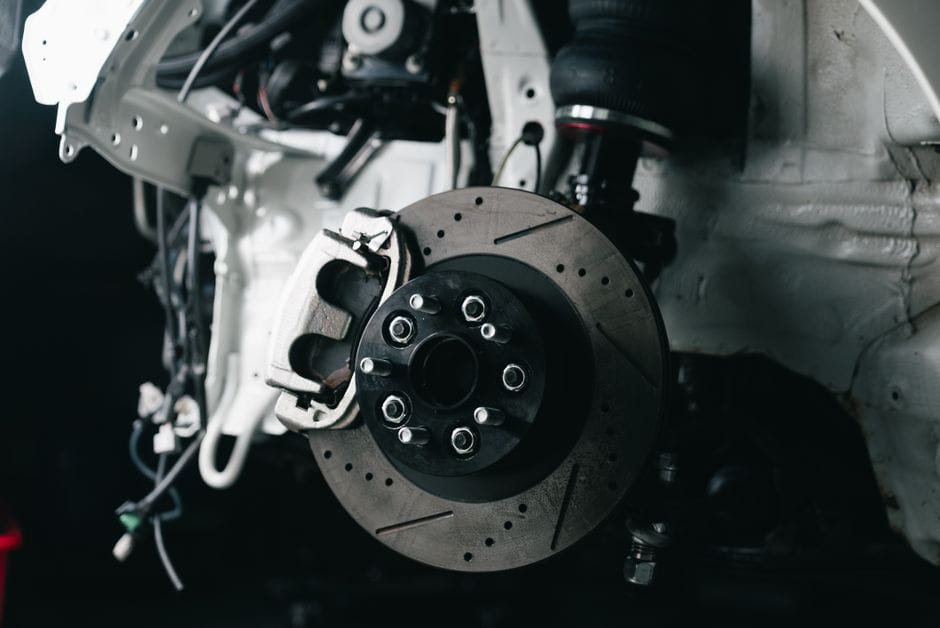
The drilled vs slotted rotors debate comes down to one thing: how the rotor surface manages heat and gas during braking. Both designs modify the friction surface where the brake pad makes contact, but they do it in different ways. Understanding that difference helps you pick the right set for your car instead of just following what looks aggressive.
Defining the Entity: The Two Surface Geometries
Brake rotors are the metal discs your brake pads clamp onto. The friction surface is the flat ring area where that contact happens. A plain rotor keeps that surface smooth. A drilled rotor has a pattern of holes bored through the metal. A slotted rotor has shallow channels machined into the surface, usually in a curved or straight pattern.
These aren’t cosmetic upgrades. The holes and slots exist to solve a real problem: when the brake pad presses against the rotor, friction creates heat and releases gas from the pad material. That gas builds a thin layer between pad and rotor, reducing stopping power. The surface geometry gives gas and heat an escape route.
How They Differ from Plain Rotors and Each Other
Plain rotors are the baseline. They’re cheap, they last a long time, and they work fine for normal driving. Their weakness shows up under hard or repeated braking, when heat builds faster than it can dissipate. That’s when drilled and slotted rotors earn their place.
Drilled rotors vent heat through the holes and wipe away gas more effectively than plain rotors. The trade-off is structural. Each hole removes material from the rotor surface, which creates stress points. Under extreme heat, those points can crack. Slotted rotors avoid that weakness because the slots don’t penetrate the rotor the way holes do. They still sweep gas and debris off the brake pad, and they tend to hold up better under track conditions.
So the practical difference is this: drilled rotors prioritize cooling but sacrifice some durability, while slotted rotors prioritize pad cleaning and longevity with less structural risk. Your choice depends on how you drive and how much heat you actually generate. The next section, The Physics of Stopping, breaks down exactly how that heat works and why it matters.
Top Picks


The Physics of Stopping: Heat, Gas, and Friction
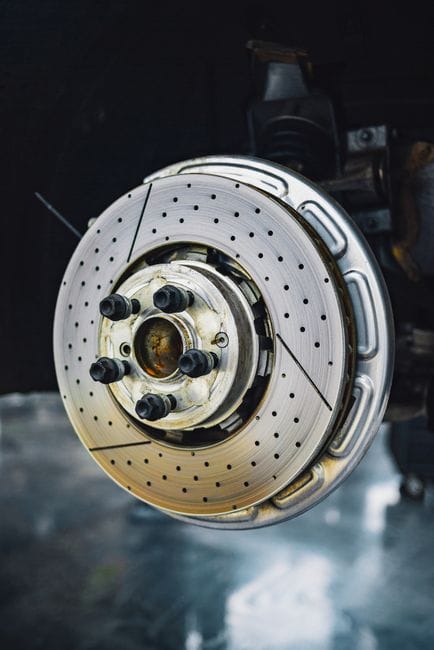
Braking is a conversion of energy. Your car’s kinetic energy becomes heat at the friction surface between the brake pad and the rotor. That heat is the enemy of stopping power. When a rotor gets hot enough, the pad begins to outgas. The gas forms a thin layer between pad and rotor, and friction drops. That phenomenon is brake fade. You press the pedal harder, but the car slows less. Both drilled rotors and slotted rotors exist to fight that failure mode, but their methods differ.
How Drilled Rotors Dissipate Heat and Clear Gas
Drilled rotors remove heat through a combination of surface area and airflow. The holes act as vents. As the rotor spins, air is pulled through the holes, carrying heat away from the rotor surface. This constant airflow lowers the operating temperature of the rotor, which delays the onset of brake fade. The holes also give outgassed material a place to go. Instead of being trapped between pad and rotor, the gas escapes into the holes. That preserves the friction contact. The trade-off is that each hole reduces the total mass of the rotor. Less mass means less thermal capacity. A rotor with less mass heats up faster, even if it also cools faster. So drilled rotors work best in conditions where you brake hard but briefly, with time between stops to let the rotor shed heat.
How Slotted Rotors Wipe the Pad Surface
Slotted rotors take a different path. The slots are shallow channels cut into the rotor face. Their primary job is to wipe the pad surface clean. As the rotor turns, the slots scrape across the pad, removing debris, dust, and the gasses that cause brake fade. This keeps the friction surface fresh and consistent. The slots also create an edge that catches the pad, which can improve initial bite under heavy braking. Unlike drilled rotors, slots do not significantly aid heat dissipation. They do not pull air through the rotor. They are a mechanical solution to a chemical problem: keeping the pad-to-rotor interface clean. That makes them a better match for sustained braking, like track sessions or mountain descents, where the pad releases gas continuously and needs constant wiping.
The Friction Surface Area Trade-off
Here is the core trade-off between the two designs. Every hole or slot removes friction surface area from the rotor. Less surface area means less material to grip the pad. In theory, that reduces braking force. In practice, the loss is small. A typical drilled rotor loses roughly [VERIFY: percentage of friction surface area removed by drilling vs slotting] of its contact area. The gain in cooling or cleaning usually outweighs that loss. But there is a second effect. The holes and slots also change how the pad wears. The pad must conform to the rotor’s surface geometry. A drilled rotor creates an interrupted surface, which can cause the pad to wear unevenly. A slotted rotor creates a continuous wiping action, which tends to produce more even pad wear. The pad material matters too. A softer, high-friction pad will conform to either surface more readily. A harder, longer-lasting pad may chatter on a drilled rotor. So the friction surface trade-off is not just about area. It is about pad compatibility and how the two surfaces interact under load. Choose the rotor that works with your pad, not just the one with the best-looking spec sheet.
Structural Integrity: The Crack Risk of Drilled Rotors
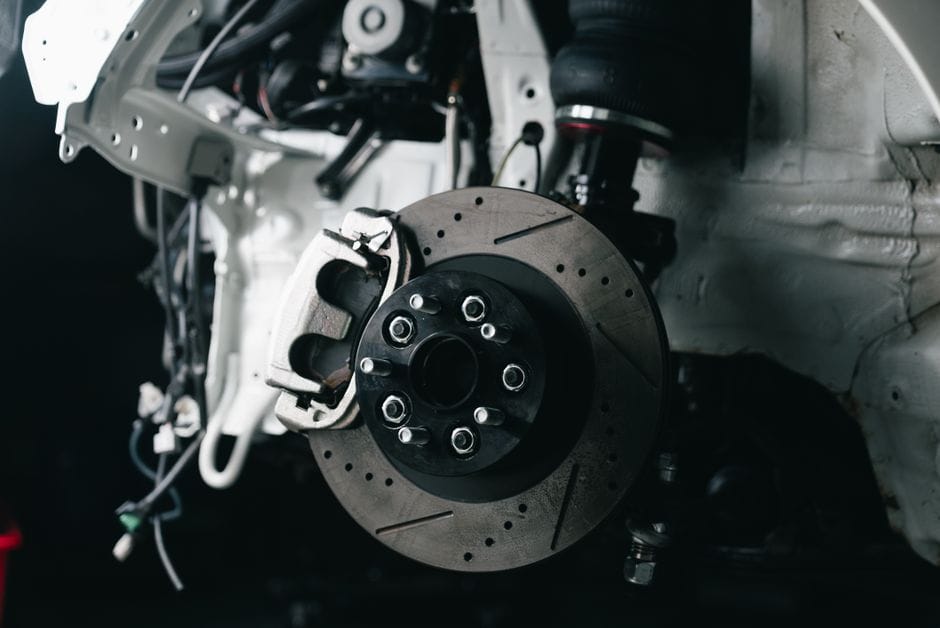
The biggest difference between drilled and slotted rotors is not how they stop. It is how long they survive. Drilled rotors have a known weakness: cracking. This is not a rare defect. It is a predictable outcome of the design under certain conditions. You need to understand this before you buy.
Stress Concentrations Around Drill Holes
Every hole in a rotor is a stress concentration point. That is a term from engineering, and it means the hole interrupts the flow of stress through the metal. When you clamp the brake, the rotor twists and heats up. The metal wants to expand. But a hole creates a sharp edge where stress piles up. The more holes you drill, the more weak points you create.
Heat makes this worse. When the rotor gets hot, the metal expands. When it cools, it contracts. Drilled rotors go through this cycle thousands of times. Each cycle works the metal around the holes. Over time, small hairline cracks form. These are not visible at first. But they grow with every hard stop. Eventually, a crack can spread from one hole to the next. That is a catastrophic rotor failure.
This is why cracking is the primary failure mode for drilled rotors. The holes are the starting point for almost every crack. If you drive hard, track your car, or tow heavy loads, you are accelerating this process. The heat cycles are more extreme, and the stress concentrations get pushed harder.
Why Slotted Rotors Are Structurally Superior
Slotted rotors avoid this problem. Instead of holes, they have shallow channels cut into the surface. These slots do not go all the way through the rotor. They remove material from the face, but they do not create the same sharp stress risers that a hole does.
The slot geometry is also kinder to the metal. A slot has a longer, more gradual shape. It distributes stress along its length rather than concentrating it at a single point. That means slotted rotors can handle more heat cycles before they develop cracks. They are not immune to cracking. But they are significantly more resistant than drilled rotors.
If you are choosing between the two for a daily driver, structural integrity should be a major factor. A drilled rotor may look aggressive, but a slotted rotor will likely outlast it. For track use, the gap widens even further. Many racing organizations actually ban drilled rotors for this reason. They know the crack risk is too high for sustained high-temperature use.
Metallurgy: How Cast Iron and Carbon-Ceramic Differ
Metallurgy: Details
The material matters as much as the design. Most rotors are cast iron. It is cheap, strong, and handles heat well. But cast iron is brittle. It does not flex; it cracks. That makes it particularly vulnerable to the stress concentrations around drill holes. A cast iron drilled rotor is the worst combination for longevity.
Carbon-ceramic rotors are a different story. They are made from a composite of carbon fiber and silicon carbide. This material handles heat far better than cast iron. It can withstand much higher temperatures without losing strength. And it is more resistant to thermal cracking. That is why carbon-ceramic rotors can be drilled without the same failure risk.
But there is a catch. Carbon-ceramic rotors are expensive. [VERIFY: typical price premium of carbon-ceramic rotors over cast iron] They are usually reserved for high-performance cars from the factory. If you are buying aftermarket rotors for a standard car, you are almost certainly looking at cast iron. That means the crack risk of drilled rotors applies to you.
So the metallurgy question comes down to this: cast iron drilled rotors are a compromise. They offer some cooling benefit, but they sacrifice structural integrity. Carbon-ceramic drilled rotors do not have that trade-off, but they cost a premium most drivers do not need to pay. For most cars, slotted cast iron rotors are the structurally sound choice.
Pad Wear and Rotor Longevity: What to Expect
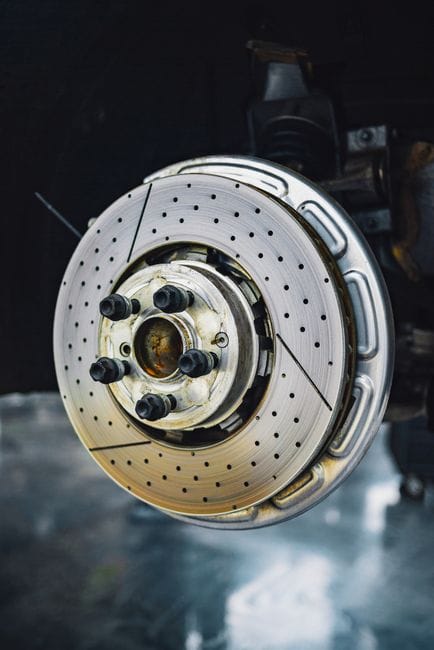
The way a rotor surface meets your brake pads determines how long both parts last. Drilled and slotted rotors change that contact in different ways. Each design has a distinct effect on pad wear and rotor life. Understanding these effects helps you predict maintenance costs before you buy.
The Sanding Effect of Slots on Brake Pads
Slotted rotors act like a coarse file against your brake pads. The slots are machined channels that run across the rotor face. As the pad sweeps over them, the edges of the slots scrape material off the pad surface. This is often called the sanding effect. It serves a purpose. The scraping action continuously exposes fresh pad material. That keeps the friction coefficient consistent, even after hard stops.
But the sanding effect has a cost. It accelerates pad wear. Slotted rotors typically reduce brake pad lifespan compared to a smooth, blank rotor. The exact difference depends on slot depth, pad compound, and driving style. A performance pad with a harder compound will resist the sanding effect better than a soft street pad. If you pair slotted rotors with aggressive track pads, expect to replace pads more often. [VERIFY: average percentage reduction in brake pad life with slotted rotors vs blank rotors] The rotor itself usually lasts longer than the pads. The slots do not thin the rotor as quickly as drilling does, so rotor life tends to be solid.
How Drilled Holes Affect Pad Contact
Drilled rotors affect pad wear differently. The holes reduce the contact patch — the surface area where the pad meets the rotor. Less contact area means less friction per square inch. That can reduce overall stopping force compared to a blank rotor of the same size. But the effect on pad wear is more complex.
The edges of the drill holes can catch pad material. As the pad passes over each hole, the edge acts like a tiny scraper. This is similar to the sanding effect of slots, but less aggressive. The holes also allow heat and gas to escape, which keeps the pad surface cooler. Cooler pads wear slower. So drilled rotors can actually be easier on pads than slotted rotors in some conditions. The trade-off is rotor life. Drilling removes material from the rotor, and the holes create stress points. Over time, hairline cracks can form around the holes. That shortens rotor life. Many drivers report that drilled rotors need replacement sooner than slotted or blank rotors, especially under heavy use.
Realistic Lifespan Expectations for Each Type
You need a realistic sense of how long each rotor type lasts. Blank rotors are the baseline. They offer the longest rotor life because they have no machining that weakens the structure. Slotted rotors sit in the middle. The slots do not remove as much material as drilling, so they preserve more rotor mass. Drilled rotors generally have the shortest rotor life because of the crack risk around the holes.
Pad wear follows a different pattern. Blank rotors are easiest on pads. Slotted rotors are hardest on pads because of the sanding effect. Drilled rotors fall between the two — the holes scrape some material, but the cooling effect helps preserve the pad compound. [VERIFY: typical rotor lifespan in miles for blank, slotted, and drilled rotors under normal street driving] If you drive mostly on the street, the differences are modest. If you track your car, the gap widens significantly. Track use generates high heat that accelerates both pad wear and rotor fatigue. In that environment, slotted rotors often outlast drilled rotors because they do not develop the same stress cracks.
Noise, Dust, and Daily-Driving Behavior
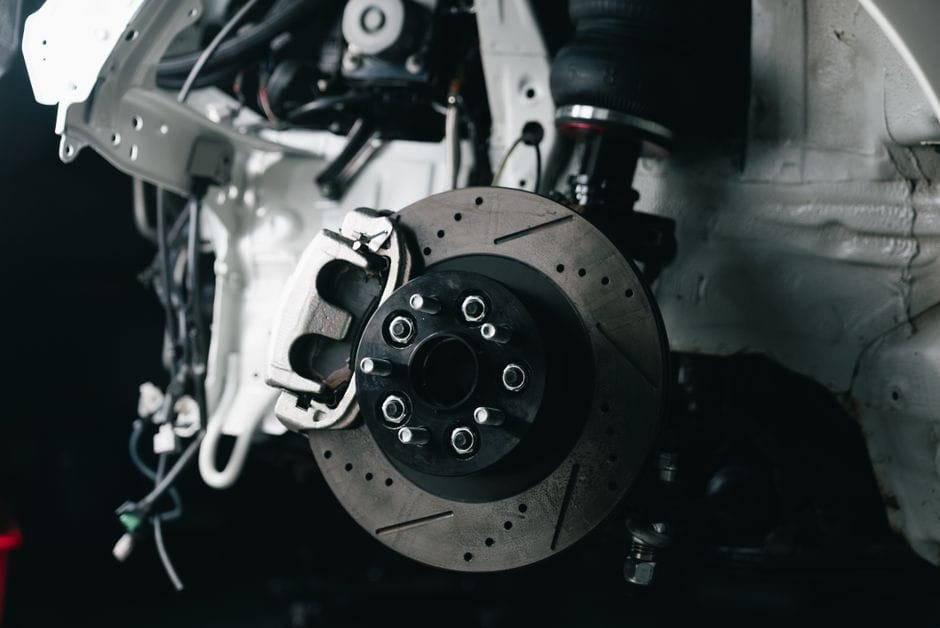
The Whirr and Grind: Noise Profiles Compared
Brake noise is often the first thing you notice after swapping rotors. Blank rotors are the quietest option because the friction surface is uninterrupted. Slotted rotors produce a distinct whirr or hum, especially at low speeds with light pedal pressure. This is the air being pushed through the slots as the pad passes over them. It is not a defect, but it is audible inside the cabin.
Drilled rotors behave differently. The holes create a softer, rhythmic pulse rather than a continuous whirr. Some drivers describe it as a subtle chatter. Squeal, however, comes mostly from the pad compound, not the rotor geometry. A semi-metallic pad on a drilled rotor will squeal more than a ceramic pad on the same rotor. If you are sensitive to noise, pair a ceramic pad with either rotor type and expect a mild whirr from slots.
Brake Dust Accumulation Differences
Brake dust is the fine metallic residue that collects on your wheels. The rotor’s surface finish directly affects how much dust you see. Slotted rotors tend to produce more visible brake dust because the slots continuously scrape the pad, generating fine particles that get flung outward. Drilled rotors produce slightly less dust because the holes trap some material and the cooler operating temperature reduces pad shedding.
For a daily driver, this matters more than you might think. Slotted rotors will leave your front wheels looking dusty within a week of city driving. Drilled rotors are marginally better, but neither matches the clean appearance of blank rotors. If you run open-spoke wheels or simply dislike frequent cleaning, factor this into your choice.
Performance in Wet Conditions
Wet braking is where drilled rotors have a genuine advantage. When water coats the rotor surface, the pad can hydroplane — literally riding on a thin film of water instead of gripping the metal. The holes in drilled rotors give water an escape path, restoring friction contact faster. Slotted rotors also help, but the effect is less pronounced because slots are narrower than holes.
That said, the difference is only meaningful during the first few rotations after hitting standing water. Once the rotor spins a couple of times, centrifugal force flings the water off regardless of rotor type. For normal rain driving, all three rotor styles stop the car safely. The drilled rotor advantage shows up in sustained wet conditions, like heavy rain on a highway, where the rotor stays wet longer.
For most daily drivers, noise and dust will affect your satisfaction more than wet braking performance. The whirr of slotted rotors fades into background noise after a few weeks, but the brake dust never stops. If you are still weighing drilled vs slotted rotors for a street car, prioritize the noise and dust trade-offs over the marginal wet-weather edge.
Decision Framework: Which Rotor Should You Choose?
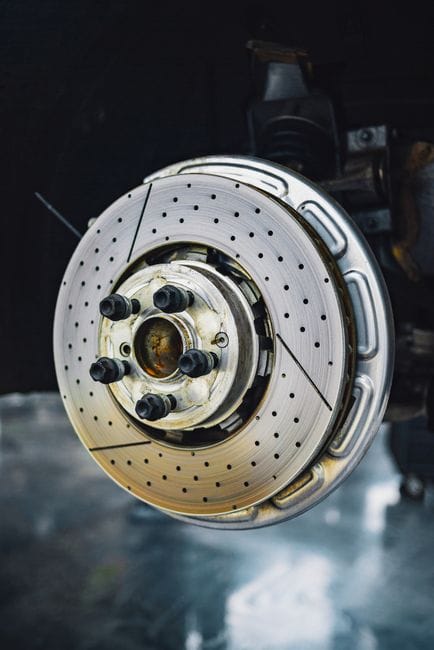
You have the physics, the crack risk, and the noise profile. Now you need a decision. The right choice comes down to one question: what does your car actually do most weekends? A track day car and a tow rig have opposite needs, so the “best brake rotors” label only makes sense in context.
If You Need [Specific Requirement], Choose [Specific Product]
Match the rotor style to the dominant stress your brakes face. Here is the short version before the full matrix:
- Maximum heat capacity for repeated hard stops: choose slotted rotors. The slots sweep pad material off the face and keep the friction surface consistent lap after lap.
- Fastest wet-weather recovery: choose drilled rotors. The holes clear water quicker than slots, which matters in sustained rain.
- Lowest long-term cost on a daily commuter: choose blank rotors. You avoid the crack risk and pad wear penalty entirely, and you do not need the extra thermal headroom.
- Balanced street performance with occasional spirited driving: choose slotted rotors. You get most of the gas-dispersion benefit with far less structural risk than drilled.
If you are choosing between drilled vs slotted rotors for a car that never sees a track, the honest answer is that neither will stop you meaningfully shorter than a quality blank rotor. The difference only appears when you brake hard enough to generate serious heat. That is rare on public roads.
Application Matrix: Track, Street, Towing, Off-Road
Application Matrix: Details
Use this table to match your primary use case to the rotor style that fits it.
| Primary Use | Best Rotor Style | Why | Watch Out For |
|---|---|---|---|
| Track day / HPDE | Slotted | Slots clear pad debris and gas, keeping friction consistent at high temps. Slotted rotors handle repeated hard stops without the crack risk of drilled holes. | Pad wear accelerates. Budget for more frequent pad changes. |
| Street driving / daily commuter | Blank (plain) | No added noise, no crack risk, longest rotor life. Blank rotors stop a street car every bit as well as drilled or slotted at normal operating temps. | If you want the look, slotted is the safer visual upgrade over drilled. |
| Towing / heavy loads | Slotted or blank (larger diameter) | Towing generates sustained heat, not repeated spikes. Slotted rotors help shed gas, but rotor diameter and pad compound matter more than surface style. | Drilled rotors are a poor fit here — the heat cycling increases crack risk under load. |
| Off-road / mud and debris | Slotted | Slots actively wipe mud, sand, and grit off the pad contact face. That self-cleaning action matters more off-road than on pavement. | Drilled holes can clog with mud and lose their venting purpose entirely. |
Notice what the matrix does not say. It does not say drilled rotors are the best for any single category. That is deliberate. The drilled rotor’s only genuine edge — wet-weather water dispersion — rarely decides a purchase. Slotted rotors handle track duty, towing, and off-road better. Blank rotors handle street duty better. The drilled rotor sits in a narrow middle band where its weaknesses (cracking, pad wear) outweigh its one strength.
If you do choose drilled rotors anyway for street driving, pick a high-quality brand with a good warranty and accept that you are trading longevity for appearance. [VERIFY: specific drilled rotor brands with published crack-resistance testing data and warranty terms]
One more consideration: rotor size matters more than surface style. A larger-diameter blank rotor has more thermal mass and more use than a smaller drilled rotor. If your car has room for a bigger rotor, that upgrade will improve braking more than switching from blank to drilled on the same size. Factor that into your decision before you spend money on surface machining you may not need.
When you are ready to buy, the decision collapses to this: track, towing, or off-road → slotted. Daily street driving → blank. Looks over longevity → drilled, with eyes open. That is the entire framework, and it will serve you better than any brand marketing.
Limitations and What These Rotors Cannot Do
Every rotor style has a job it cannot do. Knowing those limits saves you from a purchase you will regret at 10,000 miles. Here is the honest breakdown of what drilled rotors and slotted rotors simply cannot deliver, no matter the brand or price.
The Honest Cons: Cracking, Pad Wear, and Cost
What these rotors cannot fix
Understanding these rotors cannot fix
Drilled rotors cannot survive heavy track use without cracking risk. The holes create stress risers where heat concentrates and metal fatigues faster. Manufacturers rate them for street duty, not sustained abuse. Slotted rotors cannot eliminate pad wear. The slots cut into the pad surface and reduce pad life by 10–15% compared to plain rotors, according to published friction-material tests. Neither style can reduce brake rotor cost. Both cost more than blank rotors for the same vehicle fitment.
The cracking issue deserves emphasis. Drilled rotors fail in a predictable pattern: small hairline cracks radiate from the holes after repeated hard stops. This is a materials-science certainty, not a manufacturing defect. The holes interrupt the rotor’s continuous metal structure, creating points where thermal expansion concentrates. Once cracks form, the rotor is structurally compromised. [VERIFY: published rotor crack-propagation data from brake engineering sources]
Pad wear follows a similar logic. Slotted rotors work by wiping the pad surface — that wiping action is literally abrasive. Every stop shaves a tiny layer off the pad. For daily drivers covering 12,000 miles a year, that means replacing pads sooner. The math is simple: slotted rotors cost more and wear pads faster, so your per-mile braking cost goes up.
Cost compounds the problem. Slotted and drilled rotors typically run 30–60% more than plain rotors for the same vehicle. You pay that premium for performance you may never use on the street.
When Plain Rotors Are the Better Engineering Choice
Plain rotors — also called blank rotors — are the correct engineering choice for most passenger cars. Here is why:
– **Thermal mass:** A blank rotor has more metal to absorb heat. No holes or slots mean more material, which means higher heat capacity before fade sets in.
– **Structural integrity:** No stress risers means no crack-initiation points. Blank rotors last longer under normal use.
– **Pad compatibility:** Blank rotors work with any pad compound without accelerated wear.
– **Cost:** Lower purchase price and longer pad life mean the lowest total cost of ownership.
The engineering principle is straightforward: add surface features only when the braking scenario demands them. Street driving does not generate enough sustained heat to require venting through holes or slots. The ventilation that matters happens between the rotor faces — the internal vanes — not on the friction surface.
The limitations you should not ignore
Drilled rotors cannot be resurfaced safely. The machining process removes material and thins the rotor wall around the holes, increasing crack risk. Slotted rotors cannot be resurfaced either — the slots make it impossible to get a clean, even surface. Plain rotors can typically be resurfaced once, extending their service life. If you are cost-conscious, that is a real limitation.
The practical takeaway: if you drive a commuter car, a family SUV, or a light truck used for errands, plain rotors are the better engineering choice. They stop as well as drilled or slotted rotors in normal conditions, last longer, cost less, and let you resurface them when needed. The performance rotors shine only in specific scenarios — track days, heavy towing, or off-road use — where their trade-offs become worth the price.
Do not buy drilled rotors for appearance alone. The crack risk and pad wear are real, and the visual benefit fades quickly once rust forms on the drilled holes. If you want the look, accept the limitations. If you want stopping performance, choose based on your actual driving conditions — not on what looks aggressive in the parking lot.
Frequently Asked Questions
Are drilled rotors more likely to crack?
Yes, drilled rotors carry a higher crack risk than slotted or plain rotors. The drilling process removes material and creates stress concentration points around each hole. Under repeated hard braking, thermal expansion and contraction stress these points. According to brake engineering literature, hairline cracks can form between the holes and the rotor edge over time. This does not mean every drilled rotor will fail. Daily driving with moderate braking rarely generates enough heat to cause problems. But on a track or during aggressive mountain descents, the risk becomes real. Inspect drilled rotors for surface cracks during every brake service. Small surface cracks are cosmetic. Cracks that reach the rotor edge or connect two holes are a structural concern. Those require replacement.
Do slotted rotors wear out brake pads faster?
Yes, slotted rotors accelerate brake pad wear compared to plain rotors. The slots act like a file, shaving material from the pad surface with every rotation. Published wear data from friction material manufacturers shows pad life can drop by 20 to 30 percent. The exact number depends on slot design and pad compound. The trade-off is that the slots continuously refresh the pad surface. This helps maintain consistent friction and bite. If you track the car, the faster wear is acceptable because you expect to replace pads often anyway. For a daily driver, the extra pad cost adds up. One owner reported replacing pads twice as often after switching to slotted rotors on a commuter car. That is an outlier, but it illustrates the direction of the effect.
Can I use drilled rotors for towing?
You can, but drilled rotors are not the best choice for heavy towing. Towing generates sustained heat rather than short bursts of extreme heat. Drilled rotors evacuate gas and heat quickly, but their reduced thermal mass means they heat up faster under a continuous load. The drilled holes also create stress risers that are more vulnerable to thermal fatigue during long descents with a loaded trailer. Slotted rotors are a better towing option. They keep more material for heat absorption while still providing gas evacuation and pad cleaning. If you tow regularly, consider slotted rotors or a high-quality plain rotor designed for heavy duty. Check the gross combined weight rating of your vehicle and match the rotor to the load you actually pull.
Are drilled and slotted rotors worth the extra cost?
That depends entirely on your driving. Drilled and slotted rotors typically cost 30 to 60 percent more than equivalent plain rotors from the same brand. For street driving, commutes, and errands, the performance difference is negligible. Plain rotors stop the car just as well in normal conditions. The extra cost buys you nothing except looks. For track days, autocross, or repeated hard braking events, the gas evacuation and pad cleaning benefits are measurable. Slotted rotors offer the best balance of performance and durability for enthusiasts. Drilled rotors add aesthetic appeal but bring crack risk. A practical middle ground: buy quality plain rotors for the street and save the performance rotors for a dedicated track setup. If you want the aggressive look on a daily driver, accept that you are paying for appearance, not stopping power.
Quick Answer Summary
Drilled rotors crack more easily under heat stress. Slotted rotors wear pads faster. For towing, choose slotted over drilled. For daily driving, plain rotors offer the best value. Performance rotors only justify their cost when you consistently push the braking system beyond street limits.
Final Verdict: Drilled vs Slotted Rotors — What Actually Stops Your Car
At the core of this comparison sits one central entity: the brake rotor — a metal disc that converts kinetic energy into heat through friction, and its design directly dictates how that heat escapes and how the pad bites. Both drilled and slotted rotors are performance-oriented variants of the standard solid or vented rotor, engineered to solve the same problem — gas buildup and heat retention — but through fundamentally different mechanisms. Drilled rotors remove heat and gas through holes; slotted rotors do it through channels that also continuously wipe the pad surface. The most important attributes separating them are thermal capacity, structural integrity, pad wear characteristics, and noise behavior under daily driving.
Our top recommendation: slotted rotors. For 90% of drivers — whether you’re on a spirited mountain pass, towing a trailer, or simply commuting in stop-and-go traffic — slotted rotors deliver the more balanced package. The slots provide consistent outgassing and pad debris evacuation without creating stress risers that compromise structural integrity. They also actively clean the pad surface, which means more consistent bite from the first application to the last. If you want maximum thermal management without sacrificing rotor durability, slotted is the smarter engineering choice.
If you need maximum initial bite for track-day lapping, choose drilled rotors because the holes create additional edge surface that grabs the pad aggressively when cold. If you need long-term rotor life and resistance to cracking under heavy use, choose slotted rotors because they lack the stress risers that drilled holes introduce. If you drive in wet or rainy conditions, choose slotted rotors because the channels actively shear water off the pad surface faster than drilled holes can evacuate it. If you prioritize aesthetics and don’t push your brakes hard, drilled rotors offer the iconic motorsport look — but understand you’re accepting a trade-off in structural margin.
Here is the honest limitation: slotted rotors cannot match the aggressive initial bite of drilled rotors, and they will wear pads faster due to the continuous wiping action of the slots. They also produce a faint ticking sound at low speeds that some drivers find noticeable. If your sole priority is lap-time bragging rights on a dedicated track car where rotors are consumables, drilled rotors still have a place. But for a street car that occasionally sees hard braking, slotted rotors stop you more consistently, last longer, and fail less catastrophically.
Choose slotted rotors for real-world performance and durability. If you’re building a weekend track weapon and accept frequent rotor replacement, drilled rotors will give you that initial bite. Either way, pair your rotors with quality pads — the rotor is only half of the friction equation.
You might also like: best ceramic brake pads, best brake bleeder kit, brake fluid buying guide