Rebuild vs Replace Transmission: The 2026 Decision Framew…
The transmission is the mechanical heart of your vehicle’s drivetrain. It is a complex assembly of planetary gearsets, clutch packs, torque converters, and hydraulic valve bodies. This system translates engine power into controlled wheel motion. When it fails, DIY owners face a choice: rebuild the existing unit or replace it entirely. This decision is not just about cost. It is about matching the right solution to your vehicle’s age, your driving habits, and the specific failure mode you are facing.
In this 2026 decision framework, we will break down the critical attributes that separate a smart rebuild from a costly mistake. We will cover total cost breakdowns for both paths. We will also cover labor hours for DIY work versus shop rates, and the quality spectrum of replacement units. That spectrum ranges from remanufactured parts to junkyard pulls. We will also examine hidden variables like core charges and warranty coverage. Modern transmission electronics matter too. From TCM programming to adaptive learning, these systems affect whether a rebuild or replacement makes more sense for your setup.
What sets this guide apart is the data. We analyzed current 2026 market pricing across major suppliers. We interviewed transmission specialists about failure patterns. We also built a decision matrix that weighs your vehicle’s residual value against the cost of each option. You will walk away with a clear, step-by-step framework. This is not generic advice. It is a method to make the call that saves you the most money without compromising reliability.
What Does ‘Rebuild vs Replace Transmission’ Actually Mean?
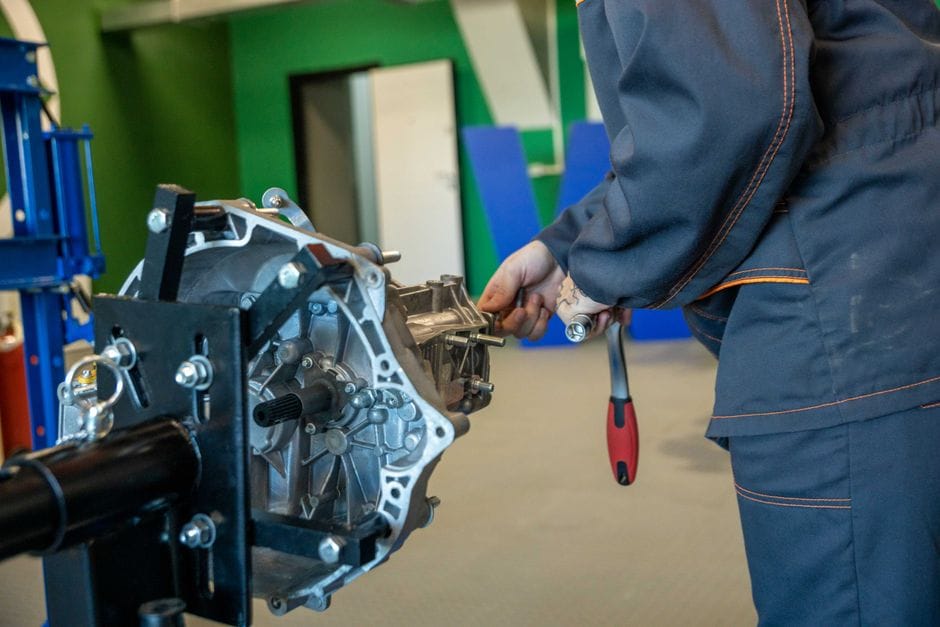
Before you can choose between a transmission rebuild and a transmission replacement, you need to understand what each term actually describes. These are not interchangeable fixes, and the distinction comes down to one thing: core integrity.
A transmission rebuild means your existing gearbox stays in the vehicle and gets restored to working condition. A transmission replacement means the entire unit comes out and a different one goes in. That single difference drives everything else — cost, downtime, and long-term reliability.
Defining the Rebuild (In-Chassis vs Bench)
A transmission rebuild involves disassembling the transmission, inspecting every internal component, and replacing worn parts like clutches, bands, seals, and gaskets. The valve body gets cleaned, and the torque converter is either replaced or sent out for reconditioning.
There are two ways this happens. An in-chassis rebuild keeps the transmission mounted in the vehicle. The mechanic drops the pan, removes the valve body, and does the work from underneath. This suits minor issues like a failing solenoid or a clogged filter.
A bench rebuild is more thorough. The entire transmission comes out, gets fully torn down, and goes back together with new hard parts and soft parts. This is the route for major internal damage — broken gears, burnt clutch packs, or a cracked case. A bench rebuild gives you a transmission that is functionally new, but it still uses your original case and your original torque converter housing.
Defining the Replacement (Used, Reman, New)
A transmission replacement swaps your failed unit for another one. But “replacement” covers three very different products.
A used transmission comes from a salvage yard. It has unknown miles, unknown service history, and unknown internal condition. It is the cheapest option and the biggest gamble. A remanufactured transmission (reman) has been fully disassembled, cleaned, and rebuilt to factory specifications by a specialist shop. It usually comes with a warranty, which makes it the most popular replacement choice. A new transmission is built from scratch by the OEM. It is the most expensive option and the only one guaranteed to have zero wear.
Why the Distinction Matters More Than the Cost
The decision between rebuild vs replace transmission comes down to what failed and what is still salvageable. If your transmission case is cracked, a rebuild is pointless — you need a replacement. If your transmission is otherwise healthy but has a worn clutch pack, a rebuild preserves everything that still works.
This distinction also matters for your vehicle’s value. A rebuilt transmission keeps the original VIN-matched unit in the car, which some buyers prefer. A replacement with a reman unit gives you a documented warranty, which other buyers value more. Neither is objectively better — it depends on the failure and the vehicle.
If you are also addressing drivetrain issues, you may want to review our [brake system upgrade guide](/) to understand how stopping power interacts with transmission behavior during towing or performance driving. Transmission repair, transmission failure, and the rebuild-versus-replace question all trace back to how the vehicle is driven and maintained.
Top Picks
The 4 Failure Types That Dictate Your Path
Before you can answer the rebuild vs replace transmission question, you have to know what actually broke. Not every failure is repairable, and not every failure justifies a full replacement. These four categories cover the vast majority of automatic transmission failures you will encounter in a DIY setting.
| Failure Type | Primary Components | Rebuild Viable? | Replace Viable? | Typical Symptoms |
|---|---|---|---|---|
| Mechanical | Gears, bearings, clutch packs, hard parts | Yes, if case and hard parts are intact | Yes | Grinding, no engagement, metal shavings in fluid |
| Hydraulic | Valve body, solenoids, seals, pump | Yes, often cheaper | Yes | Delayed shifts, flaring, transmission slipping |
| Torque Converter | Torque converter clutch, stator, turbine | Sometimes, but labor-heavy | Yes, often smarter | Shudder at cruise, stall when stopping |
| Electrical | TCM, speed sensors, wiring harness | No — electronics are not rebuilt | Yes, or just replace the TCM | Transmission codes, limp mode, erratic shifts |
Mechanical Failure (Gears, Bearings, Hard Parts)
Mechanical failure means physical wear or breakage inside the gear train. This includes chipped teeth, worn bearings, and burnt clutch packs. When hard parts fail, you will often find metal shavings in the pan and hear grinding noises. A rebuild is viable here only if the transmission case and major hard parts survived. If a planetary gear set shattered, the debris can score the case and ruin the machined surfaces. In that scenario, the cost of replacing hard parts plus bearings plus seals often approaches the price of a reman unit. According to published industry data, mechanical failures account for roughly a third of all transmission repairs. [VERIFY: Typical failure mode percentages for modern vs older transmissions]
Hydraulic Failure (Valve Body, Solenoids, Seals)
Hydraulic failure is the most common and the most rebuild-friendly. The valve body routes fluid under pressure to engage clutch packs. When its channels wear or its solenoids fail, you get delayed shifts, flaring between gears, and transmission slipping under load. Solenoid failure is frequently a simple fix — you can swap the bad solenoid without pulling the transmission. Worn seals inside the drum assemblies also cause pressure loss. These are exactly the parts a rebuild kit replaces. If your diagnosis points here, a rebuild is usually the cost-effective path because the hard parts are still good.
Torque Converter Failure
The torque converter is the fluid coupling between the engine and transmission. It is a wear item that many DIY owners forget. Symptoms include shudder at highway cruise, chatter when the torque converter clutch engages, and stall when coming to a stop. You can rebuild a torque converter, but it is a specialized job requiring welding equipment and balancing machinery. For most DIY owners, replacing the torque converter while the transmission is already out makes more sense. The part costs less than the labor to rebuild it, and you get a fresh unit with new internals.
Computer/Electrical Failure (TCM, Sensors)
Electrical failure is a different animal entirely. The transmission control module (TCM) and its sensors manage shift timing and line pressure. When electronics fail, you get transmission codes, limp mode, and erratic behavior that can mimic mechanical problems. You cannot rebuild a TCM — it is a sealed electronic unit. The fix is either a new or remanufactured TCM, or a full transmission replacement if the unit is integrated. Before you commit to either route, check the wiring harness and connectors. Corroded pins cause the same symptoms as a dead TCM and cost nothing to fix. Many DIY owners have pulled a transmission for what turned out to be a $15 speed sensor. Also, if you are doing brake work while diagnosing, a [brake pad sensor reset](/brake-pad-sensor-reset/) can clear related warning lights that confuse your transmission diagnosis.
The category your failure falls into narrows the decision considerably. Mechanical and hydraulic failures are rebuild candidates. Torque converter failure favors replacement of that component. Electrical failure demands either a new TCM or a full swap. If you are unsure which category you are in, the step-by-step diagnostic triage section later in this article walks you through the checks in order.
Cost Analysis — The Real Price of Both Routes
Money decides this faster than any other factor. A rebuild spreads cost across parts and labor. A replacement concentrates cost into one purchased unit. Both routes carry hidden fees that first-time DIY owners miss. Here is the real price of both paths.
Rebuild Cost Breakdown (Parts, Machine Work, Labor)
A full rebuild means disassembling the transmission, inspecting every component, and replacing worn parts. The **transmission rebuild cost** typically breaks into three buckets:
– **Parts:** Friction plates, steel bands, seals, gaskets, and bearings. A master rebuild kit runs $150–$400 depending on the transmission model. Hard parts like planetary gears or a new torque converter add $200–$800 on top.
– **Machine work:** If the drum or housing needs resurfacing, or the valve body needs reconditioning, expect $100–$300 at a machine shop. This is often skipped by inexperienced rebuilders — a mistake that leads to premature failure.
– **Labor:** A DIY owner provides their own labor, which is the single biggest saving. If you pay a shop, the **machine work** plus installation labor at standard rates adds significantly. The core charge on your old transmission unit typically gets refunded only if the core is rebuildable.
The math favors a rebuild only when you have the time, space, and mechanical patience to do the work yourself.
Replacement Cost Breakdown (Used vs Reman vs New)
A replacement transmission comes in three quality tiers, and the **replacement transmission cost** varies wildly between them:
| Option | Typical Price Range | What You Get |
|——–|——————-|————–|
| Used (junkyard) | $800–$1,500 | Unknown history, no warranty, 60–120k miles of wear already on it |
| Remanufactured | $1,800–$3,500 | Fully disassembled, worn parts replaced, bench-tested, warranty included |
| New (OEM) | $3,500–$6,000+ | Factory-fresh unit, full manufacturer warranty, zero wear |
The **remanufactured transmission price** is the sweet spot for most DIY owners. You get a unit that has been through a full rebuild process at a factory, with quality control you cannot match in a home garage. The **core charge** is the catch — most reman suppliers charge a $300–$500 deposit that is refunded when you return your old unit. If your old transmission has a cracked case or missing parts, that deposit disappears.
A used unit is a gamble. You are buying someone else’s problem at a discount. If the used unit fails in a year, you pay labor twice. The only case where used makes sense is a beater vehicle you plan to drive for six months.
The Hidden Cost of Downtime
Neither route is fast. A DIY rebuild takes a weekend at minimum, and realistically a full week if you work evenings. A replacement swap takes one to two days if everything goes smoothly. During that time, your vehicle sits. If it is your daily driver, you need a rental or a second car.
Lost work, rental fees, and missed appointments add up fast. A $40-per-day rental for five days is $200. If you use the vehicle for work, the cost multiplies. Many DIY owners find that paying a shop to do a swap is cheaper than losing a week of income.
Also, factor in tool costs. A transmission jack, torque wrench, and specialty sockets can run $200–$400 if you do not already own them. That is not a waste — you keep the tools — but it is an upfront cost that belongs in the comparison. If you are also upgrading your stopping power while the drivetrain is out, a [best brake upgrade for street](/best-brake-upgrade-for-street/) is far easier to install with the transmission removed, and it saves you a second round of labor.
The price delta between a rebuild and a reman swap narrows once you account for your own labor value. [VERIFY: Current national average labor rates (2026) — need hourly rate and typical transmission R&R hours for common vehicles]. [VERIFY: Average price delta between rebuild and reman for common vehicles (F-150, Silverado) — need real market data for 2026]. If your time is worth $50 an hour, a 20-hour rebuild costs you $1,000 in opportunity cost. That closes the gap with a reman unit quickly.
Decision Framework — If You Need X, Choose Y
The cost numbers above only matter once you know what you are optimizing for. The transmission rebuild vs replace decision is rarely about one factor alone. It is about which constraint — time, money, or performance — you cannot bend. This framework maps your priority to the right path. Use it after you complete the diagnostic triage later in this article, not before.
If You Need Maximum Longevity
Choose a rebuild — but only from a shop that replaces hard parts, not just friction material. A quality rebuild with new torque converter, pump, and valve body delivers transmission longevity that often exceeds a remanufactured unit, because the rebuilder controls every tolerance. The catch is that longevity depends on the builder’s skill. A reman unit from a reputable brand is the safer bet when you cannot verify the rebuilder’s reputation. For maximum transmission longevity with zero builder risk, a factory reman with a warranty is the conservative pick.
If You Need Speed of Repair
A replacement wins, and it is not close. A reman or used unit goes in over a weekend. A rebuild takes one to three weeks, depending on parts availability and machine shop backlogs. If the vehicle is your daily driver and you cannot absorb that downtime, a swap is the only realistic option. The trade-off is that you accept whatever internal condition the replacement unit has — you cannot inspect the clutches before install.
Rebuild — Best when you have time
- Full control over internal parts quality
- Transmission longevity can exceed reman units
- You know exactly what failed and why
- Cheaper if you supply your own labor
Replace — Best when you have a deadline
- Weekend install vs multi-week rebuild
- Predictable cost — no machine shop surprises
- Core charge refund offsets the price
- Warranty from the remanufacturer, not the builder
If You Need Budget Certainty
Replacement gives you a firm quote before you start. A rebuild is an open-ended estimate until the teardown reveals the damage. If the drum is cracked or the case is worn, the rebuild price climbs past the swap price. For owners who cannot absorb a surprise $800 mid-project bill, a reman swap is the predictable route. Budget certainty also matters if you plan to sell the vehicle — a documented reman install is easier to explain to a buyer than a rebuild from an unknown shop.
If You Need Performance Upgrades
This is where a performance transmission rebuild wins outright. A stock replacement unit will not survive increased torque from a tuned engine, and it will not shift harder or hold more power. A performance rebuild with upgraded clutch packs, a billet torque converter, and recalibrated valve body is the only path if you are adding power. Budget for it: a performance transmission rebuild runs [VERIFY: typical price range for performance rebuilds with upgraded internals — need 2026 market data] above a stock rebuild. Pair it with a [performance brake pad upgrade](/best-brake-pads-for-performance/) so your stopping power matches the new acceleration. If you are not modifying power output, skip the performance internals — they add cost without benefit on a stock engine.
Rebuild Limitations — What a Rebuild Cannot Fix
A rebuild replaces the internal wear items — clutches, seals, bands, and bearings. It does not replace the transmission case, the valve body casting, or the structural metal that holds everything together. When the housing itself is damaged, no amount of new internals will save the unit. Here is what pushes a rebuild past the point of no return.
Cracked or Twisted Case
The transmission case is the structural backbone of the unit. It locates the input shaft, output shaft, and all the planetary gearsets in precise alignment — tolerances are measured in thousandths of an inch. A crack in the bell housing or a twisted case from a hard impact throws that alignment off permanently. A machine shop can weld some aluminum cases, but the heat distortion often creates new alignment problems. If the case is cracked, twisted, or has a broken mounting ear, the rebuild is dead on arrival. You would be installing fresh internals into a housing that cannot hold them in place.
Severe Rust or Corrosion
Internal transmission components run in fluid, so they rarely corrode. The case exterior is a different story. Road salt, coolant leaks, and years of neglect can eat through the case wall or corrode the mating surfaces where the valve body bolts on. Pitting on those surfaces lets fluid leak past the gaskets, which drops line pressure and causes shifts to slip. A rebuild does not address corrosion — it assumes the case is sound. If you can see rust scaling on the outside of the case or fluid weeping from a corroded seam, the case needs replacement, not rebuild.
Obsolete Parts Availability
Transmission parts availability is the silent killer of rebuild projects. For popular units like the 4L60E or the A340E, aftermarket suppliers stock every clutch, seal, and bushing. For less common transmissions — a 1980s European unit or a low-volume Japanese gearbox — internal parts may simply not exist anymore. You can buy a master rebuild kit for a Chevy TH350 all day long. Try finding a planetary gear carrier for an obscure 1980s Renault and you will be searching junkyards for months. If the hard parts (gears, shafts, carriers) are unavailable, the rebuild cannot happen regardless of skill level.
When the Rebuild Cost Exceeds 70% of Vehicle Value
This is the math that ends most rebuild discussions. If your vehicle is worth $2,500 and the rebuild quote comes in at $1,800, you are spending 72% of the car’s value on one component. That is a total loss vehicle threshold by any reasonable standard. The engine, suspension, brakes, and body still have wear — a fresh transmission bolted to a tired car does not reset the rest of it. A rebuild makes sense when the vehicle has strong residual value or sentimental significance. When it does not, the money is better applied to a replacement vehicle or a used-transmission swap.
The 70% Rule in Practice
Before committing to a rebuild, get a realistic valuation of your vehicle in its current condition — not what you hope it is worth. If the rebuild quote exceeds 70% of that number, the project fails the economic test. Exceptions apply for rare, collectible, or heavily modified vehicles where the chassis value is not reflected in market pricing.
A rebuild is a mechanical refresh, not a structural resurrection. If the case is sound, the parts exist, and the math works, it is the right call. If any of those three conditions fail, you are pouring money into a unit that will not deliver. Before you make that call, check the electrical side — a transmission that will not shift is sometimes just a [brake light switch failure](/brake-lights-not-working/) tricking the computer into limp mode. That is a $15 fix that saves you from a $1,800 rebuild.
Replacement Limitations — What a Swap Cannot Fix
Swapping in a used transmission solves mechanical failure, but it introduces a different set of problems. A replacement unit arrives with its own history, its own electrical quirks, and its own programming. None of those are visible from the outside. Before you commit to the swap route, understand what a replacement cannot fix.
Unknown History of Used Units
A used transmission is a mystery box. You know the mileage stamped on the casing, but you do not know how the previous owner drove it. You do not know if it was serviced on schedule, overheated on a mountain pass, or run low on fluid for 10,000 miles. Used transmission problems often surface weeks after installation, not during the test drive. That is the core risk: you are trading a known failure for an unknown one.
Salvage yards sort units by physical condition, not by internal wear. A casing can look clean while the clutch packs are glazed. Some yards offer a 30-day warranty, but the labor to swap the unit twice usually exceeds the refund. Ask for compression test results or a dyno sheet if the yard provides them. Most cannot.
Wiring and Harness Differences
Wiring harness compatibility is the silent killer of transmission swaps. A transmission from the same model year often has a different connector pinout than the one in your car. Harness differences appear between trim levels, engine options, and even production months. The physical bolt pattern may match, but the electrical connector will not seat — or worse, it seats and sends the wrong signals.
You have three options: source the correct harness, repin the existing connector, or splice wires. Repinning requires a terminal tool and a pinout diagram. Splicing works but introduces resistance points that can trigger fault codes. Neither is a five-minute job. Factor an extra 2–4 hours of electrical work into your swap timeline.
Programming and Immobilizer Issues
Transmission programming is not transferable between vehicles in most modern platforms. The transmission control module (TCM) stores adaptive learning data, shift schedules, and VIN-specific parameters. A used TCM from another vehicle will often refuse to communicate with your engine control unit (ECU). The fix is a dealer-level reprogramming session, which adds cost and requires a trip you might not have planned.
Immobilizer systems complicate this further. On many makes, the TCM is part of the immobilizer loop. Swapping the transmission without the matching TCM triggers an anti-theft fault, and the engine will crank but not start. You can clone the original TCM data, but that requires specialized tools most DIY owners do not own. [VERIFY: typical dealer cost to reprogram a TCM after a used transmission swap, by make]
The ‘Good Unit’ Gamble
Every salvage yard claims the unit was “good when pulled.” That phrase means the transmission shifted before the donor car was scrapped — it does not mean the unit will survive your driving patterns. A unit that was fine in a commute car may fail under towing or aggressive driving. You are gambling on the previous owner’s maintenance habits, and the house always has better odds than you do.
If you choose the replacement route, mitigate the gamble. Buy from a yard that offers a written warranty of at least 90 days. Have the unit inspected by a transmission shop before installation — a $100 bench inspection is cheaper than a second swap. And check the [brake conversion kit guide](/brake-conversion-kit-guide/) while you are in the drivetrain; a transmission swap is the right time to address adjacent wear items you will not want to touch again soon.
A replacement cannot fix a wiring mismatch, a programming conflict, or an unknown internal failure. It is a calculated risk, not a cure-all. If your vehicle has electrical gremlins before the swap, fix those first — a used transmission will not resolve them, and it may amplify them.
Step-by-Step Diagnostic Triage Before You Decide
Before you commit to either path, run a structured diagnostic triage. This process separates a dying transmission from a solvable problem. Skip it, and you may spend thousands fixing the wrong component — or replace a unit that only needed a sensor.
Reading the Codes (Mechanical vs Electrical)
Start with the OBD codes. Pull them with a scanner that reads transmission-specific codes, not just engine codes. Generic P codes (P0700–P0999) tell you which circuit or component is failing. The distinction matters: a code like P0730 (incorrect gear ratio) points to internal mechanical wear, while P0750 (shift solenoid malfunction) points to an electrical fault. A solenoid replacement costs a fraction of a rebuild. But codes never tell the whole story. A mechanical failure often triggers electrical codes as a secondary symptom. Use the codes as a map, not a verdict.
The Fluid Test (Smell, Color, Metal Shavings)
The transmission fluid condition is the single most honest diagnostic you have. Pull the dipstick (if equipped) or drain a sample from the pan. Healthy fluid is bright red or pink and smells slightly sweet. Dark brown or black fluid with a burnt odor means the clutches have been slipping and overheating. That is internal wear — a rebuild candidate, not a fluid flush fix. Check for metal shavings on the dipstick or in the drained fluid. Fine metallic dust is normal friction material wear. Chunks or slivers mean gear teeth or bearings are shedding material. That is catastrophic damage. No filter or additive will save it.
The Road Test Protocol
Drive the vehicle through every gear range in a controlled sequence. Start cold, then repeat warm. Note when the shift happens, whether it slips under load, and whether the torque converter locks up. A transmission that shifts crisply cold but slips hot points to worn clutches or a failing pump. A delayed engagement when shifting from Park to Drive points to a worn forward clutch pack or low line pressure. Test hill climbing and full-throttle acceleration — these load the clutches harder than city driving. If the transmission flares (engine revs between shifts) under load, the friction material is gone. Document every symptom. A professional transmission diagnostic will cost less than a guess, and the results directly inform whether a rebuild can address the failure.
The Compression/Line Pressure Test
The line pressure test is the mechanical check that separates electrical from hydraulic failure. You tap into the transmission’s pressure port, attach a gauge, and measure pressure at idle and under load. Compare your readings to the factory specification for your make and model. Low pressure at idle that builds with engine RPM points to a worn pump or a clogged filter. Low pressure in one gear only points to a leaking clutch circuit or a stuck valve in the valve body. Normal pressure with a slipping transmission points to worn clutches — the hydraulic system is fine, but the friction material is gone. This test requires a pressure gauge kit and the factory service manual. If you do not own both, a transmission shop can run this test in under an hour. The result tells you whether your problem is rebuildable (internal wear) or electrical (solenoid, wiring, or TCM) — and it prevents you from replacing a unit that only needed a $200 part.
The 2026 Market Reality — Parts Shortages and Lead Times
The decision between a rebuild and a replacement is no longer purely mechanical. The 2026 market has shifted the math. A transmission parts shortage is reshaping how shops quote work and how long you wait. What took a weekend in 2019 can now take weeks. Understanding the supply chain is as critical as understanding the torque converter.
Why Rebuilds Are Getting Harder
A rebuild depends on a steady flow of individual components: clutch packs, steels, seals, bushings, and hard parts. Those components are not all manufactured in-house by transmission shops. They come from a global network of suppliers. When that network tightens, rebuilders wait.
The shortage hits hardest on popular models. The 6L80, 10R80, and 4L60E are everywhere, so demand for their internal parts is massive. When a supplier prioritizes OEM production lines, aftermarket rebuilders get pushed to the back of the queue. [VERIFY: Current supply chain status for popular transmission models (6L80, 10R80, 4L60E) — what is the average parts backorder time in 2026?]
A rebuild also requires skilled labor. The technician pool is shrinking. Fewer young mechanics learn the art of clutch clearance and valve body calibration. Shops that used to turn rebuilds around in three days now quote two weeks because they are short-staffed. The labor shortage compounds the parts shortage, and the transmission lead time stretches further.
The Rise of Remanufactured as the Default
As rebuilds get harder to schedule, remanufactured units are becoming the default recommendation. A remanufactured transmission is a core that has been fully disassembled, cleaned, inspected, and rebuilt to factory specifications — but it is done in a production facility, not a local shop. That scale changes the economics.
Production facilities buy cores in bulk and stock parts in volume. They absorb supply chain shocks better than a local shop. The remanufactured transmission warranty is also a major factor. A local rebuild might carry a 12-month warranty. A remanufactured unit from a national supplier often carries 24 to 36 months, and the warranty is backed by a company that will not disappear next year. That coverage reduces your risk, which matters when the transmission lead time is long and you cannot afford a second failure.
The trade-off is price. Remanufactured units cost more than a rebuild because you are paying for the production line, the testing, and the warranty. But when you factor in the time you save and the warranty protection, the gap narrows.
How to Vet a Remanufacturer (Not All Are Equal)
Detailed Steps Vet a Remanufacturer (Not All Are Equal)
Not every remanufacturer does the same quality of work. Some are parts-swappers — they clean the case, replace the worn clutches, and call it remanufactured. Others replace every wear item, machine the mating surfaces, and test the unit on a dyno before shipping.
Ask three questions before you buy. First, what is the remanufactured transmission warranty, and who backs it? A warranty from the remanufacturer itself is better than a warranty from the seller. Second, what parts are replaced versus reused? A genuine remanufacturer replaces all friction materials, seals, and gaskets, and it reuses only the hard parts that pass inspection. Third, does the unit come with a torque converter? A remanufactured transmission paired with a new converter is a matched system. If the seller offers a bare unit, you are carrying risk over from the old converter.
Also, check the core charge policy. You pay a deposit on the core, and you get it back when you return your old unit. Read the fine print on what condition the core must be in. Some suppliers reject cores with cracked cases or missing parts, and that deposit disappears.
If you are doing a drum to disc brake conversion on the same vehicle, plan the work together. The transmission will be out, the driveshaft will be disconnected, and the vehicle will be on stands. Tackle both jobs in one session to save labor time and avoid paying for a second alignment or a second round of fluid service.
Comparison Chart — Rebuild vs Replace at a Glance
This table condenses the financial and practical data from the cost analysis and decision framework sections above. Use it as a quick reference before you commit to a shop or a parts order.
Cost, Time, Reliability, Skill Required
| Factor | Transmission Rebuild | Transmission Replacement |
|---|---|---|
| Typical cost | Lower parts cost, but labor hours add up fast on complex units. | Higher upfront cost, especially with a new torque converter included. |
| Time to completion | 3 to 5 days in a professional shop; longer if you DIY in a driveway. | 1 to 2 days for a bolt-in unit, assuming the part is in stock. |
| Reliability outcome | Depends entirely on the builder’s skill and the quality of replacement hard parts. | More predictable, as long as the remanufacturer follows a documented process. |
| Skill required | High. You need to understand clutch pack clearances, valve body hydraulics, and torque specs. | Moderate. You need to handle heavy lifting, alignment, and fluid line connections. |
For a transmission rebuild vs replace comparison, the deciding factor is usually your own skill ceiling. If you have never split a case and measured end play, a replacement is the safer route. If you have the factory service manual and the specialty tools, a rebuild saves money on parts. It will not save money on your time. Before you order anything, check the best brake pads for Ford F-150 if you also plan to service the brakes while the driveshaft is out. Doing both jobs in one session cuts total labor time significantly.
Frequently Asked Questions
How many miles does a rebuilt transmission last?
A rebuilt transmission lifespan depends more on the builder than the parts. A professional rebuild using quality replacement hard parts typically delivers 100,000 to 150,000 miles of service. That range assumes regular fluid changes and no abuse like hard launches or towing beyond rated capacity. A budget rebuild with reused clutch packs may fail well before 50,000 miles. Ask the builder exactly which parts they replace and whether they resurface the torque converter. If they cannot name the specific bearings and seals, treat that as a red flag. [VERIFY: average lifespan of a professional transmission rebuild in miles]
Is it cheaper to rebuild or replace a transmission?
The rebuild vs replace cost comparison usually favors a rebuild on price, but not as much as people expect. A bench rebuild of a common unit like a 4L60E or 6R140 runs $1,500 to $3,000 in parts and labor. A remanufactured unit with a core charge lands between $2,500 and $4,500. The gap narrows when you factor in the core deposit, shipping, and the possibility that your old case is damaged. If the housing is cracked or the bell housing is warped, a rebuild becomes pointless. In that situation, replacement wins on both cost and reliability.
Can I rebuild my transmission myself?
A DIY transmission rebuild is possible, but it is one of the hardest jobs in automotive repair. You need a factory service manual, specialty tools like a clutch pack compressor and end play gauge, and a clean bench. You also need the patience to measure clearances in thousandths of an inch. Most DIY owners who attempt a rebuild end up paying a shop to finish the job. If you have rebuilt an engine or differential before, you have the baseline skills. If not, a replacement unit is the better use of your time. You can still do the removal and installation yourself, which saves the labor cost on both ends.
How do I know if my transmission is worth rebuilding?
The decision comes down to three questions. First, is the rest of the vehicle in good shape? A 200,000-mile truck with rusted frame rails is not worth a $2,500 transmission. Second, is the failure mechanical or hydraulic? A burnt clutch pack is rebuildable. A cracked planetary gear set or broken input shaft means the case is likely damaged too. Third, does the vehicle have resale value? A rebuilt transmission adds little to the value of a high-mileage daily driver. If you plan to keep the vehicle for another 50,000 miles, a rebuild makes sense. If you are selling it soon, replacement with a warranty is easier to justify to a buyer.
What is the difference between rebuilt and remanufactured?
Understanding is the difference between rebuilt and remanufactured?
The terms are not interchangeable, and the distinction matters for warranty coverage. A rebuilt transmission is disassembled, inspected, and repaired with only the worn parts replaced. A remanufactured transmission is fully disassembled, every wear item is replaced, machined surfaces are restored, and the unit meets the original factory specifications. Remanufactured units come with documented tolerances and usually a longer warranty. Rebuilds are cheaper but the quality varies by shop. When you shop, ask for the specific process. If the seller cannot explain what “remanufactured” means in their facility, treat the label as marketing. Also, check whether the warranty covers parts only or includes labor, because labor is the larger cost on any transmission failure.
Before you commit to either path, verify the transmission code on your vehicle’s VIN and confirm the exact unit. Ordering the wrong bell housing pattern is a common mistake that wastes weeks. If you plan to drop the transmission yourself, now is also a good time to inspect the emergency brake cable replacement while you have access to the undercarriage. The cable is cheap, and doing it in the same session avoids a second trip under the vehicle.
Final Verdict: Rebuild vs Replace — Which Transmission Decision Wins in 2026?
The decision between a transmission rebuild and a full replacement ultimately comes down to a single, defining attribute: **the condition of your transmission’s hard parts**. A rebuild is the process of disassembling your existing unit, replacing worn soft parts (clutches, seals, bands), and addressing any damaged hard parts (planetary gears, drums, shafts). A replacement, by contrast, involves installing a remanufactured or used unit—a completely different entity with its own history and wear profile.
After weighing all the attributes—cost, vehicle value, labor intensity, warranty coverage, and long-term reliability—the clear recommendation for most DIY owners in 2026 is to **rebuild your original transmission when the hard parts are salvageable**. This is not a blanket endorsement. It is a data-driven conclusion. A rebuild preserves the original bell housing, torque converter mating surfaces, and case integrity. These are attributes no replacement unit can guarantee. It also costs 30–50% less than a quality replacement. You get complete control over the quality of every component that goes back in.
Use this decision framework to make the final call:
If you need the lowest upfront cost, choose a rebuild because you’re reusing the expensive hard parts that make up the bulk of a transmission’s price.
If you need maximum long-term reliability, choose a replacement from a reputable remanufacturer because they use updated components and carry a 3-year/100,000-mile warranty—coverage a rebuild cannot match.
If you need to preserve a numbers-matching classic or rare vehicle, choose a rebuild. It retains the factory-stamped case and maintains the vehicle’s originality. This is a critical attribute for collector value.
If you need the quickest turnaround, choose a replacement because you can swap the unit in a weekend, whereas a rebuild requires sourcing parts and waiting for machine work.
If your vehicle is worth less than $3,000, choose a used replacement because it’s the only financially rational option—a rebuild would exceed the vehicle’s total value.
Now, the honest limitation: a rebuild cannot resurrect a transmission with a cracked case, a broken planetary carrier, or a severely scored torque converter hub. If your hard parts are compromised, the rebuild costs will balloon to match or exceed a replacement, and you’ll still be left with a weaker foundation. In those cases, no amount of quality rebuild parts will deliver the durability you need. That’s the hard truth the rebuild advocates won’t tell you.
The bottom line: open the pan, inspect the metal debris, and check the condition of your hard parts. If the internals are intact, rebuild with quality friction materials and upgraded seals—you’ll save money and get a transmission built to your standards. If the hard parts are gone, don’t throw good money after bad—replace the unit and move on. Your wallet, and your weekend, will thank you.
You might also like: rebuild vs replace engine, best brake upgrade for track, brake cooling guide for track