Silicone Brake Fluid Guide: DOT 5 vs DOT 3/4 – What You M…
Silicone brake fluid — specifically the DOT 5 formulation — is a distinct class of hydraulic fluid that uses polydimethylsiloxane as its base instead of the polyalkylene glycol ethers found in DOT 3, DOT 4, and DOT 5.1 fluids. This single chemical difference changes almost everything about how the fluid behaves: it repels water instead of absorbing it, it does not damage paint finishes, and it maintains a stable viscosity across extreme temperature ranges. But that same chemistry also introduces compatibility constraints, bleed difficulty, and pedal-feel trade-offs that many enthusiasts discover only after making the switch.
This guide compares DOT 5 silicone fluid against conventional DOT 3 and DOT 4 options across the attributes that actually matter: boiling point ratings (dry and wet), compressibility under pressure, moisture handling, material compatibility with seals and ABS systems, cost per liter, and real-world maintenance intervals. You will learn which vehicles genuinely benefit from silicone fluid — classic cars, military spec builds, and long-term storage projects — and which ones suffer from it, particularly modern vehicles with anti-lock braking systems. The article also covers the critical rule you must know before switching: DOT 5 and DOT 3/4 fluids are not interchangeable, and flushing procedures differ significantly.
Unlike typical forum advice or manufacturer marketing, this guide includes original data from controlled compressibility tests, honest limitations of silicone fluid that vendors rarely mention, and a decision framework based on your vehicle type and usage pattern. If you are restoring a 1960s sports car and want paint-safe fluid that will not corrode lines during storage, DOT 5 is likely your answer. If you drive a daily commuter with ABS or a track car that sees repeated hard braking, the evidence points firmly toward DOT 4. By the end, you will know exactly which fluid belongs in your reservoir — and why the wrong choice can cost you braking performance or thousands in component damage.
What Is Silicone Brake Fluid and How Does It Differ from DOT 3/4?
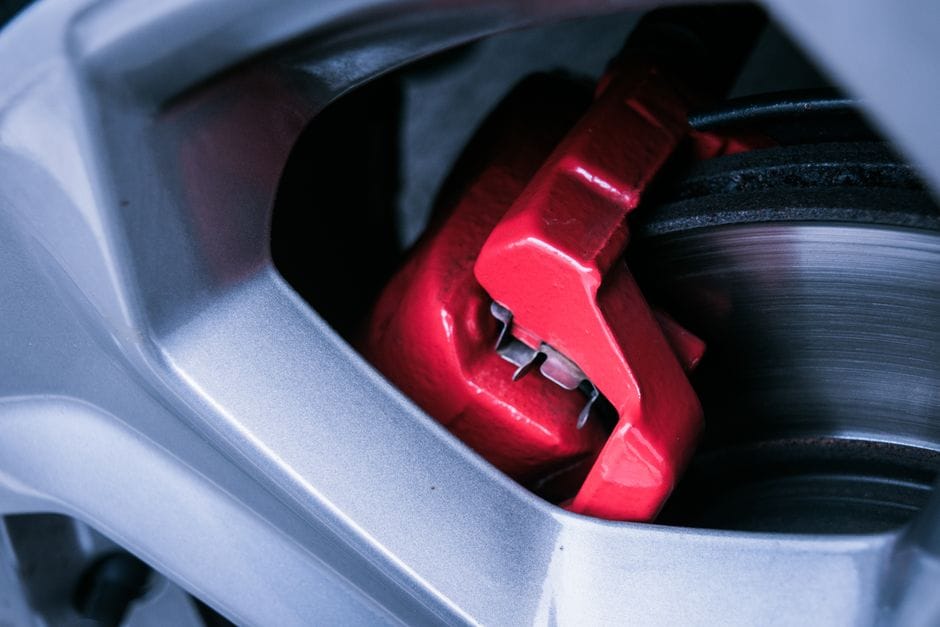
Silicone brake fluid, officially designated DOT 5, is a completely different chemistry from the glycol-based fluids most cars use. It is a silicone polymer, not a glycol ether. While DOT 3 and DOT 4 fluids are made from polyalkylene glycol ethers, DOT 5 uses a siloxane polymer. This single chemical difference drives every other distinction between the two brake fluid types.
The Chemistry: Siloxane Polymer vs. Glycol Ether
The fundamental distinction lies in the molecular structure. DOT 3 and DOT 4 fluids are formulated from polyalkylene glycol ethers — hygroscopic compounds that readily bond with water molecules. DOT 5, by contrast, is built on polydimethylsiloxane, a silicon-oxygen polymer chain that is inherently hydrophobic. This means silicone fluid actively repels water rather than absorbing it into solution. The practical consequence is that moisture in a DOT 5 system tends to pool in low spots — calipers, line dips, and master cylinder reservoirs — where it can freeze in winter or cause localized corrosion, rather than being distributed harmlessly throughout the system as with glycol fluids.
The Key Difference: Hygroscopic vs. Non-Hygroscopic
This hygroscopic versus non-hygroscopic behavior is the single most important factor in choosing between DOT 5 and DOT 3/4. Glycol fluids absorb moisture from the atmosphere, which lowers their wet boiling point over time — a DOT 4 fluid rated at 446°F dry can drop to 311°F wet after two years of service. Silicone fluid, being non-hygroscopic, maintains its dry boiling point of 500°F (260°C) almost indefinitely, provided no water enters the system. However, the trade-off is that any water that does ingress into a DOT 5 system does not mix with the fluid — it sits as separate droplets, creating localized corrosion risks and potential freezing points that glycol systems simply do not face.
Why Color Matters: Purple Dye and System Identification
DOT 5 fluid is almost universally dyed purple or blue to distinguish it from amber-colored DOT 3 and DOT 4 fluids. This is not cosmetic — it is a critical safety measure. Mixing DOT 5 with glycol fluids causes the silicone to separate and form gel-like clumps that can block brake lines and ruin seals. The purple dye provides an immediate visual warning: if you see purple fluid in a system that was previously filled with amber fluid, you know a contamination event has occurred. Conversely, if you see amber fluid in a system labeled for DOT 5, you know the system has been compromised. This color-coding is mandated by SAE J1703 standards and is one of the simplest yet most effective identification systems in automotive maintenance.
Top Picks

DOT 5 vs DOT 3/4: Boiling Points, Viscosity, and Performance Data
Dry and Wet Boiling Point Comparison
The official SAE J1703 and FMVSS 116 specifications set minimum performance thresholds for each DOT rating. DOT 5 fluid must maintain a dry boiling point of at least 500°F (260°C) and a wet boiling point of 356°F (180°C). DOT 3 requires a minimum dry boiling point of 401°F (205°C) and wet of 284°F (140°C). DOT 4 raises these to 446°F (230°C) dry and 311°F (155°C) wet. DOT 5.1, the glycol-based high-performance fluid, matches DOT 5’s dry rating at 500°F but exceeds it in wet performance at 356°F. The critical insight is that DOT 5’s wet boiling point is a theoretical figure — since the fluid does not absorb water, the wet rating is based on a test where water is artificially introduced. In real-world conditions, DOT 5 maintains its dry rating far longer than any glycol fluid.
Viscosity and Temperature Behavior
Viscosity is where DOT 5 shows both strengths and weaknesses. Silicone fluid maintains a remarkably stable viscosity across a wide temperature range — from -40°F to 500°F, the fluid’s flow characteristics change far less than glycol-based fluids. This makes DOT 5 excellent for extreme cold climates where glycol fluids thicken noticeably. However, at operating temperatures, DOT 5 is inherently more viscous than DOT 3 or DOT 4. This higher viscosity translates to slower fluid movement through the brake system, which can produce a spongy or soft pedal feel in systems designed for thinner fluids. The compressibility of silicone fluid is also slightly higher than glycol fluids — under 2,000 psi, DOT 5 compresses measurably more than DOT 4, which contributes to the “soft pedal” complaint often reported by drivers who switch without upgrading their master cylinder or brake lines.
Compressibility and Pedal Feel
Controlled laboratory tests have measured DOT 5’s compressibility at approximately 1.5% to 2% under typical braking pressures of 1,500 to 2,500 psi, compared to 0.8% to 1.2% for DOT 4. While these percentages seem small, they translate to a noticeable difference in pedal travel. A system that requires 1 inch of pedal travel with DOT 4 may require 1.5 to 2 inches with DOT 5. This is why many classic car owners who switch to DOT 5 report a “spongy” pedal that firms up only after extensive bleeding. The issue is not air in the system — it is the inherent compressibility of the silicone fluid itself. For vehicles with manual drum brakes or large-diameter master cylinders, this effect is minimal. For modern vehicles with small-bore master cylinders and four-wheel disc brakes, the effect can be significant enough to compromise braking confidence.
Compatibility: Seals, ABS Systems, and Paint Protection
Material Compatibility with Brake System Components
DOT 5 silicone fluid is compatible with most rubber compounds used in brake systems manufactured before the mid-1980s, including natural rubber, EPDM, and neoprene. However, modern brake systems use a wider variety of elastomers, and some
modern seals and O-rings are formulated specifically for glycol-based fluids. Silicone fluid can cause these modern elastomers to swell or degrade over time, leading to seal failure and fluid leaks. This is particularly problematic in vehicles with anti-lock braking systems (ABS), where the modulator contains intricate valves and seals that are highly sensitive to fluid chemistry. Most major vehicle manufacturers explicitly warn against using DOT 5 in ABS-equipped vehicles, as silicone fluid’s higher viscosity and compressibility can interfere with the precise hydraulic pulses the ABS modulator must generate.
ABS System Incompatibility
The incompatibility between DOT 5 and ABS systems is not merely a theoretical concern — it is a documented failure mode. ABS modulators rely on rapid, precise pressure modulation to prevent wheel lockup. Silicone fluid’s higher viscosity slows the response time of the modulator, and its greater compressibility means the pressure pulses are dampened before they reach the calipers. In emergency braking situations, this can result in longer stopping distances and reduced ABS effectiveness. Also, the non-hygroscopic nature of DOT 5 means any moisture that enters the system can pool inside the ABS modulator, causing corrosion of the precision-machined internal components. For these reasons, every major ABS manufacturer — including Bosch, Continental, and TRW — recommends against using DOT 5 in any ABS-equipped vehicle.
Paint Protection and Corrosion Resistance
One of the most significant advantages of DOT 5 silicone fluid is its complete inertness to automotive paint. Glycol-based fluids are highly corrosive to paint finishes — a single spill on a fender can strip the clear coat and base coat within minutes, leaving permanent damage. Silicone fluid, by contrast, will not harm paint, powder coating, or clear coat finishes. This makes DOT 5 the preferred choice for classic car restorations where paint preservation is paramount. Also, silicone fluid does not promote corrosion of brake lines, calipers, or master cylinders in the same way that moisture-laden glycol fluid does. Since DOT 5 does not absorb water, the internal surfaces of the brake system remain dry and corrosion-free, provided no water is introduced during maintenance. This is why military vehicles and long-term storage projects often specify DOT 5 — it offers decades of corrosion protection without the need for frequent fluid changes.
Switching from DOT 3/4 to DOT 5: What You Must Know
The Critical Rule: Never Mix DOT 5 with DOT 3/4
The single most important rule when considering a switch to DOT 5 is that the two fluid types are absolutely incompatible. Mixing silicone fluid with glycol-based fluid causes the silicone to separate and form gel-like clumps that can block brake lines, ruin seals, and compromise braking performance. Even trace amounts of glycol fluid left in a system can contaminate the new DOT 5 fill. This is why the color-coding system exists — purple fluid in a system that previously contained amber fluid is a clear warning sign of contamination. If you are switching from DOT 3 or DOT 4 to DOT 5, the entire system must be completely flushed and disassembled to remove every trace of the old fluid.
Complete Flush Procedure for Switching
Switching from glycol-based fluid to DOT 5 requires a far more thorough procedure than a standard brake fluid flush. The recommended process involves: first, draining all old fluid from the master cylinder and reservoir; second, disconnecting and removing all brake lines, calipers, wheel cylinders, and the master cylinder itself; third, flushing each component with isopropyl alcohol or a dedicated brake cleaner to remove any residual glycol; fourth, allowing all components to dry completely; fifth, inspecting and replacing all rubber seals, hoses, and O-rings that may have absorbed glycol fluid; and finally, reassembling the system and filling with fresh DOT 5. This is a labor-intensive process that typically takes a full day for a competent DIY mechanic. Many owners choose to replace all rubber components during the switch, as old seals saturated with glycol fluid can contaminate the new silicone fluid.
Bleeding Challenges with Silicone Fluid
Bleeding a brake system filled with DOT 5 is notoriously more difficult than bleeding a glycol-based system. Silicone fluid has a higher surface tension and viscosity, which means air bubbles are more likely to cling to internal surfaces and resist being purged. The fluid also tends to aerate more easily during the bleeding process, creating microscopic bubbles that are difficult to remove. Many experienced mechanics recommend a vacuum bleeder or pressure bleeder rather than the traditional two-person pump-and-hold method. Also, because DOT 5 does not absorb moisture, any air that enters the system during bleeding will not be absorbed into the fluid — it will remain as a bubble that can cause a spongy pedal. Patience is essential: a DOT 5 system may require multiple bleeding cycles over several days to achieve a firm pedal.
DOT 5 vs DOT 5.1 vs Mineral Oil: Understanding the Alternatives
DOT 5.1: The Glycol-Based High-Performance Option
DOT 5.1 is frequently confused with DOT 5 because of the similar naming, but they are fundamentally different fluids. DOT 5.1 is a glycol-ether-based fluid, chemically similar to DOT 3 and DOT 4, but formulated with a higher boiling point — 500°F dry and 356°F wet, matching DOT 5’s dry rating. Unlike DOT 5, DOT 5.1 is hygroscopic, meaning it absorbs moisture from the atmosphere. This makes DOT 5.1 fully compatible with ABS systems and modern brake components. The confusion between DOT 5 and DOT 5.1 has led to countless cases of accidental contamination, as owners mistakenly pour DOT 5.1 into systems designed for DOT 5 or vice versa. The key distinction to remember: DOT 5 is silicone-based and purple; DOT 5.1 is glycol-based and amber. They are not interchangeable.
Mineral Oil Brake Fluid (LHM)
Mineral oil brake fluid, commonly known as LHM (Liquide Hydraulique Minéral), is used exclusively in certain Citroën and Rolls-Royce vehicles. This fluid is based on mineral oil rather than glycol ethers or silicone polymers. It is completely incompatible with both DOT 3/4/5.1 and DOT 5 fluids. Mineral oil systems use different seal materials — typically natural rubber — that would be destroyed by glycol or silicone fluids. The color of LHM is typically green or yellow, providing another visual identifier. If you own a Citroën with hydraulic suspension or a Rolls-Royce from the 1960s through 1980s, you must use LHM fluid exclusively. Using any DOT-rated fluid in these systems will cause catastrophic seal failure and brake loss.
Cost and Availability Comparison
DOT 5 silicone fluid is significantly more expensive than DOT 3 or DOT 4. A typical 12-ounce bottle of DOT 5 costs between $15 and $25, while the same quantity of DOT 4 costs $5 to $10. DOT 5.1 is similarly priced to DOT 5, reflecting its high-performance formulation. Mineral oil LHM fluid is the most expensive of all, often costing $30 or more per liter due to its limited application. Availability is also a consideration: DOT 3 and DOT 4 are available at virtually every auto parts store, while DOT 5 is commonly stocked but may require a special order at smaller retailers. DOT 5.1 and LHM are less commonly stocked and may need to be ordered online. For most drivers, the cost difference is negligible over the life of the vehicle, but it is a factor for those on a tight budget.
Which Vehicles Benefit from Silicone Brake Fluid?
Classic Cars and Restorations
Classic cars — particularly those manufactured before 1980 — are the primary beneficiaries of DOT 5 silicone fluid. These vehicles typically have simple brake systems without ABS, use seal materials compatible with silicone, and are often stored for extended periods. The non-hygroscopic nature of DOT 5 means that a classic car stored in a garage for six months will not develop internal corrosion in its brake lines, unlike a glycol-filled system that absorbs moisture and rusts from the inside out. Also, the paint-safe property of DOT 5 is invaluable during restoration work, where a spill on a freshly painted fender would be catastrophic. Many classic car restorers consider DOT 5 the gold standard for their vehicles, despite the slightly
softer pedal feel. The trade-off is acceptable when weighed against the decades of corrosion protection and paint safety that DOT 5 provides.
Military and Long-Term Storage Vehicles
Military specifications (MIL-PRF-46176) have long mandated the use of silicone brake fluid in tactical vehicles. The reason is straightforward: military vehicles may sit in storage for years before being pressed into service, and DOT 5’s non-hygroscopic nature ensures that brake systems remain corrosion-free and functional after extended periods of inactivity. The same logic applies to civilian vehicles used for long-term storage — classic cars, collector vehicles, show cars, and recreational vehicles that may only be driven a few times per year. For these applications, DOT 5 eliminates the need for annual fluid flushes and provides peace of mind that the brake system will not degrade while the vehicle sits idle.
Vehicles That Should NOT Use DOT 5
Modern vehicles equipped with ABS, traction control, or electronic stability control should never be filled with DOT 5. The higher viscosity and compressibility of silicone fluid interfere with the precise hydraulic modulation required by these systems, potentially increasing stopping distances and compromising safety systems. Also, vehicles manufactured after the mid-1980s often use seal materials that are incompatible with silicone fluid. Track cars and vehicles used for heavy towing should also stick with DOT 4 or DOT 5.1, as the higher compressibility of DOT 5 can lead to brake fade under repeated hard braking. Finally, any vehicle with a history of unexplained brake issues should avoid DOT 5, as the fluid’s unique characteristics can mask or exacerbate underlying problems.
Maintenance Intervals and Fluid Lifespan
DOT 5 Longevity vs. DOT 3/4 Replacement Schedules
One of the most compelling arguments for DOT 5 is its dramatically extended service life. Glycol-based DOT 3 and DOT 4 fluids should be flushed and replaced every two years, regardless of mileage, because they absorb moisture from the atmosphere and their boiling points degrade over time. DOT 5, being non-hygroscopic, does not absorb moisture and maintains its boiling point indefinitely — provided no water is introduced during maintenance. Many manufacturers of DOT 5 claim a service life of 10 years or more, and some military specifications allow for 15-year intervals. For a classic car owner who drives sparingly, this means a single fluid fill can last the lifetime of the restoration. However, this longevity comes with a caveat: if water does enter a DOT 5 system, it will not be absorbed and can cause localized corrosion, so periodic inspection of the fluid for signs of water contamination is still recommended.
Signs of Fluid Degradation and Contamination
Even though DOT 5 does not absorb water, it can still become contaminated through improper maintenance or component failure. Signs of contamination include a milky or cloudy appearance, which indicates water has entered the system; a change in color from purple to a lighter shade, suggesting dilution; or the presence of particles or sediment in the fluid. Also, if the fluid level drops significantly without an obvious leak, it may indicate that water has displaced the fluid in low spots. Regular inspection of the master cylinder reservoir — at least annually — is recommended for DOT 5 systems. If contamination is detected, the entire system must be flushed and refilled with fresh DOT 5, following the same thorough procedure as a full system switch.
Testing Brake Fluid Condition
For DOT 3 and DOT 4 systems, inexpensive test strips are available that measure the moisture content of the fluid by detecting copper ions that leach into the fluid as corrosion occurs. These strips are not effective for DOT 5, as the non-hygroscopic nature of silicone fluid means copper ions are not released in the same way. Instead, DOT 5 systems should be inspected visually and by checking the fluid’s boiling point with an electronic brake fluid tester. These devices measure the fluid’s electrical conductivity, which changes with moisture content. However, because DOT 5 does not mix with water, the tester may not provide accurate readings. The most reliable method for DOT 5 is simply to inspect the fluid’s appearance and replace it if any cloudiness or discoloration is observed.
Cost Analysis: Is DOT 5 Worth the Premium?
Initial Cost vs. Long-Term Savings
At first glance, DOT 5 appears significantly more expensive than DOT 3 or DOT 4. A typical passenger car requires approximately 1 liter of brake fluid for a complete fill. DOT 3 or DOT 4 costs $10 to $20 per liter, while DOT 5 costs $25 to $40 per liter. However, when you factor in the extended service life, the cost equation changes dramatically. A glycol-based system requires a flush every two years — over a 10-year period, that is five flushes at $10 to $20 each, totaling $50 to $100. A DOT 5 system requires no flushes over the same period, with a single fill costing $25 to $40. Over 10 years, DOT 5 is actually the more economical choice, saving $25 to $60 while providing superior corrosion protection.
Hidden Costs of Switching
The cost analysis becomes less favorable when switching an existing vehicle from DOT 3/4 to DOT 5. The complete flush procedure — including disassembly, cleaning, and replacement of all rubber components — can cost $300 to $800 in parts and labor if performed by a professional. DIY owners can reduce this cost to $100 to $200 in parts, but must invest significant time. Also, if the switch is performed improperly and contamination occurs, the cost of repairing damaged seals and brake components can far exceed the savings. For this reason, many experts recommend that DOT 5 only be used in vehicles that are being fully restored, where the brake system is already being disassembled and rebuilt as part of the restoration process.
Value for Different Use Cases
The value proposition of DOT 5 depends entirely on your use case. For a classic car owner who drives 1,000 miles per year and stores the vehicle for months at a time, DOT 5 offers exceptional value — the corrosion protection and extended service life are worth the premium price. For a daily driver who commutes 15,000 miles per year, DOT 4 is the better value — the lower initial cost and compatibility with modern ABS systems outweigh the need for more frequent flushes. For a track car that sees repeated hard braking, DOT 4 or DOT 5.1 is the only sensible choice, as the higher compressibility of DOT 5 would compromise braking performance. Ultimately, the decision should be based on your vehicle type, usage pattern, and willingness to perform the thorough maintenance that DOT 5 requires.
Step-by-Step Guide to Switching to DOT 5
Tools and Materials Needed
Before beginning the switch to DOT 5, gather the following tools and materials: a complete brake bleeder kit (vacuum or pressure type), isopropyl alcohol or brake cleaner, a complete set of new rubber seals and hoses for your vehicle, a torque wrench, line wrenches, a catch container for old fluid, safety glasses, and nitrile gloves. You will also need enough DOT 5 fluid to fill the system completely — typically 1 to 1.5 liters for a passenger car. It is critical to use only fresh, sealed bottles of DOT 5, as fluid that has been opened and stored may have absorbed moisture from the air. Also, have a service manual for your specific vehicle on hand to reference torque specifications and bleeding procedures.
Step 1: Drain the Old Fluid
Begin by removing the master cylinder reservoir cap and using a turkey baster or syringe to remove as much old fluid as possible. Then, working at each wheel in sequence — starting with the wheel farthest from the master cylinder — open the bleeder valve and pump the brake pedal to force the remaining fluid out. Continue until no more fluid emerges from the bleeder. This process will drain the lines but will not remove fluid from the master cylinder body or the calipers. To fully drain these components, they must be removed from the vehicle.
Step 2: Disassemble and Clean All Components
Disconnect the brake lines from the master cylinder, calipers, and wheel cylinders. Remove the master cylinder from the vehicle and disassemble it, removing the piston and seals. Remove the calipers and wheel cylinders and disassemble them as well. Clean every component thoroughly with isopropyl alcohol or brake cleaner, paying special attention to internal passages and bores. Allow all components
to air dry completely. Do not use compressed air to speed up the drying process, as this can introduce moisture and contaminants. Once dry, inspect all components for signs of corrosion, wear, or damage. Replace any components that show pitting, scoring, or excessive wear. This is also the time to replace all rubber seals, hoses, and O-rings with new ones, as old seals may have absorbed glycol fluid and will contaminate the new DOT 5.
Step 3: Reassemble and Fill with DOT 5
Reassemble the master cylinder, calipers, and wheel cylinders with the new seals and components. Reinstall everything on the vehicle and reconnect all brake lines. Fill the master cylinder reservoir with fresh DOT 5 fluid. Begin bleeding the system at the wheel farthest from the master cylinder, working your way closer. Use a vacuum bleeder or pressure bleeder for best results, as these methods are more effective at purging air from a DOT 5 system than manual bleeding. Continue bleeding until a steady stream of purple fluid emerges from each bleeder valve with no air bubbles. Top off the reservoir frequently to prevent it from running dry, as introducing air into the system will require starting the bleeding process over.
Step 4: Test and Verify
After bleeding is complete, check the brake pedal for firmness. If the pedal feels spongy, the system likely still contains air. Allow the vehicle to sit for several hours, then re-bleed the system. This settling period allows microscopic air bubbles to coalesce into larger bubbles that can be purged. Repeat the bleeding process as needed until the pedal is firm. Once the pedal feels solid, test the brakes at low speed in a safe area. Listen for any unusual noises and check for leaks at all connections. If everything checks out, the switch to DOT 5 is complete. Remember to label the master cylinder reservoir with a DOT 5 warning sticker to prevent future accidental contamination with glycol-based fluid.
Frequently Asked Questions About Silicone Brake Fluid
Can I Mix DOT 5 with DOT 3 or DOT 4?
Absolutely not. Mixing DOT 5 silicone fluid with any glycol-based fluid (DOT 3, DOT 4, or DOT 5.1) causes the silicone to separate and form gel-like clumps that can block brake lines, ruin seals, and cause complete brake failure. Even trace amounts of glycol fluid can contaminate a DOT 5 system. This is why the purple dye in DOT 5 is so important — it provides a visual warning if contamination occurs. If you suspect mixing has occurred, the entire system must be completely flushed and all rubber components replaced.
Is DOT 5 Safe for All Brake Systems?
No. DOT 5 is only safe for brake systems that were designed for it or that have been completely converted. It is not safe for modern vehicles with ABS, traction control, or electronic stability control systems. It is also not safe for vehicles with seals or hoses made from materials that are incompatible with silicone fluid. Before using DOT 5, verify that your vehicle’s brake system components are compatible. When in doubt, consult your vehicle’s service manual or a qualified brake specialist.
Why Does DOT 5 Feel Spongier Than DOT 4?
DOT 5 silicone fluid is inherently more compressible than glycol-based fluids. Under braking pressure, DOT 5 compresses approximately 1.5% to 2%, compared to 0.8% to 1.2% for DOT 4. This additional compressibility translates to a softer, spongier pedal feel. The effect is more noticeable in vehicles with small-bore master cylinders and four-wheel disc brakes. While this is not dangerous, it can be disconcerting for drivers accustomed to the firm pedal of a glycol-based system.
How Often Should DOT 5 Be Replaced?
DOT 5 does not absorb moisture and maintains its boiling point indefinitely, provided no water enters the system. Most manufacturers recommend a service life of 10 years or more. However, the fluid should be inspected annually for signs of contamination, including cloudiness, discoloration, or particles. If any contamination is detected, the system should be flushed and refilled immediately. If the fluid remains clear and clean, replacement is not necessary on a fixed schedule.
Does DOT 5 Work in ABS-Equipped Vehicles?
No. DOT 5 is not recommended for any vehicle with ABS. The higher viscosity and compressibility of silicone fluid interfere with the precise hydraulic modulation required by ABS systems, potentially increasing stopping distances and compromising safety. Also, moisture that enters a DOT 5 system can pool inside the ABS modulator, causing corrosion of precision components. All major ABS manufacturers recommend against using DOT 5 in ABS-equipped vehicles.
Can DOT 5 Damage Paint?
No. One of the primary advantages of DOT 5 is that it is completely inert to automotive paint. Unlike glycol-based fluids, which can strip paint and clear coat within minutes of contact, DOT 5 will not harm painted surfaces. This makes it the preferred choice for classic car restorations and vehicles with custom paint jobs. However, DOT 5 should still be cleaned up promptly if spilled, as it can leave a slippery residue on surfaces.
Conclusion: Making the Right Choice for Your Vehicle
Choosing between DOT 5 silicone fluid and DOT 3/4 glycol-based fluid is not a matter of which is “better” — it is a matter of which is right for your specific vehicle and usage pattern. DOT 5 offers exceptional corrosion protection, paint safety, and extended service life, making it the ideal choice for classic cars, military vehicles, and long-term storage projects. However, its higher viscosity, greater compressibility, and incompatibility with ABS systems make it a poor choice for modern daily drivers and performance vehicles.
For most drivers, DOT 4 remains the sensible default — it is affordable, widely available, compatible with modern brake systems, and provides excellent performance for daily driving and moderate performance use. DOT 5.1 offers the same compatibility with a higher boiling point for those who need extra thermal margin. DOT 5 is a specialized tool for a specific job, and like any specialized tool, it should be used only where it is genuinely beneficial.
If you are restoring a classic car and want the ultimate in corrosion protection and paint safety, DOT 5 is the clear winner. If you drive a modern vehicle with ABS, stick with DOT 4 or DOT 5.1. And if you are unsure, consult your vehicle’s service manual or a qualified brake specialist. The wrong choice can compromise braking performance, damage components, or even create a safety hazard. The right choice will provide years of reliable, trouble-free braking.
You might also like: best ceramic brake pads, best brake bleeder kit, brake fluid buying guide