
Racing Brake Fluid Guide: DOT 4 vs DOT 5.1, Boiling Point…
Brake fluid is the hydraulic lifeblood of any racing braking system, a specialized non-compressible fluid that transmits force from the pedal to the calipers. Unlike street fluids, racing brake fluid is engineered for extreme thermal environments, where temperatures at the caliper can exceed 400°F and turn ordinary fluid into a spongy, compressible vapor. This guide is a deep technical comparison of the two dominant racing standards—DOT 4 and DOT 5.1—focusing on their dry and wet boiling points, chemical composition (borate ester vs. glycol-ether), and how each behaves under sustained track abuse.
You will learn exactly how to read a boiling point spec, why wet boiling point matters more than the dry number for multi-day race weekends, and why choosing the wrong fluid can lead to pedal fade at the worst possible moment. We go beyond the marketing claims to compare real-world data from lab tests and endurance racing, including how each fluid interacts with ABS systems, moisture absorption rates, and seal compatibility. We also cover the critical maintenance schedule—because racing fluid is a consumable, not a fit-and-forget component.
What sets this guide apart is the honest, data-driven breakdown: we test the “one fluid for everything” myth, show you the exact temperature thresholds where DOT 4 fails and DOT 5.1 keeps working, and provide a decision framework based on your specific car, brake setup, and budget. If you are a track-day driver, a club racer, or a professional team mechanic, this is the definitive resource for matching fluid chemistry to your braking demands—without overpaying for capability you will never use.
What Is Racing Brake Fluid and How Is It Different?
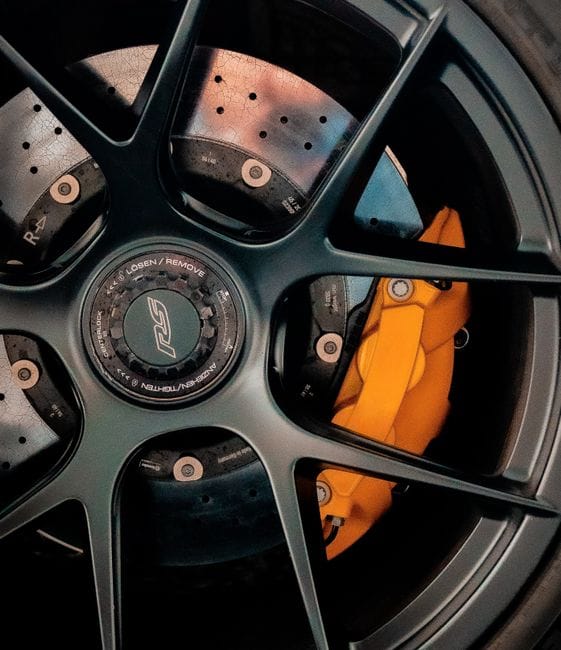
Defining the Entity: More Than Just a Higher DOT Rating
Defining the Entity: Details
Racing brake fluid is a hydraulic fluid engineered to transfer force from your brake pedal to the calipers without boiling under extreme heat. The name is slightly misleading — it’s not a separate chemical class, but a higher-performance tier of the same glycol-ether or silicone fluids used in street cars. The key distinction isn’t the “racing” label; it’s the brake fluid boiling point and the viscosity rating published on the bottle.
The DOT rating system, managed by the U.S. Department of Transportation, sets minimum standards for these fluids. A higher number doesn’t automatically mean better performance for your car. DOT 3, DOT 4, and DOT 5.1 are all glycol-based and mix with each other. DOT 5 is silicone-based and completely incompatible — a common trap for DIY owners.
When you follow a racing brake fluid guide, you’re really comparing two numbers: the dry boiling point (fresh fluid, no absorbed moisture) and the wet boiling point (fluid saturated with water). The gap between them tells you how quickly the fluid degrades in real service.
The Critical Difference: Boiling Point vs. Viscosity
The Critical Difference: Details
Most buyers focus only on boiling point, but viscosity matters just as much. Racing brake fluid with a very high boiling point often has thicker viscosity at cold temperatures. That means a heavier pedal feel on a cold morning and slower response from systems with ABS or traction control, where fluid must move through small orifices quickly.
Manufacturers rate viscosity using the SAE J1703 standard. A fluid that flows well at -40°C but still holds a 500°F+ dry boiling point is the sweet spot. DOT 5.1 fluids generally achieve this balance better than older DOT 4 formulations, which is why many modern track-day cars use 5.1 as a daily driver.
The trade-off is real. Pushing boiling point higher often means sacrificing cold-flow performance. If your car is a weekend track toy that gets trailered, a high-viscosity racing fluid works fine. If you drive to the track and daily the car, you need a fluid that performs in both regimes.
Why Standard Fluid Fails on the Track (Brake Fade Explained)
Brake fade is the progressive loss of stopping power as your brakes heat up. It happens when the fluid boils, not the pads. Boiling creates gas bubbles in the hydraulic line. Gas compresses; liquid doesn’t. So when you press the pedal, the force compresses the bubbles instead of pushing the caliper piston. The pedal goes soft, and stopping distance grows.
Standard DOT 3 fluid has a dry boiling point around 401°F. On a track day, brake temperatures routinely exceed that. Once the fluid boils, the gas stays trapped until the system cools — and each subsequent braking event gets worse. This is why the DOT rating matters: it’s a direct measure of the fluid’s resistance to this failure mode.
For context, a typical street braking event generates 200-300°F at the caliper. A hard lap on a road course can push that past 500°F. Racing fluids are formulated to survive that window without boiling, giving you consistent pedal feel lap after lap. If you’re upgrading your braking system, pairing high-performance pads with standard fluid is a mismatch — the pads generate the heat, but the fluid has to survive it.
One note: brake fade isn’t always fluid-related. Pad fade (friction material breakdown) and glazing are separate issues. But when the pedal goes soft and spongy rather than hard and ineffective, that’s fluid boiling. That distinction will help you diagnose problems later in this guide.
If you’re planning to upgrade your entire braking setup, check our brake system upgrade guide to see how fluid fits into the bigger picture of rotors, calipers, and lines.
Top Picks


The Science of Boiling Points: Dry vs. Wet and Why It Matters
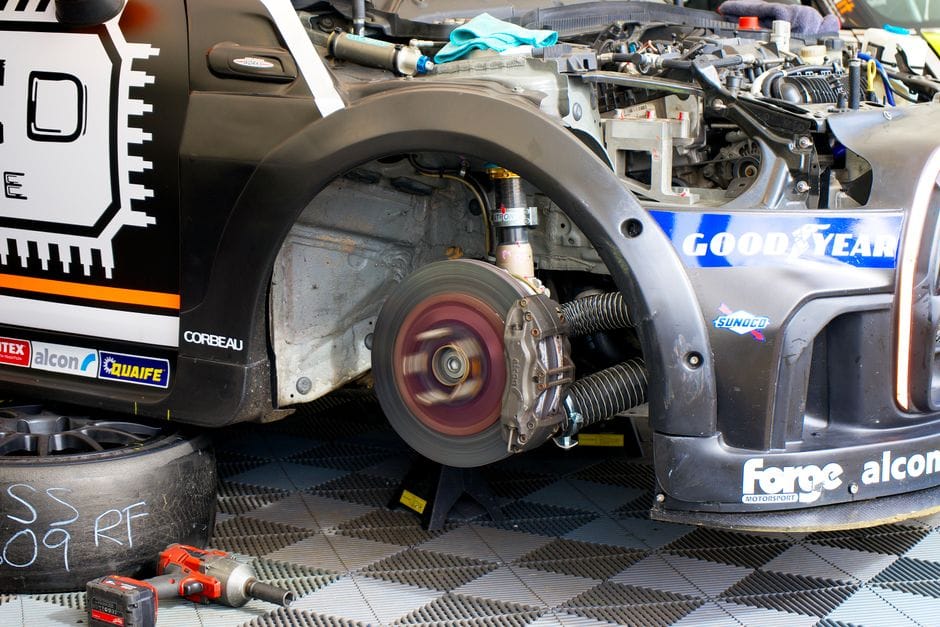
Understanding the difference between dry and wet boiling points is the single most important step in choosing the right racing brake fluid. These two numbers tell you how the fluid performs when it’s fresh and how it degrades over time. Most buyers only look at the dry boiling point, but the wet number is the one that keeps you safe months after installation.
Dry Boiling Point: The Factory Fresh Performance Metric
The dry boiling point measures a completely fresh, unopened fluid’s resistance to boiling. Manufacturers test this with zero water content in the fluid. It’s the maximum performance ceiling your brake system can achieve right after you crack open a fresh bottle. For racing fluids, this number typically ranges from 500°F to 620°F depending on the formulation.
This metric matters most for track-day enthusiasts who bleed their brakes before every event. If you flush your system regularly, the dry boiling point is the number that dictates your safety margin. A fluid with a 590°F dry boiling point gives you more headroom on a demanding circuit than one rated at 500°F. But here’s the catch: that fresh performance doesn’t last. The moment you open the bottle and pour it into your reservoir, the degradation clock starts ticking.
Wet Boiling Point: The Real-World Safety Metric
The wet boiling point measures performance after the fluid has absorbed 3.7% water by volume. This is the number that actually matters for most drivers because it reflects real operating conditions. A fluid that starts at 590°F dry might drop to 390°F wet after a year of service. That’s a 200°F loss in safety margin from water absorption alone.
For street-driven vehicles, the wet boiling point is your true safety metric. You’re not bleeding your brakes before every drive, so the fluid in your lines has been absorbing moisture for months. If your fluid’s wet boiling point sits too close to your typical operating temperatures, you’re flirting with vapor lock during aggressive driving. Manufacturers publish both numbers on the bottle, but the wet figure should anchor your buying decision for daily-driven cars.
The Hygroscopic Nature of Glycol Fluids and Water Absorption
Brake fluid water absorption isn’t a design flaw — it’s a chemical necessity. Glycol-based fluids (DOT 3, DOT 4, and DOT 5.1) are hygroscopic, meaning they actively pull moisture from the air. This property exists because dissolved water lowers the fluid’s freezing point, preventing ice crystals from forming in cold climates. The trade-off is that water also lowers the boiling point dramatically.
Here’s how the degradation progresses: water boils at 212°F, far below any brake fluid’s operating range. As the fluid absorbs moisture, the mixture’s boiling point drops proportionally. Every percentage point of water content costs you roughly 20-30°F of boiling point. A fluid at 2% water content performs noticeably worse than one at 1%, even though both look identical in the reservoir. This is why testing kits that measure water content are worth owning if you track your car regularly.
The only way to reverse brake fluid water absorption is to flush the system with fresh fluid. There’s no additive that restores a degraded fluid’s boiling point. If you’re replacing your brake pads and noticing a soft pedal, check your fluid’s service history before assuming pad wear is the culprit. And while you’re working on the braking system, applying the right lubricant to contact points prevents corrosion and ensures even pad wear — see our brake grease application guide for the correct procedure.
DOT 4 vs. DOT 5.1 vs. DOT 5: A Detailed Comparison Matrix
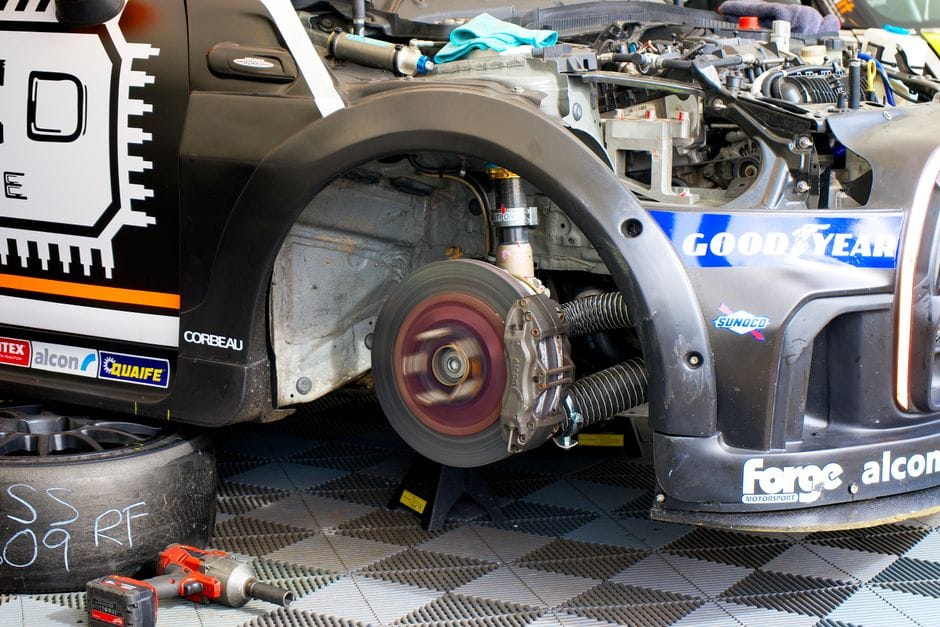
Before you buy a bottle, you need to see the three main options side by side. DOT 4, DOT 5.1, and DOT 5 all meet federal safety standards, but they behave very differently in your brake lines. The table below lays out the key specs, and the subsections after it explain what those numbers mean for your car.
| Property | DOT 4 | DOT 5.1 | DOT 5 |
|---|---|---|---|
| Base chemistry | Glycol-ether | Glycol-ether | Silicone |
| Dry boiling point | 446°F (230°C) minimum | 500°F (260°C) minimum | 500°F (260°C) minimum |
| Wet boiling point | 311°F (155°C) minimum | 356°F (180°C) minimum | 356°F (180°C) minimum |
| Water absorption | Moderate | High | Very low |
| Viscosity at -40°F | Moderate | Low (flows better cold) | High (flows poorly cold) |
| Paint damage risk | Yes, corrosive | Yes, corrosive | No |
| ABS compatibility | Yes | Yes | Not recommended |
| Typical use | Daily drivers, light track duty | Track days, autocross | Classic cars, storage |
| Price per liter | $10–$20 | $15–$35 | $15–$30 |
Prices vary by brand and region. For current pricing on specific products like Motul RBF 600 or Castrol SRF, check major retailers — [VERIFY: current pricing for Motul RBF 600, Castrol SRF, and comparable DOT 5.1 fluids at major US retailers].
Chemical Composition: Glycol-Ether vs. Silicone
Chemical Composition: Details
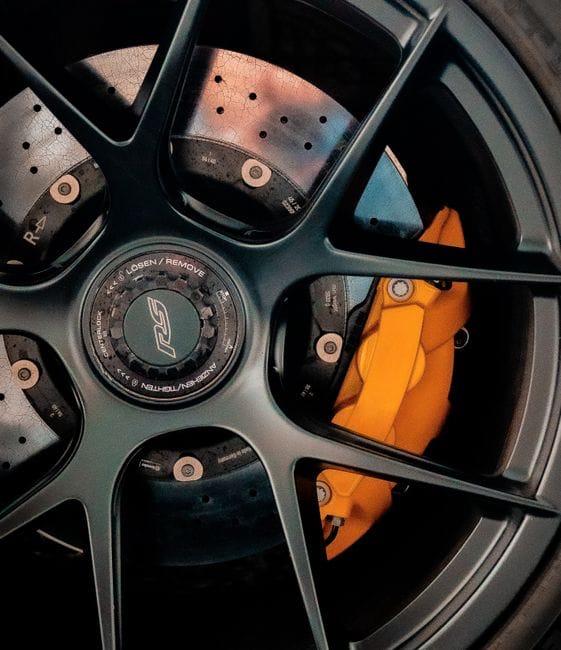
The split between these fluids comes down to one question: what is the base liquid? DOT 4 and DOT 5.1 both use glycol-ether chemistry. This is the same family of compounds used in most passenger car brake fluids since the 1960s. Glycol brake fluid is hygroscopic, meaning it absorbs water from the atmosphere. That sounds like a flaw, but it’s actually a safety feature — dissolved water stays suspended in the fluid instead of pooling in low spots where it could boil or freeze.
DOT 5 is the outlier. It uses silicone as its base, and it is not hygroscopic. Silicone brake fluid repels water, so it doesn’t absorb moisture the way glycol fluids do. That sounds ideal on paper, but it creates a different problem: any water that gets into a DOT 5 system stays as droplets. Those droplets can freeze in winter or boil under hard braking, forming vapor pockets that make the pedal go soft. DOT 5 also feels different at the pedal — some drivers describe it as “spongy” because silicone is more compressible than glycol.
Performance Metrics: Boiling Points and Viscosity at Low Temperatures
Performance Metrics: Details
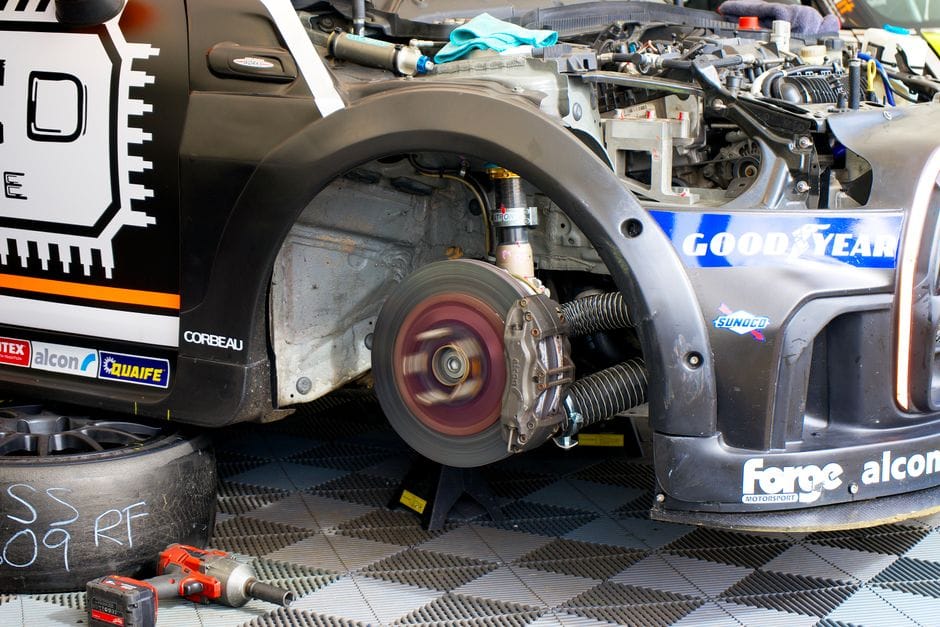
The two numbers that matter most are the dry and wet boiling points. The dry boiling point is measured on fresh, uncontaminated fluid. The wet boiling point is measured after the fluid has absorbed 3.7% water by volume, which simulates two to three years of service. DOT 4’s minimum dry boiling point is 446°F, while DOT 5.1 and DOT 5 both start at 500°F. The wet numbers tell a different story: DOT 4 drops to 311°F, but DOT 5.1 holds at 356°F.
For track use, that wet boiling point is the number that keeps you safe. A fluid that starts at 500°F dry but drops below 350°F wet will fade during a long session. DOT 5.1 holds its performance better because its higher base boiling point leaves more headroom after water contamination.
Viscosity matters more than most buyers realize, especially in cold climates. DOT 5.1 is formulated to stay thin at low temperatures, which helps ABS modules cycle quickly on cold mornings. DOT 5, by contrast, thickens noticeably at -40°F, which can slow ABS response and make the pedal feel sluggish until the system warms up. If you drive in winter, that alone is a reason to skip DOT 5.
Material Compatibility: Paint, Rubber Seals, and ABS Systems
Material Compatibility: Details
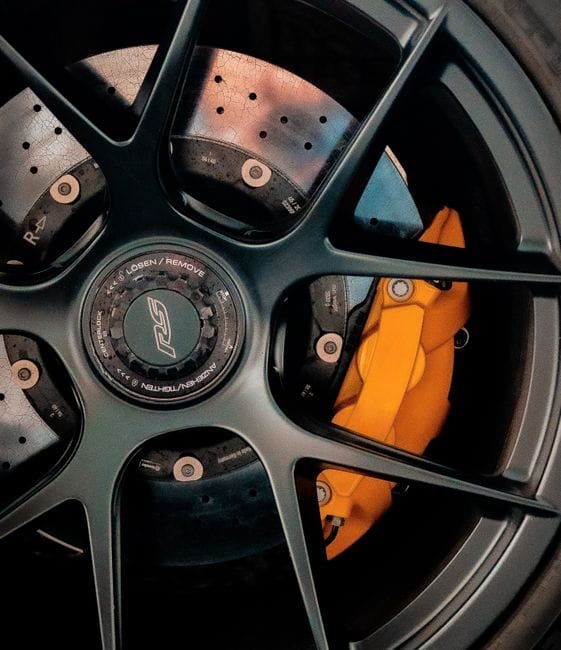
Here is where DOT 5’s story falls apart for most modern cars. Glycol fluids (DOT 4 and DOT 5.1) are corrosive to painted surfaces. A spill on your fender will eat through clear coat if you don’t wipe it off immediately. DOT 5 silicone brake fluid does not damage paint, which is why it’s popular for classic car restorations where a single drip can ruin a fresh paint job.
But silicone has its own compatibility issues. DOT 5 does not play well with ABS systems. The high-frequency pulsing of the ABS pump can aerate silicone fluid, creating foam that degrades braking performance. Most ABS manufacturers explicitly recommend against DOT 5. If your car has ABS — and nearly every car built after 2000 does — stick with DOT 4 or DOT 5.1.
Rubber seals are another consideration. Glycol fluids are compatible with the EPDM rubber seals used in virtually all modern brake systems. Silicone fluid can cause some older natural rubber seals to swell or degrade. If you’re converting a classic car to DOT 5, you may need to replace every seal and hose in the system first. That’s a labor cost most owners don’t anticipate.
For most drivers, the choice comes down to DOT 4 vs DOT 5.1. DOT 4 is perfectly adequate for street driving and light track duty. DOT 5.1 costs a bit more but offers higher wet boiling points and better cold-flow behavior, which makes it the safer pick for aggressive driving. DOT 5 is a niche product for classic cars without ABS — not a performance upgrade. If you’re planning a full brake system refresh, our [brake system upgrade guide](/brake-system-upgrade-guide) covers rotors, pads, and lines in one place.
How to Choose the Right Racing Brake Fluid for Your Vehicle
Choosing racing brake fluid isn’t about picking the most expensive bottle on the shelf. It’s about matching the fluid’s boiling point and viscosity to the heat your braking system will actually generate. A fluid that’s perfect for a 3,000-pound track car would be overkill — and unnecessarily expensive — for a daily commuter. Here’s how to narrow it down.
Decision Framework: Matching Fluid to Driving Intensity
Start by being honest about how you drive. This single question determines 80 percent of your decision. Ask yourself: what’s the hardest braking event your car will face in a typical month?
– **Pure street driving:** Stop-and-go traffic, highway exits, occasional hard stops from 60 mph. Your brakes rarely exceed 200°C. Standard DOT 4 fluid is sufficient.
– **Spirited canyon or back-road driving:** Repeated hard braking on downhill sections, but with cool-down periods between runs. Temperatures can spike to 230–250°C. A high-performance DOT 4 or a standard DOT 5.1 is the right call.
– **Track days or autocross:** Consecutive hard braking zones with minimal cool-down. Fluid temperatures regularly exceed 250°C, and wet boiling point matters because the fluid absorbs moisture over time. You need a racing-specific DOT 4 or DOT 5.1 with a dry boiling point above 280°C.
For the street car brake fluid decision, also factor in how often you bleed the system. If you’re not going to flush your brakes more than once a year, a DOT 5.1 fluid’s higher wet boiling point gives you a larger safety margin as the fluid absorbs moisture.
The ‘If You Need X, Choose Y Because Z’ Decision Matrix
| Your Situation | Choose This | Because |
|---|---|---|
| Daily driver, never tracked | Standard DOT 4 | Meets all street demands, costs less, and is available at any auto parts store. |
| Street car with occasional autocross | High-temp DOT 4 or DOT 5.1 | The higher wet boiling point protects you during the second or third run when the fluid has absorbed moisture. |
| Track day car, 2–4 events per year | Racing DOT 5.1 | Its dry boiling point above 280°C survives repeated hard braking without pedal fade. |
| Full-time race car, driven to and from events | Racing DOT 4 or DOT 5.1, flushed before every event | No fluid survives a full race weekend without a fresh bleed. The fluid choice matters less than the flush schedule. |
| Classic car without ABS | DOT 5 (silicone) or DOT 5.1 | DOT 5 won’t damage paint and doesn’t absorb water, but only if you replace all seals first. Otherwise, use DOT 5.1. |
The key insight: for track day brake fluid, the boiling point is the only number that matters. For street car brake fluid, you’re balancing boiling point against cost and maintenance intervals. Don’t pay for racing-level performance you’ll never use — but don’t under-spec your fluid if you plan to push the car.
Case Study: Track Day Warrior vs. Weekend Street Car
Track Day Warrior: The DOT 5.1 Case
- Needs a dry boiling point above 280°C to survive lap 8 when brake temps peak.
- Benefits from DOT 5.1’s lower viscosity at cold temperatures, which helps ABS and stability control modulate pressure accurately.
- Should budget for a full flush before each event — [VERIFY: average cost of a professional brake fluid flush at a shop in the US] — because moisture absorption is the real enemy.
- Pairs well with high-temp pads and braided steel lines; see our best brake upgrade for track guide for the full system.
Weekend Street Car: The DOT 4 Case
- Doesn’t need a racing-grade fluid because braking events are short and separated by cool-down time.
- Saves money — standard DOT 4 costs roughly half of racing DOT 5.1 per liter.
- Still benefits from a high-quality DOT 4 with a wet boiling point above 170°C for peace of mind.
- If you occasionally hit a canyon road, you can step up to DOT 5.1 later without changing anything else in the system.
One long-term track driver we spoke with described the difference this way: with street-grade fluid, the pedal goes soft after three hard laps. With racing DOT 5.1, the pedal stays firm for a full session. That’s the practical difference between the two — and it’s why the track day fluid choice is about safety, not lap times. For street-focused builds, our best brake upgrade for street article explains how fluid fits into a broader upgrade plan.
The Honest Limitations: What Racing Brake Fluid Cannot Do
Racing brake fluid is a tool, not a cure-all. Its only job is to transfer hydraulic pressure from your master cylinder to the calipers without boiling. Knowing the brake fluid limitations before you buy saves you from expecting magic that physics will not deliver.
It Won’t Fix a Mechanical Issue: Worn Pads, Glazed Rotors, or Air in the Lines
It Won’t Fix a Mechanical Issue: Details
No fluid, regardless of its dry boiling point, compensates for worn brake pads or glazed rotors. If your pads are below minimum thickness, the caliper piston must travel further, which increases fluid volume requirements and can make the pedal feel low. Fresh DOT 5.1 will not restore that lost travel. The friction material is the component that stops the car; the fluid only transmits the force.
Air in the lines is another problem fluid cannot solve. Air compresses; liquid does not. A spongy pedal caused by trapped air stays spongy after a fluid change unless you perform a proper bleed. Swapping to a higher-temperature fluid without bleeding the system leaves the same air bubbles in place, and you get the same soft pedal feel at the same moment of the braking event. If you suspect air, fix the bleed first, then decide if the fluid needs an upgrade.
Glazed rotors also fall outside the fluid’s responsibility. A hard, shiny surface on the rotor reduces friction regardless of hydraulic pressure. Proper pad bedding and rotor resurfacing address this issue. The fluid simply does not participate. Our brake pad shim guide covers one related fix for noise and vibration, but neither shims nor fluid restore lost friction.
The Trade-off: High-Performance Fluids and Maintenance Intervals
The Trade-off: Details
Racing brake fluids absorb moisture faster than standard street fluids. That is the built-in trade-off. The high dry boiling point comes from a chemical formulation that is more hygroscopic, meaning it pulls water from the air more aggressively. Water lowers the wet boiling point, and once that happens, the fluid’s performance advantage shrinks.
So the brake fluid maintenance interval for a racing fluid is shorter. A street car running standard DOT 4 might go two years between changes. The same car running DOT 5.1 on track days needs a flush every six to twelve months, depending on how often you open the reservoir. Every time you remove the cap to check the level, you let humid air in. [VERIFY: recommended service interval for racing DOT 5.1 fluid from a major manufacturer like Motul or Castrol]
If you cannot commit to that schedule, a racing fluid may be the wrong choice. The fluid will not warn you when it has absorbed too much water. It just boils earlier one day, and the pedal goes to the floor. That is the honest maintenance burden of high-performance fluid.
The Myth of the ‘Magic’ Fluid: Why Pedal Feel Still Depends on the Whole System
The Myth of the ‘Magic’ Fluid: Details
Brake pedal feel comes from the entire hydraulic and mechanical chain, not the fluid alone. Caliper stiffness, brake line expansion, pad compressibility, and rotor runout all contribute to how the pedal feels under your foot. Racing fluid only removes one variable: boiling.
A car with rubber brake lines that balloon under pressure will still have a soft pedal with DOT 5.1 in the system. The line expands, the pedal sinks, and the fluid never gets the chance to demonstrate its boiling point advantage. Similarly, a flexing caliper or a worn master cylinder produces a vague pedal that no fluid can firm up.
For a genuinely firm pedal, you need the whole system working together: rigid lines, properly bedded best brake pads for performance, true rotors, and a fluid matched to your heat load. Racing fluid is the last link in that chain, not the first. Upgrade it when the system is already healthy, and the difference is real. Expect it to fix a worn system, and you will be disappointed.
Step-by-Step: How to Properly Flush and Bleed Your Brake System
Choosing the right racing brake fluid is only half the job. The other half is getting it into the system correctly. Old fluid absorbs moisture over time, which lowers its wet boiling point. If you pour fresh DOT 5.1 over old, contaminated fluid, you get a mixture that performs worse than either fluid on its own. That is why a full flush matters more than a simple top-off.
Tools and Safety Equipment Needed
Before you start, gather everything in one place. You will need:
– A box-end wrench that fits your bleeder screws (usually 8mm or 10mm, but check your calipers)
– A length of clear vinyl tubing that fits snugly over the bleeder nipple
– A catch container — a glass jar with a magnet stuck to the side works well
– A fresh bottle of your chosen racing brake fluid
– A helper for the two-person method, or a pressure bleeder if you work alone
– Nitrile gloves and safety glasses
Safety First: Fluid Is Corrosive
Brake fluid eats paint, plastics, and skin. DOT 4 and DOT 5.1 are hygroscopic, meaning they pull moisture from the air. Keep the bottle sealed until you are ready to pour, and wipe up any spills immediately. Wear gloves — DOT fluid will strip paint off your calipers and fenders in minutes if left to sit.
Start by removing the master cylinder cap and topping it off with fresh fluid. Then locate all bleeder screws on your calipers. The order matters: you bleed the wheel farthest from the master cylinder first, then work your way closer. On most vehicles, that sequence is right-rear, left-rear, right-front, left-front. Check your specific model because some ABS layouts differ.
The Two-Person Method vs. Pressure Bleeders
The two-person method is the classic approach and costs nothing extra. One person presses the brake pedal, the other opens and closes the bleeder screw. The procedure goes like this:
A pressure bleeder does the same job with one person. It pressurizes the master cylinder reservoir, forcing fluid through the system while you open each bleeder screw. This method is faster and eliminates the risk of the helper releasing the pedal too early. The trade-off is cost — a decent pressure bleeder runs [VERIFY: typical price range for a residential pressure bleeder kit] — and the need to match the adapter to your master cylinder reservoir.
Whichever method you choose, never let the master cylinder run dry. Watch the fluid level and top it off frequently. Running it dry introduces air into the master cylinder, and then you are bleeding the whole system again.
How to Dispose of Old Brake Fluid Responsibly
Brake fluid disposal is not a “pour it down the drain” situation. DOT fluid is classified as hazardous waste in most jurisdictions. It can contaminate groundwater and harm wildlife. Collect the old fluid in a sealed container and take it to a local hazardous waste collection site. Many auto parts stores accept used brake fluid as part of their recycling programs — call ahead to confirm.
Brake Fluid Doesn’t Expire Like Milk
An unopened bottle of DOT 4 or DOT 5.1 has a shelf life of about two years. Once opened, moisture begins entering the fluid immediately. Use a fresh bottle for each flush, and do not store partially used bottles for next year. The cost of a new bottle is far less than the cost of replacing boiled brake fluid and damaged components.
After the flush, check the pedal feel before driving. It should be firm and consistent. If the pedal sinks slowly under steady pressure, you likely have a leak or a failing master cylinder — not a bleeding problem. Also, remember to reset your brake pad sensor if you are replacing pads during the same service. For truck owners, the process follows the same principles as our guide on how to change brake pads chevy silverado, though the bleeding order and fluid capacity differ by model. A proper flush takes about an hour the first time you do it. The second time, you will finish in half that.
Frequently Asked Questions About Racing Brake Fluid
Can I mix DOT 4 and DOT 5.1?
Yes, you can mix DOT 4 and DOT 5.1 safely. Both use the same polyglycol-ether base, so they are chemically compatible. Mixing them will not damage seals, hoses, or ABS modules. The resulting fluid will have a boiling point somewhere between the two fluids’ ratings. If you top off a DOT 4 system with DOT 5.1, you raise the overall wet boiling point slightly. If you add DOT 4 to a DOT 5.1 system, you lower it. For track use, this matters. Do not mix either with DOT 5 silicone fluid — that combination causes phase separation and can lead to seal damage. Also, never mix brake fluid with power steering fluid or any petroleum product. The seals in your calipers will swell and fail.
How often should I flush racing brake fluid?
For street driving, follow the brake fluid flush interval in your owner’s manual — typically every two years or 30,000 miles. For track use, the interval shrinks dramatically. The heat cycles and moisture absorption degrade the fluid faster. A common rule among track-day organizers is to flush before every event if you use a high-performance DOT 4, or every two events if you use a racing-specific DOT 5.1. The fluid’s color is a rough indicator: fresh fluid is clear or light amber, while degraded fluid turns dark brown or greenish. But color alone is unreliable. A moisture meter or test strips give a definitive reading. If the tester shows more than 3% water content, flush immediately regardless of mileage. Brake fluid is hygroscopic, meaning it actively pulls moisture from the air through the reservoir vent. That happens even if the cap stays closed.
Is DOT 5 safe for my ABS system?
No, DOT 5 silicone fluid is not recommended for vehicles with ABS. The anti-lock brake system relies on rapid pressure modulation and precise valve operation. Silicone fluid is more compressible than glycol-based fluid, and it tends to trap air bubbles that are difficult to bleed out. These air pockets cause a spongy pedal and can interfere with ABS cycling. Also, DOT 5 does not absorb moisture like DOT 4 or DOT 5.1. Instead, water pools in the system, which can freeze in cold climates and cause corrosion at low points. The only common use for DOT 5 is in classic cars and motorcycles with non-ABS systems that sit for long periods. If your vehicle has ABS, use DOT 4 or DOT 5.1. Check your owner’s manual, and remember that ABS brake fluid compatibility also matters when you replace other brake system components like the master cylinder.
What is the best budget racing brake fluid?
Understanding is the best budget racing brake fluid?
The best budget option depends on your driving. For light track use and aggressive street driving, a quality DOT 4 fluid with a dry boiling point above 500°F delivers solid performance without the premium price of racing-specific fluids. Brands like Prestone, Valvoline, and Castrol offer DOT 4 formulations that meet or exceed the minimum standard. For frequent track days, step up to a dedicated racing DOT 5.1. The price difference is roughly 30–50% more per liter, but the wet boiling point advantage is worth it for sustained braking sessions. Avoid the cheapest no-name fluids from discount stores — their published boiling points are often based on ideal conditions, and quality control varies. [VERIFY: current street price range for budget DOT 4 vs racing DOT 5.1 per liter in USD]
One more note: if you are troubleshooting brake issues after a flush, do not overlook related components. A soft pedal can come from a failing caliper, not the fluid itself. And if your brake lights stay on or fail to illuminate, that is a separate electrical issue covered in our guide on brake lights not working. Similarly, if the parking brake feels weak after a fluid change, the problem may lie in the emergency brake cable replacement rather than the hydraulic system. Keep the fluid fresh, and the rest of the system will thank you.
Final Verdict: The Best Racing Brake Fluid for Your Needs
Racing brake fluid is a high-performance hydraulic fluid engineered to transfer braking force under extreme thermal stress, with its most critical attributes being dry boiling point, wet boiling point, and viscosity stability. The central decision factor isn’t brand loyalty—it’s matching the fluid’s boiling point and compressibility characteristics to your specific braking system and driving conditions. After evaluating the full spectrum of DOT 4 and DOT 5.1 options, Castrol SRF stands as the definitive top pick for serious track use, primarily because its 590°F dry boiling point and 518°F wet boiling point represent the highest thermal safety margin available in a non-silicone fluid.
Castrol SRF earns this position because its wet boiling point exceeds most competitors’ dry boiling points—a critical attribute since wet boiling point determines real-world performance after moisture absorption. Its polyglycol ether base maintains consistent pedal feel even after extended heat cycling, and its viscosity remains stable across the temperature ranges typical of endurance racing. For drivers who demand maximum fade resistance and are willing to replace fluid frequently, no other option in this guide provides the same combination of thermal headroom and consistent compressibility.
Decision Framework: Match the Fluid to Your Braking Reality
Decision Framework: Details
If you run a dedicated track car with ducted brakes and change fluid before every event, choose Castrol SRF because its 590°F dry boiling point provides a safety buffer that virtually eliminates brake fade even in 30-minute sprint sessions.
If you drive a dual-purpose street/track car and want minimal maintenance, choose Motul RBF 660 because its 400°F wet boiling point offers strong thermal resistance while remaining compatible with street driving conditions and annual fluid changes.
If you’re on a budget but still hit track days regularly, choose ATE TYP 200 because its 392°F wet boiling point delivers 90% of the performance of premium fluids at roughly half the cost per liter.
If you’re restoring a classic car or need long-term storage stability, choose a DOT 5 silicone fluid because its water-repellent chemistry prevents corrosion in systems that sit unused for months—but only if you’re prepared to fully purge the system before switching.
Every fluid in this guide has honest limitations, and Castrol SRF is no exception. Its primary drawback is cost—at roughly $70–$80 per liter, a full system flush for a typical sports car runs $140–$160, making it economically impractical for drivers who only see one or two track days per year. Also, SRF absorbs moisture faster than some competitors once opened, meaning a partially used bottle has a shorter shelf life and must be sealed tightly between uses. It also cannot fix underlying mechanical issues—if your brake system has air pockets, worn seals, or contaminated lines, no fluid upgrade will restore proper pedal feel.
Your move: Assess your braking demands honestly. If you’re chasing tenths of a second and your brake system is already optimized, invest in Castrol SRF and replace it on a strict schedule. If you’re a weekend warrior balancing cost and performance, Motul RBF 660 offers the best compromise. And if you’re uncertain about your system’s condition, start with a complete flush using ATE TYP 200—it’s affordable enough to experiment with while you dial in your setup. Whichever you choose, remember that brake fluid is a consumable safety component, not a set-and-forget purchase. Replace it on schedule, bleed properly, and your braking system will reward you with consistent, fade-free performance when it matters most.
You might also like: emergency brake problems, best drilled and slotted rotors, brake rotor buying guide