Timing Belt Replacement Cost: What You’ll Pay in 2025
Quick Answer: In 2026, the average timing belt replacement cost ranges from $500 to $1,200 for most vehicles. DIY costs typically land between $180 and $450, depending on engine design and parts quality. Interference engines, luxury brands, and bundled water pump replacements push costs higher.
That One Tuesday Morning I’ll Never Forget
It was a sticky July morning, already pushing 90°F before 9 a.m., when a tow truck dropped off a silver 2014 Honda Accord at my bay. The customer—young dad, coffee still in hand—kept saying, “It just shut off on the highway.” I already knew where this was headed. Hood up, timing cover off, belt shredded like an old gym sock. He was 12,000 miles past Honda’s service interval.
I’ve been turning wrenches for over 15 years, and timing belt failures still sting. Not because they’re rare—but because they’re predictable. Every shop has stories like this. Mine usually start with rain, traffic, and a customer who thought skipping a “preventive” service would save a few hundred bucks.
That Accord? Interference engine. Bent valves. What could’ve been a routine $900 service turned into a $3,800 engine repair. That’s why understanding timing belt replacement cost—and when to pay it—matters more than most people realize.
Let’s break down what you’ll actually pay in 2025, why prices vary so much, and how to decide whether this is a DIY job or one best left to the pros.
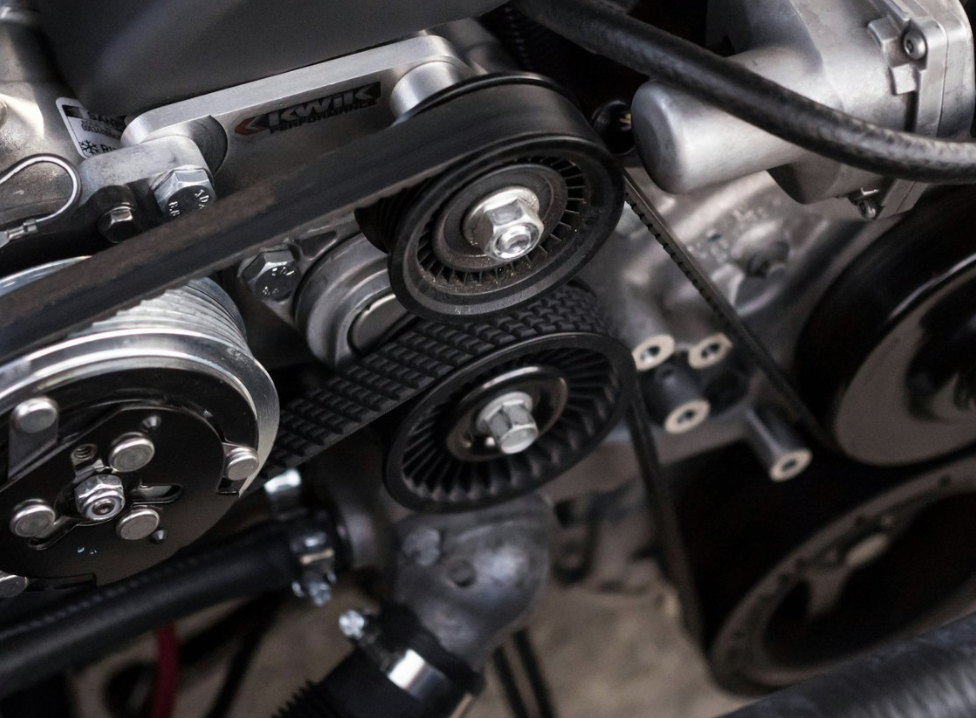 Replacement Cost: What You’ll Pay in 2025″ width=”976″ height=”718″ />
Timing Belt Replacement Cost Breakdown (2025)
VehicleBar Affiliate Product Box
Do It Yourself & Save $200-400
As an Amazon Associate, VehicleBar earns from qualifying purchases at no extra cost to you.
Save $200-400
End VehicleBar Affiliate Product Box
| Service Type | Low | Average | High |
|---|---|---|---|
| DIY (Parts Only) | $180 | $300 | $450 |
| Independent Shop | $500 | $850 | $1,200 |
| Dealer Service | $900 | $1,400 | $2,000+ |
The wide spread comes down to three things: engine design, labor time, and what’s replaced during the service. A four-cylinder Honda is a different animal than a transverse V6 stuffed into a tight engine bay.
Timing Belt Labor Cost Explained
Labor is the big hitter. In 2025, most independent shops charge $95–$150 per labor hour. Dealers often exceed $180/hour. Timing belt jobs range from 3.5 to 9.0 labor hours depending on vehicle.
For example:
- 2008–2017 Honda Accord 2.4L:~4.5 hours
- 2010–2015 Toyota Camry V6:~6.8 hours
- Subaru EJ25:~5.2 hours
That’s why labor alone can hit $700 before parts even enter the conversation.
Timing Belt Price: Parts That Actually Matter
Timing Belt Price: Details
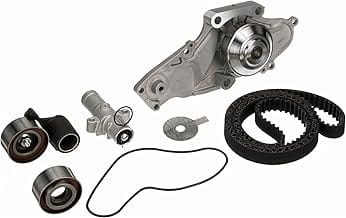
A quality timing belt kit typically includes:
- Timing belt
- Tensioner (hydraulic or mechanical)
- Idler pulleys
- Water pump (often recommended)
OEM kits from Honda or Toyota often cost $280–$420. Reputable aftermarket kits—Aisin, Gates Racing, Continental—usually land between $180–$320. I’ve installed hundreds of Aisin kits; they’re OEM suppliers for Toyota and worth every penny.
TECHNICAL SPECIFICATIONS
Technical Specifications That Affect Cost
I won’t guess specs—ever. Always verify for your exact year, engine, and trim. Here are examples from common platforms:
| Vehicle | Engine | Timing Interval | Notes |
|---|---|---|---|
| Honda Accord (2003–2017) | 3.0L / 3.5L V6 | 105,000 miles | Interference engine |
| Toyota Camry (2002–2011) | 3.0L / 3.5L V6 | 90,000 miles | Water pump driven by belt |
For detailed, model-specific walkthroughs, review our [complete replacement guide, Honda Accord timing belt, Toyota Camry timing belt](timing-belt-replacement-guide, honda-accord-timing-belt, toyota-camry-timing-belt) before you touch a wrench.
DIY Timing Belt Replacement: What You’re Really Signing Up For
Disconnect battery and support engine with a jack and wood block. Remove accessory belts.
Remove crank pulley (often torqued over180 ft-lbs). Air tools or a holding tool required.
Align timing marks exactly. Double-check. Triple-check. [Diagram of cam/crank marks]
Install new components. Torque fasteners to OEM spec—check your service manual.
Expect 6–10 hours your first time. Pros do it faster because we’ve made every mistake already.
Tools & Materials List
- Must Have:3/8” & 1/2” torque wrenches ($60–$150)
- Crank pulley holding tool (vehicle-specific)
- Metric socket set (8mm–22mm)
- Jack stands (rated 3-ton minimum)
- Nice to Have: Impact wrench, service manual subscription
Troubleshooting & Common Problems
If engine won’t start after replacement: Check cam timing alignment first. One tooth off is enough.
If belt whines: Tensioner installed incorrectly or defective. Shut it down immediately.
Professional correction usually runs $300–$600 if no damage occurred.
Timing Belt Replacement FAQs
How much does timing belt replacement cost in 2025?
Most drivers pay between $500 and $1,200, depending on vehicle and labor rates.
Can I drive with a worn timing belt?
You can—until you can’t. Failure is sudden, not gradual.
Is timing belt service cost negotiable?
Parts markup often is. Labor usually isn’t.
Engine-Specific Timing Belt Differences You Must Know
Honda V6 (J30 / J32 / J35 – Accord, Odyssey, Pilot)
Engine Type: Interference
Difficulty: Moderate–High
Honda J-series V6 engines are some of the most forgiving to work on—but they absolutely punish skipped maintenance. The rear bank cam timing is easy to misalign if the crank moves during belt removal.
- Hydraulic tensioner must be pinned correctly
- Water pump is timing-belt-driven (replace it)
- Crank pulley bolt is extremely tight
—
Toyota V6 (1MZ-FE / 3MZ-FE / 2GR-FE – Camry, Avalon, Lexus)
Engine Type: Interference
Difficulty: Moderate
Toyota V6 engines are mechanically precise. Timing marks are small, and belt routing must be exact. Many aftermarket kits fail early due to weak tensioners.
- Always use OEM or Aisin kits
- Cam seals often leak after 100k miles
- Rear cam timing is easiest to misread
—
Subaru EJ25 (Impreza, Forester, Outback)
Engine Type: Interference
Difficulty: High
Subaru’s flat-four layout adds complexity. Camshafts can snap violently when belt tension is released.
- Use cam locking tools if available
- Never rotate cams independently
- Replace all idlers—bearings fail often
—
Volkswagen / Audi 1.8T & 2.0T
Engine Type: Interference
Difficulty: Very High
VW/Audi timing systems require locking tools. Guesswork does not work here.
- Cam and crank locking tools mandatory
- Improper tension causes immediate noise
- Coolant contamination is common
Printable Timing Belt Replacement Checklist (Shop-Proven)
Pre-Disassembly
- ☐ Battery disconnected
- ☐ Vehicle securely on jack stands
- ☐ Engine supported before mount removal
- ☐ Service manual opened for exact specs
Before Belt Removal
- ☐ Crankshaft at TDC
- ☐ Cam timing marks aligned
- ☐ Paint reference marks added
- ☐ No oil or coolant contamination present
Component Replacement
- ☐ Timing belt replaced
- ☐ Tensioner replaced
- ☐ Idler pulleys replaced
- ☐ Water pump replaced (if driven by belt)
Post-Installation
- ☐ Engine rotated by hand twice
- ☐ Timing marks rechecked
- ☐ No binding or resistance felt
Final Verification
- ☐ Engine starts smoothly
- ☐ No abnormal noise
- ☐ No coolant or oil leaks
- ☐ Accessory belts tracking correctly
Common Timing Belt Failures: What We See in the Shop
Stripped or Missing Teeth
Usually caused by oil contamination or seized water pump bearings. Results in sudden loss of valve timing.
Hydraulic Tensioner Collapse
Internal seal failure causes belt slack and timing drift—often intermittent before complete failure.
Idler Pulley Bearing Failure
Heat discoloration indicates bearing seizure. The belt overheats and snaps shortly afterward.
Oil-Soaked Belt
Cam or crank seal leaks weaken belt material. Belt may appear intact but loses structural strength.
Final Thoughts From the Shop Floor
Timing belts aren’t glamorous, but they’re critical. The timing belt replacement cost hurts once; engine damage hurts for years. For experienced DIYers, this is a difficult but doable job with the right tools and patience. For everyone else, paying a reputable shop is money well spent.
If you asked me over coffee whether it’s worth doing on time—every time—I’d say yes without hesitation. I’ve seen what happens when people don’t. And I’ve never once had a customer regret replacing a timing belt early.