Oil Pan Gasket Replacement: A DIY Guide to Fixing Leaks &…
You pull out of the driveway. There it is — a dark, oily stain on the concrete where your car sat overnight. Your stomach drops. That stain means one thing: you’ve got an oil pan gasket leak. I’ve seen this hundreds of times in 15 years of shop work. The good news? It’s one of the most fixable leaks on any engine. This guide covers everything — how to spot a bad oil pan gasket, what parts and tools you actually need, the full step-by-step replacement process, and how to avoid the mistakes that send people back to square one.
A failing oil pan gasket costs you money every week you ignore it. You’re topping off oil constantly. You’re risking low oil pressure. You’re one long highway trip away from a seized engine. So let’s fix it right the first time.
Parts & Tools You’ll Need
As an Amazon Associate, VehicleBar earns from qualifying purchases at no extra cost to you.
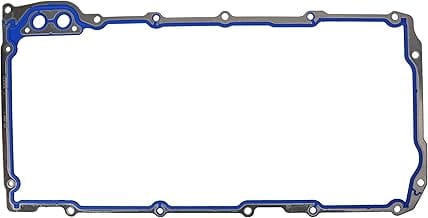
Gasket
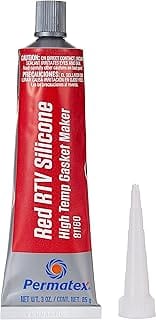
Sealant
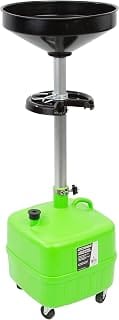
Tool

Signs Your Oil Pan Gasket Is Failing
Before you buy parts, make sure the oil pan gasket is actually the problem. I’ve seen plenty of people replace one only to find the real leak was the valve cover or drain plug. Here’s what to look for.
Oil Puddles Under the Engine
Fresh oil is amber-colored and slightly transparent. Old oil goes dark brown or black. If you find a puddle directly under the front or center of the engine — not near a tire, not near the transmission — the oil pan gasket is the likely source.
One customer brought in a 2018 Honda Accord last year. He’d been losing about a quart every 800 miles. The stain on his driveway was dead center under the block. Turned out the original factory gasket had been slowly compressing for 73,000 miles. One new Fel-Pro gasket and the leak was gone.
Oil Level Drops Between Changes
Healthy engines use minimal oil between changes — usually less than half a quart per 3,000 miles. If you’re adding a quart every 1,000 miles or less without blue smoke from the exhaust, you’ve got an external leak. Check the dipstick every two weeks and log the readings.
Oily Residue and Dirt Buildup on the Engine Underside
Get under the car with a flashlight. Look at where the oil pan bolts to the engine block. Any wet, oily film along that seam is a dead giveaway. Sometimes road dust sticks to the leak and forms a crusty black ridge. That crud tells you exactly where the gasket has failed.
Burning Oil Smell While Driving
Oil dripping onto hot exhaust pipes or the catalytic converter creates a sharp, acrid smell. You’ll notice it most when you first start the car or when the engine is warm. It smells different from coolant — coolant is sweeter. Oil burning off exhaust is more of a harsh, chemical smell.
This isn’t just unpleasant. If enough oil accumulates on the exhaust manifold, it can start a fire. I’m not saying that to scare you — I’m saying get it fixed soon.
Low Oil Pressure Warning Light
If the oil pressure light comes on, stop driving. Seriously. Low oil pressure means the engine isn’t getting lubricated properly. Metal-on-metal contact starts within seconds. A $40 gasket can turn into a $4,000 engine rebuild if you keep driving on low oil.
Pro Tip: Before pulling the oil pan, always check the valve cover gasket, oil filter housing, and drain plug first. Those three are faster and cheaper to fix. If oil is coming from the lowest point of the engine and you’ve ruled everything else out, the pan gasket is your culprit. See our full guide on engine overheating causes — low oil is one of the most common triggers.
Tools and Parts You Need for This Job
Gather everything before you start. Stopping mid-job to run to AutoZone wastes an hour and kills your momentum. Here’s what you actually need — no fluff.
Essential Tools
You need a floor jack and two solid jack stands rated for your vehicle’s weight. Never use the scissor jack that came with your car — it’s not safe for working underneath. A 3/8-inch drive socket set covers most oil pan bolts. Pick up metric and standard sets if you’re not sure which your car uses.
A breaker bar is worth having. Oil pan bolts can be corroded, especially on older vehicles. A breaker bar gives you the use to break them loose without rounding the heads. A torque wrench is non-negotiable — I’ll explain why in the steps below. You’ll also need a rubber mallet, a plastic or nylon gasket scraper, brake cleaner spray, and a pile of shop rags.
Parts to Buy
The new oil pan gasket is the obvious one. Use a quality brand — Fel-Pro is my go-to for most domestic and Japanese engines. Victor Reinz is solid for European vehicles. Match the part to your exact year, make, model, and engine size. A 2.5L and a 3.5L in the same model year often use different gaskets.
Pick up a new drain plug washer while you’re at it. They’re cheap — under $2 — and reusing a crushed copper washer is how you end up with a dripping drain plug immediately after a clean oil pan job. Also grab a new oil filter. Since you’re draining the oil anyway, it makes no sense not to swap the filter.
Check your owner’s manual for the correct oil viscosity and capacity. Most four-cylinder engines hold 4 to 5 quarts. V6 engines typically take 5 to 6 quarts. Some performance engines need up to 8 quarts.
RTV Silicone: When You Need It
RTV Silicone: Details
Some oil pan gaskets go on dry. Others require a thin bead of RTV silicone sealant at the four corners where the gasket meets the rear main seal area. Check the instructions that come with the gasket — they’ll tell you exactly where to apply it. Permatex Ultra Black (part number 82180) is what I use most often. Permatex High-Temp Red works for higher heat applications. Don’t use both on the same joint — pick one and apply it correctly.
| Item | DIY Cost | Shop Cost |
|---|---|---|
| Oil Pan Gasket (Fel-Pro) | $15–$50 | Included in labor estimate |
| Engine Oil (5 qts, synthetic) | $30–$55 | Included |
| Oil Filter | $8–$18 | Included |
| RTV Sealant (if needed) | $8–$14 | Included |
| Labor | $0 | $200–$450 |
| Total | $61–$137 | $280–$600 |
How to Replace an Oil Pan Gasket: Step-by-Step
This process covers most rear-wheel-drive and front-wheel-drive cars. A few SUVs and 4WD trucks require subframe or crossmember removal for clearance — I’ll flag those as we go.
Step 1 — Prep the Vehicle
Park on a flat, level surface. Concrete is ideal. Asphalt works. Never jack up a car on a slope. Set the parking brake. Place wheel chocks behind the rear tires.
Let the engine cool for at least two hours. Hot oil burns. Even “warm” oil at 140°F will scald you if it spills. If you need to speed things up, you can pop the hood and let ambient air circulate — but don’t rush this step.
Disconnect the negative battery terminal. It’s a habit I keep for any underhood work. Eliminates any risk of an electrical issue while you’re underneath the car.
Step 2 — Lift and Support the Car
Jack the car up using the manufacturer’s specified jack points. These are reinforced sections of the frame. Using the wrong spot can bend rocker panels or damage structural components. Once the car is raised, place jack stands under the proper support points before crawling underneath — never work under a car supported only by a hydraulic jack.
Some front-wheel-drive vehicles sit very low. If you can’t get enough clearance with standard jack stands, consider using ramps on the front wheels instead.
Step 3 — Drain the Engine Oil
Position the drain pan under the drain plug. Use the correct socket — usually 14mm, 17mm, or 19mm. Loosen counterclockwise. Once it’s nearly out, use your fingers and pull the plug away quickly so the oil stream hits the pan and not your arm.
While the oil drains, remove the oil filler cap on top of the engine. This breaks the vacuum and speeds up drainage. Let it drain for a full 10 minutes. Once the flow slows to drops, remove the oil filter too. Set both aside — you’re replacing them.
Step 4 — Remove the Oil Pan Bolts
Locate every oil pan bolt. There are usually between 10 and 20, depending on the engine. On a Toyota 2GR-FE V6, there are 18. On a GM 3.6L, there are 16. Count them before you start so you don’t forget any.
Start removing bolts from the corners and work inward. This relieves tension evenly and prevents warping the pan flange. If bolts are stubborn, apply a shot of PB Blaster penetrating oil and wait 5 minutes. A breaker bar will handle most seized bolts.
Store all bolts in a tray or bag. Don’t let them roll under the car. Losing one bolt means a trip to the hardware store or the dealer parts counter.
Step 5 — Remove the Oil Pan
With all bolts out, the pan might still be stuck. The old gasket has bonded to the block over the years. Don’t pry with a screwdriver — you’ll gouge the sealing surface. Instead, tap the pan sideways with a rubber mallet. A few gentle taps usually breaks the seal without any damage.
Lower the pan carefully. Residual oil will still be in there. Have a rag ready. Set the pan on a clean surface so you can inspect it for cracks or damage before reinstalling.
Step 6 — Scrape and Clean Both Surfaces
This step matters more than people think. A dirty sealing surface is the number-one reason new gaskets still leak after installation.
Use a plastic gasket scraper on aluminum pans. Metal scrapers work on cast iron blocks, but they’ll gouge aluminum. Scrape off every bit of old gasket material from both the engine block and the oil pan flange. Take your time.
Then spray both surfaces with brake cleaner. Wipe them down with a lint-free shop rag. Check again. Any residue left behind will prevent the new gasket from seating flat.
Step 7 — Apply RTV Sealant (If Required)
Check your gasket instructions. Many modern molded rubber gaskets go on completely dry. Others need RTV at the four T-junction corners where the oil pan gasket meets the rear main seal or timing cover.
If RTV is needed, apply a 3mm bead — about the diameter of a pencil tip. Don’t glob it on. Too much RTV can squeeze inside the engine and clog the oil pickup tube strainer. That’s a disaster. A thin, even bead is all you need.
After applying RTV, install the pan within 15 minutes. RTV starts skinning over quickly, especially in warm weather. If you wait too long, it won’t bond properly.
Step 8 — Install the New Oil Pan Gasket and Pan
Position the new gasket on the oil pan. Some gaskets have alignment tabs that slot into holes on the pan — use those. Raise the pan into position against the engine block and hand-thread a few bolts on opposite corners to hold it while you install the rest.
Once all bolts are hand-tight, grab the torque wrench. Tighten in a crisscross or star pattern — never circle around sequentially. Work in three passes: snug all bolts finger-tight first, then torque to half spec, then full spec. Most oil pan bolts torque to 8–12 ft-lbs for aluminum pans and 15–18 ft-lbs for cast iron pans. Check your service manual for your exact spec. Over-tightening warps the flange or strips threads — both of which cause future leaks.
Critical: Over-tightening is just as damaging as under-tightening. Use a torque wrench — not a ratchet and gut feel.
Step 9 — Reinstall the Drain Plug and Oil Filter
Thread in the drain plug with a new aluminum or copper crush washer. Torque it to spec — typically 25–30 ft-lbs for most vehicles. Snug it down firm, but don’t gorilla it. A crushed washer just needs even compression to seal.
Install the new oil filter. Apply a thin film of fresh oil to the rubber O-ring first. Hand-tighten the filter until the O-ring contacts the housing, then add another 3/4 turn. That’s it. No wrench needed — over-tightening oil filters makes them nearly impossible to remove next time.
Step 10 — Refill, Start, and Check
Refill with the correct oil type and quantity. Check the dipstick before starting to confirm the level is in the acceptable range. Lower the car off the stands.
Start the engine and let it idle for two minutes. Watch underneath for drips. Check the oil pressure indicator on the dash — it should go out within 3 seconds of startup. If it stays on, shut the engine off immediately and investigate.
After the engine warms up, shut it off and check the dipstick again. Oil expands when hot, so the level may read slightly different. After driving 10–15 miles, crawl under and look at the oil pan seam one more time with a flashlight. A fresh gasket sometimes weeps a tiny bit during the first heat cycle. That’s normal. By the second or third drive, it should be completely dry.
Recommended Torque Wrench
As an Amazon Associate, VehicleBar earns from qualifying purchases at no extra cost to you.
Tool

Common Mistakes That Cause the Job to Fail
I’ve seen all of these in the shop. Some from customers doing it themselves. Some from other mechanics. Learn from their mistakes so you don’t repeat them.
Skipping the Torque Wrench
Most people over-tighten oil pan bolts by feel. That warps the flange on aluminum pans within a quarter turn past spec. You’ll end up with a flat section that no gasket can seal. The fix is expensive — machining or replacing the pan. Just use the torque wrench.
Reusing the Old Gasket
Old gaskets are permanently compressed. They have memory in the rubber. Even if they look intact, they won’t seal properly the second time. Gaskets cost $15–$50. There’s no good reason to reuse one.
Not Cleaning the Sealing Surface
Old gasket residue left on the block or pan flange creates high spots. The new gasket can’t compress evenly across the joint. That’s a leak, every single time. Clean completely — even the parts that look clean. Use brake cleaner and a lint-free rag for the final pass.
Using Too Much RTV Silicone
More isn’t better here. Thick beads of RTV squeeze inside the engine and can break off in chunks. Those chunks travel to the oil pickup tube and block oil flow. That causes oil starvation and engine damage. Use a 3mm bead, max.
Not Identifying the Real Leak Source First
Replace the oil pan gasket and still have a leak? That means the leak was coming from somewhere else — or there’s a second leak source. Common culprits are the valve cover gasket, the rear main seal, the oil cooler adapter O-rings, or a loose drain plug. Clean the entire engine bottom with degreaser, dry it completely, then run the engine to find exactly where fresh oil first appears.
Vehicle-Specific Notes and Difficulty Levels
Not every oil pan gasket job is the same. The basic steps above apply to most cars, but here’s what varies by vehicle type.
Trucks and Body-on-Frame SUVs
Ford F-150 5.0L, Ram 1500 5.7L HEMI, Chevy Silverado 5.3L — these are all straightforward. High ground clearance means easy access. You usually don’t need to raise the engine at all. Budget 2–3 hours for the job.
Front-Wheel-Drive Sedans
Honda Accord 1.5T, Toyota Camry 2.5L, Nissan Altima 2.5L — all manageable with standard jack stands. The pans are compact and the bolt count is lower. Expect 1.5–2.5 hours.
4WD and AWD Vehicles
Some 4WD trucks and SUVs have a front differential or transfer case crossmember that partially blocks the oil pan. A Jeep Wrangler JK 3.6L, for example, requires dropping the front axle differential to remove the oil pan. That adds 2–3 hours to the job. Check a vehicle-specific forum or factory service manual before you start.
High-Mileage Vehicles (100,000+ Miles)
Expect rusted bolts. Expect old gasket material welded to the block. Expect some bolts to snap. Apply penetrating oil the night before you plan to start. Have a bolt extractor set on hand. If more than two or three bolts snap, this job moves into professional territory.
If your car has over 150,000 miles and you’re in there anyway, it’s worth replacing the rear main seal at the same time. It’s often accessible once the pan is down and saves you from another full oil pan job later.
When to Skip the DIY and Take It to a Shop
I’m all for doing your own work. But some situations make this job harder or riskier than it looks.
Call a mechanic if you have snapped or stripped oil pan bolts that need drilling and thread repair. Call one if you have a cracked oil pan that needs welding or replacement. Call one if the leak persists after a correct installation — that could mean a cracked engine block or a failing rear main seal, neither of which is a beginner job. And if your car requires subframe removal for pan access, it’s worth paying for a shop lift and an extra set of experienced hands.
Shop rates in 2026 average between $120 and $180 per hour depending on your region. A straightforward oil pan gasket job typically runs 2–3 labor hours plus parts, so budget $300–$600 total at a dealership or independent shop. That’s real money — which is why most people with basic mechanical skills choose to tackle this one themselves. If you do take it to a shop, check out our guide on how to find a trustworthy mechanic so you’re not getting overcharged.
How Long Does an Oil Pan Gasket Last?
Most factory oil pan gaskets are designed to last 75,000 to 100,000 miles under normal conditions. Some vehicles — particularly those that see consistent highway miles with regular oil changes — go 150,000 miles or more without a leak.
But heat cycles degrade rubber. Every time the engine heats up and cools down, the gasket material flexes slightly. Over thousands of cycles, it loses elasticity. Combine that with the minor vibrations of engine operation, and small leak points develop along the gasket seam. Using the wrong engine oil viscosity or neglecting oil changes speeds up this process — dirty, degraded oil carries more heat and more combustion byproducts that attack rubber components.
If you’re driving a vehicle past 80,000 miles and notice any of the symptoms above, don’t wait. Check our full 100,000-mile maintenance checklist to see what else is due at that interval.
Frequently Asked Questions
Can I drive with a leaking oil pan gasket?
Short trips with constant oil level monitoring — yes. Long drives or ignoring it for weeks — no. A leaking gasket drains oil slowly but steadily. Once oil pressure drops below the safe threshold, engine bearings and camshafts start taking damage within seconds. Check your dipstick daily if you’re driving on a known leak, and fix it within a week.
How much does oil pan gasket replacement cost at a shop?
At an independent shop in 2026, expect $280–$450 total including parts and labor. Dealership rates run higher — usually $400–$600. The job typically takes 2 to 3 hours of labor. DIY brings that cost down to $60–$140 in parts only, which is why it’s one of the better weekend repair projects for home mechanics.
What is the torque spec for oil pan bolts?
Torque specs vary by vehicle. Most aluminum oil pans torque to 8–12 ft-lbs. Cast iron pans typically run 15–18 ft-lbs. Some performance engines specify torque in inch-pounds rather than foot-pounds. Always check your vehicle-specific service manual or a trusted repair database like Alldata or Mitchell1 for the exact spec — don’t guess on this one.
What’s the difference between rubber and cork oil pan gaskets?
Rubber gaskets — specifically molded silicone or rubber-coated steel — are standard on most modern engines. They’re more durable, resist heat better, and install without RTV on most applications. Cork gaskets are an older design found on classic cars and some budget replacement kits. Cork compresses unevenly over time and usually needs RTV at the corners to seal properly. Use a modern rubber or MLS (multi-layer steel) gasket whenever possible.
Why does my oil pan gasket still leak after replacement?
Three main reasons: the sealing surfaces weren’t clean enough before installation, the bolts weren’t torqued evenly in a crisscross pattern, or the wrong gasket was used for the vehicle. It’s also possible the leak is coming from a different source — the rear main seal, valve cover, or oil cooler adapter — that was misidentified as the oil pan gasket. Clean the whole engine underside with degreaser, run it, and trace the fresh oil to its actual origin point.
Do I need to remove the engine to replace the oil pan gasket?
Almost never. On the vast majority of vehicles, the oil pan is accessible from underneath the car with basic jacks and stands. Some 4WD trucks and a handful of transversely-mounted V6 engines require lowering the subframe or front differential for pan clearance, but even those don’t require engine removal. Check a forum specific to your vehicle before you start so you know what to expect.
How long does it take to replace an oil pan gasket?
For most cars with good access, the job runs 2–3 hours for an experienced DIYer. Add another hour for high-mileage vehicles with rusted bolts or stuck pans. Some 4WD applications with subframe removal can run 4–5 hours total. Cleaning and prep time is usually what catches beginners off guard — rushing that step is exactly what causes new gaskets to leak.
An oil pan gasket leak won’t fix itself. But it’s one of the more satisfying repairs to complete — you start with an oily stain on the driveway and end with a clean, dry engine. The total investment is a few hours and $60–$140 in parts. The savings compared to a shop bill are real.
Do the diagnosis first. Rule out other leak sources. Get the right gasket for your specific engine. Clean the surfaces thoroughly. Torque the bolts correctly. Those five things are what separate a successful repair from a second trip under the car.
For more maintenance guides at this level, check our complete car maintenance hub — it covers everything from brake pad replacement to timing belt intervals, all written from real shop experience.