Catalytic Converter Problems: Diagnosis Guide
It was a sweltering July afternoon in the shop, the kind of heat that makes the concrete floor radiate up through your boots. A 2008 Toyota Camry rolled in, the owner sweating almost as much as his car. “It’s running like a dog, and the check engine light’s been on for weeks,” he said, tossing his keys on the counter. I plugged in my scan tool, and there it was: P0420—catalytic converter efficiency below threshold. Not my first rodeo with this code, but every time, it’s a reminder: catalytic converters don’t just fail overnight. They scream for help, and if you know what to listen for, you can save yourself a fortune.
Quick Answer Box
Quick Answer:A failing catalytic converter usually triggers a P0420 code, causes loss of power, or makes your car smell like rotten eggs. But before replacing it, check for exhaust leaks, oxygen sensor failure, or engine misfires—these can mimic converter issues.

What Does a Catalytic Converter Actually Do?
A catalytic converter is your car’s emissions control powerhouse. It converts harmful gases—carbon monoxide (CO), hydrocarbons (HC), and nitrogen oxides (NOx)—into less harmful carbon dioxide (CO₂), water (H₂O), and nitrogen (N₂). Inside, you’ve got a honeycomb structure coated with precious metals like platinum, palladium, and rhodium. When these metals overheat or get contaminated, the converter stops doing its job.
Most converters are designed to last 100,000+ miles, but I’ve seen them fail at 60,000—usually due to oil or coolant contamination, or an engine running too rich. If your car’s burning oil or leaking coolant into the exhaust, that converter’s days are numbered.
Symptoms of a Failing Catalytic Converter
VehicleBar Affiliate Product Box
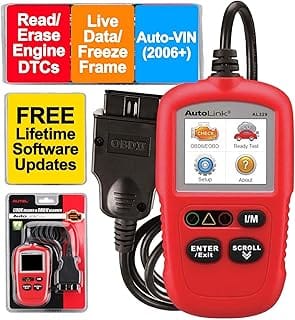
Scan Your Codes Before Spending $400+
As an Amazon Associate, VehicleBar earns from qualifying purchases at no extra cost to you.
Scan First
End VehicleBar Affiliate Product Box
Catalytic converters don’t just quit—they degrade. Here’s what to watch for:
- Check Engine Light (P0420 or P0430 codes):The most common sign. P0420 means Bank 1 efficiency is low; P0430 is Bank 2. But don’t assume the converter’s bad—other issues can trigger these codes.
- Loss of Power:A clogged converter restricts exhaust flow, making your engine feel like it’s running through mud. If your car struggles to accelerate or feels sluggish, it’s time to check for exhaust restriction.
- Rotten Egg Smell:That’s hydrogen sulfide, a byproduct of a failing converter. If your car smells like a sewer, the converter’s not converting properly.
- Rattling Noise:The honeycomb inside can break apart, creating a rattling sound under the car. If you hear it, the converter’s toast.
- Failed Emissions Test:If your car can’t pass smog, the converter is a prime suspect—but again, check the oxygen sensors first.
Diagnosing Catalytic Converter Problems
Step 1: Scan for Codes
1.Plug in an OBD-II scanner. If you see P0420 or P0430, it’s time to dig deeper. But don’t stop there—check for misfire codes (P0300-P0312) or oxygen sensor codes (P0130-P0167).
2.Clear the codes and drive the car. If the P0420 comes back immediately, the issue is likely the converter or an oxygen sensor. If it takes a while, look for intermittent problems like a leaking fuel injector.
Step 2: Check for Exhaust Restriction
Step 2: Details
1. Backpressure Test:Use a vacuum gauge or a pressure tester to measure exhaust backpressure. Hook it up to the oxygen sensor port before the converter. At 2,500 RPM, pressure should be under 1.5 psi. Over 3 psi? You’ve got a restriction.
2. Visual Inspection:Jack up the car and look for physical damage, rust, or a collapsed pipe. A flashlight and a mirror are your best friends here.
Step 3: Test the Oxygen Sensors
Step 3: Details
1.Use a multimeter or scan tool to check the voltage of the upstream and downstream oxygen sensors. The upstream sensor should fluctuate between 0.1V and 0.9V. The downstream sensor should be steady around 0.45V. If it’s mimicking the upstream sensor, the converter isn’t doing its job.
2.Swap the upstream and downstream sensors. If the code changes (e.g., from P0420 to P0130), you’ve got a bad sensor, not a bad converter.
Step 4: Inspect for Contamination
Step 4: Details
1.Remove the upstream oxygen sensor and look inside the exhaust pipe with a borescope. If you see white crust (coolant), black soot (oil), or a shiny glaze (fuel additive buildup), the converter is contaminated.
2.Check the spark plugs. If they’re fouled with oil or coolant, you’ve got bigger problems than the converter.
Common Causes of Catalytic Converter Failure
| Cause | Symptoms | Fix |
|---|---|---|
| Engine Misfire | Rough idle, P0300-P0312 codes, overheated converter | Replace spark plugs, coils, or wires; check compression |
| Oil or Coolant Leak | White smoke, sweet smell, oil in exhaust | Fix leaks, replace contaminated converter |
| Rich Fuel Mixture | Black smoke, fuel smell, P0172 code | Clean MAF sensor, check fuel pressure, replace fuel injector |
| Exhaust Leak | Loud noise, P0420 code, false converter failure | Weld or replace leaking pipe/gasket |
| Bad Oxygen Sensor | P0130-P0167 codes, poor fuel economy | Replace faulty sensor |
Tools & Materials You’ll Need
- OBD-II Scanner:$20-$200 (I use the BlueDriver for its live data features).
- Backpressure Tester:$50-$100 (or rent one from AutoZone).
- Oxygen Sensor Socket:$10-$20 (get a 22mm for most cars).
- Multimeter:$15-$50 (for testing sensors).
- Jack and Jack Stands:$50-$150 (never trust a jack alone!).
- Borescope:$30-$100 (for inspecting the converter internals).
- Exhaust Pipe Cutter:$20-$50 (if you’re replacing the converter yourself).
Safety First:Exhaust systems get hot enough to cause third-degree burns. Always let the car cool before working on the exhaust. Wear gloves, safety glasses, and a respirator if you’re cutting or grinding.
If you’re jacking up the car,use jack stands and chock the wheels. I’ve seen cars fall off jacks—it’s not pretty.
DIY vs. Professional Repair: Cost Breakdown
| Task | DIY Cost | Professional Cost |
|---|---|---|
| Diagnosis (scanner, tests) | $20-$100 | $80-$150 |
| Oxygen Sensor Replacement | $40-$100 (parts + tools) | $150-$300 |
| Catalytic Converter Replacement | $200-$800 (aftermarket part + tools) | $800-$2,500 (OEM part + labor) |
| Exhaust Leak Repair | $20-$50 (gaskets, clamps) | $100-$300 |
Money-Saving Tip:If you’re replacing the converter yourself, buy from a reputable brand like MagnaFlow, Walker, or Eastern Catalytic. Avoid the cheap eBay specials—they won’t last, and you’ll fail emissions.
For OEM quality, check RockAuto or your local dealer. I’ve had good luck with Denso and Bosch oxygen sensors—they’re reliable and won’t break the bank.
FAQ: Your Catalytic Converter Questions Answered
Can I drive with a bad catalytic converter?
Technically, yes—but it’s a bad idea. A clogged converter can cause engine overheating,poor performance, and even engine damage if the backpressure gets too high. Plus, you’ll fail emissions tests, and in some states, that means no registration.
How much does it cost to replace a catalytic converter?
It depends on the car and whether you go OEM or aftermarket. For a 2010 Honda Civic, an aftermarket converter runs $200-$400, while an OEM part is $800-$1,200. Labor adds $100-$300. Luxury or performance cars? Double those numbers.
Will a catalytic converter cleaner work?
Maybe—for very mild clogs. I’ve seen Cataclean or Seafoam help in early stages, but if the converter’s physically damaged or contaminated, no cleaner will fix it. Think of it like bandaging a broken bone.
Can I replace just one catalytic converter?
If your car has dual converters (like a V6 or V8), you can replace just the bad one. But if the other’s on its last legs, it’s often worth replacing both to save labor costs later.
Why do catalytic converters get stolen?
The precious metals inside—platinum, palladium, rhodium—are worth $100-$300 at a scrap yard. Thieves can cut one out in under a minute. Park in a garage or install an anti-theft clamp if you’re in a high-risk area.
Final Thoughts: The Mechanic’s Perspective
Catalytic converter problems are rarely as simple as they seem. I’ve saved customers thousands by diagnosing therealissue—a bad oxygen sensor, an exhaust leak, or an engine misfire—before jumping to conclusions. If you’re patient and methodical, you can too.
Replacing a converter isn’t the hardest job, but it’s messy and requires some specialized tools. If you’re comfortable under a car and can follow instructions, you can tackle this yourself. But if you’re unsure, there’s no shame in calling a pro—just make sure they diagnose before they replace.
Remember: A new converter won’t fix an underlying issue. If your engine’s running rich or burning oil, that shiny new converter will fail just like the old one. Fix the root cause, and your converter—and your wallet—will thank you.